
Winter evenings can feel rough even when you’re wrapped in a warm coat. The wind is sharp, frost settles on the ground, and you might spot a neighborhood cat slipping under a porch. It’s hard not to wonder how that small animal will get through the night.
If you’ve ever wondered, “How do cats stay warm in the winter outside?” you’re not the only one. A lot of us worry about stray and feral cats when the temperature drops. Cats are tough and resourceful, and there are simple ways we can help them stay safe, warm, and healthy.
Once you know a few basics, it becomes much easier to step in and make a real difference. Even one person paying attention on a cold night can change how the story ends for a cat.
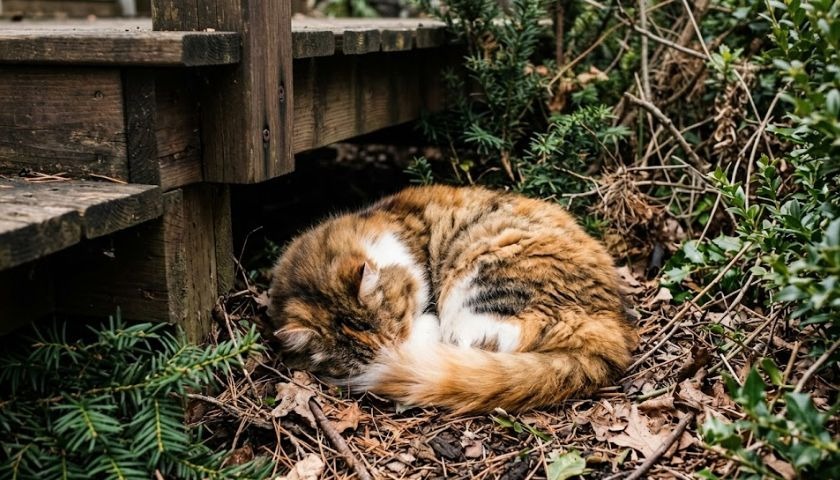
Cats are built to handle many different temperatures. Their winter coat gives them good protection against the cold. Still, extreme cold is very hard on them. Their small bodies lose heat faster than we think, especially when the wind picks up or the ground is wet.
To get through the frost, outdoor cats look for small, covered spots where they can hide and stay warmer. Once inside, they use their own body heat to warm up their immediate surroundings. Eventually, a small, dry, wind-free hiding place can feel cozy to them.
You will often spot them in some very common hiding places around your neighborhood. They usually duck beneath a porch, sneak into storm drains, or crawl under the crawlspaces of homes. These tight areas act as makeshift havens when the snow starts piling up.
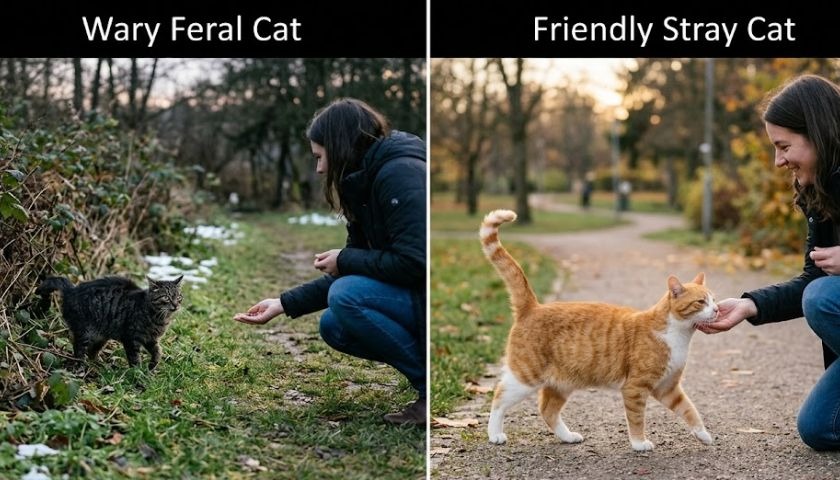
Not every cat you see outside lives the same kind of life. A feral cat was born outdoors, raised without human contact, and is essentially wild. A stray cat, on the other hand, used to be someone’s pet that got lost or was left behind. Strays are socialized and may come to you for help. Feral cats usually won’t.
Feral cats have sharper survival instincts than strays do, and they’re used to fending for themselves around the clock. They know how to find food, locate warmth, and stay out of danger. But surviving a cold winter is still a hard ask, even for a cat that’s done it before. Long, freezing nights take a toll on any animal, no matter how “street smart” it is.
Helping a feral cat is not the same as helping a stray cat. Keeping a feral cat warm in winter means helping without picking it up, bringing it inside, or handling it. The focus turns entirely to creating resources the cat can access and use completely on its own terms.
That may involve setting up and then stepping back so the cat feels safe using your creation. Patience is key because earning a feral cat’s trust, even from a distance, doesn’t happen overnight.
Helping outdoor cats does not require expensive tools. Small, deliberate changes can make a world of difference in their comfort and survival.
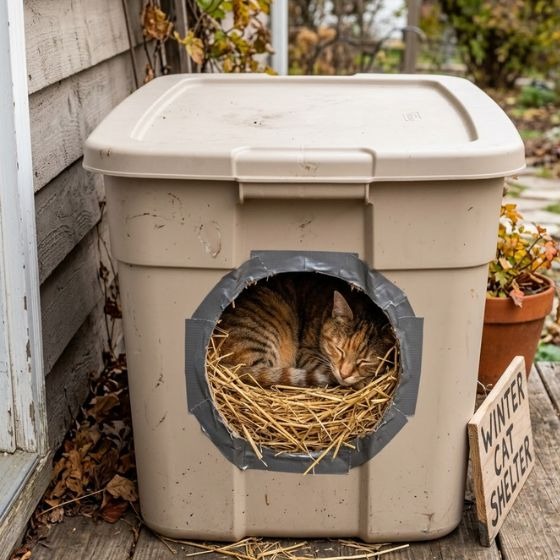
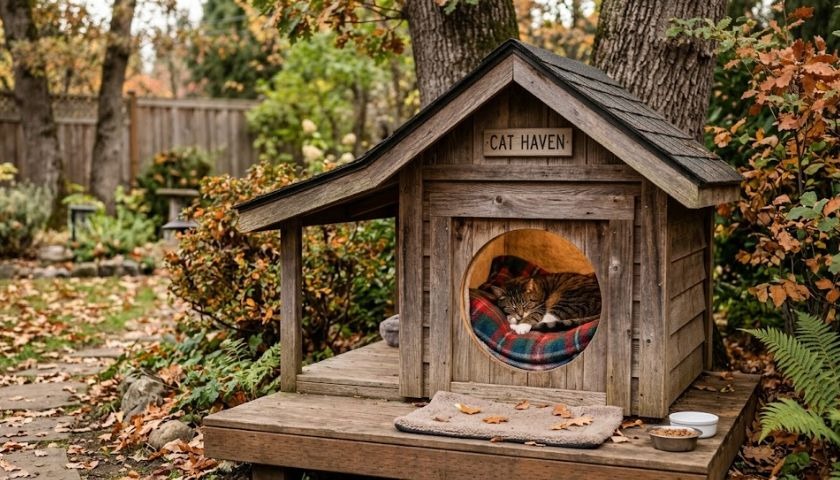
A good shelter should be small enough to trap body heat. If it is too large, warmth escapes and the space stays cold. Think snug, not spacious.
For insulation, straw is the best choice because cats can burrow into it. Avoid blankets, towels, or newspapers since they absorb moisture and pull heat away from the cat’s body. A simple plastic storage bin with straw inside can work surprisingly well.

Cats burn more energy in winter, so regular feeding matters. Dry food works better outside because wet food can freeze fast and become unsafe for cats to eat.
Water matters just as much as food. However, It’s easy to forget about it, especially in cold weather. Check bowls often to make sure they are not frozen. Some people use thick plastic bowls or solar options outdoors. For indoor cats, water fountains that keep the water moving and fresh are helpful.
You might wonder about elevated bowls, but in winter, the goal is to keep food and water usable.

If cats visit your home, create a quiet, draft-free corner where they can rest. Covered porches work well. Adding soft cat beds or even a cat teepee can give them a cozy place to settle.
Switch out summer items like a pet cooling mat, then replace them with warmer options. Some cats tolerate light clothing, which can add a bit of warmth, but this only works for owned or social cats.
If you care for a regular outdoor cat, keep food bowls and litter boxes in sheltered, protected spots.
Cold temperatures are only part of the challenge. Winter also brings several hidden dangers that outdoor cats may encounter.
Recognizing these risks allows caregivers to take preventative action before an emergency develops.
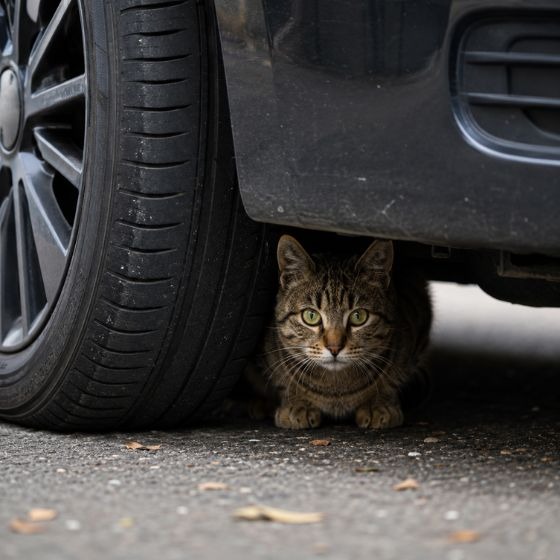
Cats actively search for warmth on freezing days. Unfortunately, car engines and wheel wells can be attractive hiding places.
A cat may crawl beneath a parked car or climb into the engine compartment after the engine cools. When the vehicle starts again, serious injuries can occur.
How to Protect Outdoor Cats
These simple habits take only seconds and may save a cat’s life.
Antifreeze poses one of the greatest winter dangers to cats. It smells and tastes sweet to animals, but even a tiny amount can be deadly.
Clean up any spills right away and keep containers locked up tight. Never leave automotive fluids where a cat can get to them.
Winter Chemical Safety
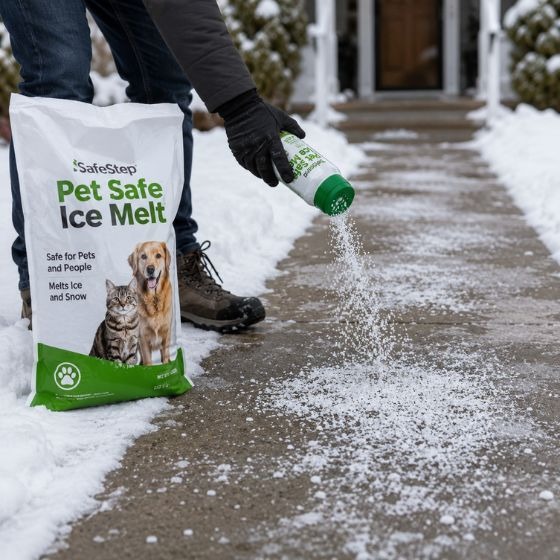
Chemical deicers and road salt can irritate your pet’s paws or, worse, burn them. Switching to pet-safe products makes a big difference for outdoor cats walking through your yard.
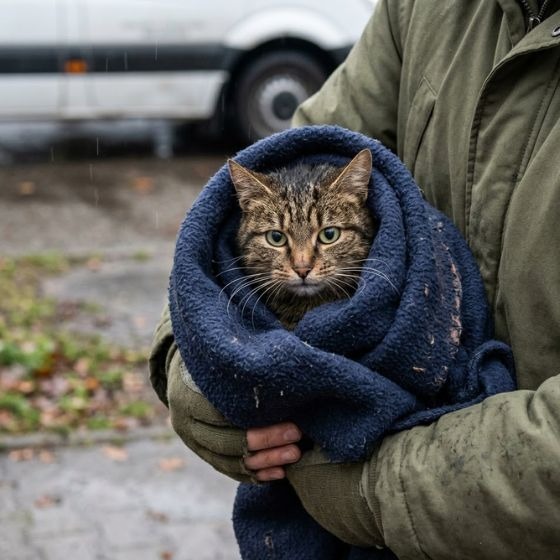
Hypothermia is a condition in which a cat’s body temperature drops to a dangerously low level. It’s a medical emergency, so act fast if you think a cat has it.
The early signs can be easy to miss, but things can go downhill quickly if the cat stays out in the cold.
Signs of Hypothermia
If you see these symptoms, move the cat to a warm, dry spot right away and contact a vet.
Unusual behavior can also be a sign of illness or stress. For example, a cat sleeping in a litter box may be sick, stressed, or seeking a warmer, safer spot.
Q1: Can I use hay instead of straw for an outdoor cat shelter?
No. Skip hay in a cat house. It can irritate a cat’s nose and trigger allergies. Straw is a better choice because it stays dry and lets cats burrow in without getting damp.
Q2: Should I keep the water bowl inside the cat’s shelter?
No, keep all liquids outside of their sleeping area. Water gets easily spilled when cats move around inside tight spaces. A damp shelter chills a cat instead of keeping it warm.
Q3: I find a stray cat shivering in the cold. What do I do?
Move fast. Take the cat to a warm, dry place, out of draughts. Wrap them gently in a warm towel and contact a vet as soon as possible.
Q4: Do feral cats need additional food in winter?
Yes, they absolutely need more calories when the snow falls. They burn significantly more energy just trying to maintain their core body temperature. Providing extra kibble gives them the fuel they need to survive.
Q5: Is it safe to trap, neuter, and return (TNR) cats during the winter?
You have to be very careful with winter TNR activities. Don’t attempt TNR in the winter unless you can guarantee the cats will be returned to a warm shelter. As their body temperatures drop after surgery, they need a safe place to stay.
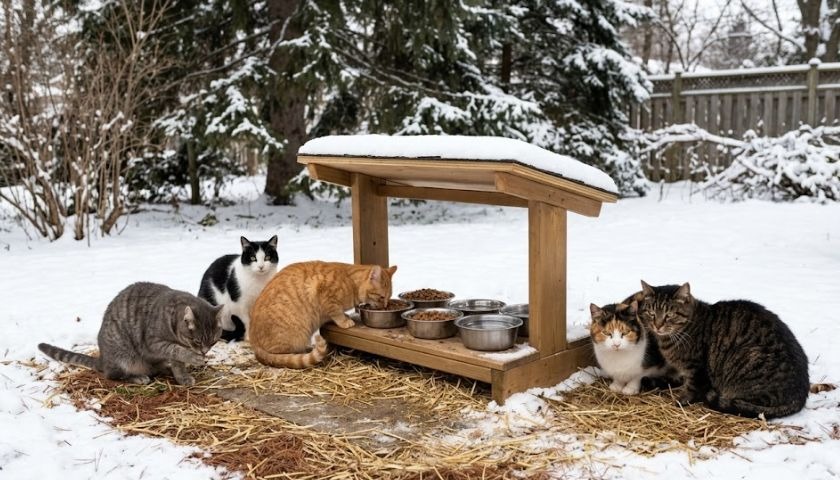
You don’t need to overhaul your entire routine to help outdoor cats this winter. One simple DIY shelter with straw can help several cats survive the coldest winter nights. That’s a few hours on a weekend and maybe thirty dollars.
Talk to your neighbors, too. A shared feeding plan keeps cats from overeating at one house and going hungry at the next few. It eases tension between the cats and lets more people watch for anyone who looks sick or injured.
Cats have survived hard winters for thousands of years. They’re resilient in ways most animals aren’t. But resilience has limits. The steady care of one person can mean a cat reaches spring healthy instead of barely hanging on. You don’t have to do everything. Just start somewhere.