
It’s easy to miss, but your cat does a little yoga pose every time they eat. Their bodies crouch low, their necks bend down, and their whiskers press against the bowl. Some cats handle this just fine, while others make a mess, pause often, or even walk away mid-meal.
Because of this, many pet owners have started raising their cats’ feeding stations. That leads to one big question: are elevated cat bowls good or bad? The answer is not one-size-fits-all. For some cats, especially older ones or those with health issues, a raised bowl can make a real difference. But others may not need it.
Cats eat every day, so even small changes to their feeding setup can affect long-term comfort. Before trying raised bowls, it helps to understand how your cat’s body moves and feels while they eat.
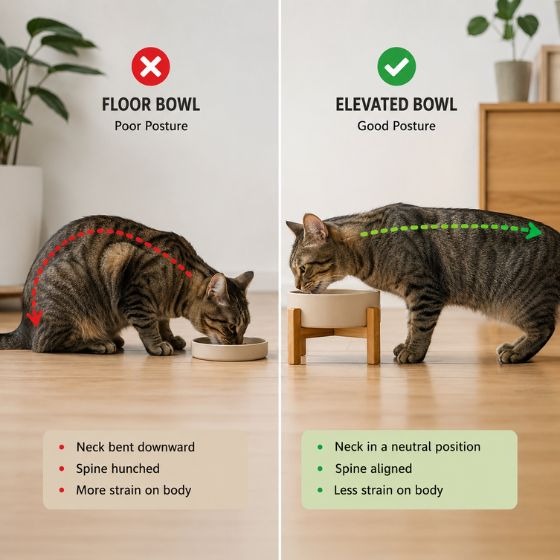
A cat’s body naturally bends toward food on the floor. This low, crouched position works for many cats but still forces their neck and head to tilt downward while eating.
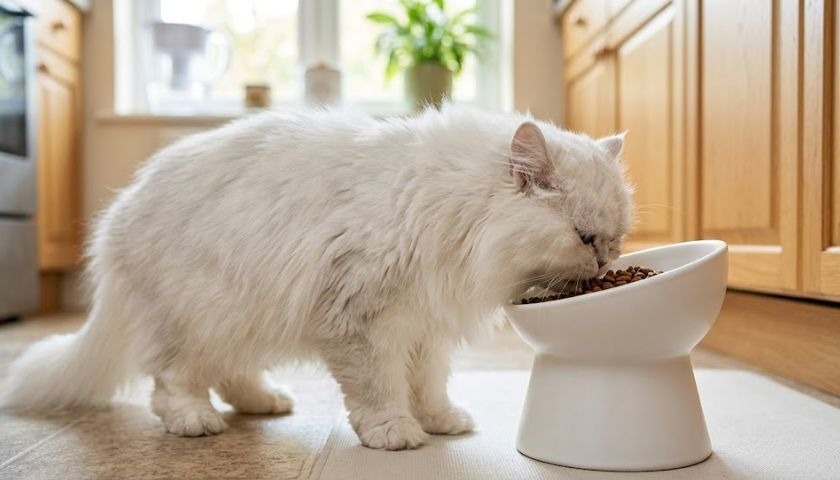
Elevated bowls sit higher than regular bowls and bring food closer to the cat’s chest level. This promotes a more natural posture, with the neck and spine straighter rather than slanted down. Less bending can make eating feel easier and more relaxed.
Watching your cat’s body language matters. Small changes in daily habits often tell you when something feels off. Watching your cat during meals can be just as important as noticing new behaviors, like whining at night.
Some cats quickly adjust to a raised feeding station. Others may sniff it, stare at it suspiciously, and act as if you’ve rearranged their entire feeding station. Cats have a talent for making simple things dramatic.
The lifted dish offers some great benefits for your home and your pet. They are very popular for these factors.
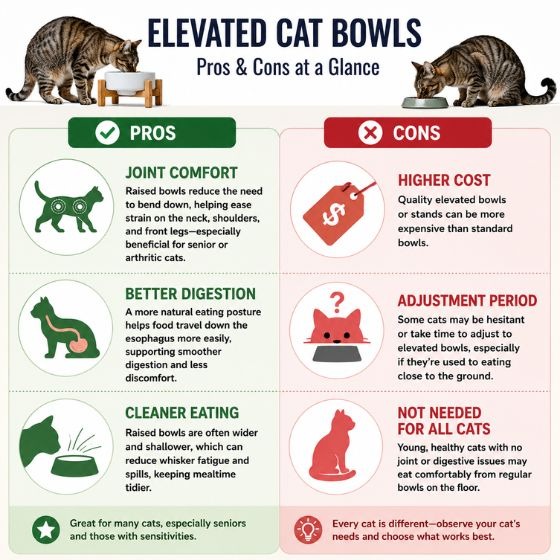
Looking at the pros and cons is a very smart step for any caring pet parent. You want to make sure you are making a choice that helps your furry friend. Comparing the good and the bad keeps you totally informed.
We will start by focusing on the major “pros” that make these stands so popular. From fixing bad posture to keeping pesky ants out of the food, the upside can be huge. Great for keeping the kitchen cleaner, many owners love these taller dishes.
One more great thing about taller dishes is that cats can’t knock their water all over the place. If your pet is a messy eater, moving the food up makes sweeping the floor much easier for you. Less cleaning means more playtime for everyone.
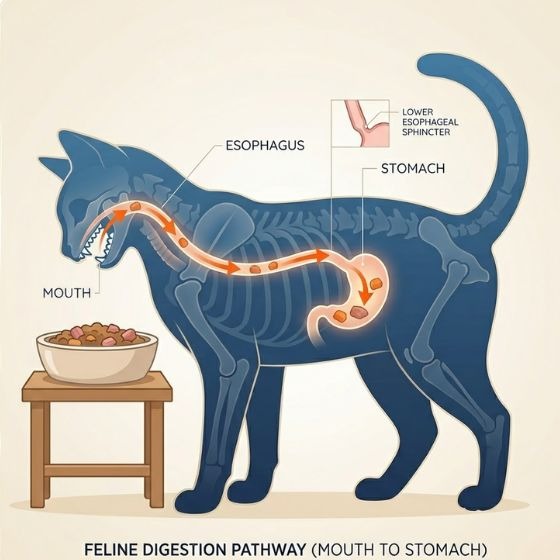
Now think about the path food takes from the mouth to the stomach. When eating flat on the floor, a cat’s food actually has to travel against gravity. This awkward path can slow meals down and cause discomfort.
Raising the bowl gives food a straighter, easier path down the esophagus. This simple change eases the swallowing process so food slides right down. It stops them from choking on dry bits or gagging on wet food.
Because gravity is finally helping out, your cat’s tummy does not have to work as hard. It gently and naturally makes dinnertime more comfortable. Their whole digestive system gets a nice break.
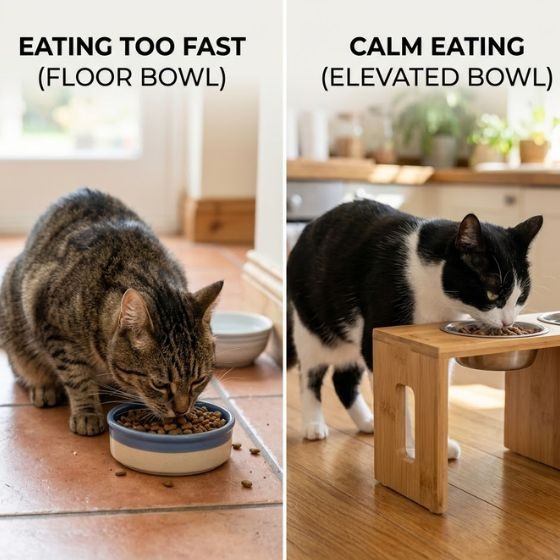
That straight swallowing angle is directly tied to a happier, calmer stomach. Gravity pulls the food down smoothly, reducing the risk of your cat bringing up undigested food right after eating. It stops food from getting stuck on the way down.
They eat a little slower and more calmly when the setup is higher. Eating more slowly helps prevent big gulps of air, a common cause of painful bloating. They chew much better when they are not rushing through their bowl.
For kitties with sensitive stomachs, this simple fix is a huge relief. Less gulping means far fewer messes on your nice carpet, and a much happier tummy for your pet. You will both enjoy a more peaceful evening.
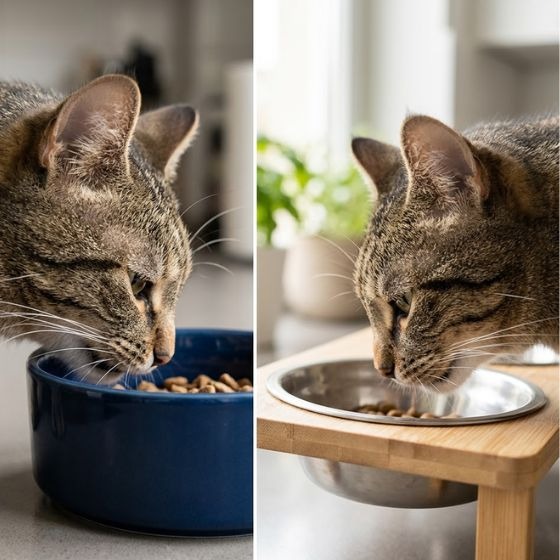
“Whisker fatigue” happens when a cat’s sensitive whiskers brush against the sides of a deep, narrow dish. Their whiskers are full of nerves, so bumping into each other all the time is very annoying. It makes them not want to use that bowl.
Many raised options have a wider and shallower shape. This smart design gives those sensitive whiskers plenty of room to twitch freely without getting stressed out. A wide dish makes mealtime relaxing instead of deeply frustrating.
With the right bowl, your cat can finally focus entirely on their yummy food. They will not have to dig around in a deep hole just to find the last few pieces of kibble. It makes eating feel like a treat again.
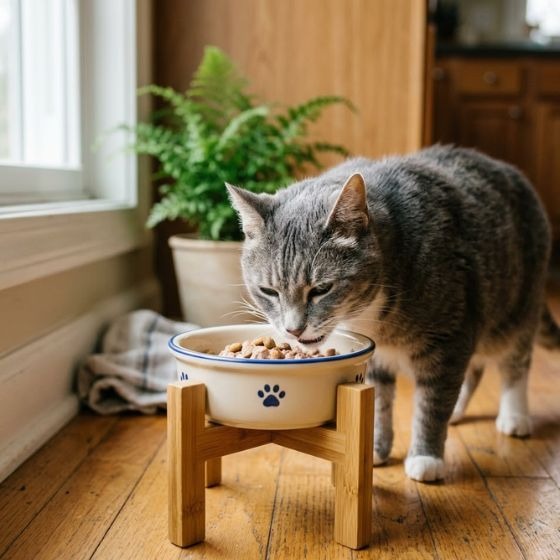
Getting older is really tough on our loyal feline friends. You may not know this, but 90% of cats over 12 years of age show clear signs of joint disease. Their legs and back get super sore and really stiff.
Bending all the way down to the floor just makes that terrible joint pain worse. When they eat at higher stations, their front legs, neck, and shoulders don’t have to carry as much weight. It makes grabbing a bite totally pain-free.
Taking care of senior pets means looking at their whole daily routine. From easing how they stand to keeping their teeth healthy, each small step helps keep senior cats active. A little care goes far.
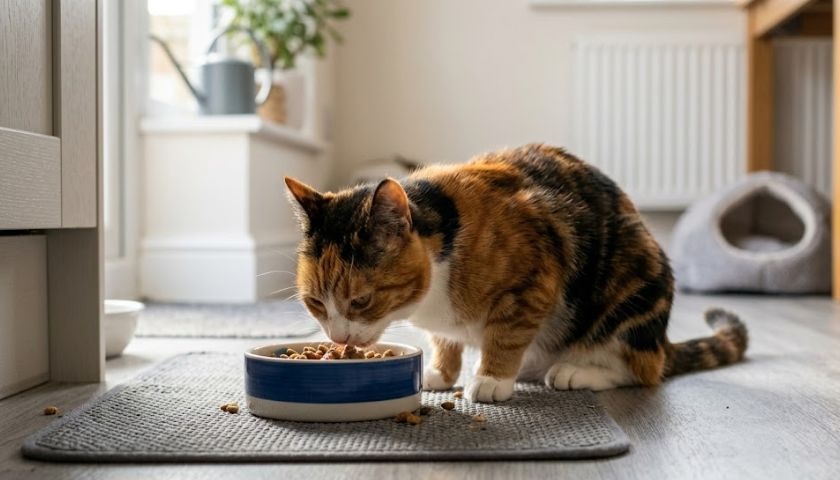
In the wild, cats eat with prey on the ground, head down and body in a natural hunting crouch. Some experts think this low, crouched posture suits a cat’s digestion, and overly high bowls could disrupt it.
For some cats, standing too upright while eating can feel awkward. It may upset their stomach or make them avoid the bowl altogether. Young, healthy cats without joint pain or digestive issues often don’t gain much from raised bowls. In that case, spending money on a raised feeder might be unnecessary.
Every cat has its quirks, and feeding preferences are no exception. Just like some cats develop puzzling habits, like sleeping in the litter box, their approach to food is highly individual. Your own observation is the best guide. If your cat eats well from a floor-level bowl and seems healthy, you may not need to change anything.
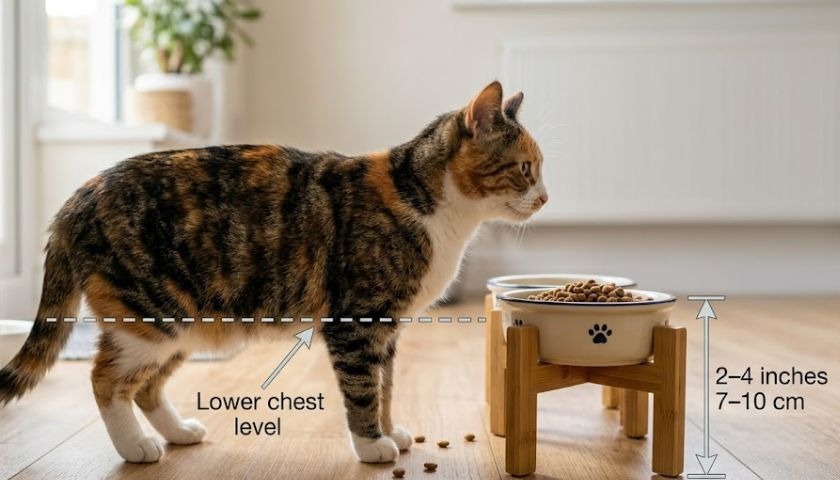
Choosing the right height matters just as much as choosing the bowl itself.
The ideal height lets your cat eat without bending too low or stretching too high. A good rule is to position the bowl at the level of your cat’s lower chest while standing.
For most adult cats, veterinarians often suggest a height of about 7 to 10 cm (roughly 2 to 4 inches). Some elevated feeders reach 4 to 6 inches high, which can work for larger or taller cats.
Avoid extremes. A bowl that is too high forces the neck upward, which can cause strain. If the bowl is too low, what’s the point of elevating it? Stability matters too, so choose sturdy materials like ceramic or stainless steel that are less likely to tip.
You can check out well‑designed examples, like Astronaut Ceramic Elevated Cat Bowls and Gradient Color Elevated Cat Bowls. These show how proper height and sturdy construction come together in a functional feeding setup.
This section answers common questions pet owners ask before making a switch.
Yes. Elevated bowls can help food move more smoothly from the mouth to the stomach. The higher angle uses gravity and can make swallowing easier for some cats.
Healthy cats usually don’t need raised bowls for medical reasons, but they can still improve posture and reduce spills.
Yes. Flat‑faced cats often find mealtime harder because of their face shape. A raised, slightly angled bowl brings the food closer and can make eating easier while reducing swallowed air.
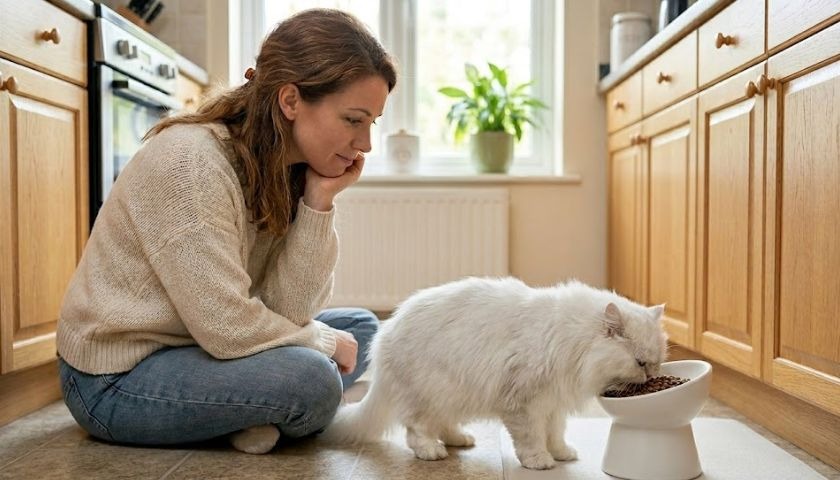
Instead of asking if tall dishes are perfectly right or completely wrong, focus purely on knowing your own pet. Deciding if elevated bowls are good or bad starts with watching how your cat stands, moves, and behaves at mealtime.
Take a quiet moment tonight to watch your furry friend eat. Are they hunching over, looking stiff, or are they making a giant mess all over the floor? Let what they actually do guide your next smart choice. Talk to your vet before buying new gear if your cat vomits often or starts walking stiffly. Every kitty deserves a meal that feels as good as it tastes.