
You expect your cat on a cozy cushion, but instead find them curled up asleep in the litter box. It’s unsettling, even a little confusing. A cat sleeping in litter box granules seems completely out of character for such clean, particular animals.
While this behavior looks odd, it’s actually a well-known signal in feline behavior. Cats don’t act this way without a reason. In many cases, your cat could be experiencing stress, discomfort, or confusion. Even small hygiene clues, like cat litter stuck in paws, can suggest that something about the litter setup is off.
In this guide, we’ll explain the real medical, emotional, and environmental reasons behind this habit. We’ll also share practical, vet-informed ways to help your cat feel safe again.
How old your cat is changes how you should read this behavior entirely.
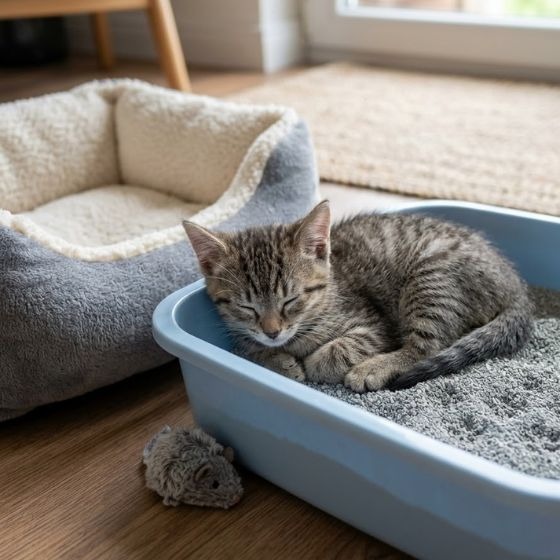
It’s very common to find a new kitten sleeping in the litter box and usually it’s nothing to worry about. Kittens are still figuring out their environment. After rough play, they might just run out of gas and view the litter pan as a place to crash.
Young kittens may also stay there because the box feels familiar and easy to find. In the first weeks of adjustment, convenience often matters more than comfort.
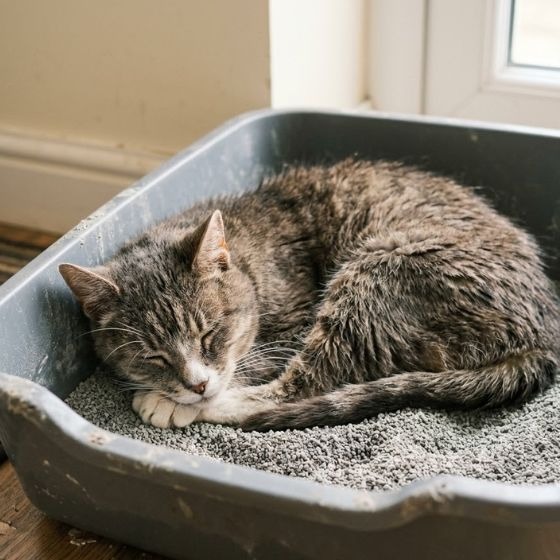
You need to look at this very differently if an adult or senior cat starts doing it. Usually, something is wrong when an older cat sleeps in the litter box. It is a clear signal that needs your immediate attention to ensure they are healthy.
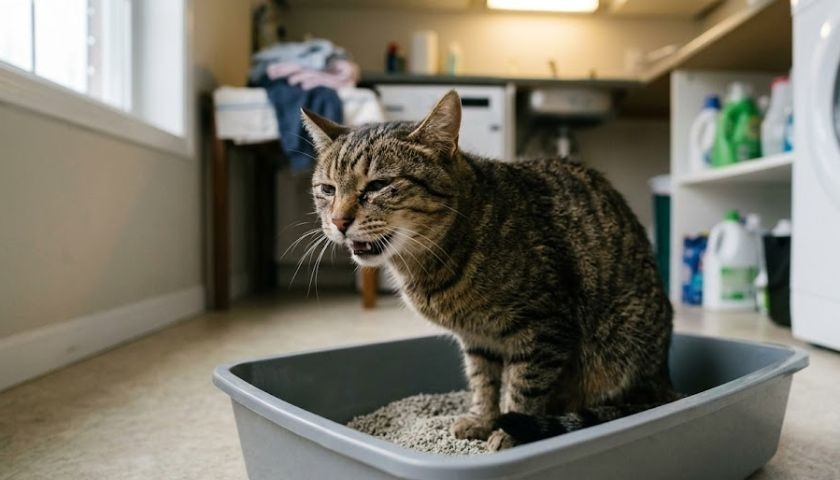
Most of the time, a sudden change in behavior calls for a closer look. Cats hide pain, so small changes in behavior are the first signs owners notice.
Watch for these signs alongside the litter box sleeping:
Urinary issues are one of the most common reasons a cat stays in the litter box. Infections, kidney disease, diabetes, and bladder inflammation can keep a cat close to the litter box.
Urinary crystals make urination painful. Because the urge to go can return almost immediately, some cats simply stay put rather than walk away.
If you notice repeated attempts to urinate with little or no output, contact a veterinarian immediately. Urinary blockages can become dangerous very quickly.
Digestive problems can create similar behavior. Cats dealing with diarrhea or constipation often stay close to the place where they expect relief.
People do something similar when they have stomach issues. Nobody wants to travel far from the bathroom when they feel miserable, and cats operate with the same basic logic.
Other cats may appear tense or reluctant to settle down anywhere else if they have an upset stomach.
Senior cats commonly develop joint pain. Climbing stairs, jumping onto furniture, or walking across the house can become genuinely uncomfortable with arthritis.
Some cats walk into the litter box and simply stay there because getting back out feels uncomfortable. High-sided litter trays can also be harder for cats to get in and out of.
In some homes, the litter box may be one of the few low, easy-to-reach spaces available to them.
Older cats can have changes that are similar to memory loss in people. Familiar routines and places start to feel confusing.
Your cat may also whine at night, pace around the house, or sleep differently than usual.
Cats close to labor may look for small, protected spaces. If there is no nesting area, they may choose the litter box.
The sides provide privacy, and familiar smells may reassure the cat. However, this is not a clean birthing place.
Sometimes, there is no medical explanation. The cause is behavioral, rooted in fear, past experiences, or home social dynamics.
Big changes, like a new home, a baby, construction noise, or a pet, can stress a cat out. When a cat is stressed, a hooded litter box feels like a small, safe place that it is used to.
Their own smell is calming. A cat hiding under the bed or sleeping in the litter box is usually looking for a safe place. Identifying the stressor and giving them a proper retreat space usually helps resolve it.
Shelter cats, especially those kept in cages for long periods, learned that the litter box was their only safe space. In a shelter, the litter box was often the only private corner in their world.
That habit can carry over into their new home, even months later. It’s not a serious concern, but they may need more time to adjust.
A calm routine and a few quiet hiding spots can help them settle in.
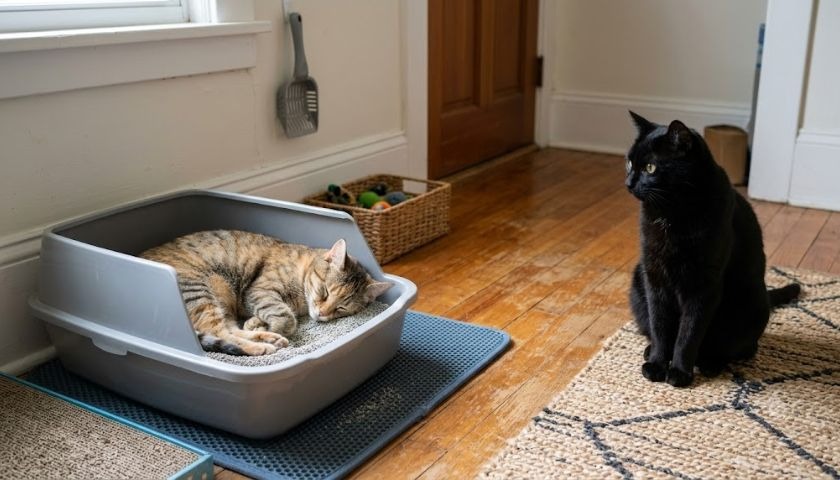
In multi-cat homes, a dominant cat may sleep in the litter box to claim it. It’s territorial behavior, plain and simple. It’s territorial behavior: lying in the box blocks access and signals ownership.
It may also mean you do not have enough litter boxes, which can lead to conflict. There is a clear difference between a cat that sits in the litter box for a moment and one that lies down to sleep.
Tension between cats may also show up in staring, blocking hallways, or guarding food and water.
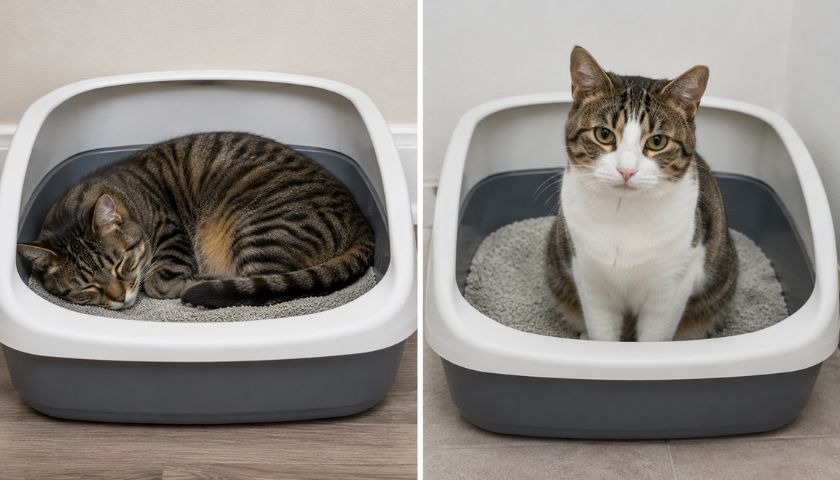
It’s important to distinguish between a cat that briefly sits in the litter box and one that fully sleeps there.
A cat that sits in the box may be:
This may seem unusual, but it is not always serious.
However, a cat that curls up and sleeps in the litter box is showing something more serious. It usually points to pain, fear, or a strong need for security.
If your cat is straining in the box and producing no urine, that’s an emergency, especially for male cats. Get to a vet immediately.
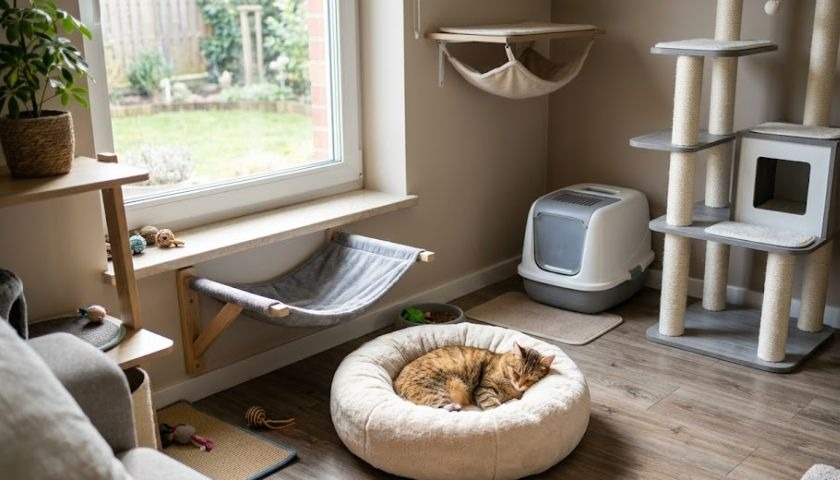
Once you understand what’s driving the behavior, there are clear steps you can take to address it.
Anesthesia and pain medication can leave a cat feeling disoriented for hours or a couple of days after a procedure. The litter box has familiar smells and a contained shape that can feel grounding when they’re not quite themselves. It usually passes as they recover.
No. Litter is not meant to be a place to sleep. Being around waste, bacteria, and dust all the time can make skin irritation and urinary problems more likely.
Many rescue cats spent significant time in shelters where a cage offered very little private space. The litter box was often the only corner that felt like theirs. That habit can follow them home. Give it time, keep the routine consistent, and add some dedicated hiding spots around the house.
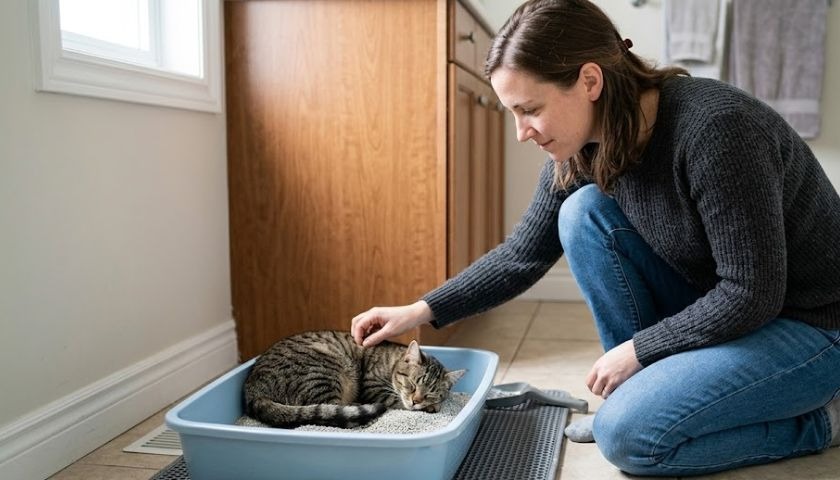
A cat snuggled in a litter box isn’t being difficult. They’re not dirty or strange. They’re communicating something they have no other way to say out loud. This behavior is a message, whether it comes from joint pain, confusion, or a need to feel safe. Your job is to notice it and figure out what your cat needs.