
You settle onto the couch with a soft blanket, and your cat climbs onto your lap. Before long, their front paws begin pressing into the fabric, one after the other. It looks sweet until those little claws start pulling at the threads or poking through your clothes.
So, why do cats knead blankets? The behavior often starts in kittenhood and can continue into adulthood. It may be linked to comfort, scent communication, nesting instincts, and relaxation. Notice when your cat kneads and whether their body looks relaxed. These clues can help you understand the habit and spot behavior that deserves closer attention.
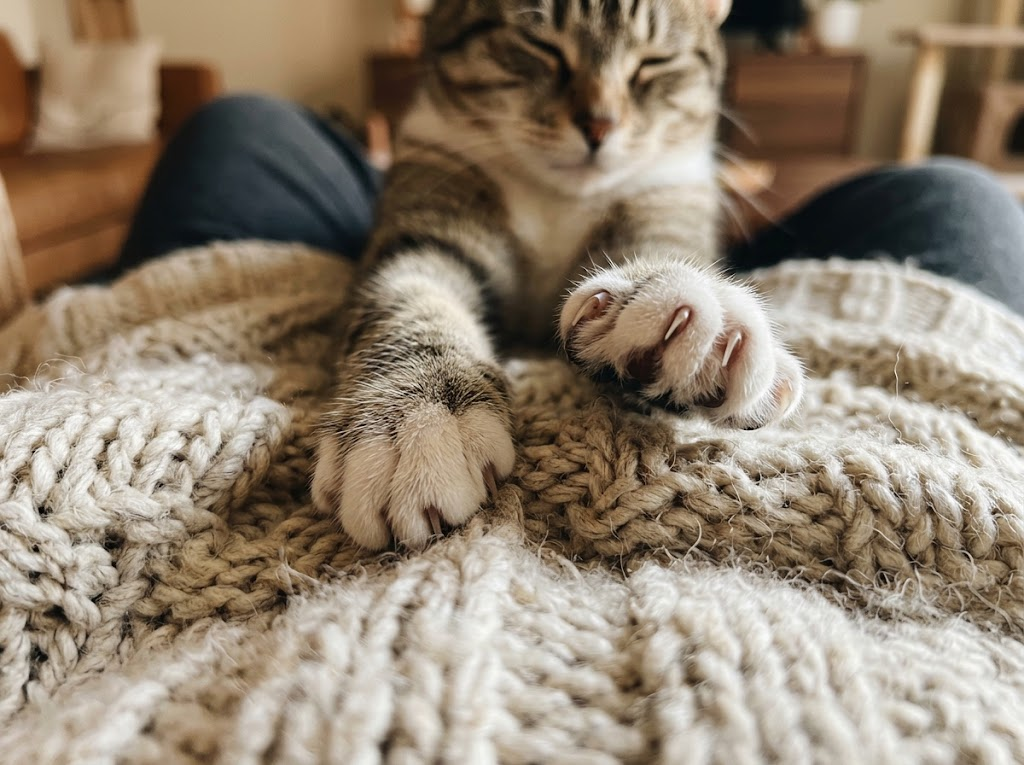
Kneading is the repeated motion of pushing the front paws against a soft surface. Some cats alternate their paws slowly, while others press both paws down with their claws partly extended. You may also notice purring, half-closed eyes, or a little drooling.
Cats often knead when settling down to sleep, sitting on familiar bedding, or relaxing beside someone they trust. Cats knead for different reasons, but the behavior is usually harmless.
Kneading can have several causes. Your cat may knead for several reasons, depending on the situation and their body language.
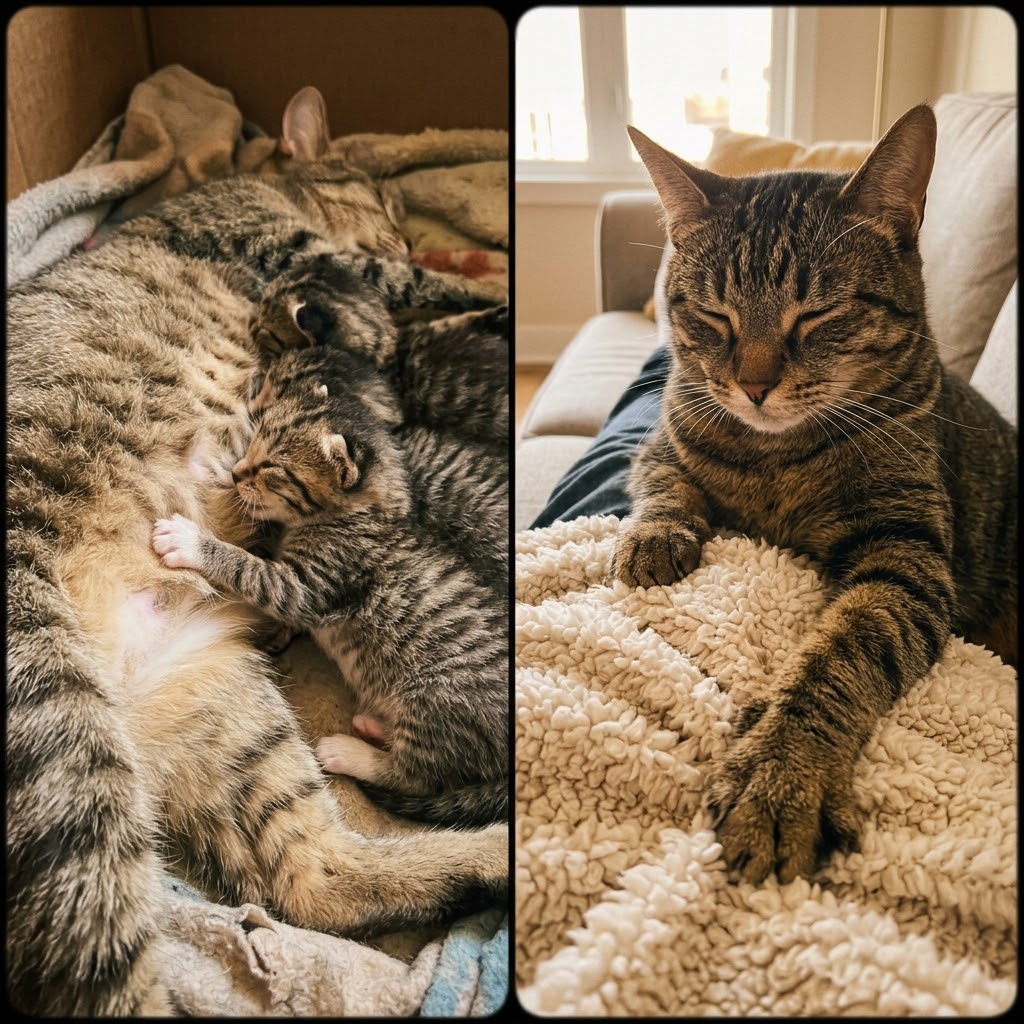
One of the most widely accepted explanations for kneading comes from nursing. Kittens press their paws against their mother’s belly while feeding. This rhythmic movement helps stimulate milk flow.
Many cats continue kneading after they grow up. Pressing their paws into a soft blanket may bring back the soothing sensations associated with nursing. This could explain why some cats purr, drool, or appear almost sleepy while making biscuits.
If your adult cat kneads a fleece throw before settling down, the movement may simply be a familiar comfort habit.
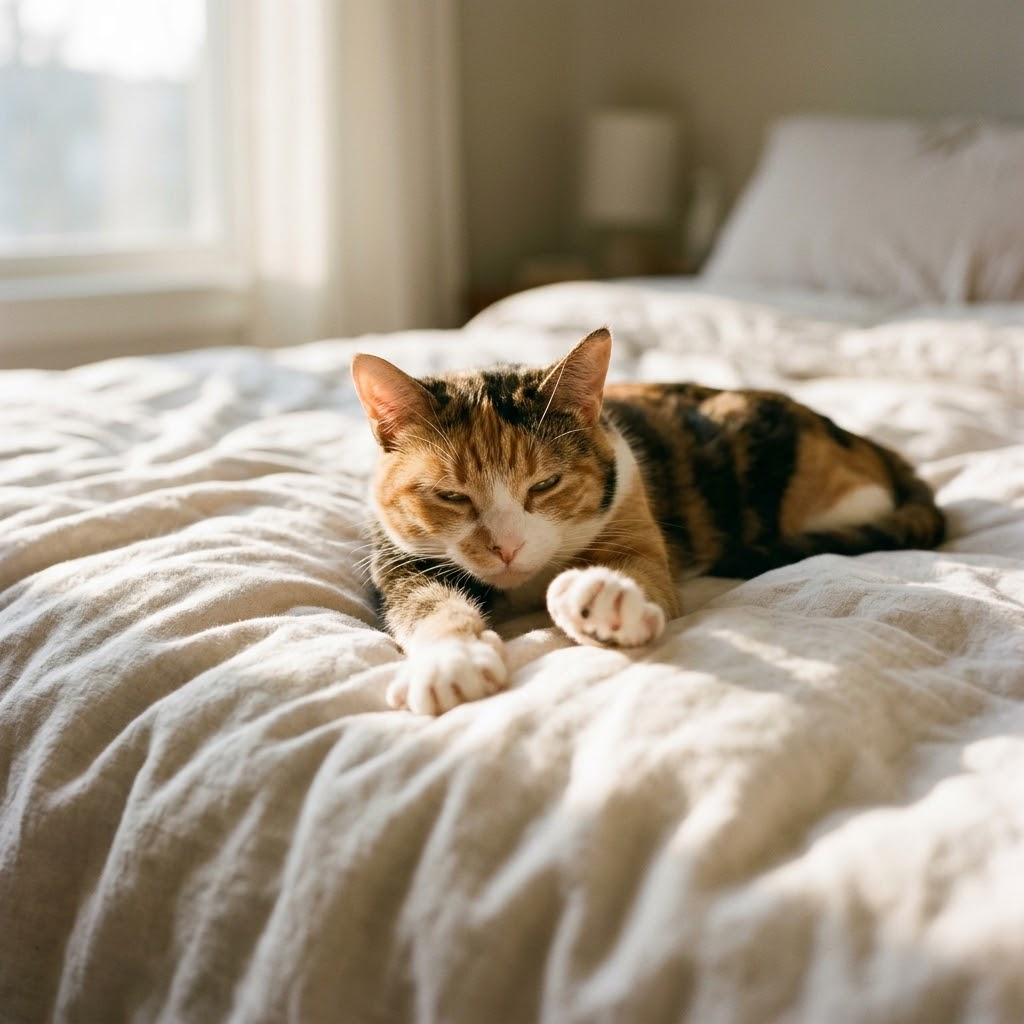
Cats often knead when they’re relaxed, especially on a familiar bed, blanket, or person’s lap. The soft texture feels comfortable beneath their paws, while a familiar scent can make the spot even more inviting.
Look at the rest of your cat’s body language. Loose muscles, relaxed ears, slow blinks, and gentle movements usually suggest that your pet is comfortable. Some cats knead just before taking a nap.
However, kneading alone doesn’t prove that a cat is happy. Other signs, such as hiding or restlessness, may tell a different story.
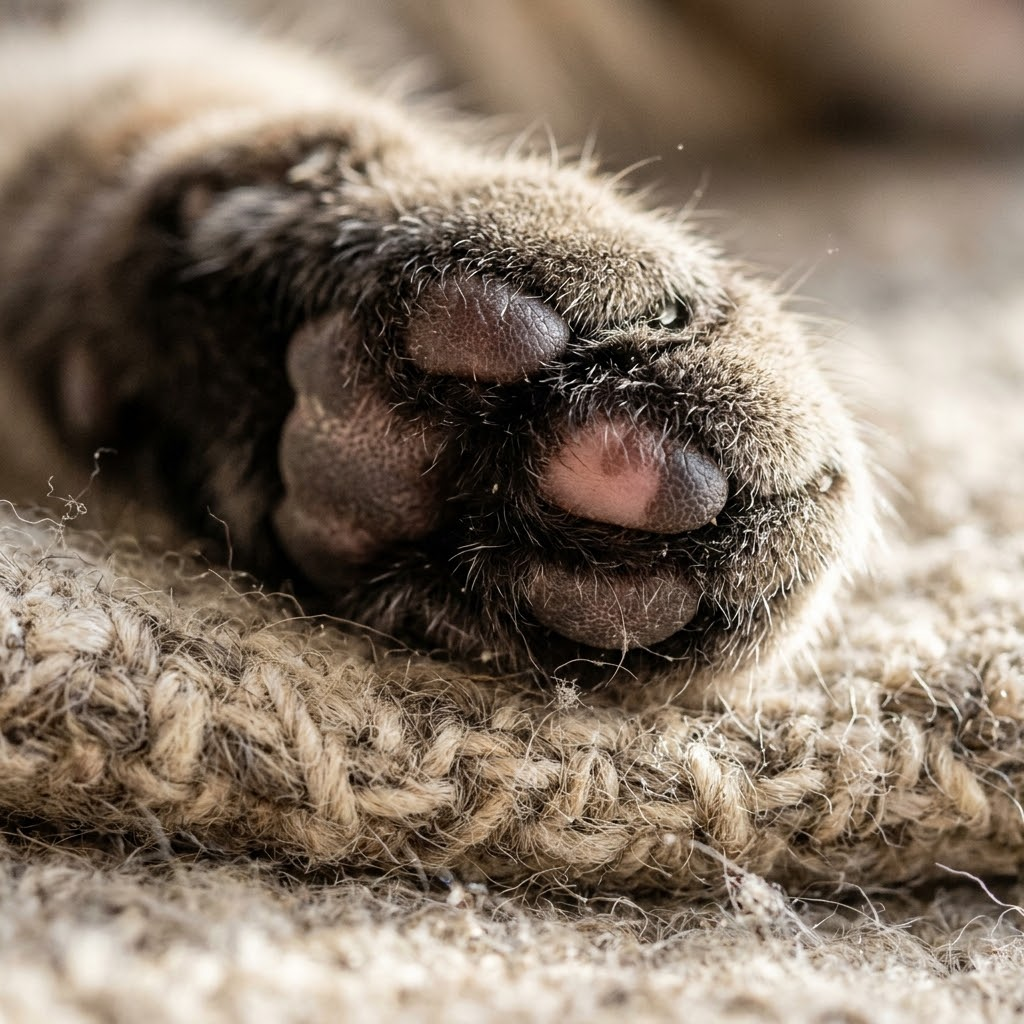
Scent may be one reason cats knead familiar blankets. Cats have scent glands in their paw pads, so the motion may leave scent cues on the surfaces they touch.
This offers one possible explanation for why my cat is kneading my blanket. Your cat may be leaving familiar scent markers in a place where it spends a lot of time.
Although you may not detect these scent cues, they can make a resting spot feel more familiar and comforting to your cat. It’s difficult to know whether scent marking motivates a particular cat, and kneading may serve other purposes at the same time.
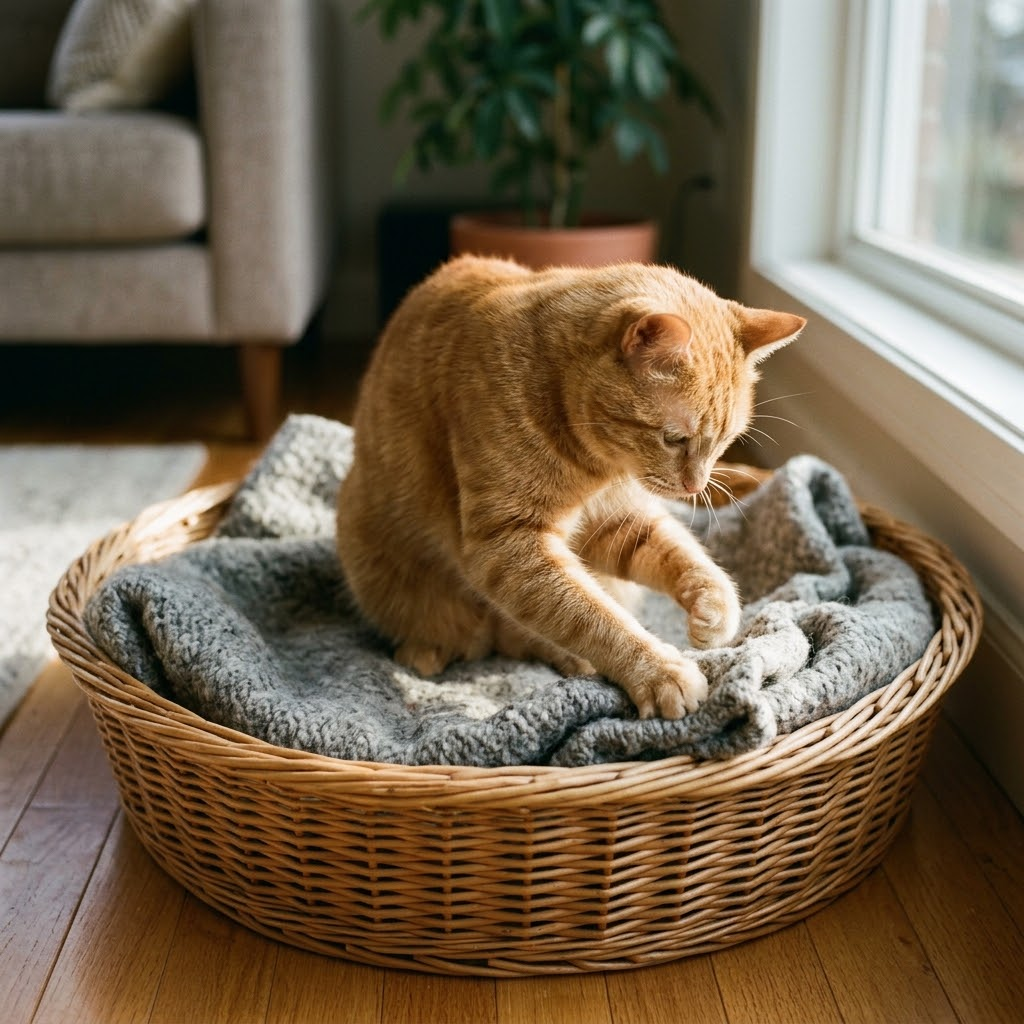
Cats sometimes circle, scratch, or press their paws into a surface before lying down. Kneading may be part of this settling-in routine.
Their wild ancestors may have pressed down vegetation or other loose material before resting. Although the exact connection between modern kneading and this ancestral behavior isn’t certain, preparing a resting spot is a plausible explanation.
Watch what happens before your cat lies down. If they walk around a blanket, press their paws into one corner, turn in a circle, and finally curl up, kneading may be part of their bedtime routine.
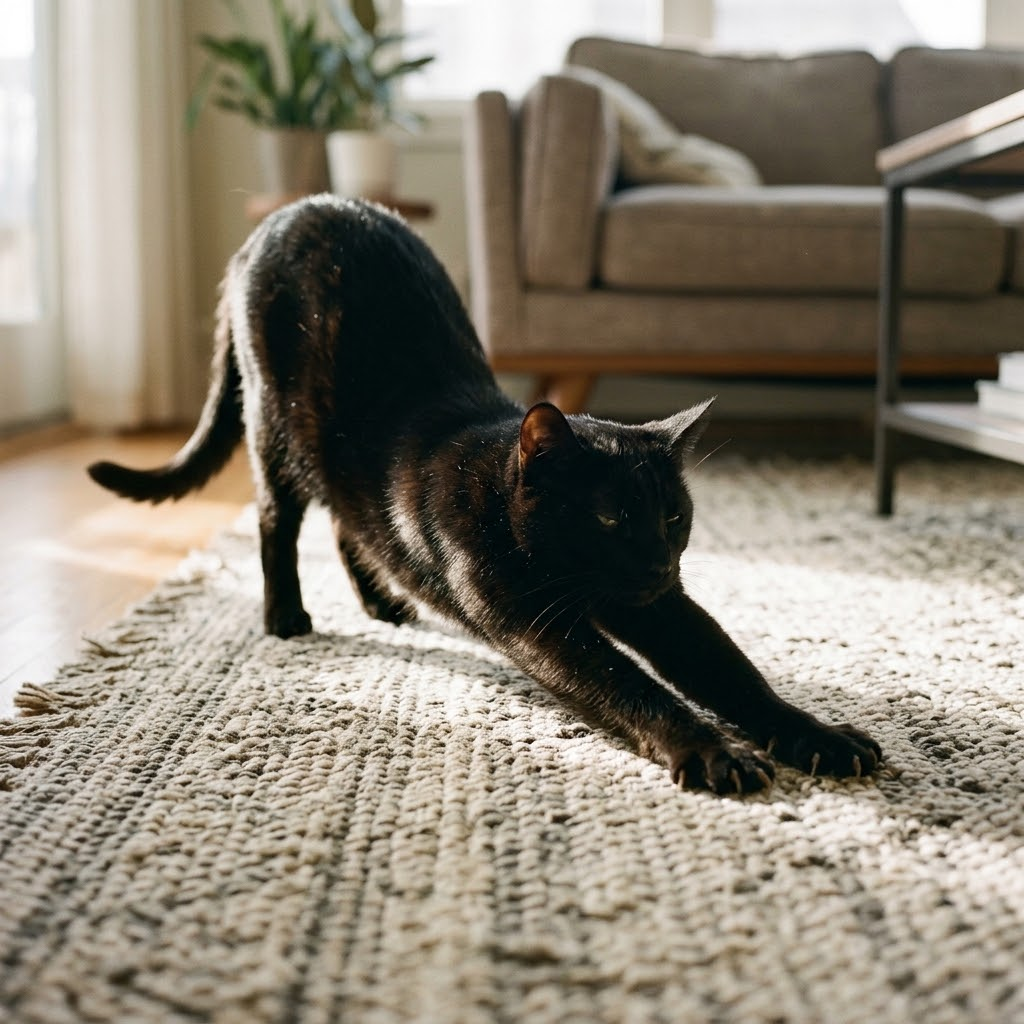
Each push engages the toes and front legs, while extending and retracting the claws adds another small movement.
Some cats knead after waking up or stretching out on the couch. Others combine kneading with a long body stretch before lying down.
The movement may accompany stretching and getting comfortable after a period of rest. You don’t need to interpret every kneading session as exercise or assume that stretching is its main purpose.
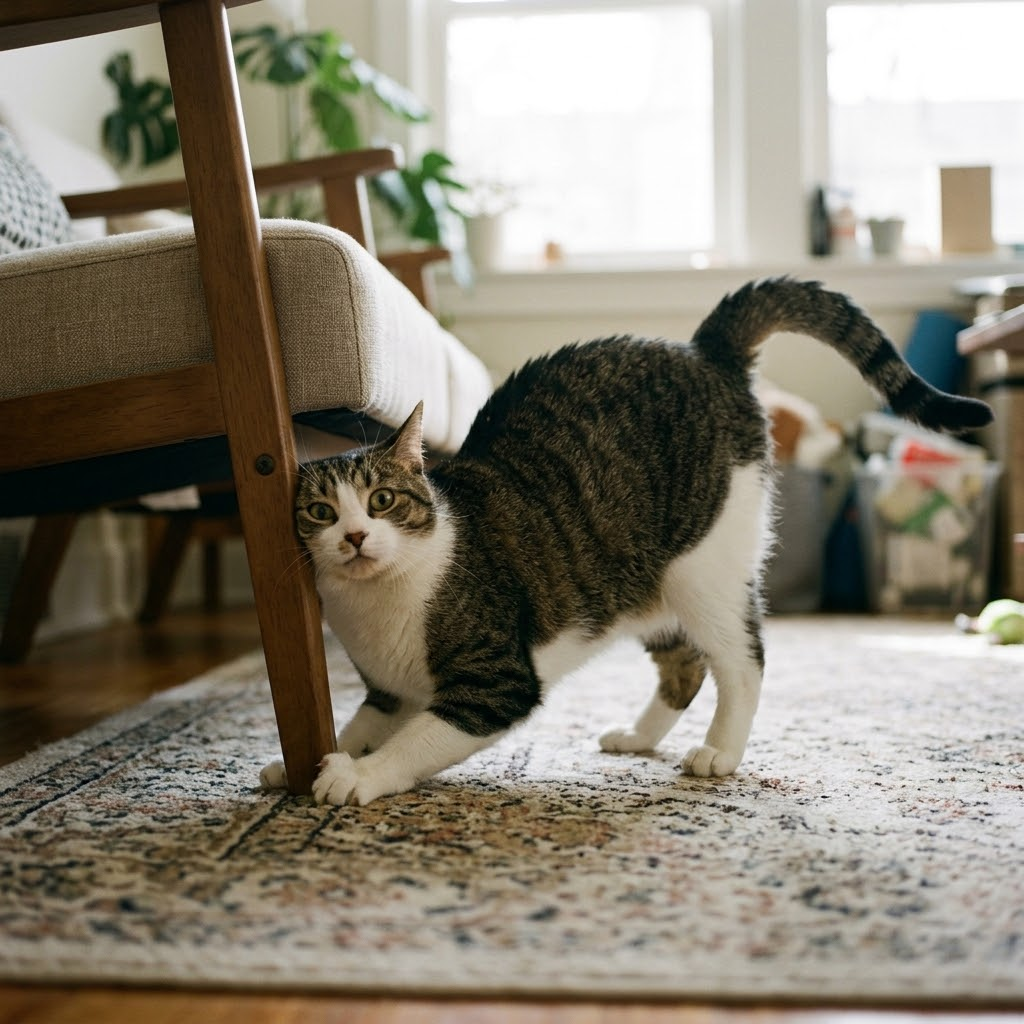
An unspayed female cat may behave differently when she is in heat. She might become more vocal, rub against furniture, roll on the floor, raise her hindquarters, or act more restless than usual.
Some cats may also knead more during this period, but kneading alone is not a reliable sign of heat. Look for the other behavioral changes rather than relying on paw movements to identify the cause.
If you aren’t planning to breed your cat, talk to your veterinarian about spaying. Your vet can explain the benefits, timing, and health considerations relevant to your pet.
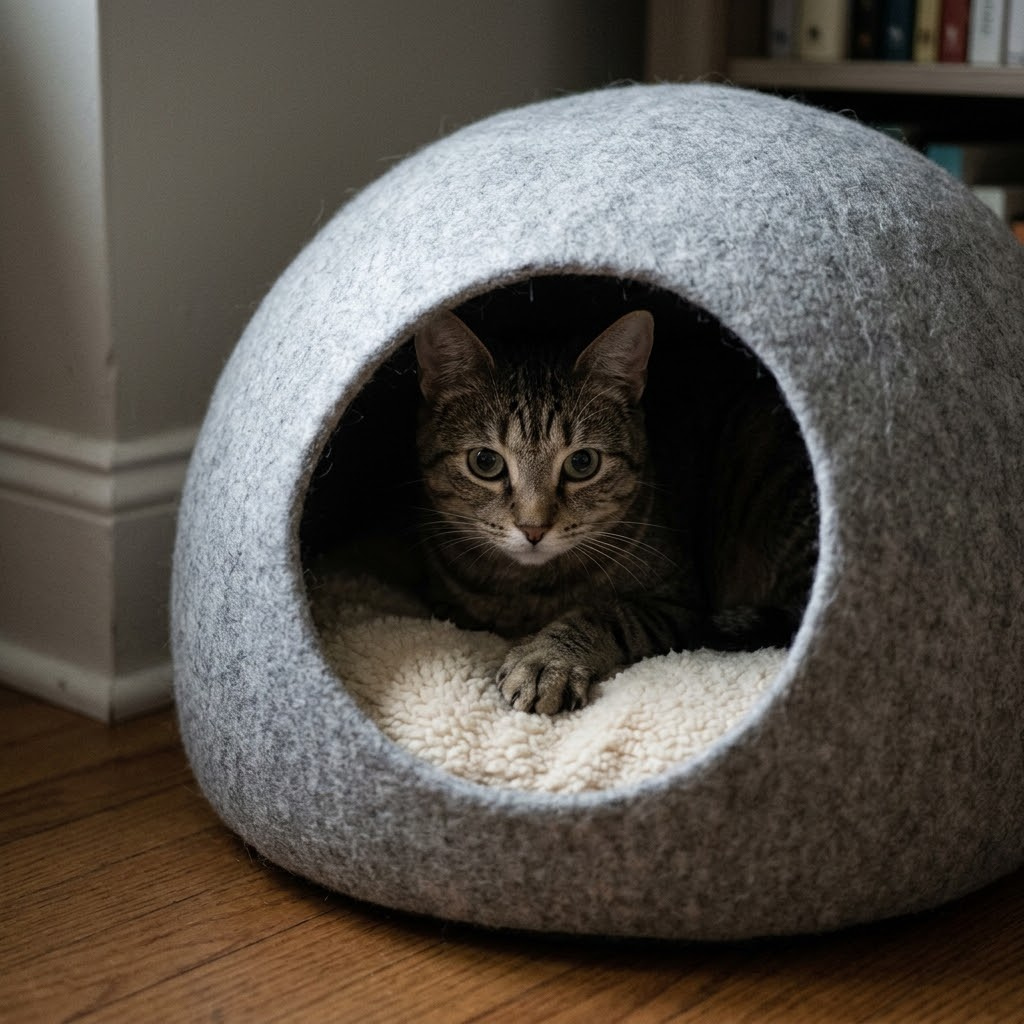
Repetitive movements can sometimes help cats settle themselves. Kneading may serve this purpose when a cat encounters a change in its surroundings, such as moving house, meeting a new pet, or hearing unfamiliar noises.
Pay attention to changes in routine. A cat that kneads gently on a familiar blanket before sleeping is probably following a normal habit. If your cat starts hiding more often, pacing, eating less, or grooming excessively, look beyond the kneading itself.
Kneading alone doesn’t establish that a cat is anxious. Changes in your cat’s appetite, grooming, sleep, and social behavior offer clearer clues about how well they’re coping.
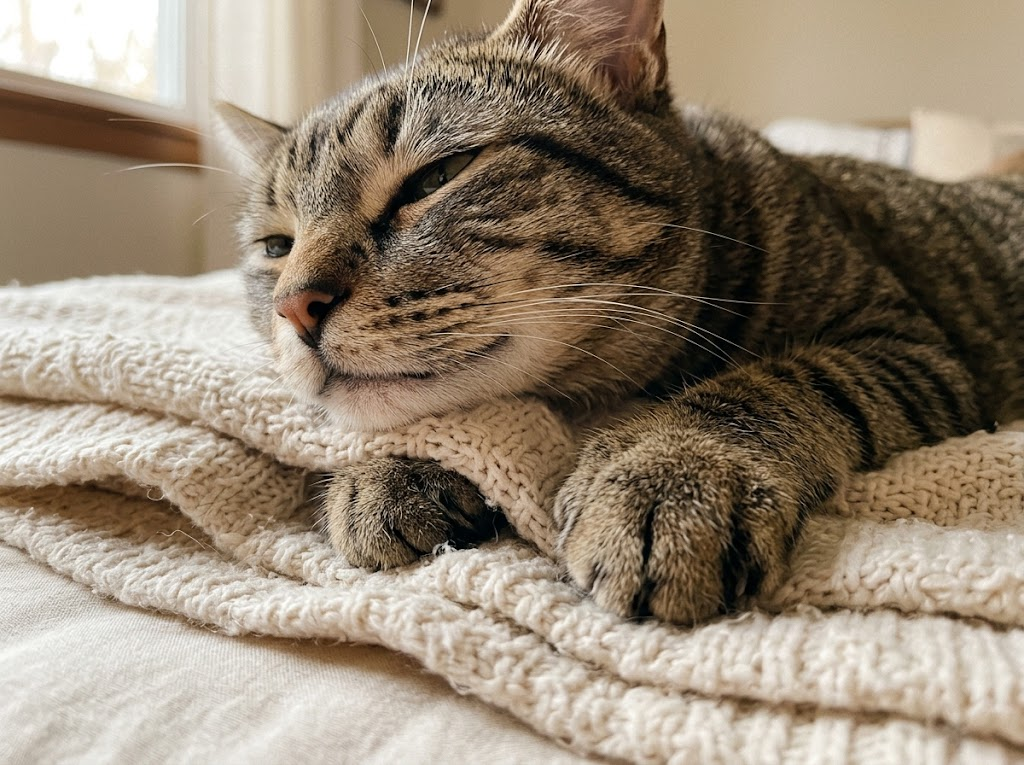
Purring and kneading often occur together when a cat is relaxed. Your pet may press their paws into your blanket, purr softly, and gradually settle down for a nap.
Still, purring isn’t a reliable measure of happiness on its own. Cats can also purr when they’re uncomfortable, stressed, or in pain.
Check for these signs of relaxation:
If your cat appears tense, hides, or behaves unusually, pay attention to those signs instead of assuming the kneading means everything is fine.
You can also learn more about why cats chatter at birds to understand another common feline behavior.
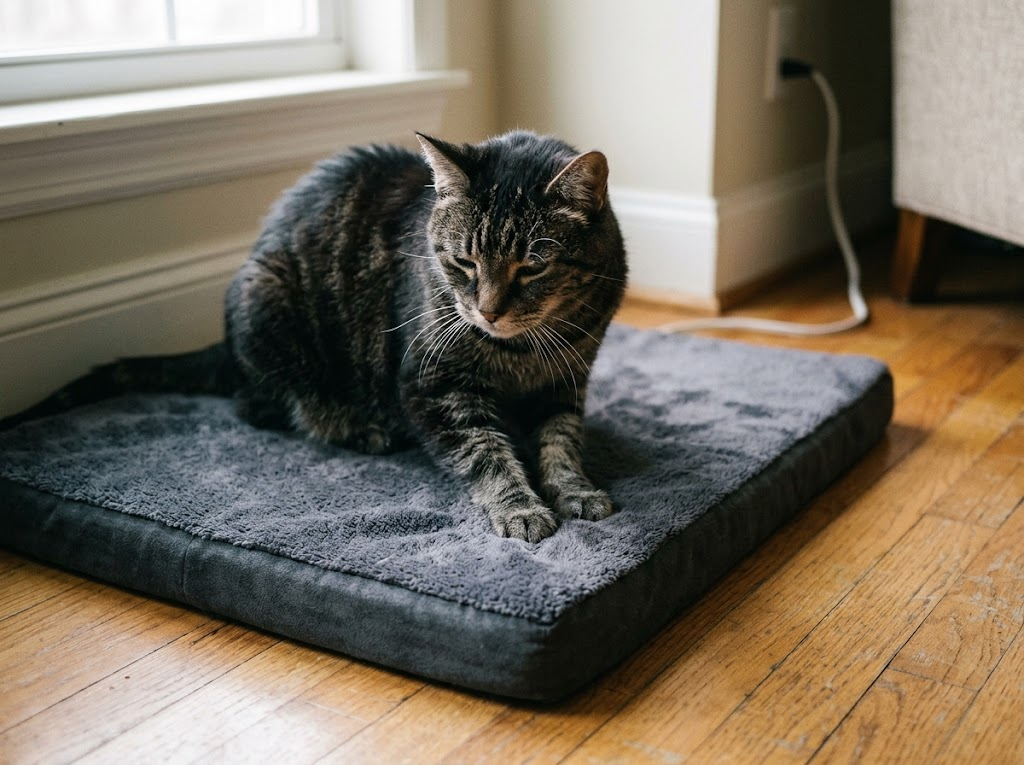
Most cats continue kneading into adulthood, although the frequency varies. Some make biscuits every day, while others rarely do it.
Early experiences, personality, and individual preferences may influence how often a cat kneads. A cat that enjoys soft bedding may knead frequently, while another may prefer to settle down without the extra movement.
You don’t need to discourage an adult cat from kneading simply because the behavior has continued since kittenhood. If an older cat suddenly stops or seems uncomfortable while kneading, ask your veterinarian whether pain or stiffness could be involved.
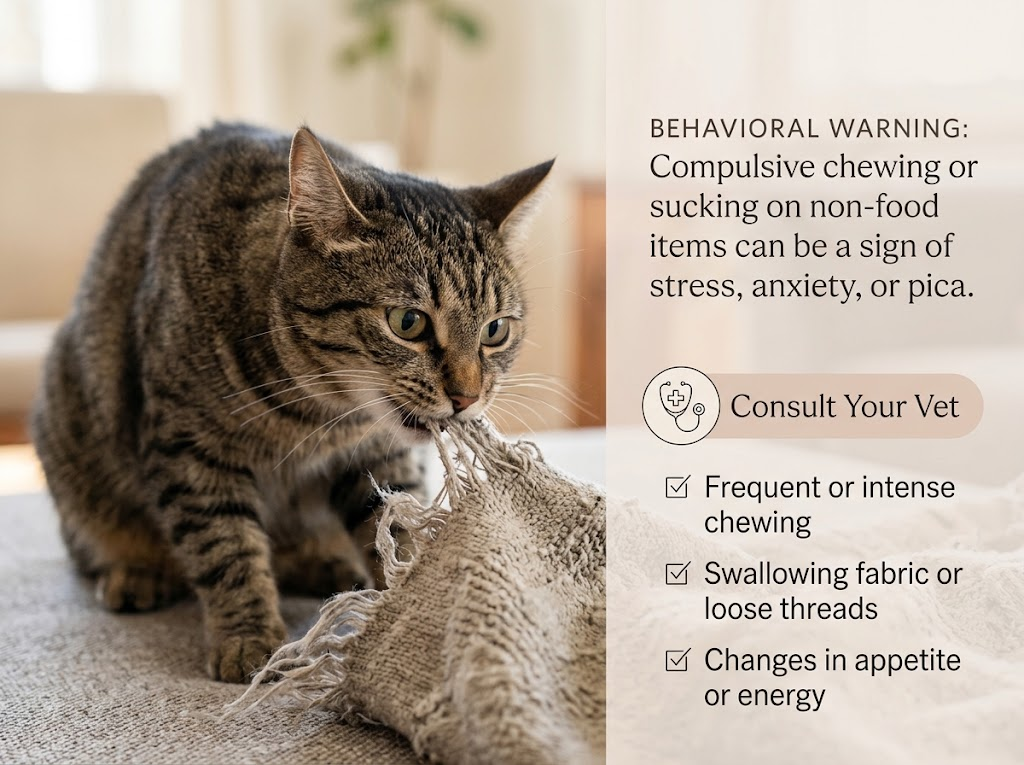
Kneading is usually harmless, but changes in the behavior deserve attention when they occur alongside other symptoms.
Watch for these signs:
Contact your veterinarian if the behavior changes suddenly or your cat appears distressed. If your pet has swallowed fabric, seek veterinary advice promptly rather than waiting for symptoms to appear.
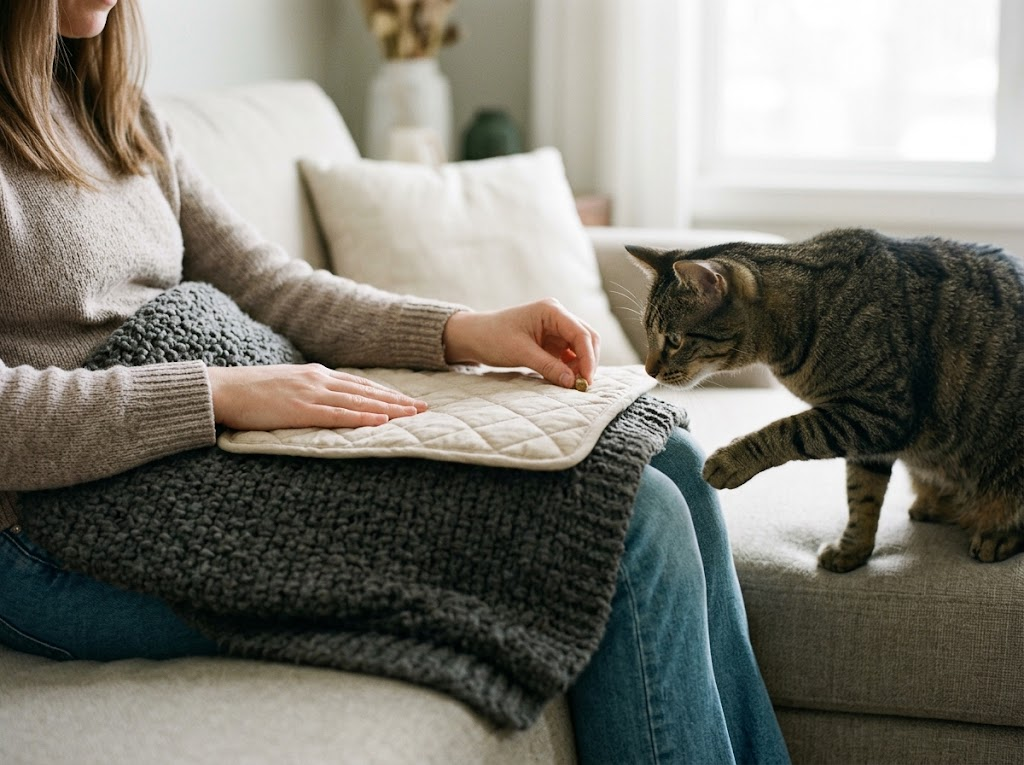
Usually, no. Kneading is a normal behavior, and punishing your cat for it can cause unnecessary stress. If the claws are damaging your bedding or scratching your skin, redirecting the behavior is a better approach.
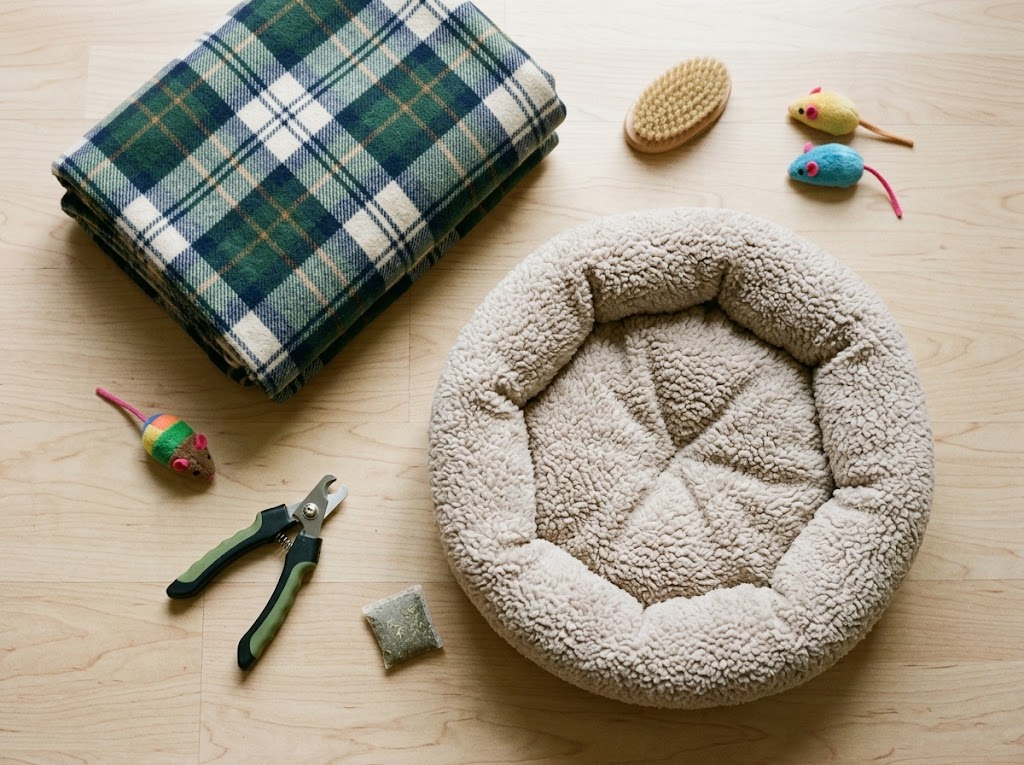
Try these approaches:
If the kneading hurts, calmly stand up and move your cat to another comfortable spot. With consistent redirection, your cat may begin choosing the dedicated mat instead of your favorite throw.
Yes. Many cats continue kneading from kittenhood through adulthood. It’s usually harmless unless it changes suddenly or occurs alongside signs of distress, pain, or fabric ingestion.
A widely accepted explanation is the nursing instinct carried over from kittenhood. Scent communication and preparing a resting spot may also play a role.
Your cat may be comfortable and settling down to rest. Pay attention to their posture and behavior, since purring can also occur when a cat is stressed or in pain.
Some cats knead less as they age, while others continue throughout their lives. If your cat’s kneading changes suddenly and they seem stiff or uncomfortable, consult your veterinarian.
Not usually. Protect your bedding, keep your cat’s nails trimmed, and offer a dedicated surface such as a cat bed mat. Avoid punishment, which can create unnecessary stress.
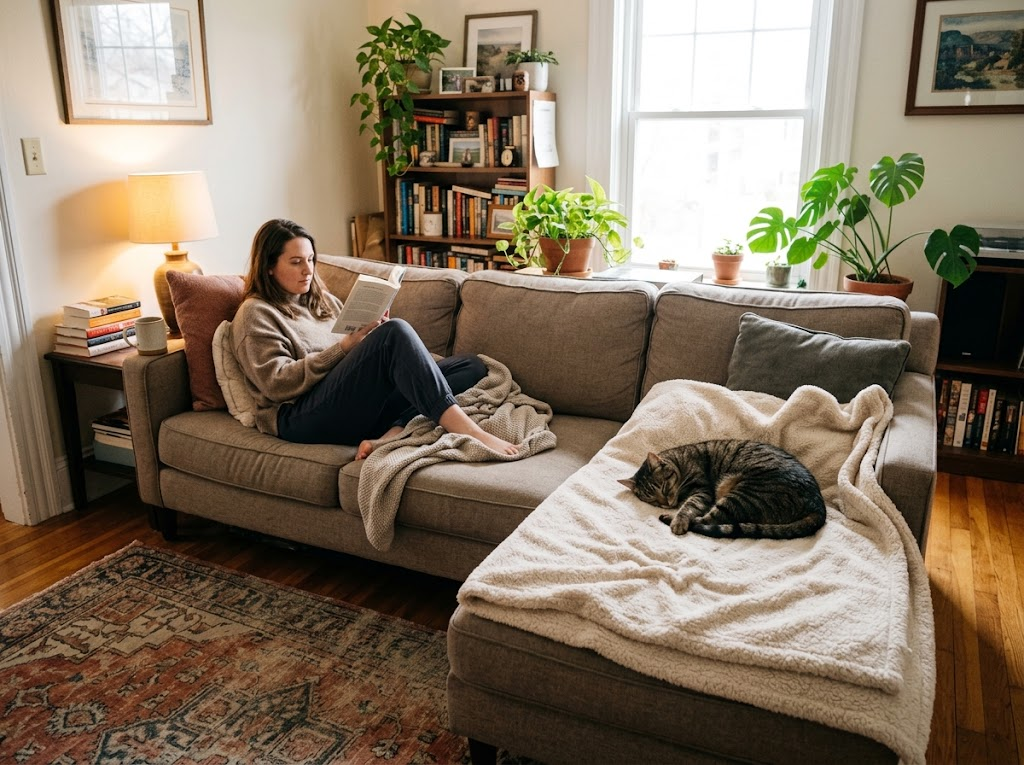
Most cats knead blankets without any cause for concern. Provide your cat with a comfortable place to knead, protect delicate fabrics, and watch for sudden behavioral changes. If your cat chews and swallows fabric or seems uncomfortable, contact your veterinarian. A few snags in a blanket are usually a small price to pay for a comfortable cat.