
You’re sipping your coffee when you hear it: a fast, clicky stutter from the window. Your cat is crouched low, jaw trembling, eyes fixed on a sparrow. Is she talking to it? Is she annoyed?
So, why do cats chatter at birds? Nobody knows for sure. The main theories involve hunting instinct, excitement, and frustration.
That little “ekekek” sound is usually normal when it happens during bird-watching. Still, context matters. Here’s how to read your cat’s signals, spot changes worth checking, and make window time more fun.
Cats chatter at birds because seeing prey seems to switch on their hunting instincts. The sound could stem from excitement, frustration, or both. Some experts also think cats may copy bird sounds, though that idea remains unproven.
Your cat might spend all day napping on a soft bed. Then a bird lands outside, and suddenly she is wide awake. Her eyes lock onto it. Her body gets ready to chase. The instinct is still there, even if she has never had to hunt for food.
The glass changes the situation. The bird is close enough to watch but impossible to reach.
Researchers have not settled on one clear reason. Cats Protection says experts don’t know for certain why cats chirp and chatter at birds. They do share a few theories behind cat chattering.
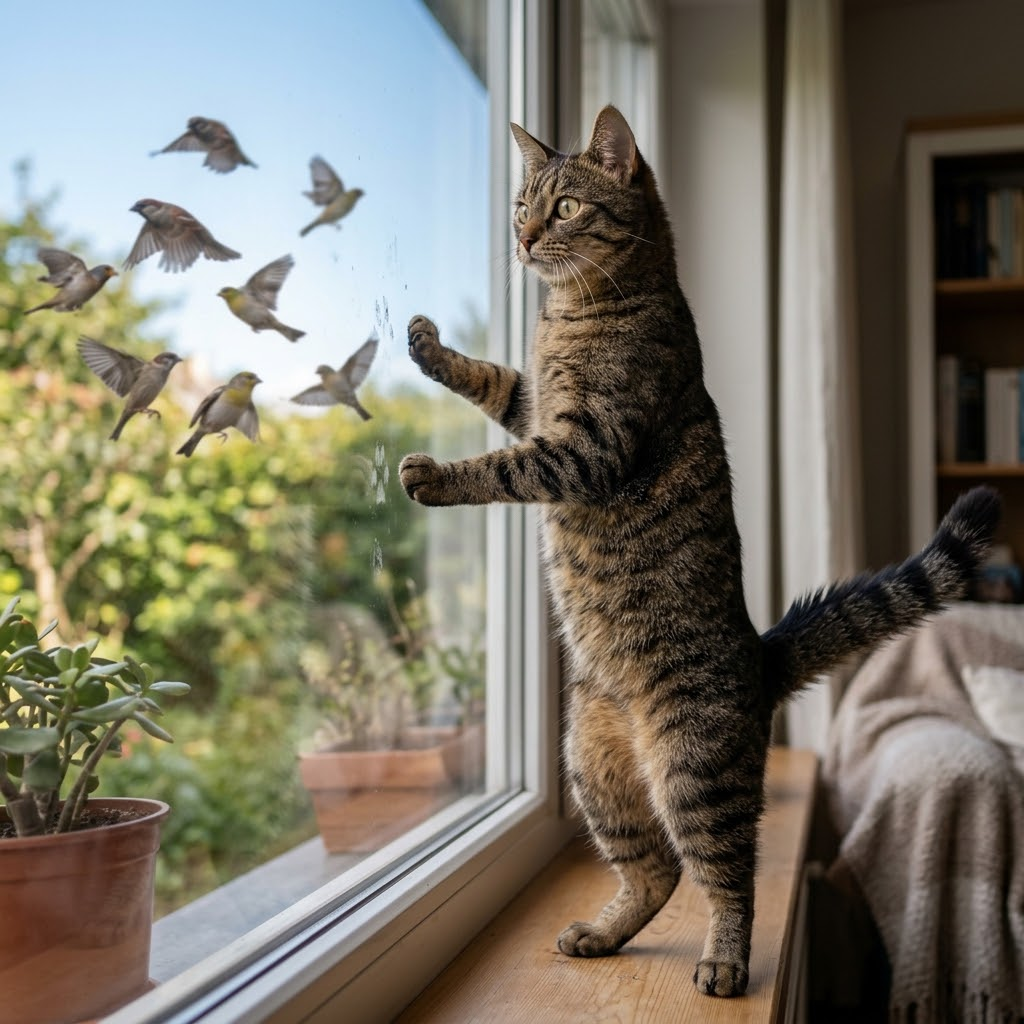
Sometimes the simplest explanation is that your cat is extremely excited. A bird outside gives her something worth watching. Her attention becomes laser-focused. She may crouch, lean toward the glass, twitch her tail, or make that rapid little chattering sound.
That does not necessarily mean she is upset. Some cats look almost frozen when they are watching prey, as if they are trying not to miss a single movement.
You might see her ears pointing forward and her eyes staying fixed on the bird. The moment the bird flies away, she may simply turn around and go back to whatever she was doing.
In that case, the chattering may simply reflect the thrill of focusing on potential prey.
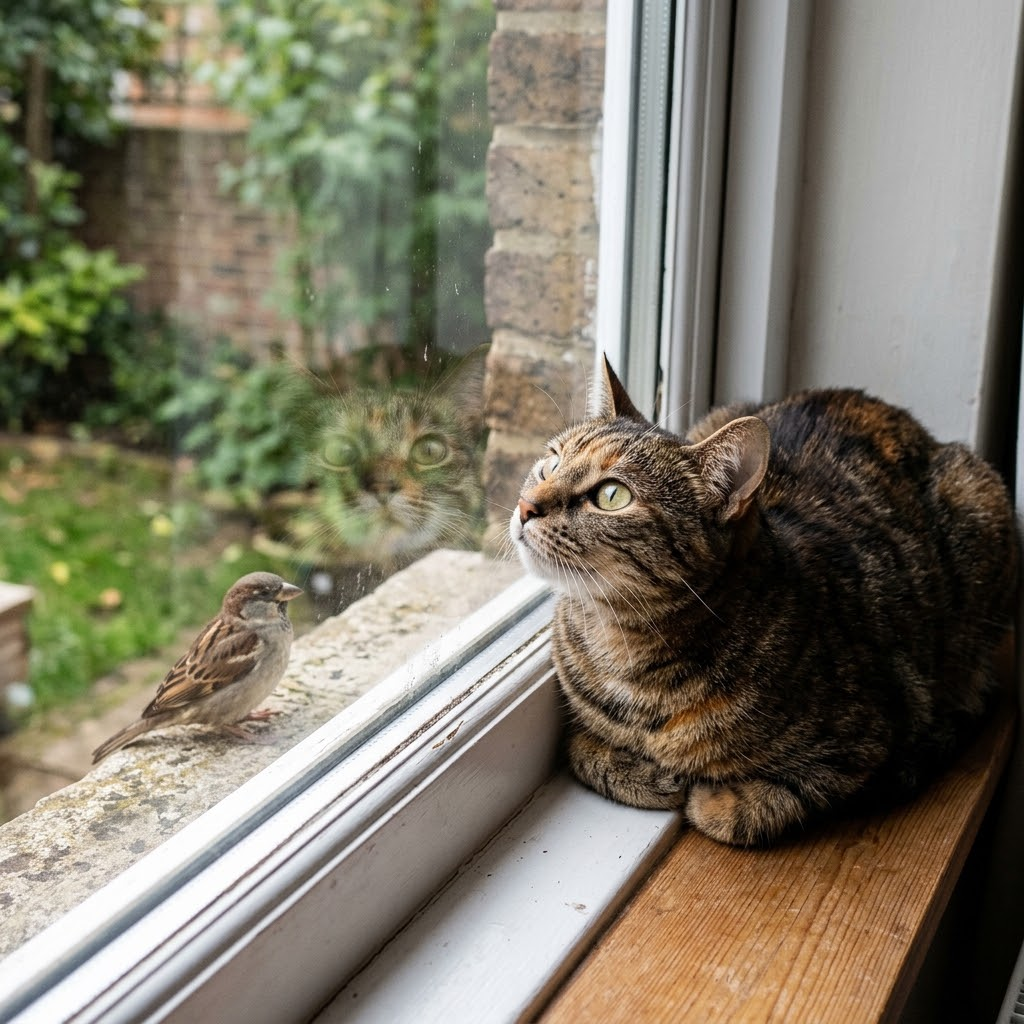
There is another side to it. Your cat can see the bird. She may even be close enough to follow every hop and wing movement. But she cannot get through the window. That can be frustrating.
Her hunting response has kicked in, but there is no chase and no pounce. Chattering may be one way your cat releases that pent-up tension. You may notice it more when a bird stays near the window instead of flying away quickly.
Watch what happens after the bird leaves. If your cat settles down almost immediately, the frustration was probably brief. If she keeps pacing, staring outside, or vocalizing, she may still be worked up.
However, no single behavior confirms that your cat is frustrated. You have to look at the whole situation.
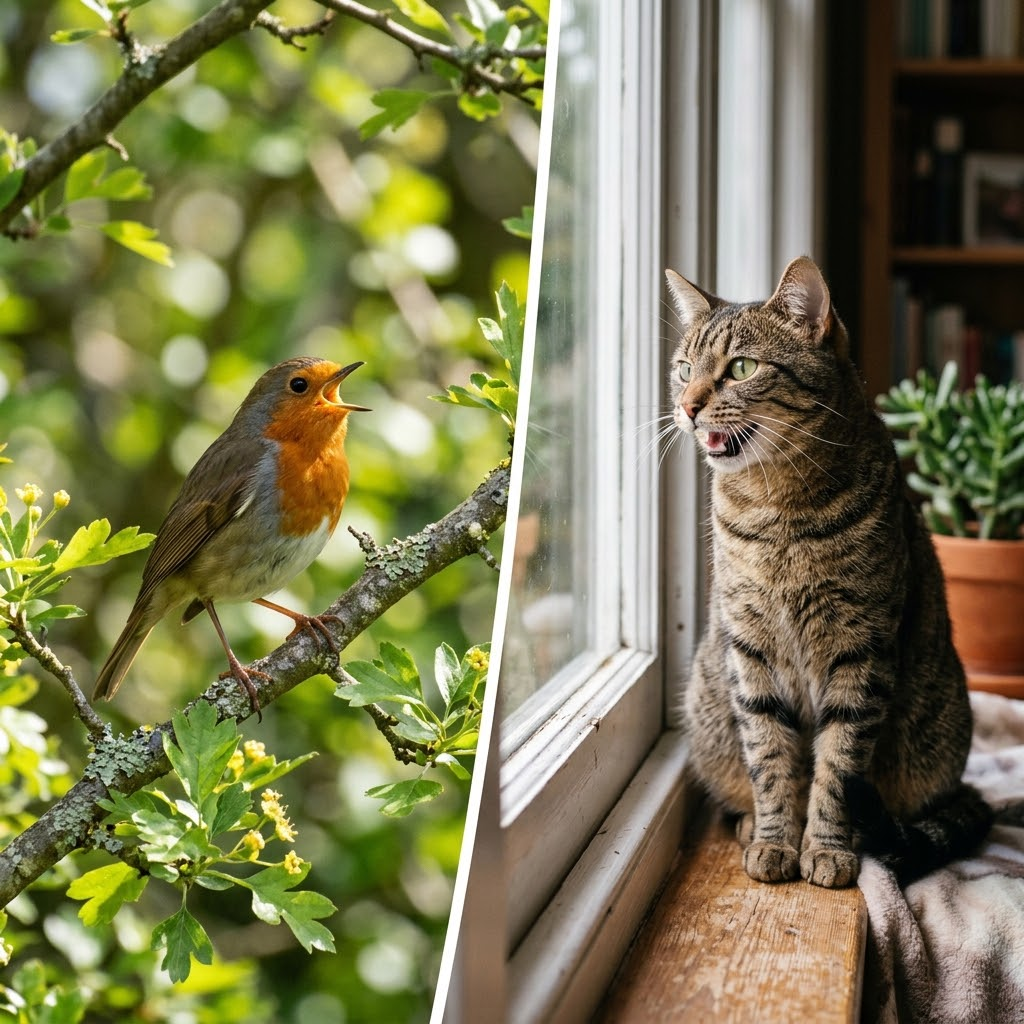
Then there is the idea that cats are copying their prey. A cat’s chirp can sound surprisingly bird-like. That has led some people to wonder whether cats use these sounds to imitate birds or other small animals.
It’s an interesting theory, but there’s little evidence that house cats deliberately mimic prey sounds to deceive them. Your cat is probably not trying to pull off a clever bird impression.
Another explanation focuses on the jaw movement itself. It may resemble the quick bite cats use when killing prey. Cats Protection considers that explanation unlikely, so it is better treated as an idea rather than a proven answer.
You might hear several different noises when your pet stares out the window. Cat chattering, cat chirping, and cat clicking are related, though people often use the terms differently.
Understanding what cat chattering means can help you interpret your cat’s mood more accurately. Some owners call the main sound an “ekekek” noise because of its quick, repetitive rhythm.
The noise is only one clue, though. What your cat is watching and how she behaves at the same time can tell you much more. This is similar to discovering why cats purr when you pet them. Context matters with both behaviors.
These terms overlap, and every cat uses sounds a little differently. Still, here’s a general guide to the noises owners often notice.
| Sound Type | What It Sounds and Looks Like | Common Context |
| Cats Chattering | Fast, rhythmic “ekekek” with a trembling lower jaw. | Watching an unreachable bird or squirrel outside. |
| Cat Chirping | A high-pitched, short trill or peep with minimal jaw movement. | Seeing prey, greeting a person, or asking for attention. |
| Cat Clicking | Sharp, repeated jaw or teeth sounds. | Intense focus on a fast-moving insect, toy, or other prey-like movement. |
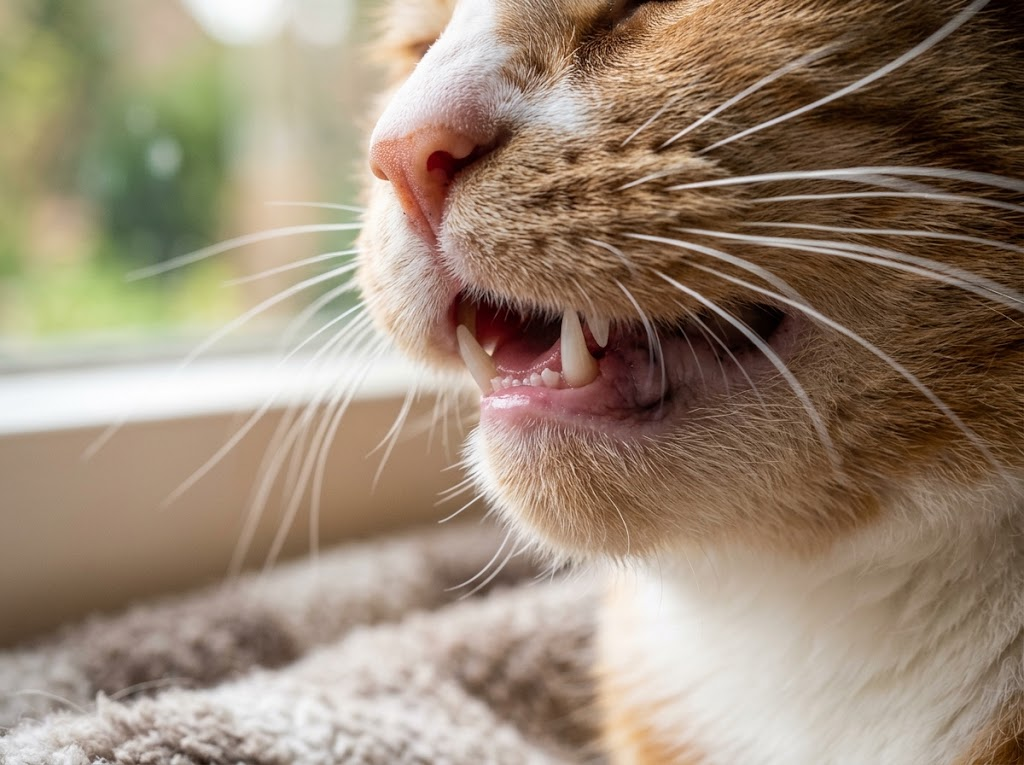
When you see your cat chattering teeth at window glass, look at everything she is doing, not just her mouth. She may crouch close to the window with her eyes fixed on a bird. Her whiskers can point forward. Her ears may stay aimed at the sound outside. Sometimes the tip of her tail flicks back and forth.
It can look intense because it is. Her hunting instinct is fully engaged, but the window stops her from following through. That may explain why some cats seem to get more animated the longer a bird stays nearby. They can watch and track their target but never get the opportunity to chase it.
Some behaviorists describe this as a possible form of displacement behavior — an action that can appear when an animal is caught between conflicting drives, such as the urge to chase and the inability to reach the prey. It’s a useful way to think about it, though researchers have not proven it is the exact cause.
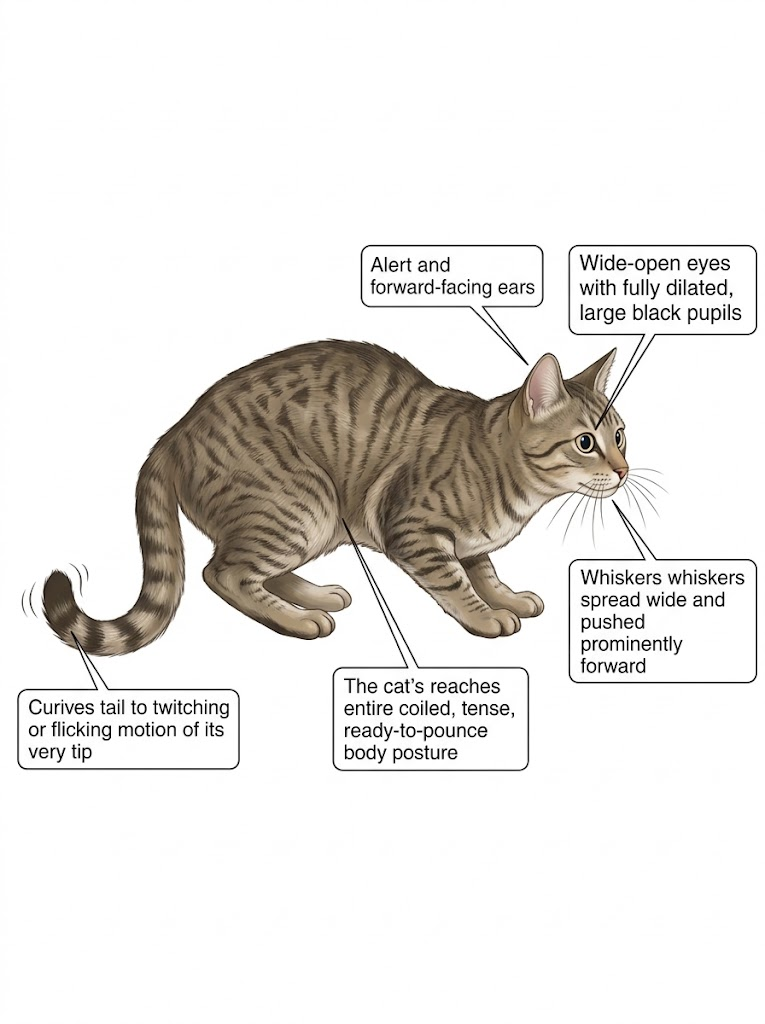
The chatter itself does not tell you everything. Look at what the rest of your cat is doing.
Don’t try to decode one signal in isolation. A twitching tail means little without knowing what the rest of the cat is doing.
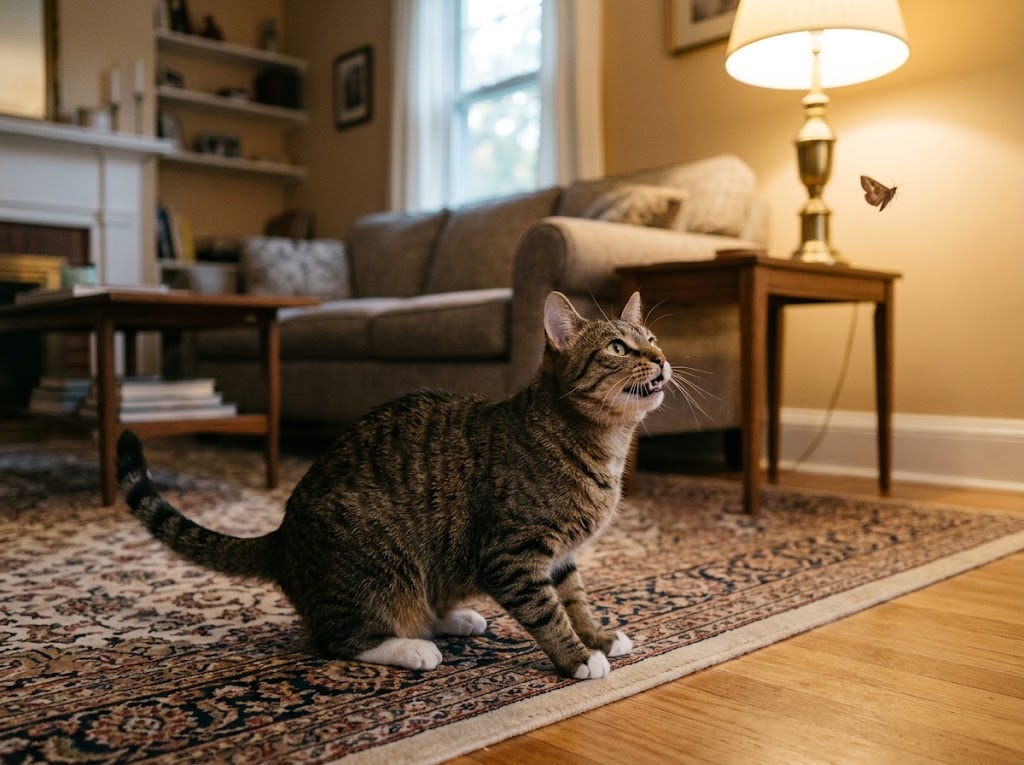
Birds aren’t the only trigger. Cats may chatter at squirrels, other rodents, flies, moths, and toys that move like prey. Some owners also notice a response to tiny moving specks, such as dust in a sunbeam, though that trigger is less well documented.
And not every chirp is about hunting. A cat may make a short chirrup when you come home or when she wants your attention. Hill’s explains that cats chirp to greet and ask for attention.
Context makes the difference. A cat walking toward you and rubbing against your legs is probably looking for contact. A cat crouched at the window is focused on whatever is moving outside.
If your cat never chatters, that’s fine too. Not every cat makes this sound.
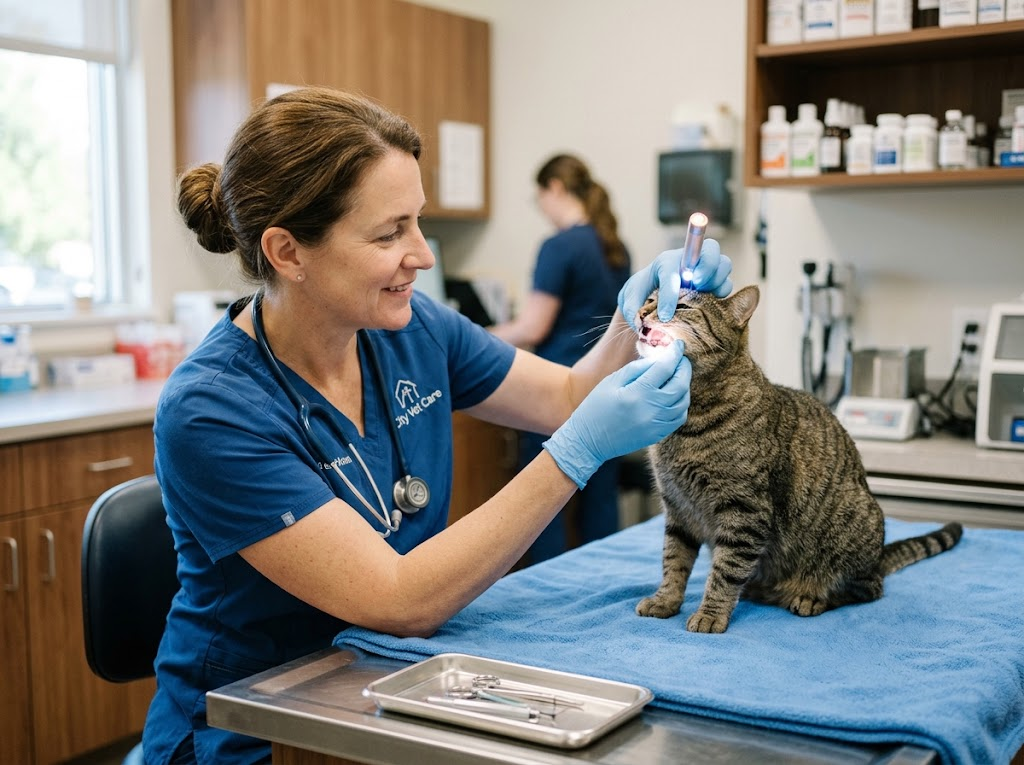
For most cats, chattering is completely normal. A short burst at a bird followed by a return to normal behavior is usually nothing to worry about.
Still, a sudden change deserves some attention. You know your cat’s usual habits, so you’ll probably notice when something feels different.
It’s smart to check in with your vet if you notice any of these:
Mouth pain or a nerve problem can sometimes look like chattering. Your vet can rule those problems out. It’s better to have an unusual new behavior checked than to spend days wondering what might be causing it.
Window watching can provide useful mental stimulation for indoor cats. But sometimes your cat needs somewhere to put all that hunting energy after the bird disappears.
A few simple changes can help.
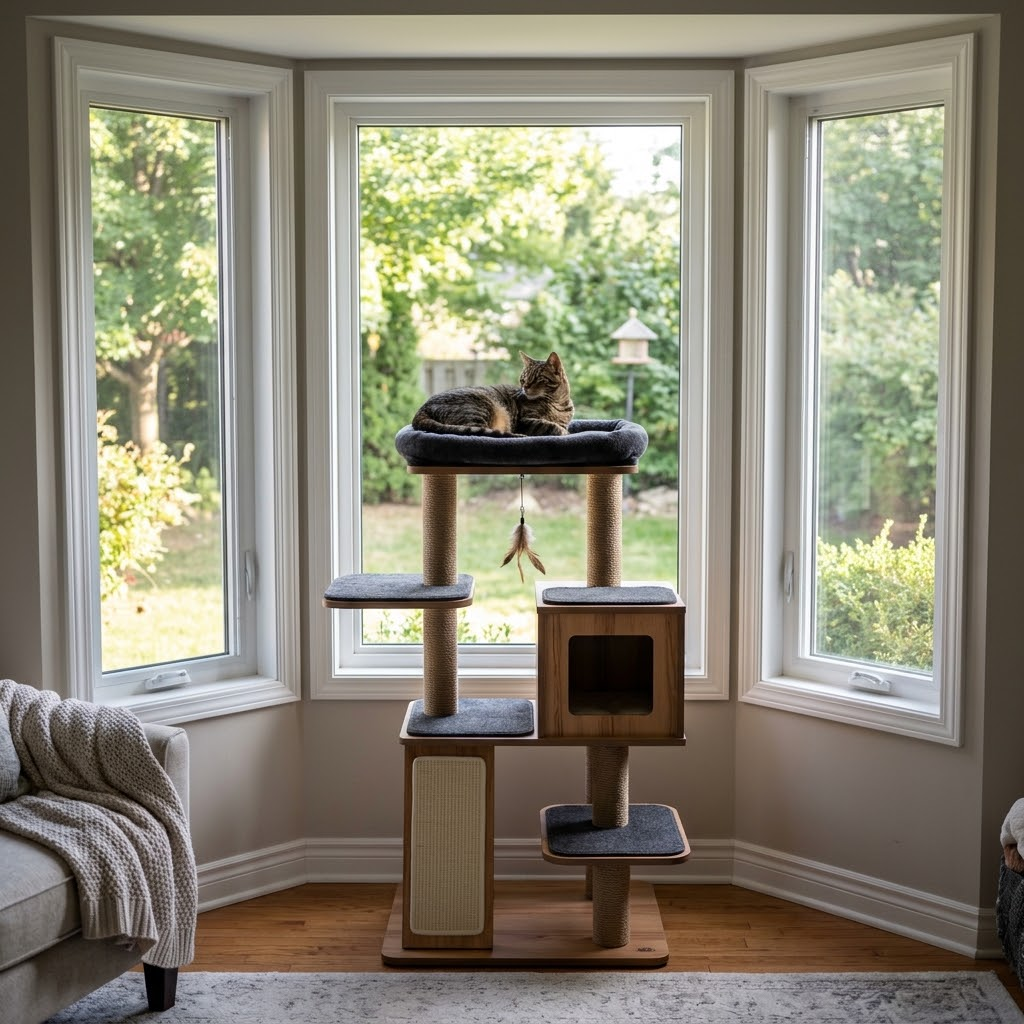
A tall perch gives your cat a better view of the yard. Many cats also like being up high because they can watch what is happening around them without being in the middle of it.
Providing dedicated cat trees and towers can turn a plain window into a regular viewing spot. Position the tower on a stable surface where your cat can safely enjoy the view outside. She’ll have a comfortable spot to watch birds, people, and anything else passing by.
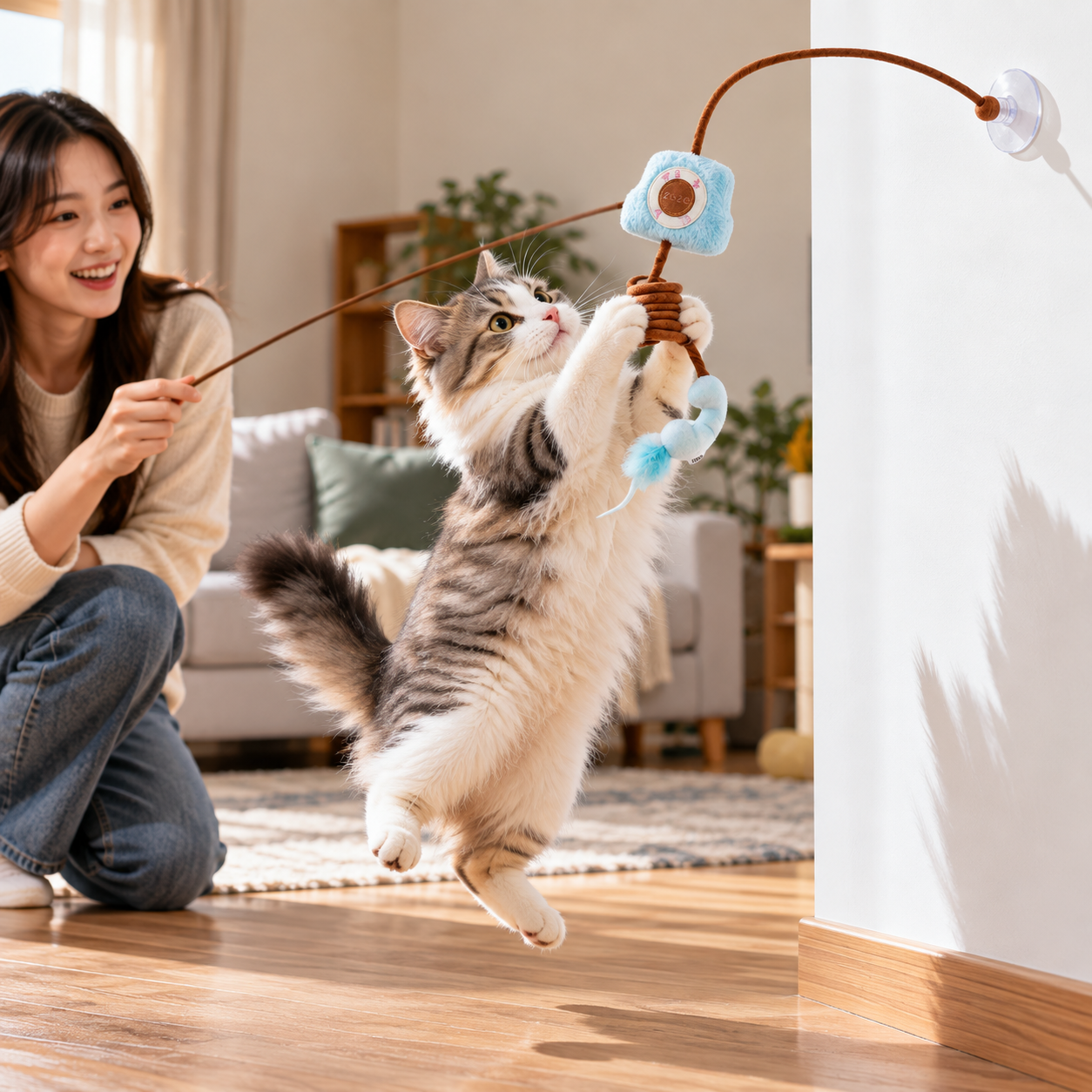
Your cat can spend ten minutes watching a bird and still have plenty of energy left afterward. She saw the hunt begin but never got to finish it.
That is where play can help. Keep an Elastic Cat Wand Toy nearby and start a short play session after the bird leaves. Let her chase, pounce, grab, and finally catch the toy.
Following play with a small meal can also mimic the natural hunt-and-eat sequence.
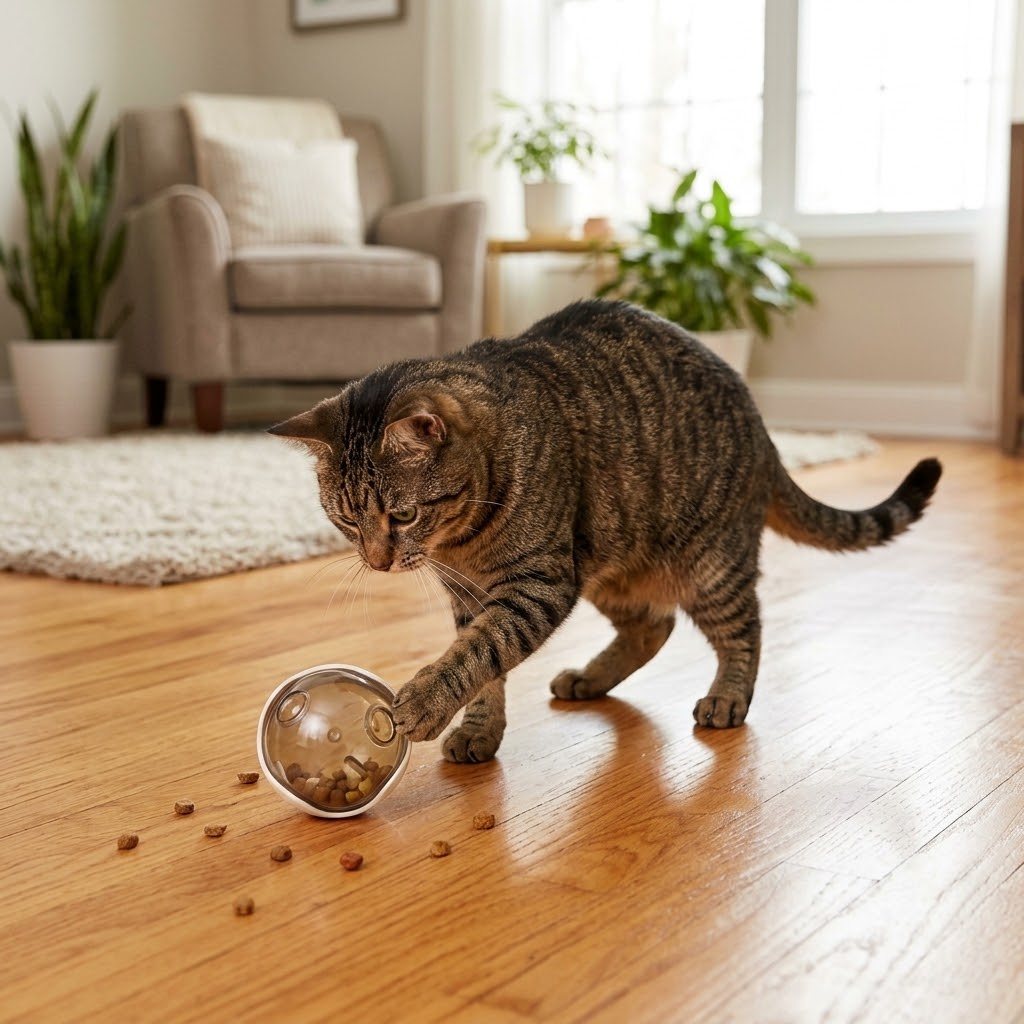
You won’t always be home to play with a wand toy. Your cat still needs things to do while you’re working or away.
Having a variety of interactive cat toys around the house can help. Puzzle feeders and rolling balls give her other ways to move around and stay occupied.
The goal isn’t to stop her from watching birds. It’s simply to give her another outlet when staring through the glass isn’t enough.
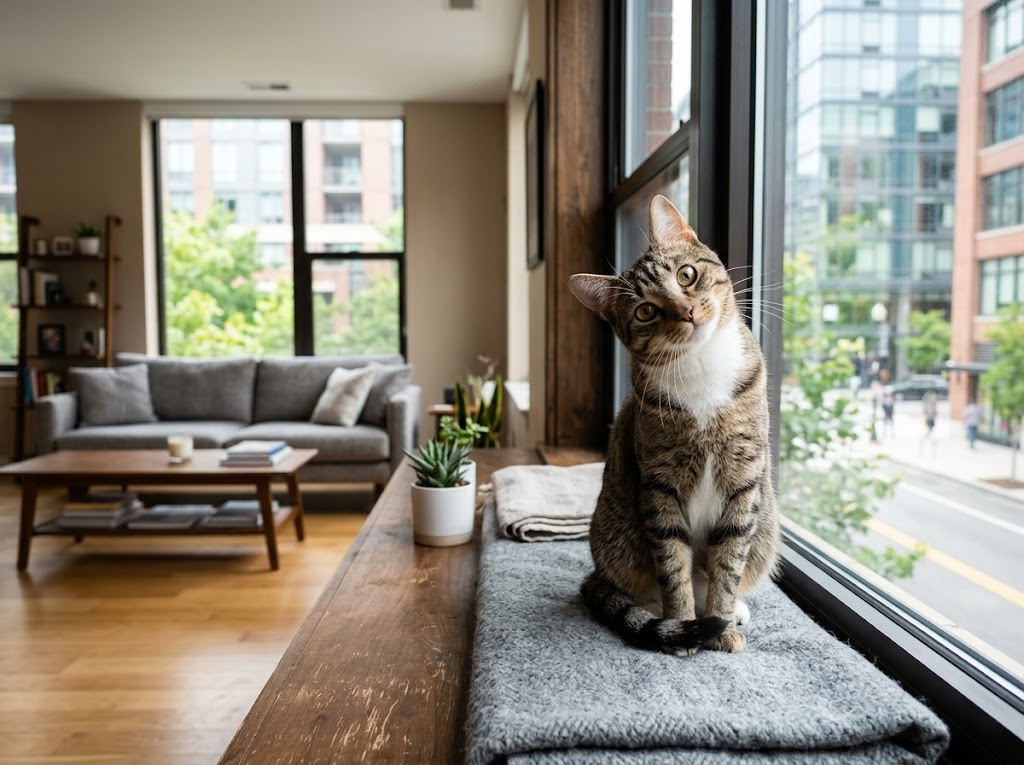
Usually, it is prey drive mixed with excitement and possibly frustration. She spots a bird or squirrel, her hunting instinct kicks in, and the glass blocks the chase. That energy may come out as jaw quivering or chattering. Some behaviorists call this possible displacement behavior, but the exact cause is still uncertain.
Context matters. A cat clicking or chattering at a window is usually intensely focused on something outside, especially prey or prey-like movement.
A chirp directed at you can mean something different. Cats often use short chirps as greetings or to get attention.
So “what does it mean when cats chatter” depends on what is happening around the sound. Watch the cat, not just the noise.
It can be either. A cat that is crouched at the window with wide eyes and her attention fixed on a bird is clearly highly aroused by what she sees. Frustration may enter the picture because she cannot actually reach the prey.
Sometimes both reactions happen at once. If she relaxes as soon as the bird leaves, there may not be much frustration involved. If she remains agitated, the blocked hunt may have been harder for her to shake off.
No. Birds are just one common trigger. Cats may chirp or chatter at squirrels, insects, moths, dust motes, and feather toys. They can also chirp at people. Some cats use that little sound as a greeting or when they want food or attention.
So if you’ve wondered, “Why does my cat chirp at birds one minute and meow at me the next?” the answer is that cats use different vocal sounds in different situations.
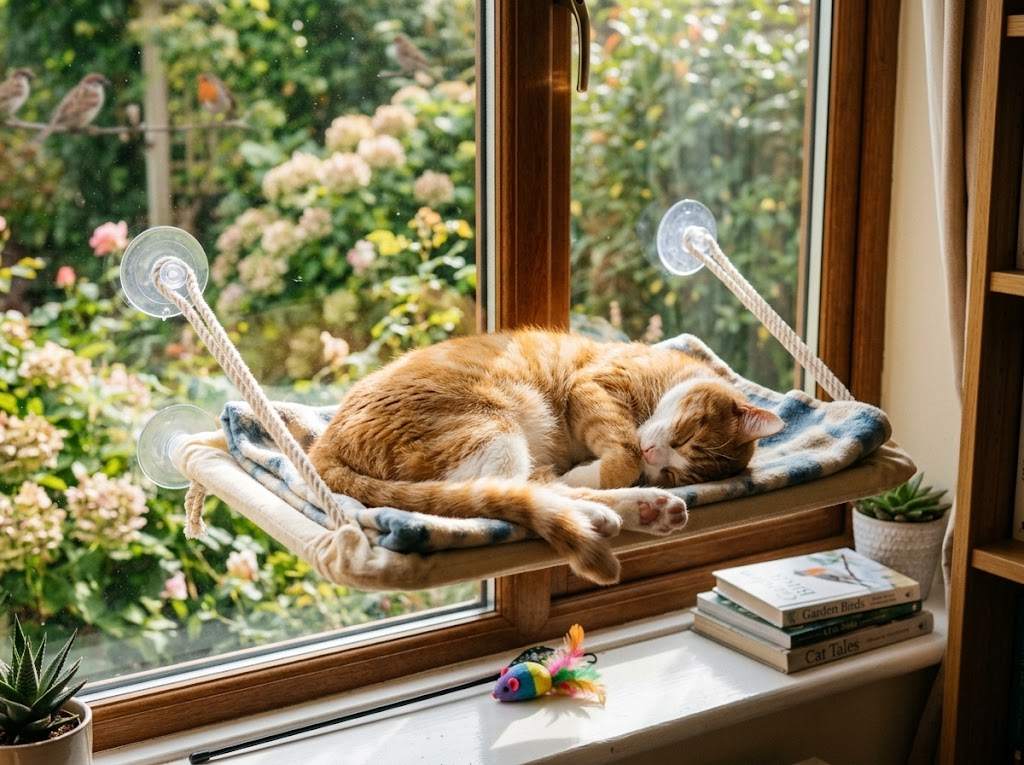
Why do cats chatter at birds? The leading theories point to hunting excitement and frustration, but the exact cause remains uncertain.
For most cats, that strange little “ekekek” at the window is simply part of watching something they find fascinating. Pay attention to the rest of her body and how quickly she settles afterward.
If she seems happy and relaxed once the bird is gone, there is usually no reason to worry. And if she needs somewhere to put that leftover hunting energy, a good toy or a comfortable cat tree can give her something else to chase, climb, or watch.