
You sit down on the couch, and your cat hops up beside you. You run a hand down their back. Then you feel it: that low, steady rumble coming from their chest.
So, why do cats purr when you pet them? Most of the time, your cat feels safe, relaxed, and happy to have you nearby. It can be their way of saying, “Yep, keep doing that.” But a purr can show up in other situations, too.
This guide covers the main reasons cats purr, what the sound can mean, and how to tell when your cat is enjoying the attention. You’ll also learn what those little warning signs mean when your cat has had enough.
Cats often purr when you pet them because they enjoy the contact and feel secure with you. Think about what happens when your cat climbs onto your lap, settles against your leg, and starts purring as soon as you scratch behind its ears. For many cats, that familiar routine is comforting.
Purring can also serve other purposes. Cats may use it to communicate, get your attention, or settle themselves when they feel uneasy. That’s why the sound makes more sense when you consider what your cat is doing at the same time.
The main reasons include:
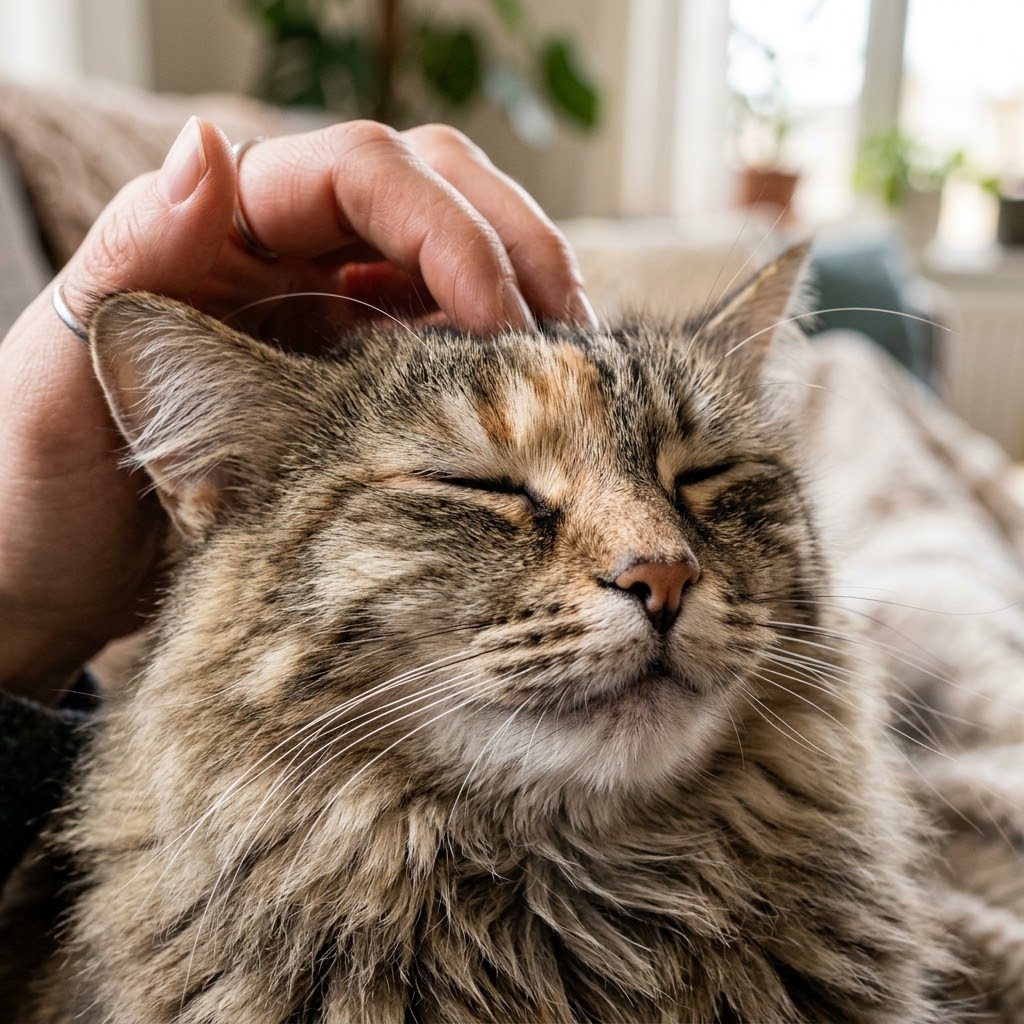
The most common reason cats purr while being petted is that they feel comfortable. A relaxed cat may curl up beside you, press its face into your hand, knead with its paws, or blink slowly while you pet it. Your cat may even stretch out and fall asleep without moving away. Those little behaviors tell you a lot about how comfortable it feels.
The American Animal Hospital Association notes that cats commonly purr when they feel content, comfortable, and secure. A cat resting with relaxed muscles and closed or half-closed eyes is likely enjoying the interaction.
The purr is only one clue. Your cat’s posture and behavior fill in the rest.
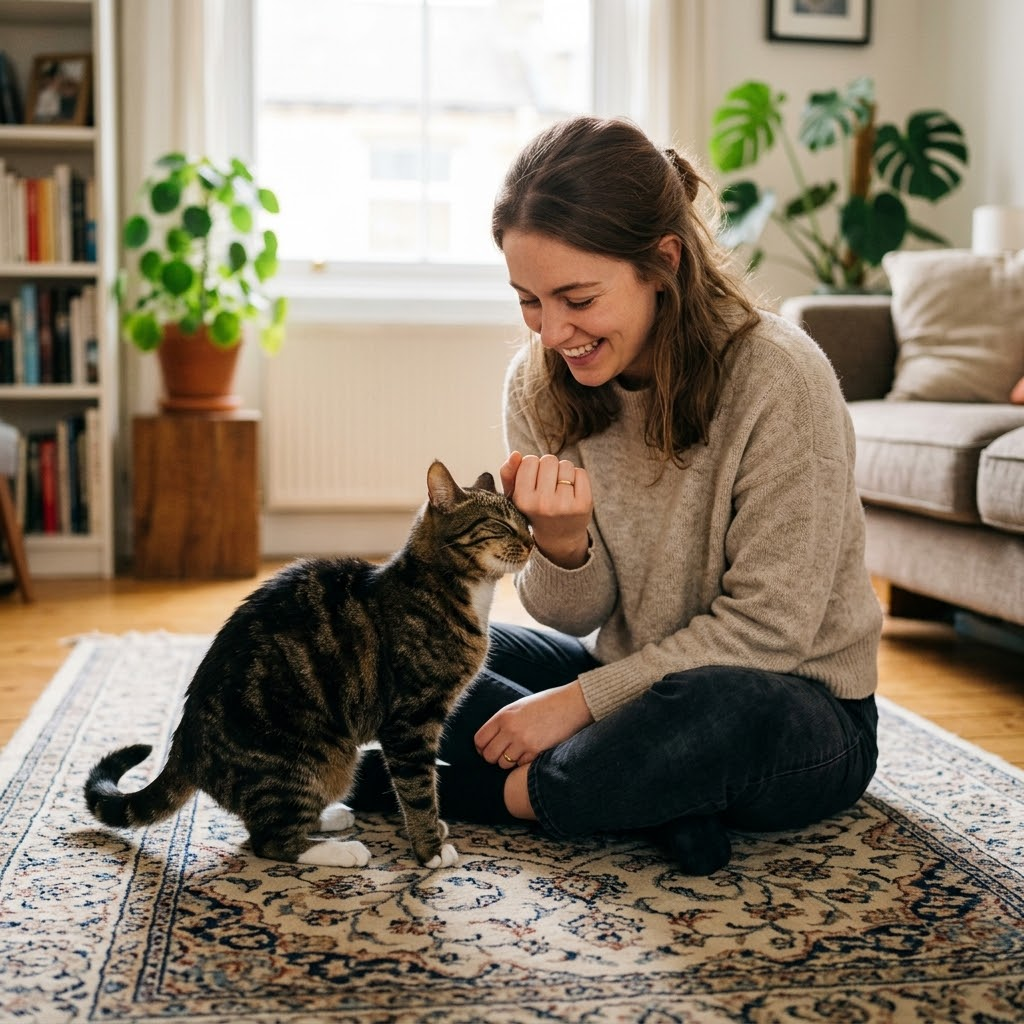
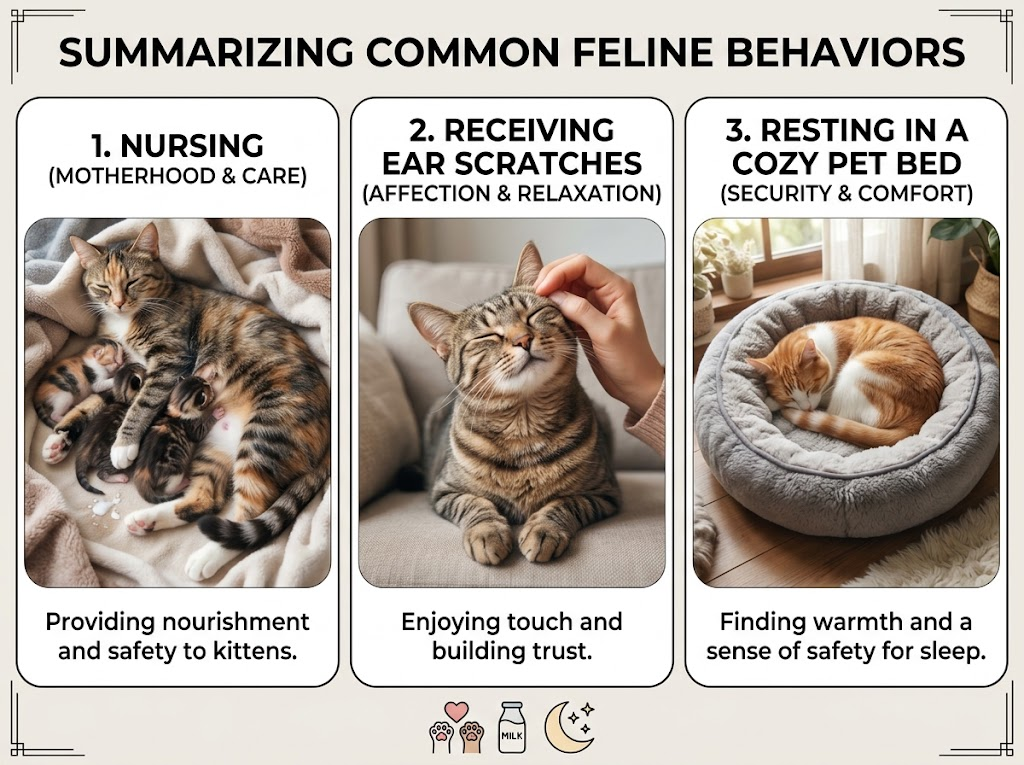
Purring starts early in a cat’s life. Very young kittens can purr while nursing, and mother cats may purr around their kittens. Since newborn kittens cannot see or hear well, the vibration may help them stay close to their mother.
As cats grow, many continue using purring during friendly social contact. Your cat may purr when it greets you at the door, settles on your chest, or leans into a cheek rub. Over time, these small routines can become part of how your cat interacts with you.
Purring isn’t the only sign of trust. Some cats follow their owners from room to room, sleep beside them, slow blink at them, or bring them a favorite toy. A quiet cat can still be a very happy cat.
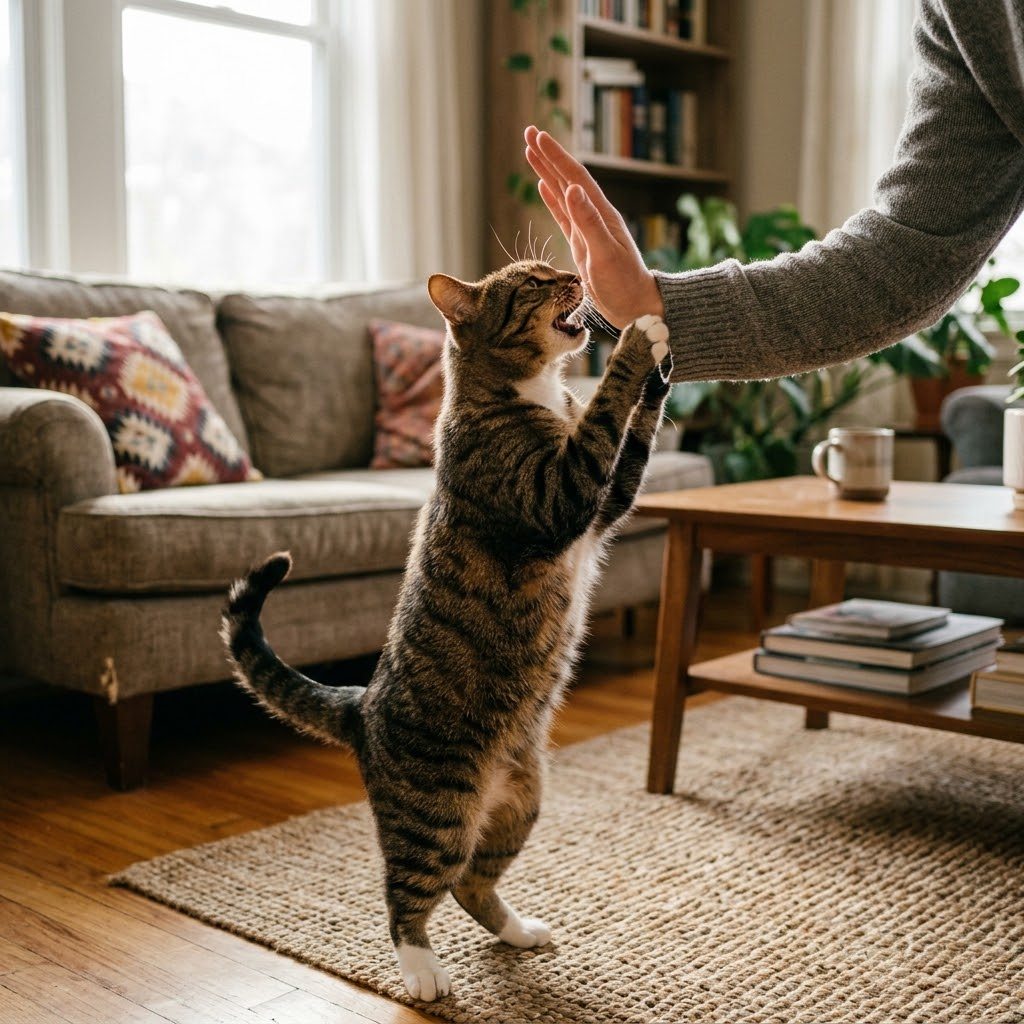
Sometimes, a purr is your cat’s way of asking you to keep paying attention. Your cat may rub against your legs, push its head into your hand, or give you a little nudge when you stop petting.
Research discussed by BBC Science Focus describes a type of “solicitation purr” that may include a higher-pitched sound. People can hear this type of purr as more urgent than a calm resting purr. Research from the University of Sussex also suggests that cats can use purring as part of attention-seeking communication.
You can often work out what your cat wants by watching what happens next:
Those small details can tell you more than the purr itself.
If your cat seems ready to play after getting some attention, a few options from a cat toys collection can give it something else to focus on.
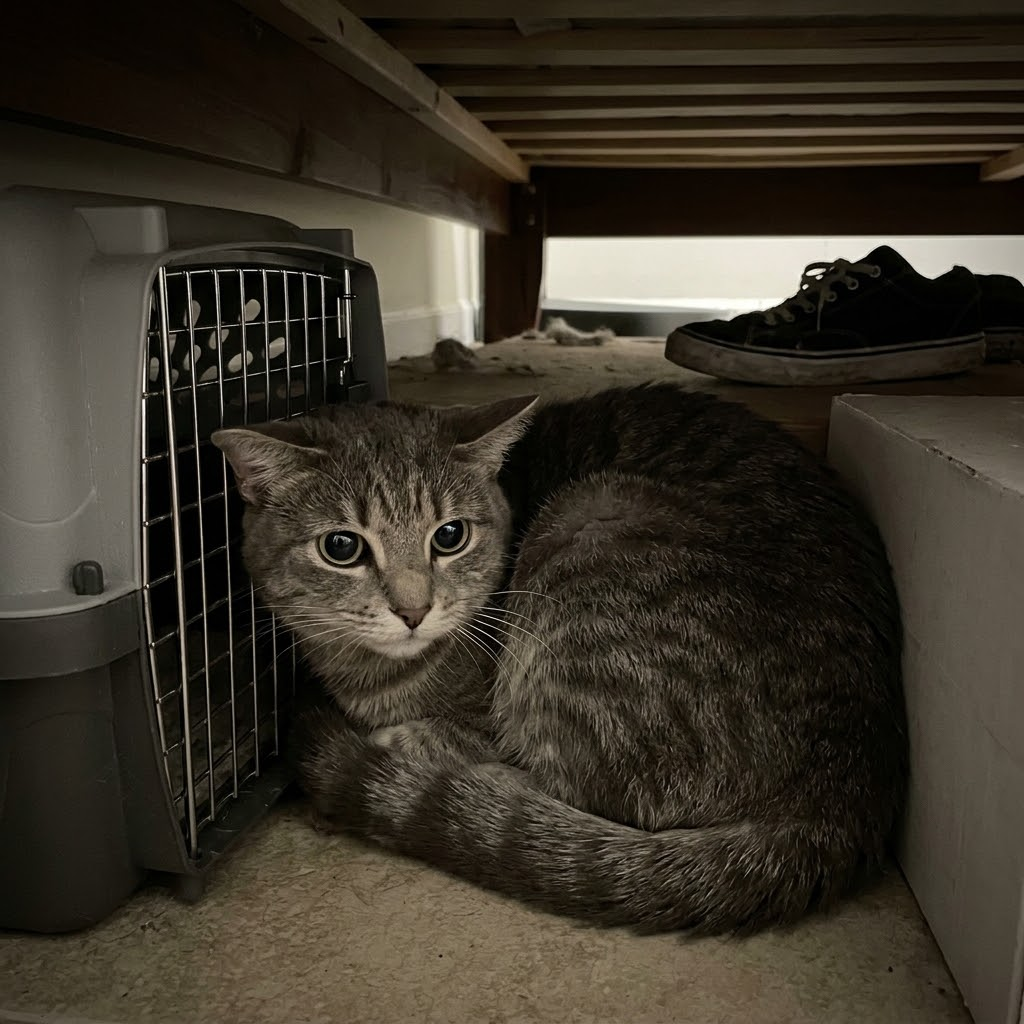
Many cat owners will be surprised that a cat can purr when something is wrong. Some cats purr in unfamiliar places, during a vet visit, after a scare, or when they are in pain. The vibration may help them settle themselves in these situations. A purr alone doesn’t tell you that your cat is sick, but a sudden change in purring is worth noticing.
For example, a cat that purrs while crouching under the bed, refusing food, or avoiding your hand may be trying to cope rather than asking for a cuddle. PetMD notes that cats purr for reasons that can include stress, attention-seeking, and illness. If the change in purring is accompanied by changes in appetite, energy, litter box habits, movement, or social behavior, speak with your veterinarian.
You might ask, what does it mean when a cat purrs when you pet it? Start by looking beyond the sound.
Pay attention to the ears, eyes, tail, and posture. A cat stretched across your lap with half-closed eyes is giving you very different signals from one whose tail keeps thumping against the couch.
Here’s a simple guide to reading your cat’s mood during a petting session:
| Body Part | Relaxed and Happy | Stressed or Overstimulated |
| Eyes | Half-closed, slow blinking, soft gaze | Wide open, pupils fully dilated or very narrow |
| Ears | Pointing forward or slightly relaxed backward | Pinned flat against the head or held rigidly |
| Tail | Still, gently draped, or softly curled | Flicking rapidly, thumping the ground, or stiff |
| Posture | Loose, sprawled out, exposing the belly | Tense, crouched, or leaning away from your hand |
| Purr Volume | Steady, rhythmic, soft to medium volume | Unusually loud, erratic, or combined with growls |
A relaxed cat usually looks loose and comfortable. A stressed cat often looks tense or ready to move away.
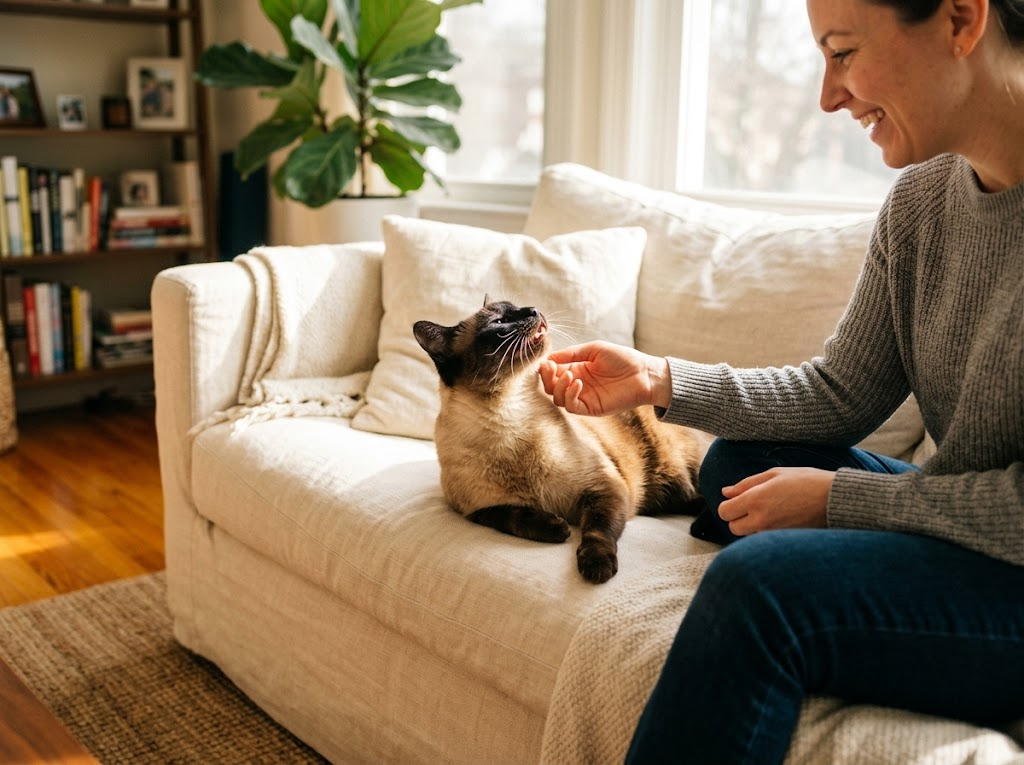
If your cat turns into a little rumble machine the second your hand touches them, personality is probably part of the answer.
Some cats are naturally more vocal and affectionate. Breeds like Siamese and Oriental-type cats are known for being chatty, although purr volume and frequency vary from one cat to another. A cat’s individual personality can matter just as much.
Age can also play a role. Kittens start purring as early as two days old, often while nursing. Older cats may purr in different situations, including when they seek comfort.
Early experiences matter, too. A kitten that gets gentle, positive handling may grow more comfortable with human touch. A cat with less experience around people may need more time before it settles into a lap and starts purring.
And sometimes, there isn’t a complicated explanation. Your cat may simply be a loud purrer. If it curls up beside you every evening and starts rumbling as soon as you scratch its chin, that’s probably just part of its personality.
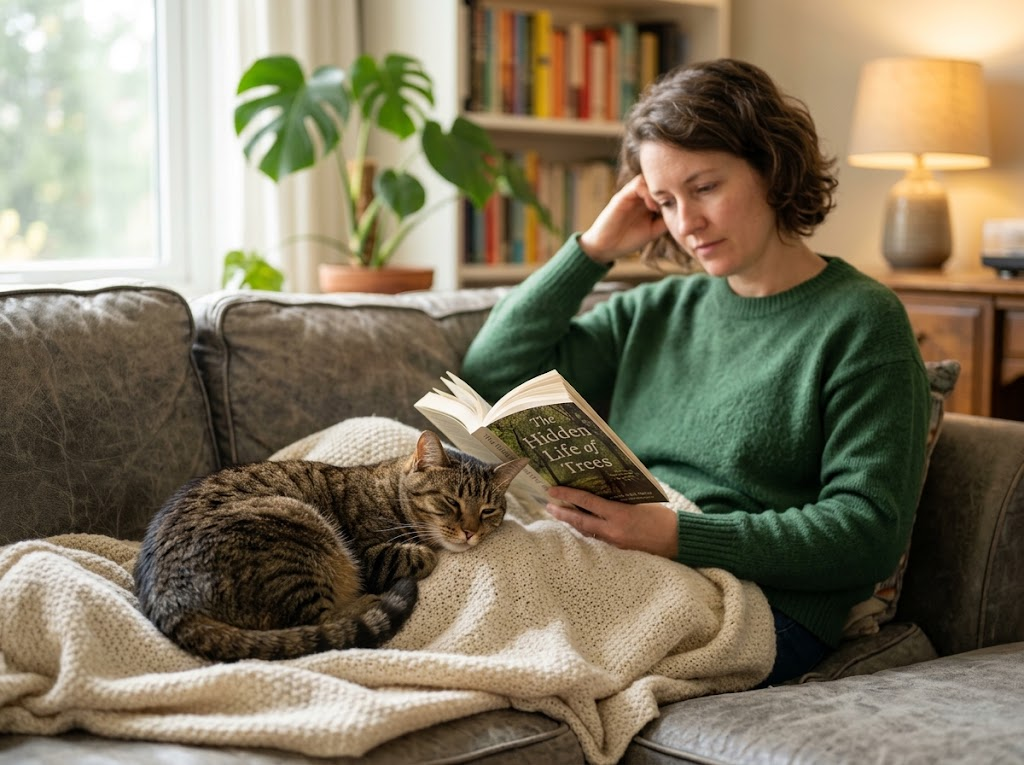
Yes. Many cats purr when someone they trust gives them gentle attention. Some will purr for a few seconds. Others can keep going through an entire cuddle session. If your cat is relaxed and chooses to stay close, that behavior is generally normal.
Pay closer attention if you also notice:
Cats can purr when they’re sick or in pain. If the unusual purring is accompanied by other behavior changes, contact your vet.
Many cats enjoy petting in short bursts. Even a friendly cat can become overstimulated when the session goes on too long.
It may seem sudden when your cat goes from purring to biting or jumping away, but there are often small clues first.
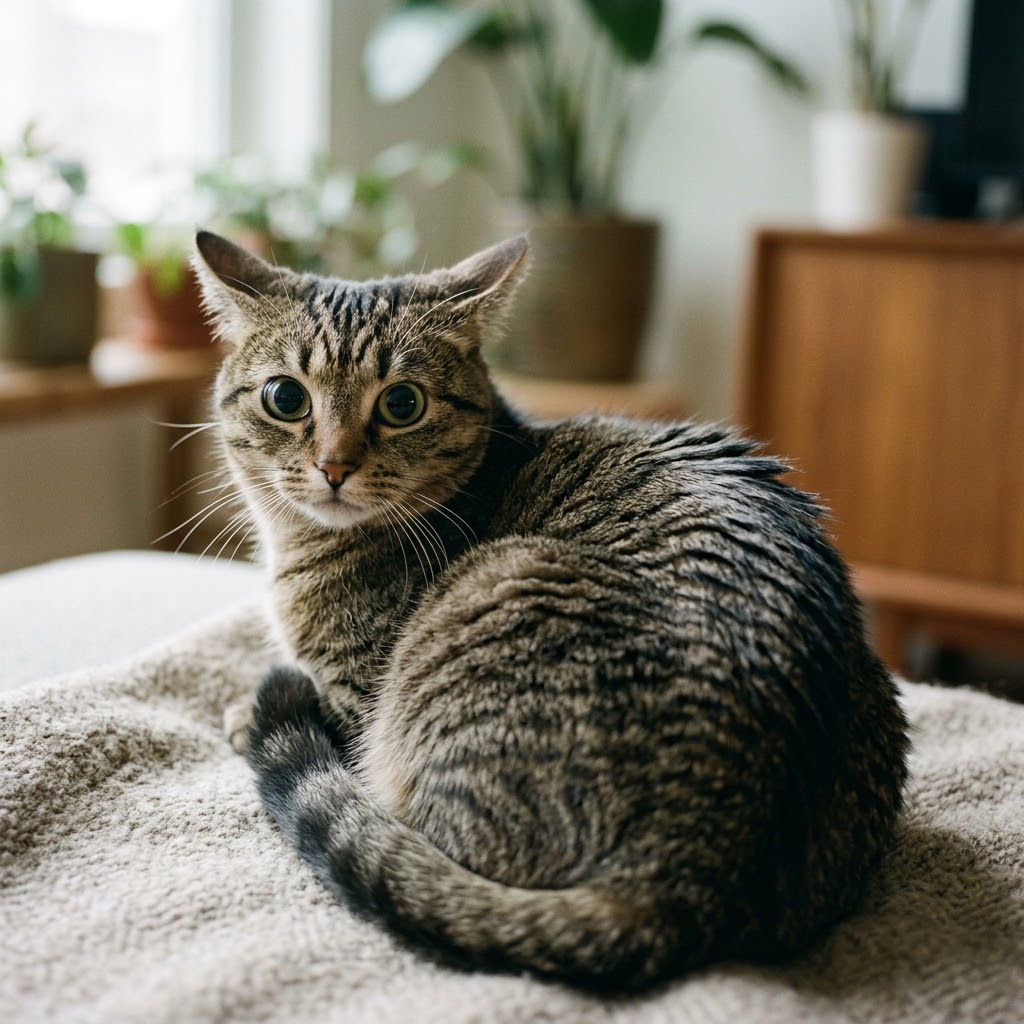
Stop or slow down if you see:
If your cat suddenly turns its head toward your hand after several minutes of petting, take that as a hint. It may be saying that the session has gone on long enough.
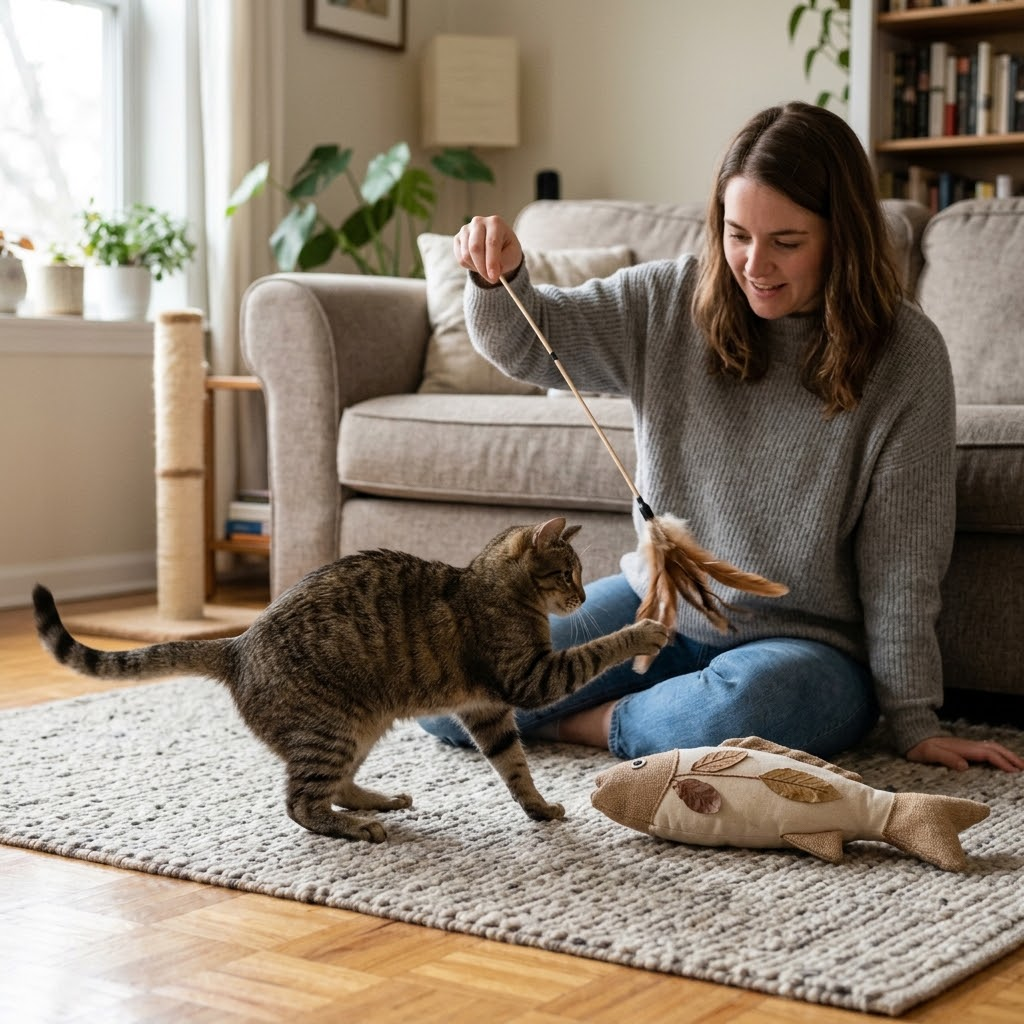
When you notice those signs, pause the petting and let your cat move away. Don’t keep following it or reach for it again right away.
If your cat still seems playful, switch to a wand toy or another activity. A short play session can be a better outlet than continuing to touch your cat. For cats that enjoy herbal toys, silvervine and catnip toys offer another way to shift the focus from petting to play.
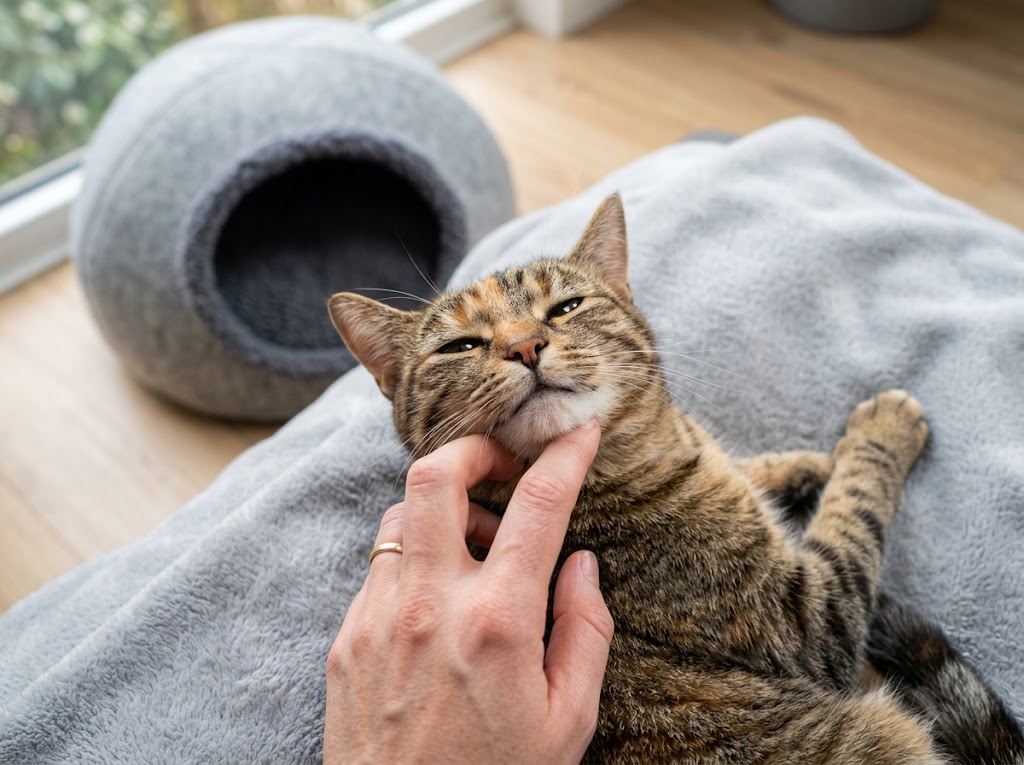
You can make petting more enjoyable by paying attention to where your cat naturally asks for contact. Many cats like gentle scratches around the cheeks, chin, and base of the ears.
These areas contain scent glands, and cats often rub their faces against people and objects as part of normal scent-marking behavior. When your cat bumps its head or cheek against your hand, it’s choosing to interact with you.
Start with gentle strokes around the cheeks, chin, and ears. If your cat leans closer or nudges your hand, you can keep going. If it turns away, stop and give it some room.
The belly is another area where it’s better to be careful. Some cats enjoy having their belly touched, but many see it as a vulnerable area and may respond with a scratch or bite.
Keep petting sessions short while you’re learning your cat’s preferences. Let your cat approach your hand rather than holding it in place. That gives your pet more control over the interaction.
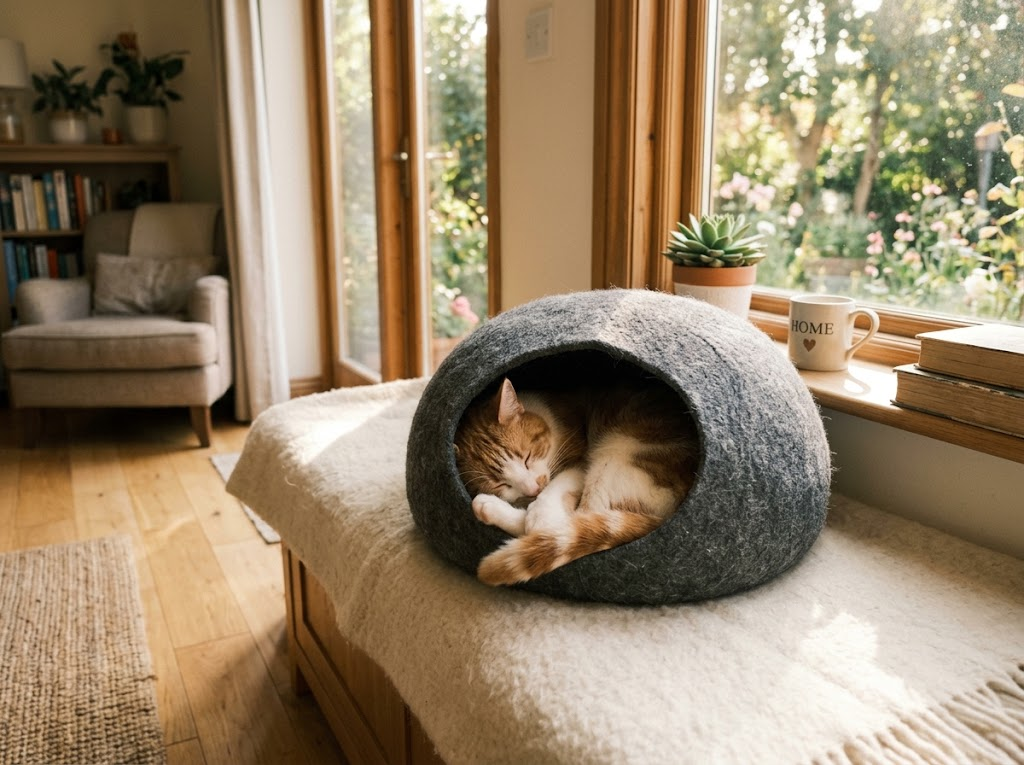
After a good session, give your cat somewhere quiet to rest. A comfortable cat bed gives it a dedicated place to settle down. If your cat prefers enclosed spaces, a Cat Cave Bed can be a cozy option for a post-cuddle nap.
It can be. Some cats purr almost nonstop when they’re being petted. If your cat is relaxed, stays close, and isn’t showing signs of discomfort, continuous purring isn’t usually a concern. Watch what happens alongside the sound. A cat that starts flicking its tail or trying to leave may be ready for a break.
The main reasons why cats purr when you pet them include comfort, bonding, attention-seeking, and self-soothing. A cat may purr because it enjoys being touched, wants you to continue, or feels nervous and is trying to settle itself. Context matters, so watch what your cat does before and after the purring starts.
Yes. This is one reason cat purring meaning can be tricky to interpret from the sound alone. If your cat is purring while its tail is flicking, its ears are pulled back, or it keeps trying to move away, it may be overstimulated or stressed. Give it some space and see whether its body relaxes.
Cats don’t all have the same purr. Some are naturally louder, while others produce a softer vibration.
Breed and personality can both play a part. A chatty, outgoing cat may simply make more noise than a quiet one. If the loud purring is normal for your cat and its body language looks relaxed, the volume itself usually isn’t a problem.
So, why do cats purr when you pet them? Most often, it’s because they enjoy the interaction and feel comfortable around you. But purring can also be linked to attention-seeking, communication, stress, or discomfort.
The easiest way to read the signal is to watch the rest of your cat. A cat that leans into your hand, slow-blinks, and settles down is probably enjoying the moment. A cat that stiffens, flicks its tail, or walks away is telling you something different.
Once you learn those small signals, petting becomes a lot easier to get right. And when the cuddle session ends, your cat can retreat to its favorite quiet spot for a nap.