
It’s 6 a.m., and you’re barely awake. Before you can even open your eyes, a warm, fuzzy forehead bumps against your cheek. A familiar purr follows. Your cat seems delighted by this morning greeting, even while you’re still half asleep.
So, why do cats headbutt you? Your cat usually does this gesture to greet you, exchange scents, or get your attention. It can also tell you something about how comfortable your cat feels around you. That small bump may look simple, but there’s more going on than you might think.
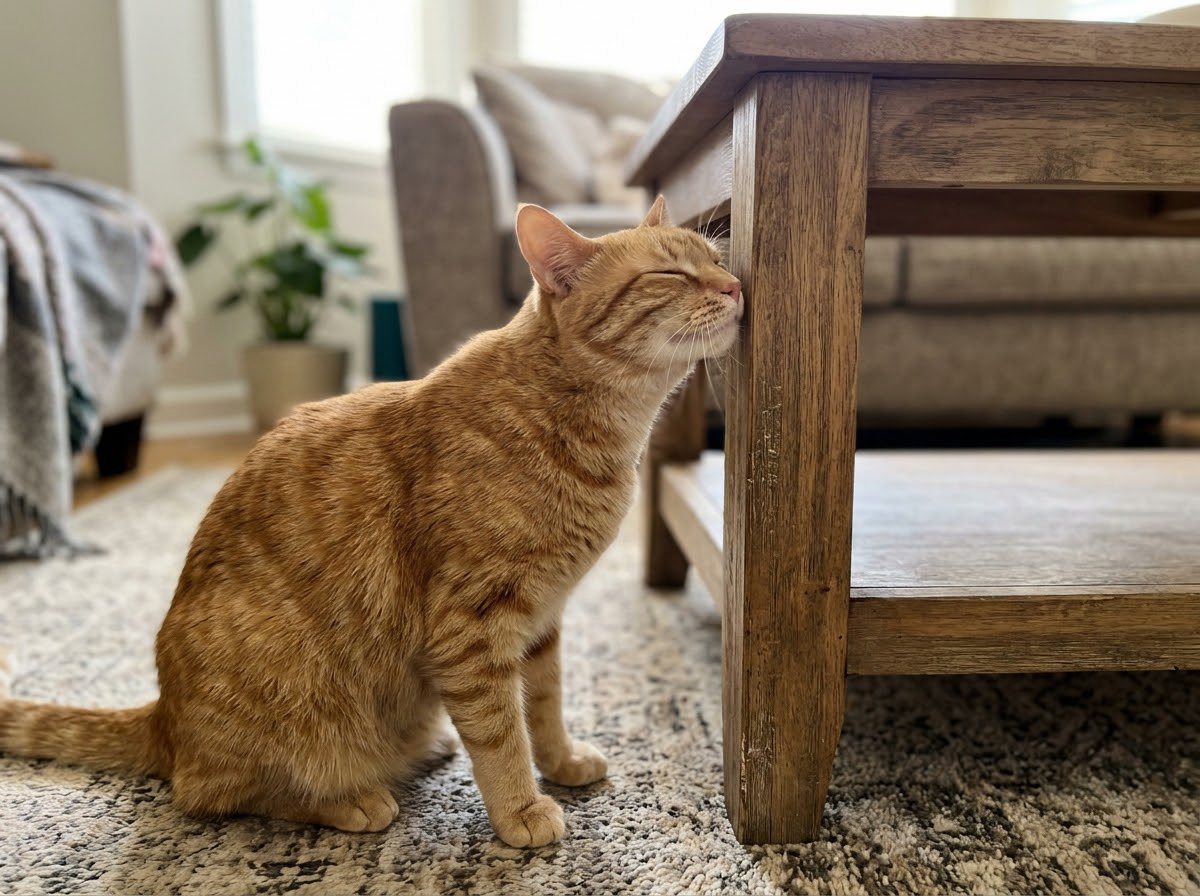
Cat bunting is when a cat presses its forehead, cheeks, or chin against a person, another animal, or an object. Most pet owners call it a headbutt. It’s a normal behavior that cats use to communicate and leave their scent.
You might notice it when you come home, while you’re sitting on the couch, or when your cat wants attention. Some cats give a gentle nudge and walk away. Others follow it with a long cheek rub.
This behavior is largely due to the scent glands around your cat’s face.
Your cat’s face does more than help them see, smell, and eat. It also plays a part in how they communicate. Several scent glands around the head release chemical signals that help cats recognize familiar people, pets, and places.
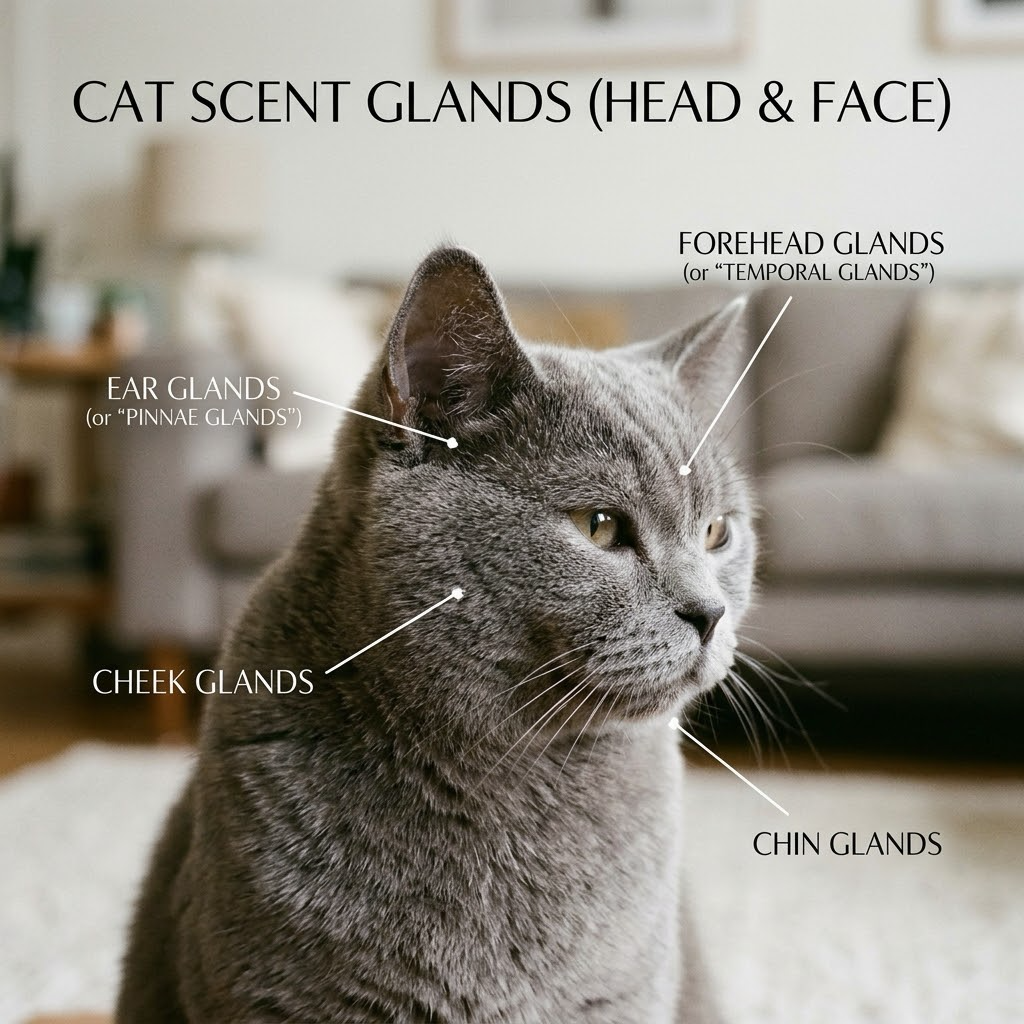
Cats have scent glands on their forehead, cheeks, chin, and near their ears. They often press these areas against people and furniture.
Whenever your cat rubs its face against familiar objects, doorways, or your legs, it leaves behind scent signals. This is known as scent marking.
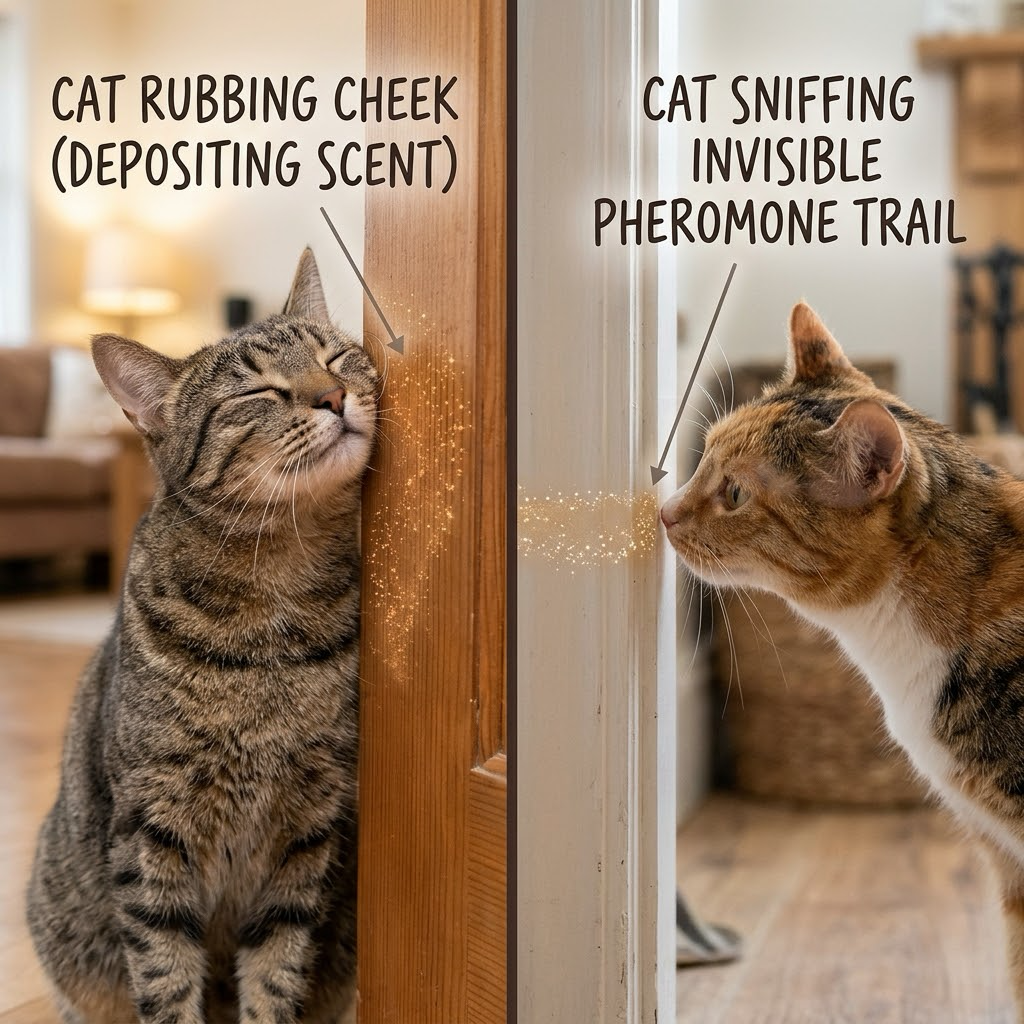
These glands release chemical signals called pheromones. Although people usually can’t detect them, cats use them to communicate with one another.
Facial pheromones help cats recognize their surroundings and communicate with other members of their social group. They also influence how cats interact with one another.
You may not notice anything after a headbutt, but your cat has added another familiar scent to the mix.
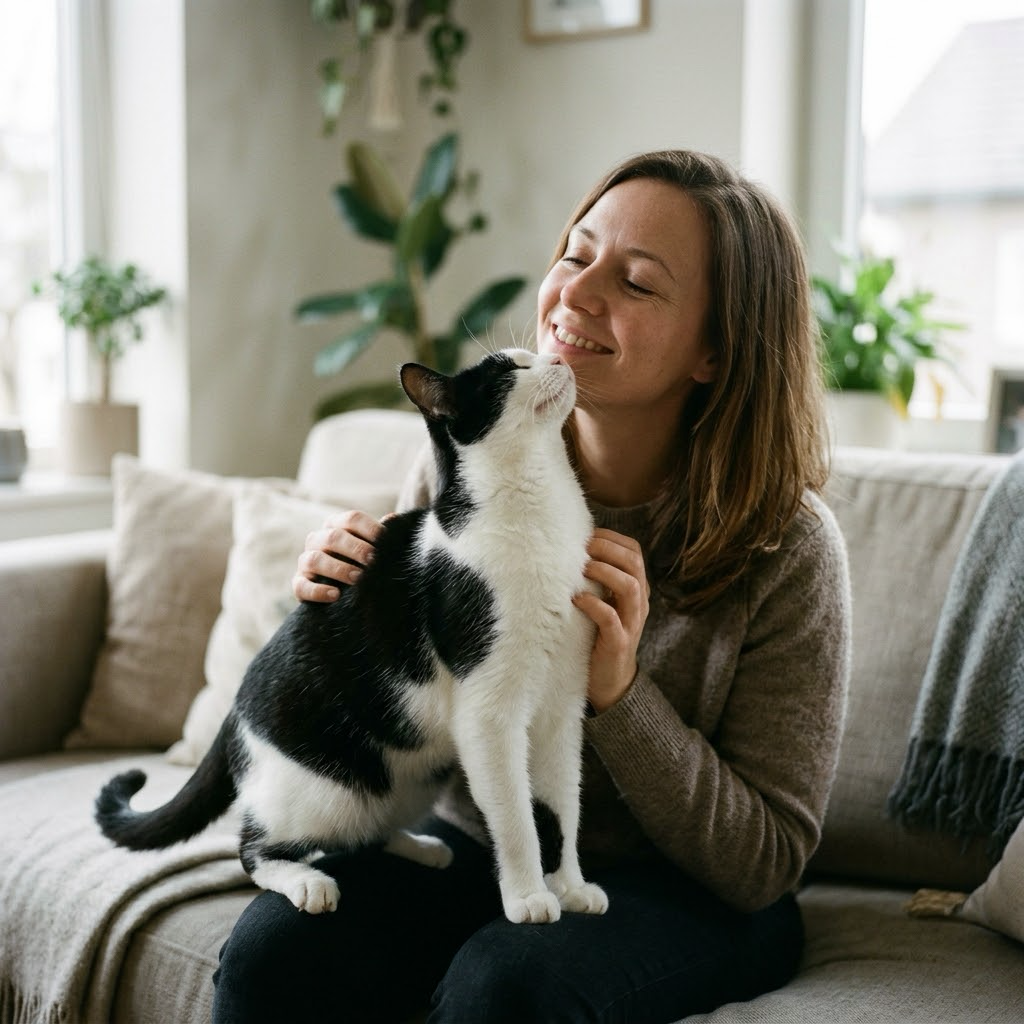
Why do cats bump heads with you instead of rubbing against the nearest piece of furniture? Your face is close to theirs and easy to reach when you’re sitting or lying down. It also gives your cat direct access to the scent glands on its forehead, cheeks, and chin.
Some cats prefer your cheek, while others aim for your chin or forehead. They may even rub against your hands before moving closer to your face.
By rubbing against you, your cat adds its scent to yours. This familiar routine helps deepen the bond you share.
Yes, cats headbutt to show love, although the behavior has more than one purpose. Bunting can also greet familiar companions, share scents, and strengthen social bonds.
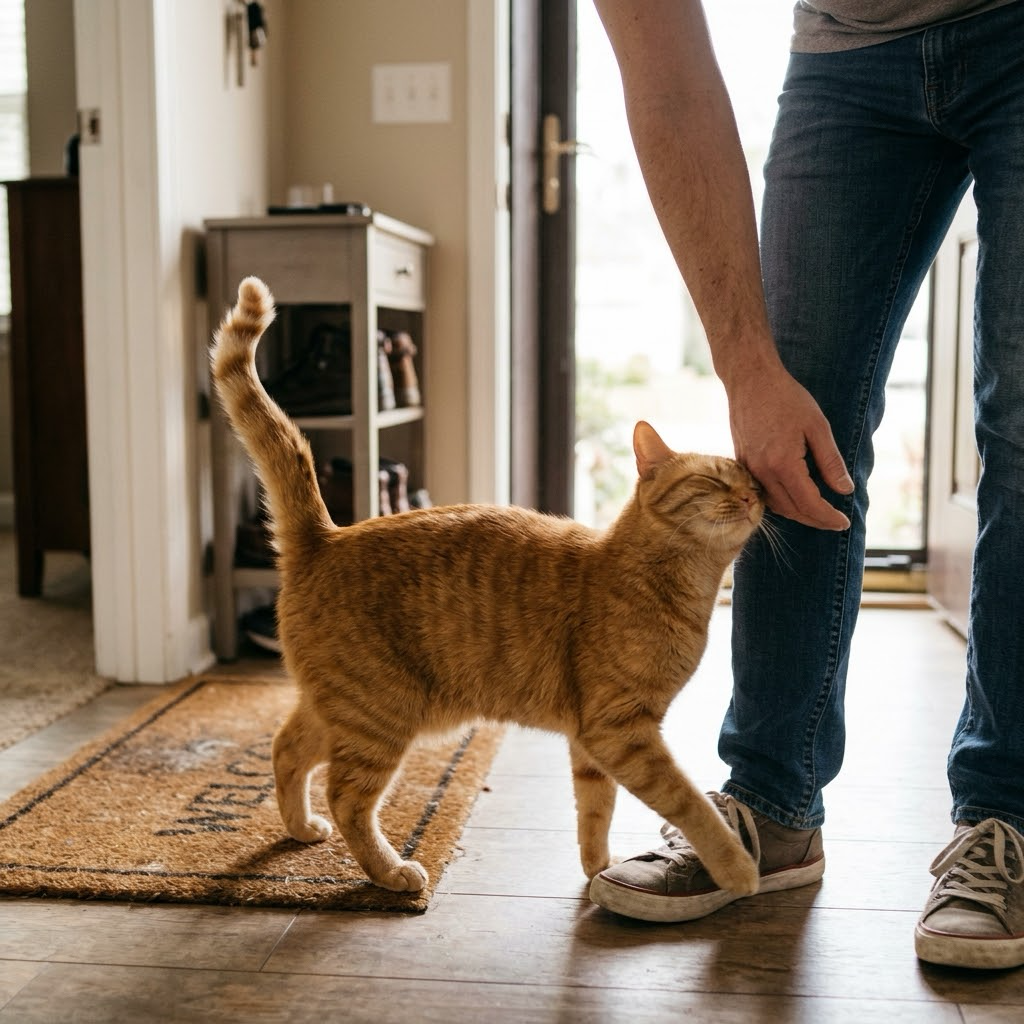
Does your cat come running when you get home? They might weave between your legs, rub against your ankles, and finish with a little bump against your hand.
Some cats also headbutt their owners first thing in the morning, especially after spending the night in another room. You may notice a few purrs, tail movements, or soft meows as they approach.
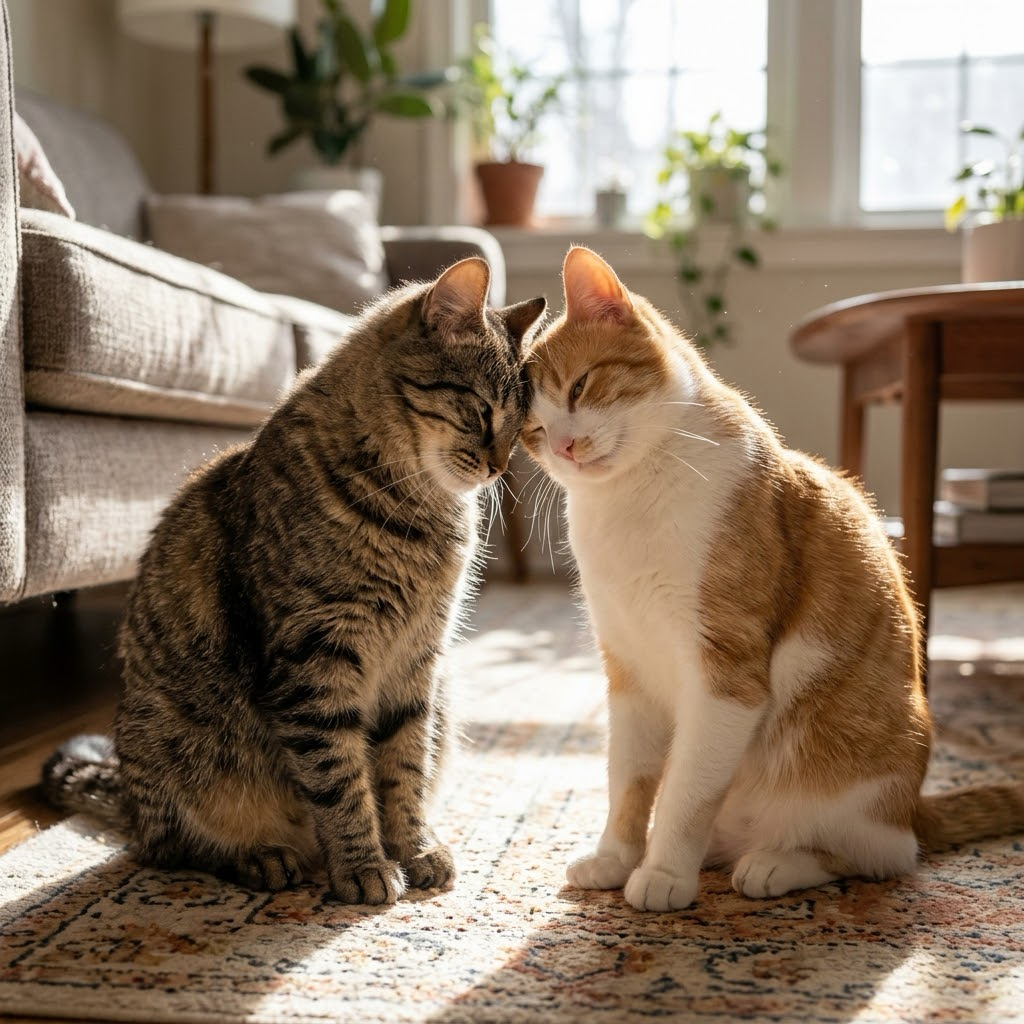
Cats that get along often rub their heads and cheeks against one another. This allows them to exchange scents and develop a familiar group smell.
They can do something similar with people. When your cat rubs against you, it includes you in a familiar scent-sharing routine.
This helps explain why cat headbutt love is more than a cute greeting. It’s how cats form a bond with a familiar animal or person.
Cat headbutt affection can also look different from one pet to another. Some cats give quick nudges, while others press their cheeks against you and linger for a few seconds.
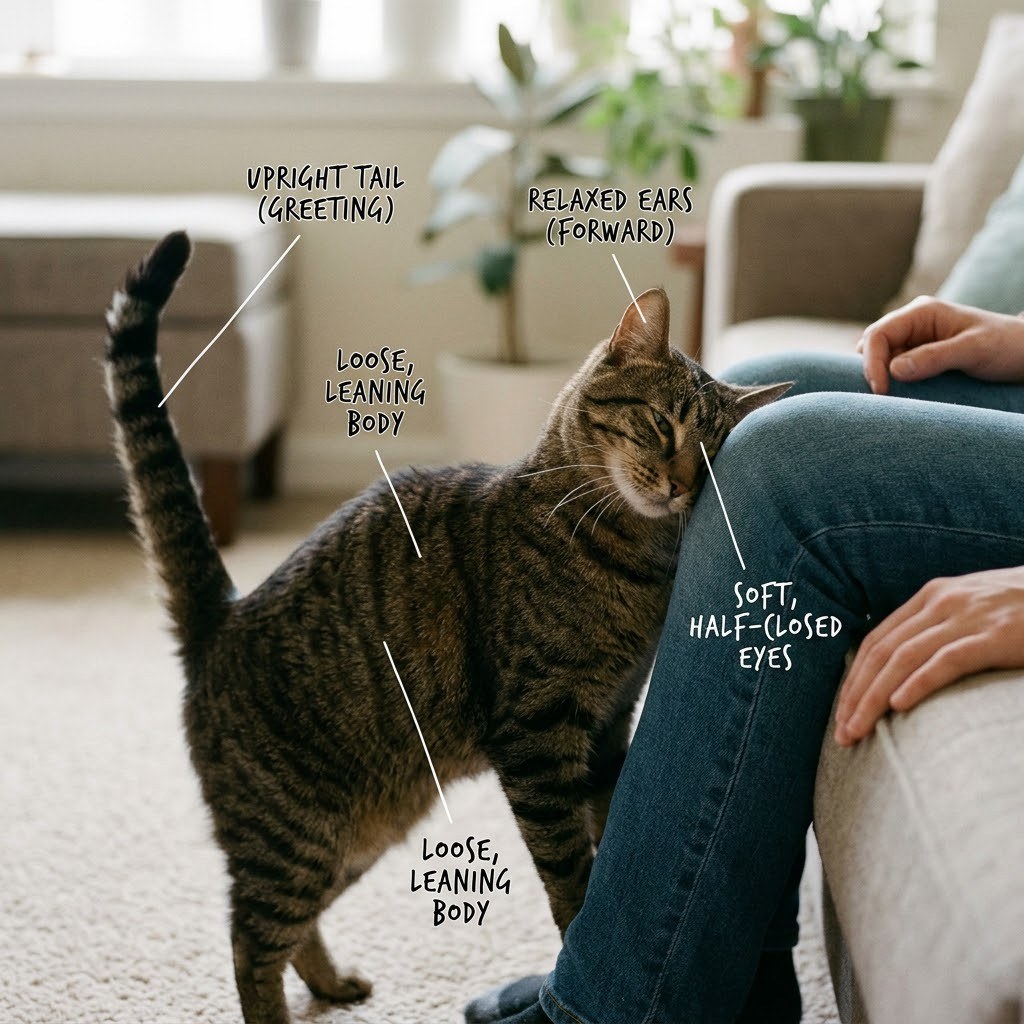
A relaxed cat that greets you with a headbutt is often comfortable around you. It willingly moves close and allows physical contact.
Even so, a single headbutt doesn’t reveal everything your cat may be feeling. Pay attention to the rest of its body language.
Relaxed ears, soft eyes, a loose body, and an upright tail are generally reassuring signs. If your cat seems tense or pulls away, give it some space.
Cats also headbutt for everyday reasons, such as asking for attention or food. Sometimes, your pet has a more immediate request.
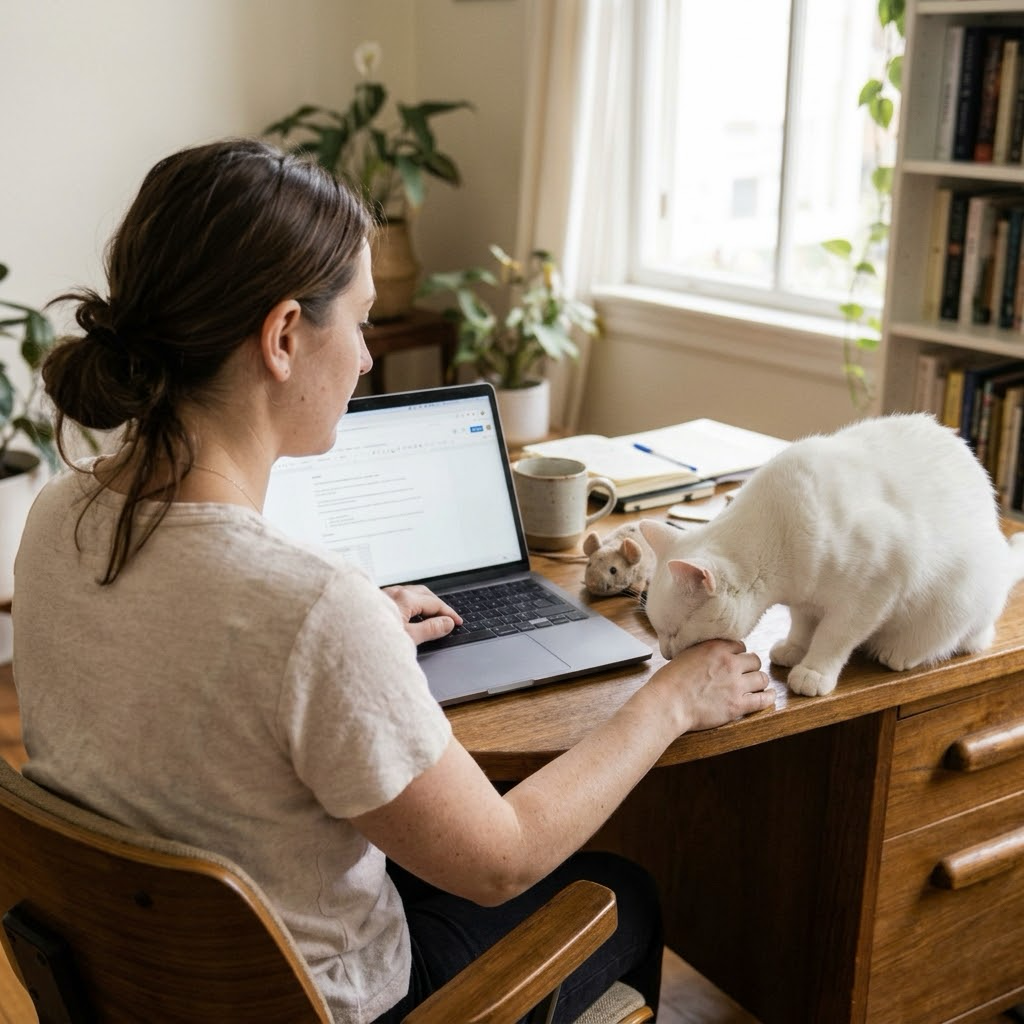
A headbutt can be your cat’s way of asking for a scratch or a little company. Your cat might nudge your hand while you’re working or bump your leg when you’re busy.
Look for other signs of an attention request. Your cat may meow, paw at you, sit in front of you, or bring over a toy.
If your cat leaves a toy at your feet and waits for you to notice, it may be inviting you to play. You can learn more about this behavior in our guide to why your cat brings you toys.
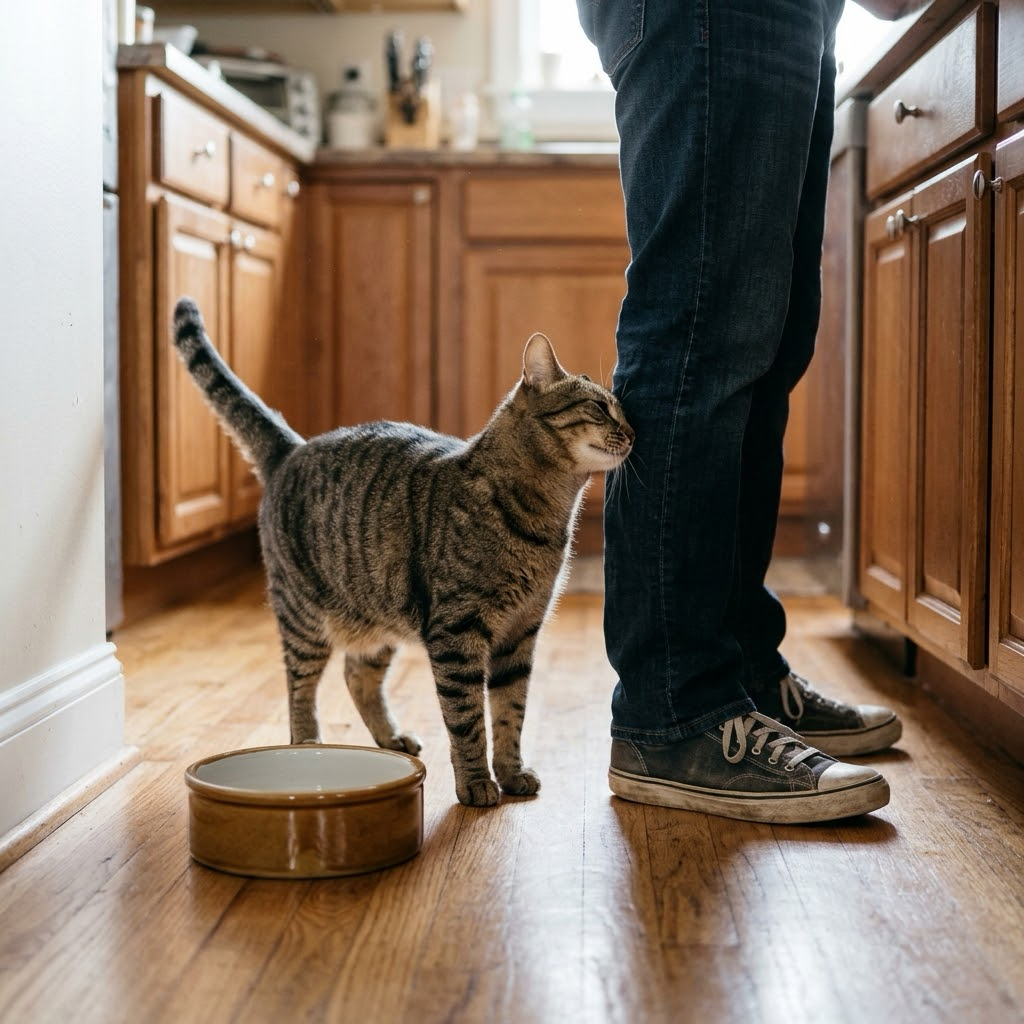
Cats quickly learn familiar routines, especially those that lead to food. If your cat has learned that headbutting you near the kitchen leads to breakfast, it may repeat the behavior whenever mealtime approaches. You might see it rubbing against your legs or waiting beside its food bowl.
This doesn’t mean the affection is fake. Your cat can enjoy being close to you while also hoping you’ll fill its bowl.
Try to keep feeding times consistent. A regular schedule can make mealtimes easier to manage and reduce repeated requests for food.
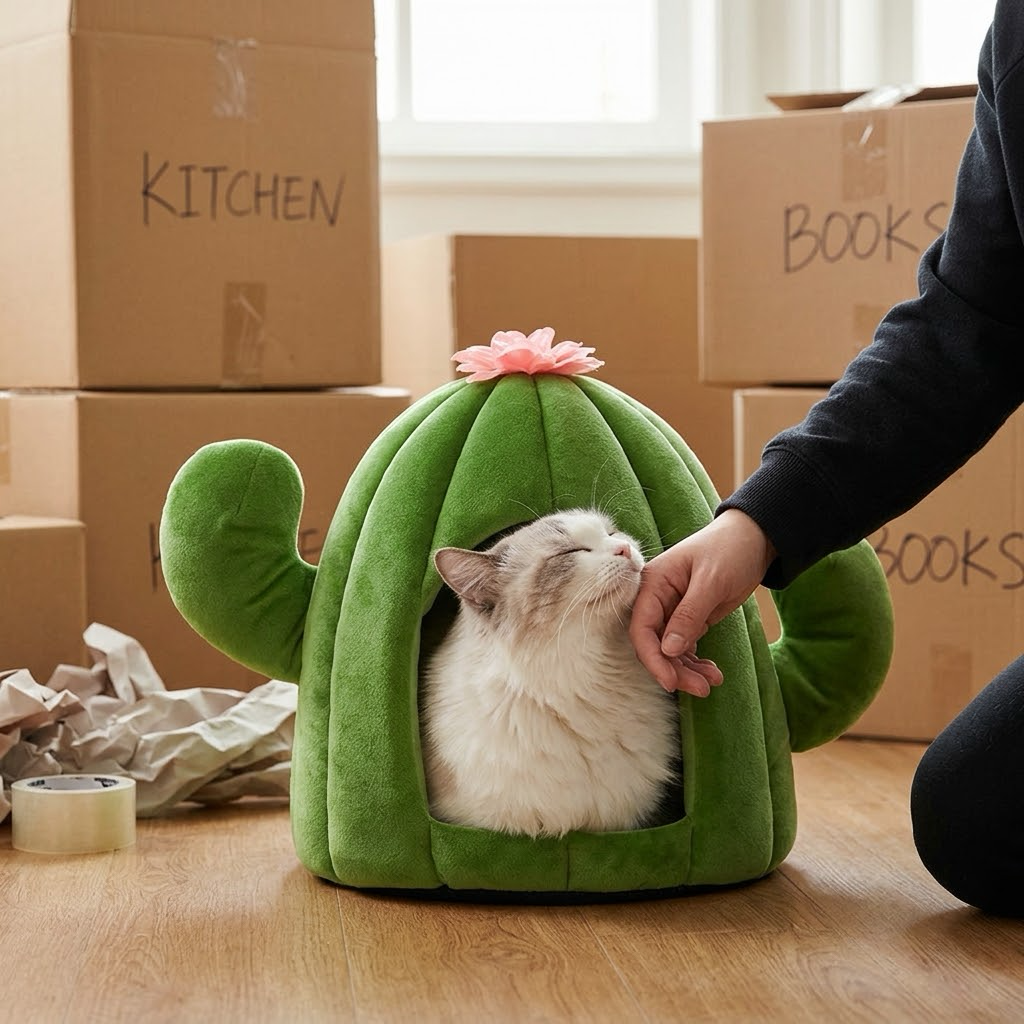
Cats sometimes bunt more often when something in their surroundings changes. Moving house, a new pet, unfamiliar visitors, or rearranged furniture can make them feel less settled.
Rubbing against familiar people and objects may help them establish familiar scents in the space. You might notice your cat doing this more often after a change at home.
Give your pet a quiet place to retreat when things get overwhelming. A cozy, enclosed resting spot can also help. Our cozy cat beds provide a soft place for cats to relax with minimal disturbance.
If your cat suddenly starts headbutting much more than usual and also seems anxious or uncomfortable, consider speaking with a veterinarian.
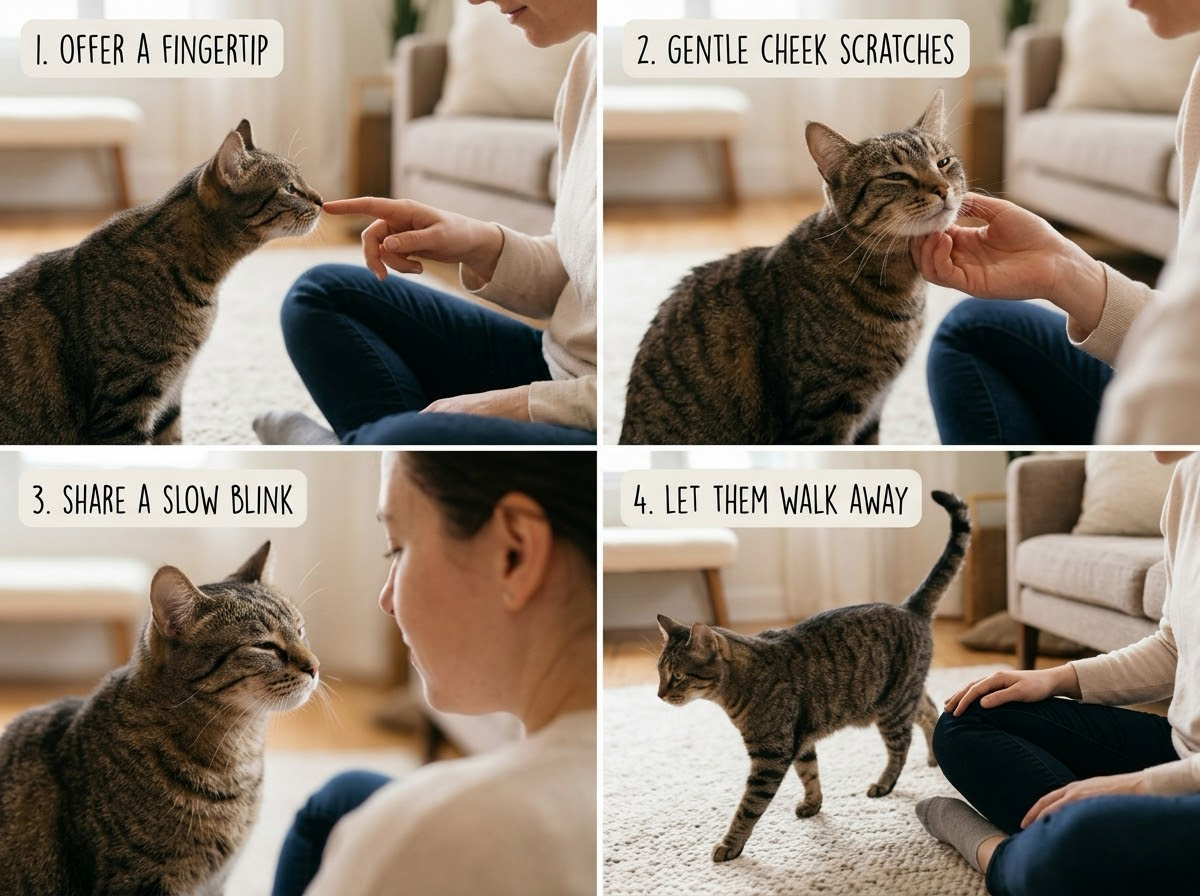
There’s no need to make a big fuss when your cat headbutts you. A calm response is usually enough.
Here are a few ways to return the gesture:
Some cats return a slow blink, while others simply carry on with whatever they were doing. Both reactions are normal.
Most importantly, don’t force interaction. If your cat walks away, let it go. Respecting its boundaries helps keep your interactions comfortable for both of you.
Most headbutts are harmless social behaviors. Pet owners should also be aware of a condition called head pressing.
Head pressing is not an affectionate gesture. It may signal a serious neurological issue and needs immediate veterinary attention.
The easiest way to tell the behaviors apart is to look at where your cat presses its head and how long it stays there.
| Feature | Normal Cat Bunting | Head Pressing |
| Target | People, friendly pets, or furniture | Walls, floor corners, or hard surfaces |
| Duration | Brief bump followed by rubbing or release | Prolonged or repeated pressure against a surface |
| Body Language | Relaxed, alert, and responsive | May appear confused, stiff, or distressed |
| Meaning | Social greeting or scent marking | Possible sign of an underlying medical problem |
A cat experiencing head pressing may walk up to a wall or hard surface and hold its head against it for an unusual length of time. It may remain in that position without responding normally to its surroundings.
Other warning signs include:
Head pressing can be associated with several medical problems, including toxin exposure, infections, liver disease, brain injury, and other neurological or metabolic conditions.
Important: If your cat holds its head against a hard surface and appears unresponsive or confused, contact an emergency veterinarian immediately. Don’t wait to see if the behavior goes away on its own.
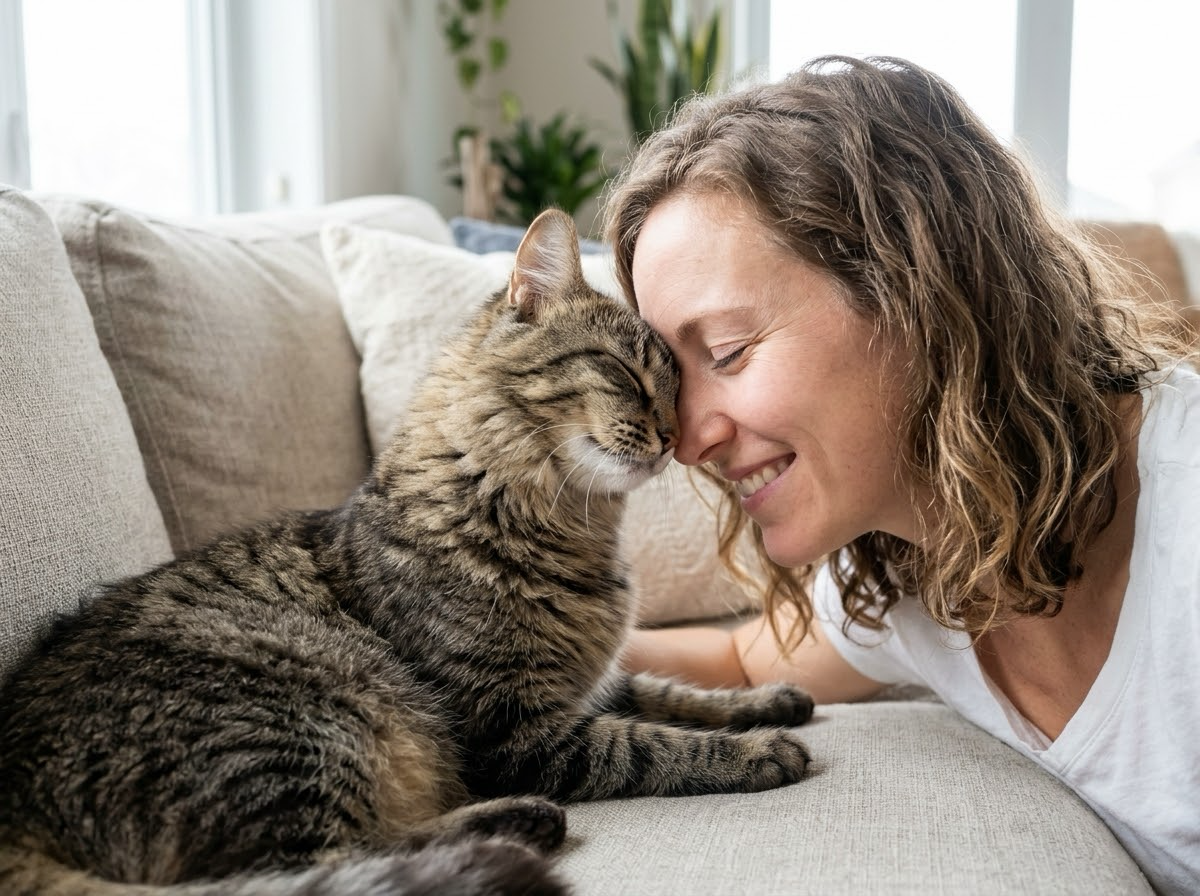
When your cat gently bumps your face with its head, it may be greeting you, sharing its scent, or showing that it feels comfortable with you. If your cat also purrs, rubs its cheeks against you, or shows relaxed body language, it’s likely a friendly interaction.
Not exactly. Cats don’t kiss in the same way people do. However, headbutting is a friendly social gesture that can show affection and familiarity. It’s your cat’s sweet way of saying hello.
An enthusiastic headbutt often means your cat wants attention, food, or another round of petting. Some pets are simply more expressive than others.
If this behavior is new, or your cat is biting, hissing, or showing signs of pain, take them to the vet. A sudden change in behavior is worth investigating.
Cheek rubbing is another way cats mark familiar people and objects. Your cat may also enjoy the gentle pressure and physical contact, especially when you respond with a few scratches around its cheeks.
Normal bunting is a brief, relaxed behavior directed toward people, other animals, or familiar objects. Head pressing involves holding or repeatedly pushing the head against a hard surface for an unusual length of time.
Unlike normal bunting, head pressing can signal a serious medical problem. Contact an emergency veterinarian if you notice this behavior, especially if your cat also seems confused, unsteady, or unresponsive.
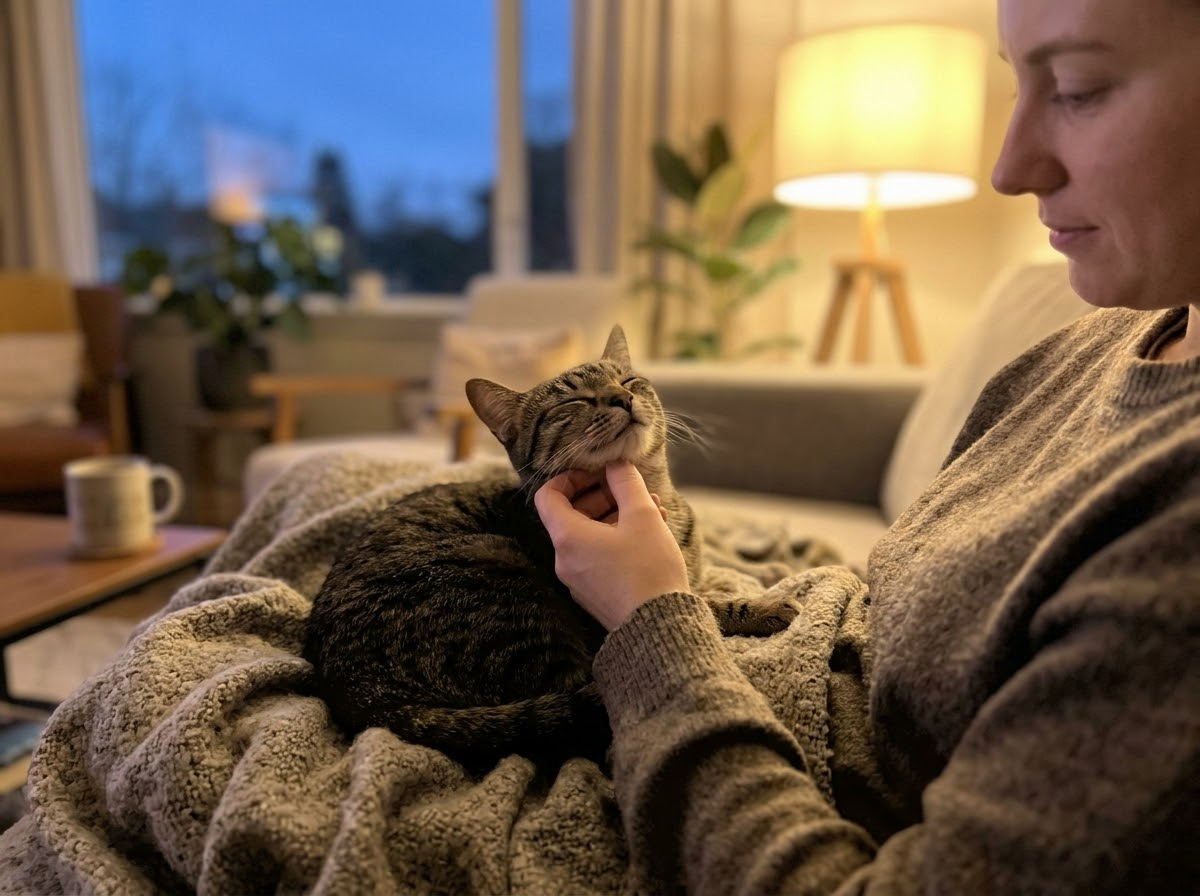
The next time your cat gives you that familiar forehead bump, take a moment to enjoy it before returning to what you were doing. Your pet might be greeting you, asking for attention, or simply enjoying being close.
You don’t need to do much in return. A gentle cheek scratch or a slow blink may be enough. Those little forehead bumps may become part of your daily routine, but they’re still worth appreciating.