
If your cat brings you toys, you may wonder what the behavior means. One minute you’re working or relaxing, and the next, your cat drops a stuffed mouse or feather wand at your feet. Some cats carry their favorite toy across the house. Others leave one beside the bed and wait for you to notice.
So, why does my cat bring me toys? Hunting instincts are part of the answer, but play, attention, and comfort also matter. The way your cat delivers the toy can offer useful clues. Do they drop it and wait for you to throw it? Do they meow while carrying it? Or do they leave it beside you and walk away?
Those details can help you figure out what your cat wants from the interaction.
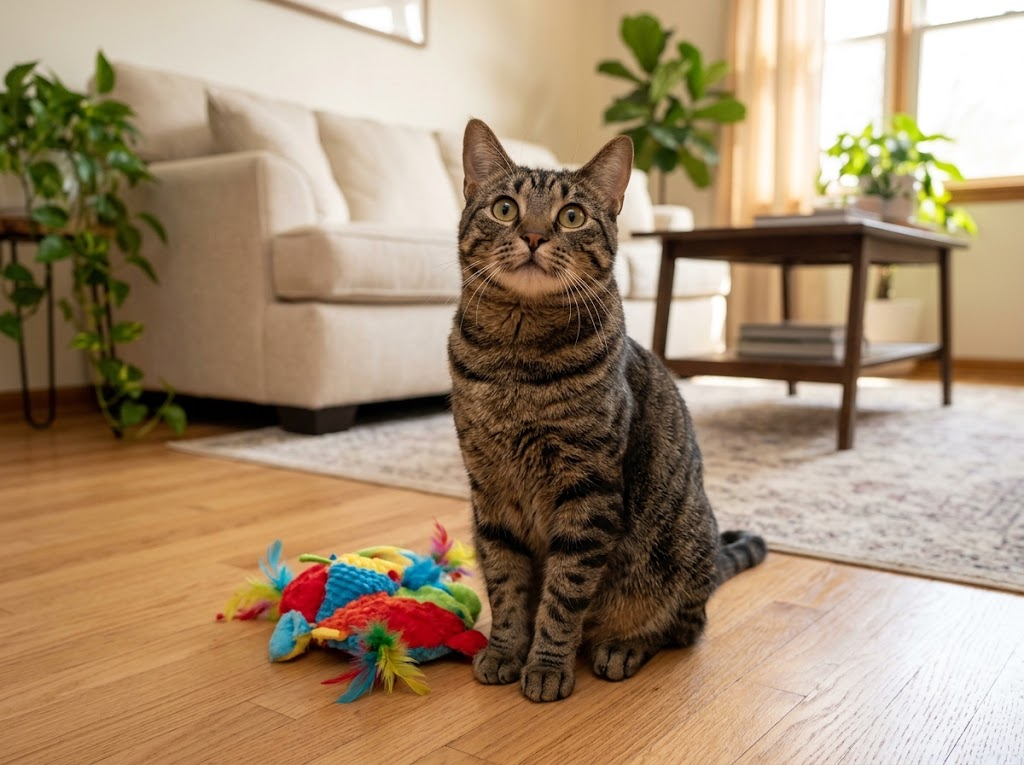
A toy delivery can serve several purposes. Your cat might be showing off a prized “catch,” starting a game, looking for attention, or taking a favorite object to a familiar spot.
Cats communicate a lot through actions rather than sounds. Dropping a toy at your feet is a simple way to get you involved. If your cat leaves the toy, looks at you, and waits, a game is often on the agenda.
The toy itself can provide another clue. A stuffed mouse or feather toy fits naturally into hunting play. A ball that your cat expects you to toss is more likely part of a fetch routine.
If you want to keep that interaction going, it helps to have toys that encourage chasing, batting, and carrying. ZezeLife’s full range of cat teasers and interactive toys gives your cat plenty of options for active play.
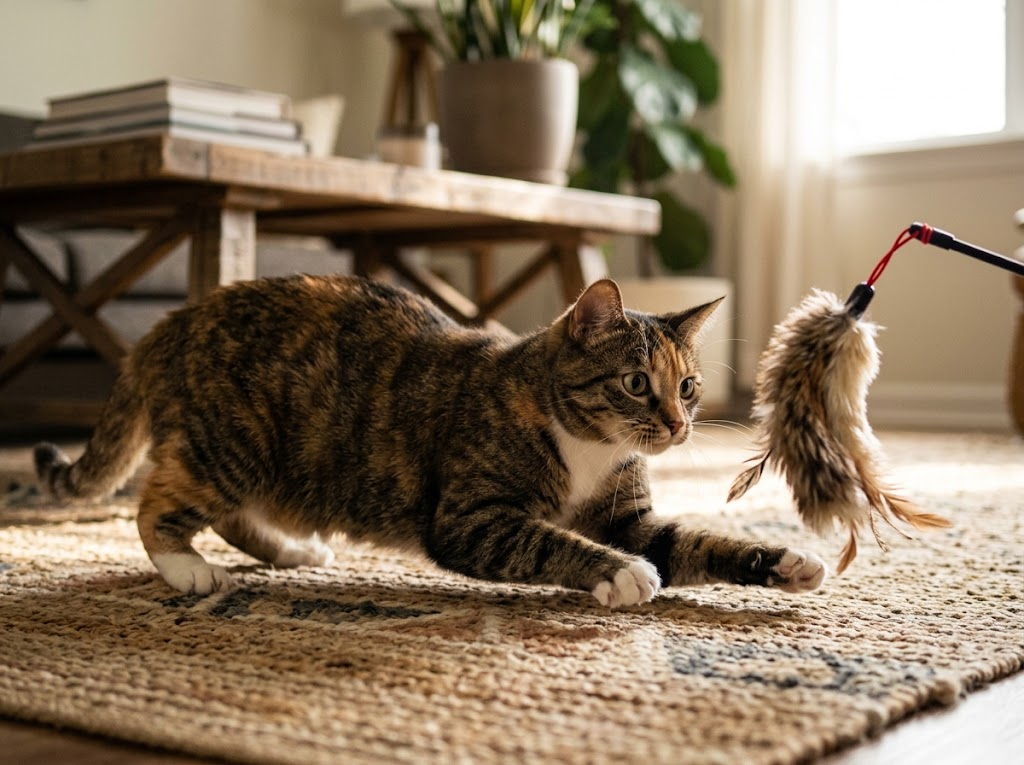
Your cat doesn’t need an empty stomach to act like a hunter. Domestic cats still have the physical and behavioral traits that drive stalking, chasing, and catching.
According to research on cats’ predatory play behavior from International Cat Care, feline hunting includes actions such as searching, stalking, chasing, pouncing, and capturing. Play lets cats practice many of these movements without real prey.
That’s why a small toy mouse can become a serious mission. Your cat stalks it across the floor, grabs it, carries it around, and sometimes takes it to another room.
This is where the hunting-instinct explanation fits. Carrying and capturing an object are natural parts of feline predatory behavior, even when the object is a plush toy.
The toy isn’t necessarily being treated as food. Your cat is simply acting out behaviors that come naturally to them.
The reason cats bring toys varies from one cat to another. Personality, routine, age, and past experiences all play a part.

Some cats carry toys as though they’ve caught something worth showing off. They chase a toy under the sofa, grab it, and proudly parade it into another room.
Mother cats also carry prey to their kittens, so prey-carrying has a clear place in feline behavior. However, there is limited evidence that an adult cat brings a toy to a person specifically because it thinks it is sharing food or teaching a hunting lesson.
Your cat could simply be displaying the result of their play. The setting and what happens afterward are more useful clues than the toy alone.
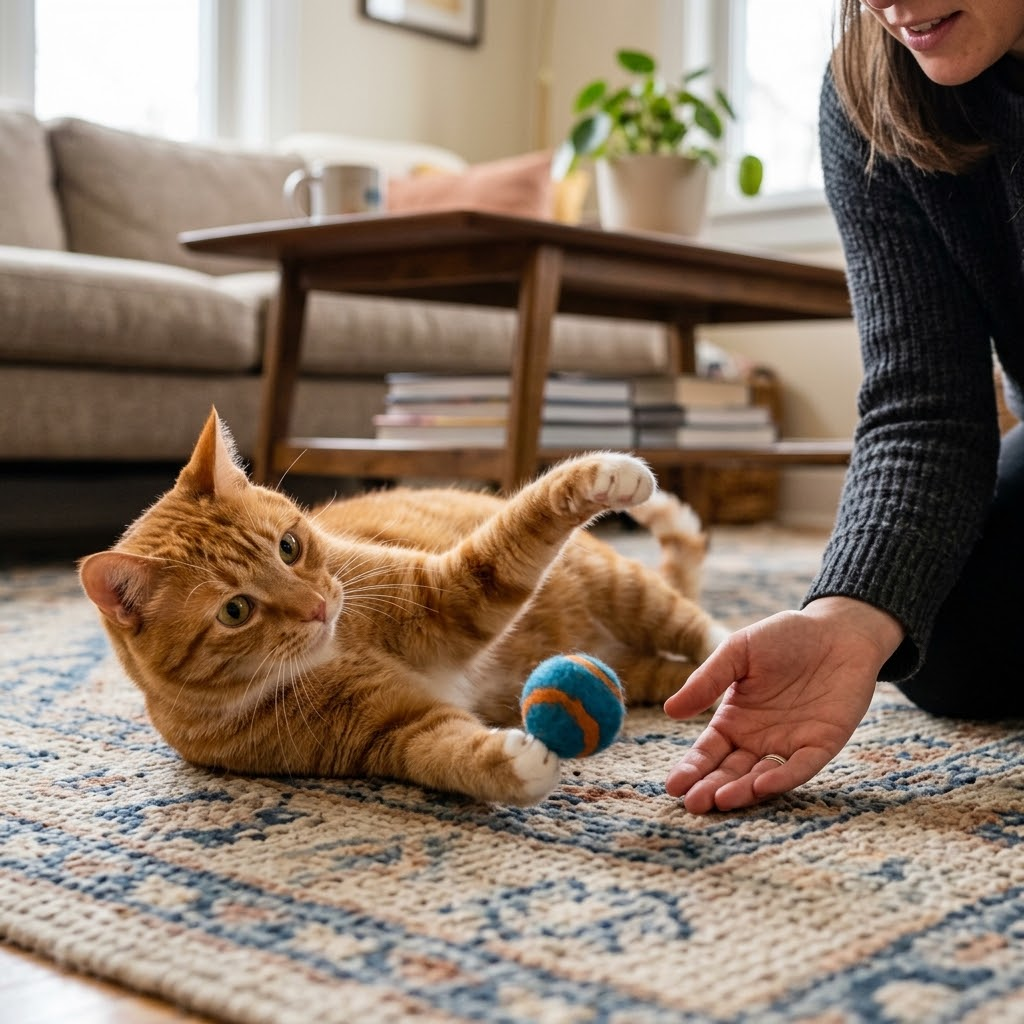
Sometimes your cat is making a very simple request: “Play with me.”
Cats learn which actions get a response. If your cat has ever brought you a toy and you picked it up, threw it, or started playing with it, it has learned that bringing you a toy gets a response.
You’ll often see the pattern clearly. Your cat drops the toy, looks at you, and stays nearby. Some cats take it a step further and bring the same toy back after you throw it.
For these cats, bringing toys has become part of the game itself.
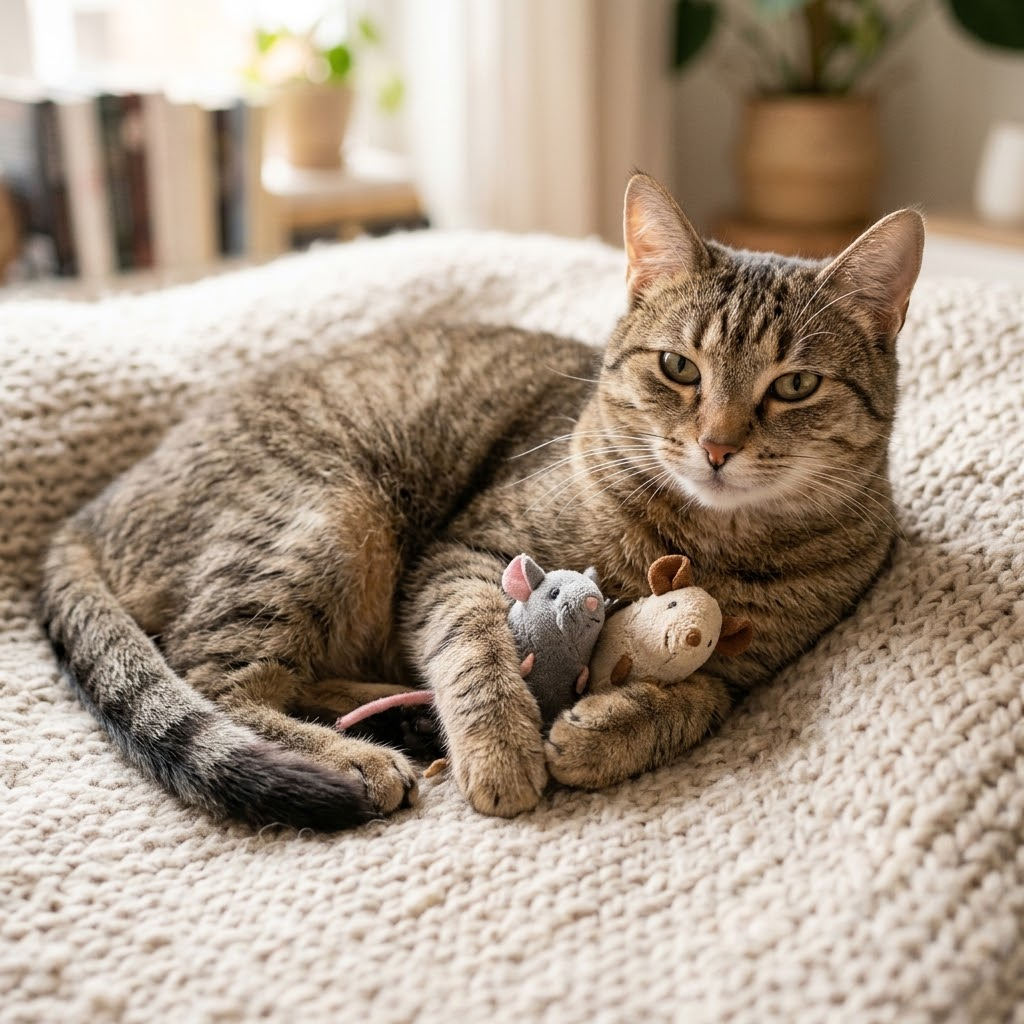
Mother cats bring prey to their kittens as they grow. Young kittens eventually get opportunities to handle prey and practice hunting.
That behavior has inspired the idea that a cat might bring a toy to a human as though the person needs a hunting lesson. It’s a fun theory, but there’s limited direct evidence that adult cats actually see people this way.
Maternal behavior provides useful background on prey-carrying, but it doesn’t explain every toy delivery.
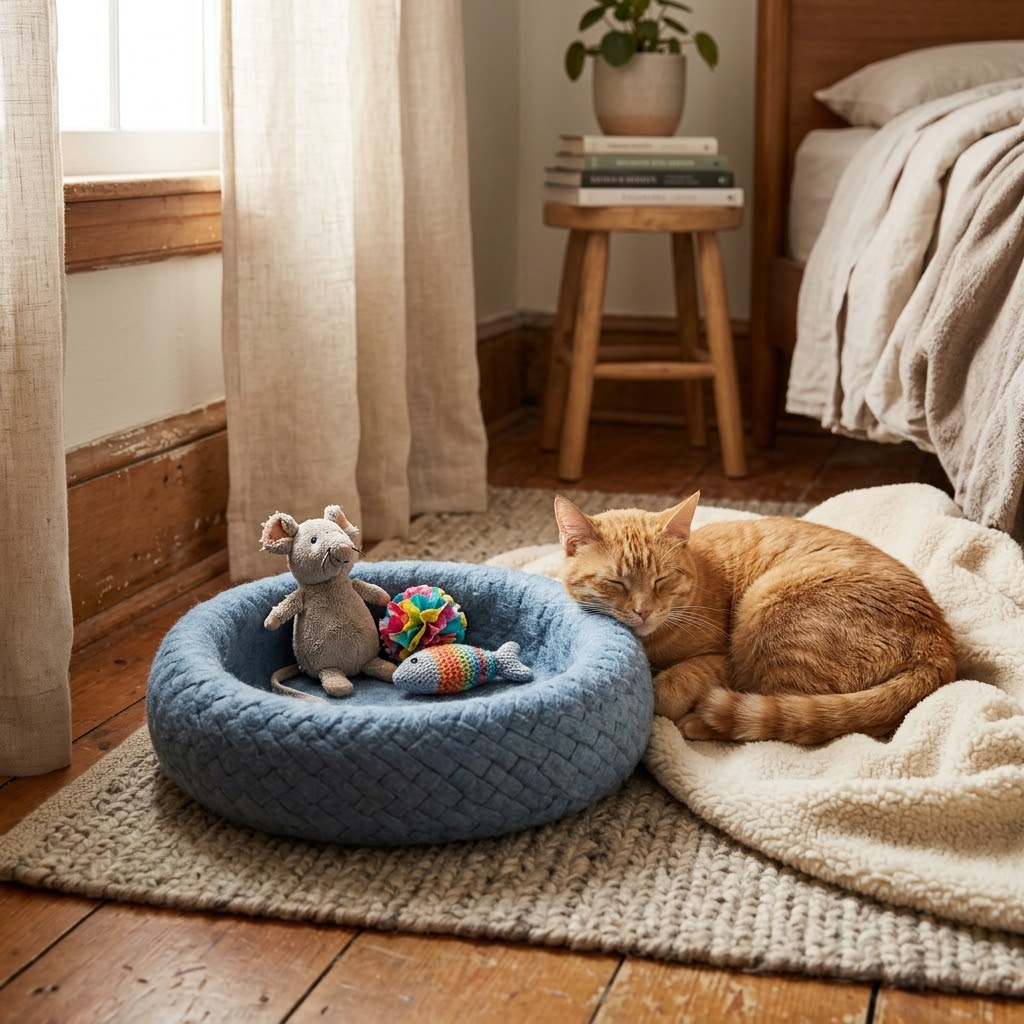
Some cats have favorite places for their toys. A bedroom, sofa, or quiet corner can become a regular drop-off point.
If your cat keeps leaving toys beside your bed or near your chair, the location itself could be important. That area already feels familiar and secure.
So, what does it mean when a cat brings toys to a particular room? Sometimes the answer has less to do with you and more to do with where your cat feels comfortable.

A nighttime toy delivery isn’t unusual, especially for a cat that sleeps through much of the day.
Cats are often most active around dawn and dusk, a pattern known as crepuscular activity. Some cats also become active at night, especially if they’ve spent the evening sleeping.
Picture the scene: it’s 2 a.m., the house is quiet, and your cat walks into the bedroom carrying a toy mouse. For your cat, it may be the perfect time for a game.
A play session before bed can help some cats use up extra energy. Food puzzles and other enrichment activities can also keep them occupied during active periods.
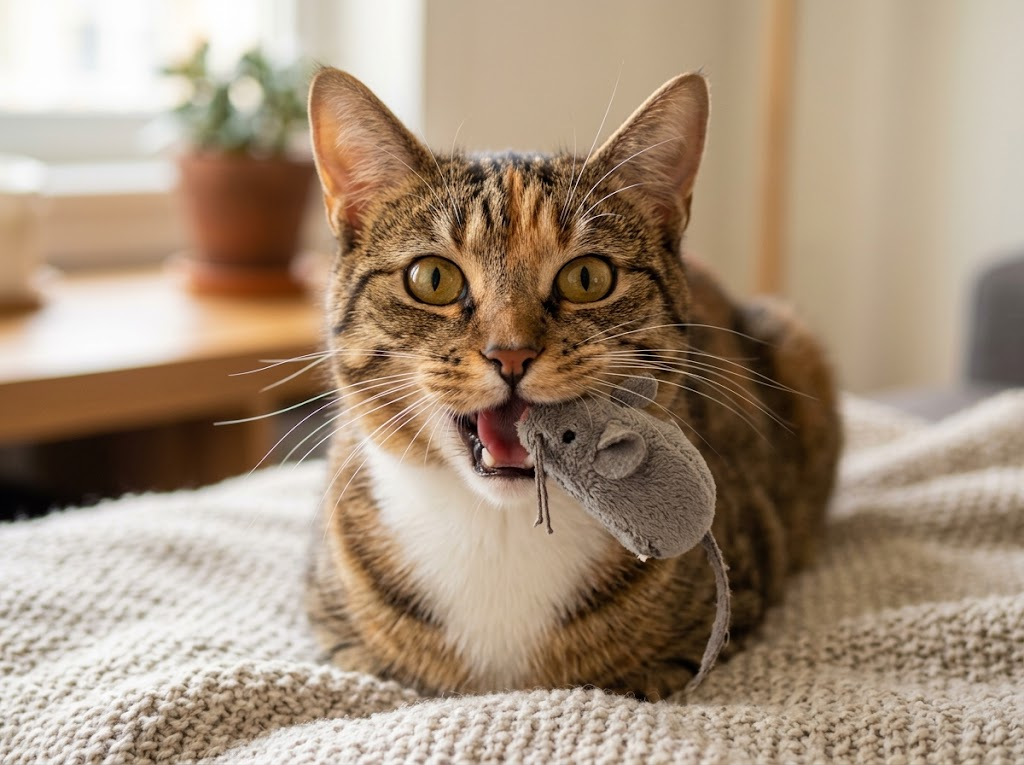
Some cats announce their deliveries. They walk through the house with a toy in their mouth, meowing, chirping, or making a muffled sound.
The noise is often part of the interaction. Cats learn that vocalizing gets human attention, so a meow can make sure you don’t miss their latest “catch.”
Two situations are especially common:
Pay attention to what follows. If your cat waits for you to pick up the toy, they likely want a game. If they wander off after dropping it, the delivery itself might have been the important part.
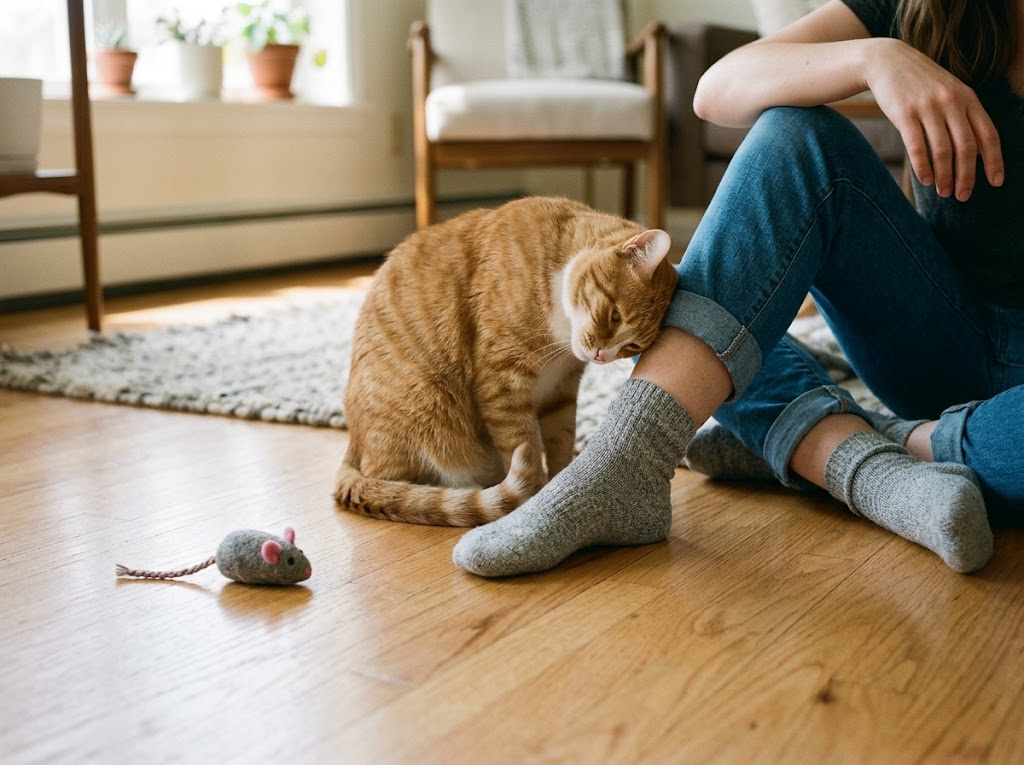
It can be part of a friendly social routine, but the toy itself doesn’t prove that your cat is showing affection.
Cats that feel comfortable around people often develop repeated ways of interacting with them. Bringing a favorite toy can become part of that routine. It also creates an opportunity for play and attention.
According to a vet-reviewed explanation of feline gift-giving, cats may carry toys for several reasons, including play, attention, and instinctive behavior.
Look at the rest of your cat’s body language. Rubbing against you, sitting close, following you around, head-bumping, and slow blinking provide more context. When those behaviors appear alongside toy deliveries, the overall picture points toward a comfortable bond.
Sometimes, though, the answer is less sentimental. Your cat may simply be bored, excited about a favorite toy, or ready for a game.
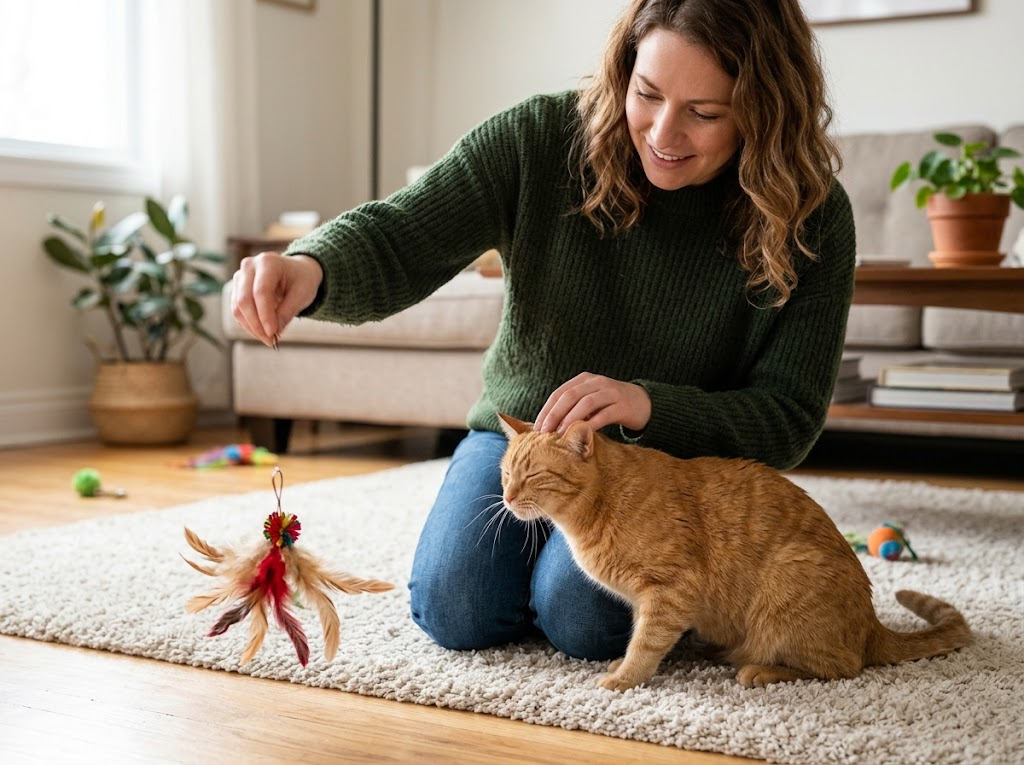
Your cat has made the first move. What you do next depends on what they seem to want and whether you have time to play.
You don’t have to turn every delivery into a long play session. Sometimes a quick response is enough.
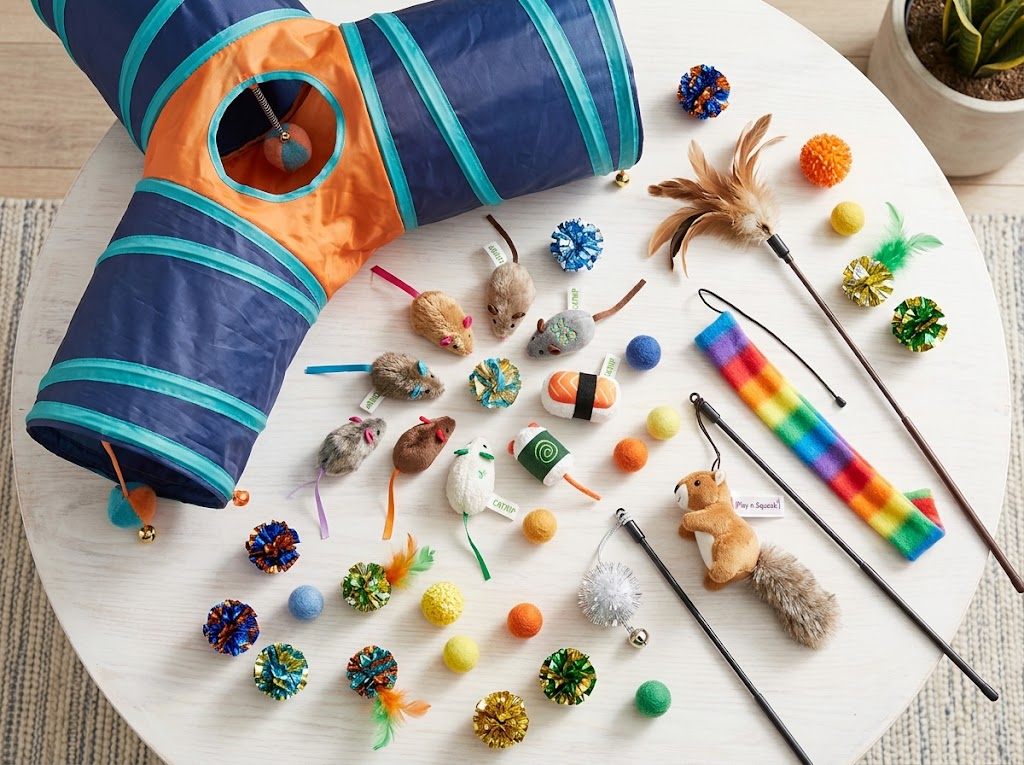
Toy carrying is one part of a cat’s natural play routine. The right toys can encourage chasing, stalking, pouncing, and carrying while giving indoor cats more ways to stay active.
A few simple changes can make play more interesting:
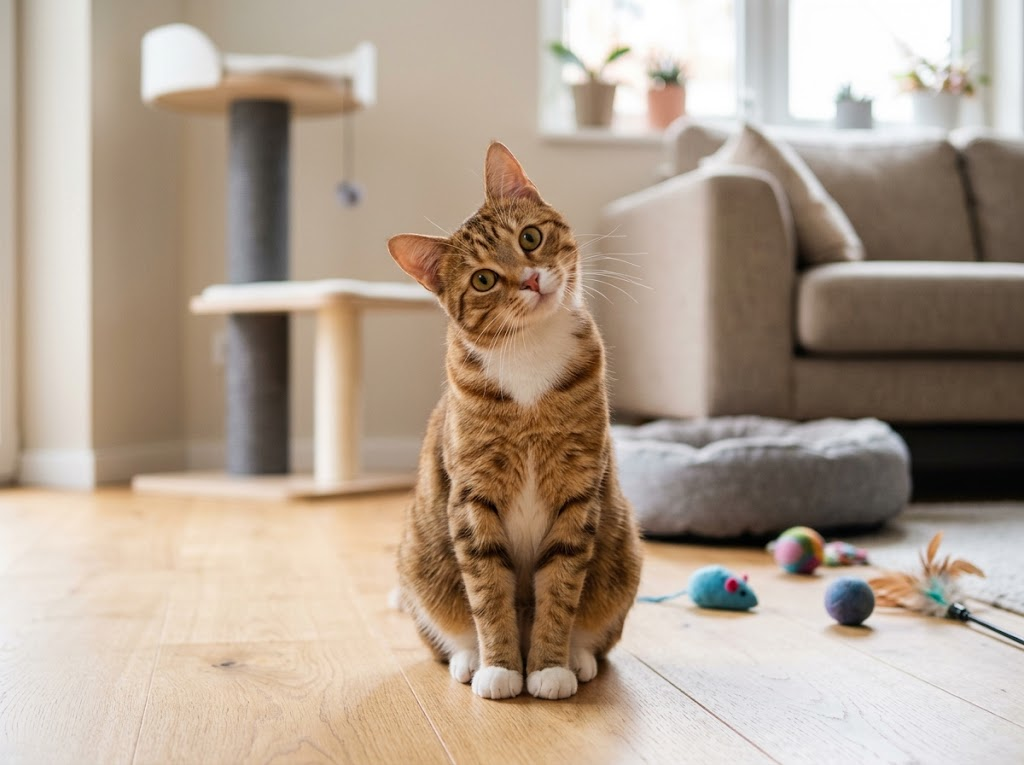
What does it mean when my cat brings me toys?
Usually, it means your cat wants some kind of interaction. Play, attention, hunting behavior, and carrying a favorite object are all common reasons.
Why does my cat bring me toys at night?
Your cat may simply be active after sleeping during the day. Cats often have strong bursts of activity around dawn and dusk, too.
How should I respond when my cat brings me toys?
Acknowledge the delivery and play if you have time. Letting your cat chase and catch the toy makes the interaction more rewarding.
Why does my cat bring me toys and meow?
The meowing helps get your attention. Your cat could be announcing the toy, inviting you to play, or simply vocalizing while carrying it.
Is my cat bringing me toys a sign of affection?
It can be part of a positive social routine, especially if your cat initiates contact by rubbing against you, head-butting, slow-blinking, or sitting close to you.
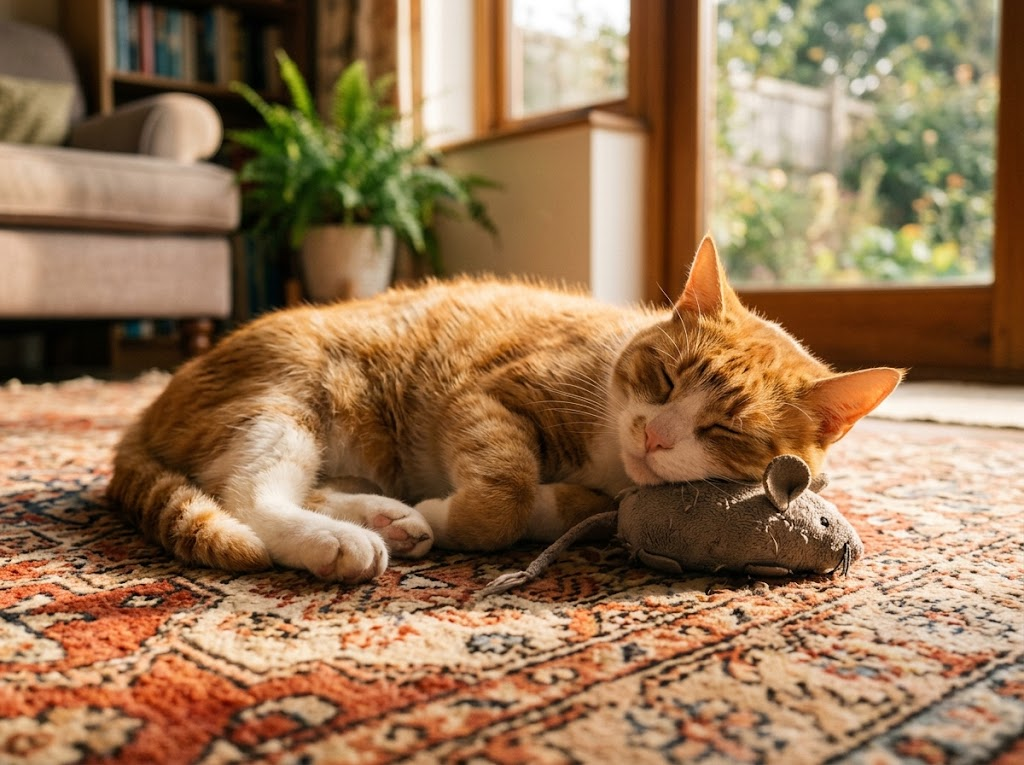
The next time your cat delivers a toy, look at what they do afterward. A cat that stares at you and waits is probably ready for a game. One who drops the toy and walks away might simply be moving a favorite object to a familiar spot.
Either way, there’s no need to overthink every delivery. Let your cat’s behavior guide your response. A little praise, a few minutes of play, or simply acknowledging their “catch” can turn the moment into a useful interaction.
If the toy box needs some new options, you can browse our full collection here and find more toys for your cat to chase, carry, and explore.