You scrunch up an old receipt, roll it between your palms, and toss it across the living room rug. Your cat dashes across the floor, bats the paper ball under a chair, and carries it off proudly like a prize. An hour later, you walk into the kitchen to refill their bowl, only to find a soggy, wet lump of paper floating in the middle of their water dish.
If this happens in your house, you’re not alone. Many pet parents find themselves asking, “Why does my cat drop paperball toys in water?”
It looks strange. Is your cat trying to wash the toy? Did they drop it while getting a drink? Or did they discover that paper balls are more fun once water gets involved?
Finding cat toys in water isn’t unusual. Paper balls, toy mice, plastic springs, and other small toys can all end up in drinking bowls. Hunting-related play, curiosity, novelty, and simple accidents all offer possible explanations.
Here’s what to know about the habit, when it matters, and how to keep your cat’s drinking water clean.
There isn’t one answer for every cat. Carrying, chasing, batting, and grabbing toys are common feline play behaviors that overlap with hunting behaviors.
The water adds another variable. Once a paper ball gets wet, its texture and weight change, giving your cat something different to investigate.
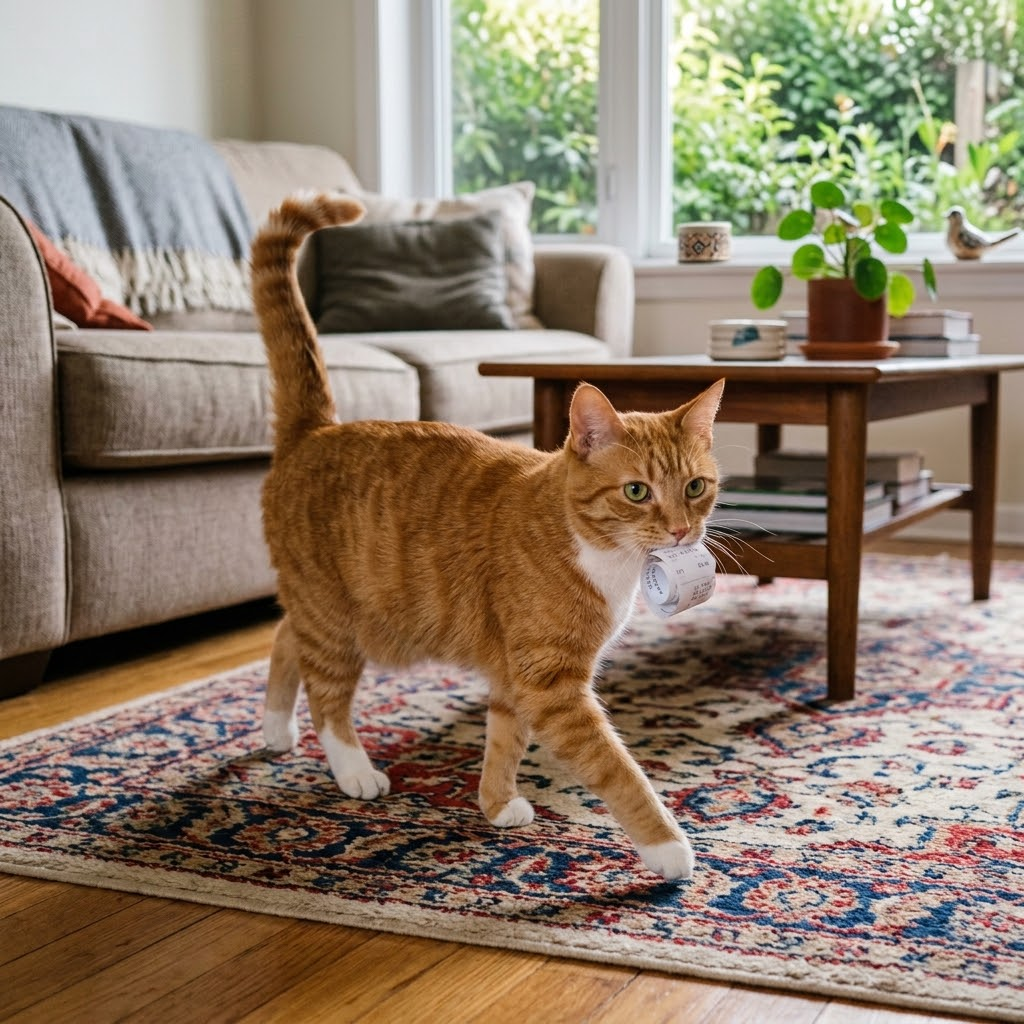
Your cat’s paper ball isn’t trash as far as they’re concerned. It’s something to chase, grab, carry, bat, and sometimes hide. Those actions are closely related to normal feline play and predatory behavior.
Some cats carry toys through familiar parts of the home, so a toy may end up near a food or water station without any special meaning.
If your cat also carries toys to their food bowl, our guide on why cats put toys in their food bowl offers a useful comparison. The same basic play and carrying behaviors can show up around different parts of the home.
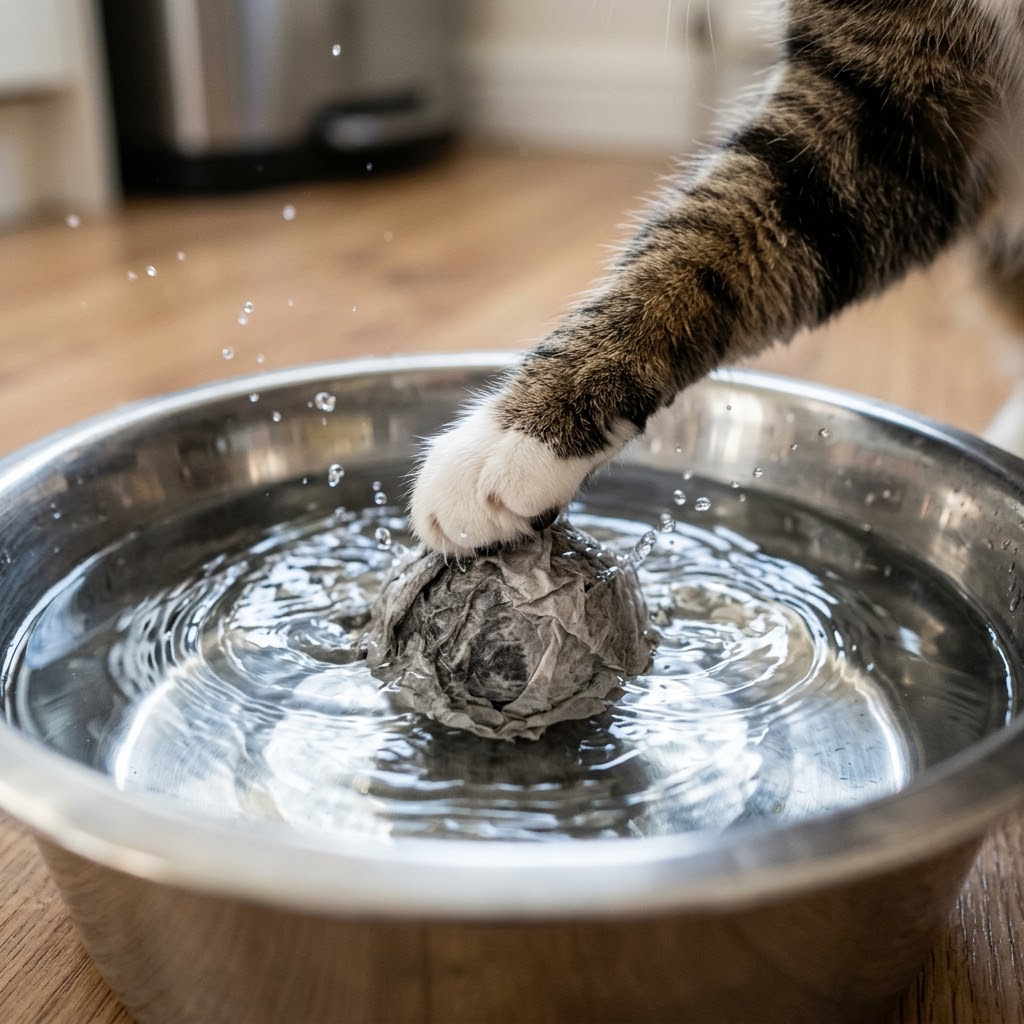
Here’s the fun part: paper changes when it gets wet.
A dry paper ball is light and easy to chase. Once it lands in water, it absorbs moisture, becomes softer and heavier, and may float briefly before sinking. Pawing at it creates ripples and makes the toy move in ways it doesn’t on a dry floor.
For a curious cat, that’s a new game.
Your cat gets to paw at the toy, push it under, watch it move, and fish it back out. Toy mice, foam balls, and other lightweight objects can produce similar reactions.
So if you’ve been wondering why cats put toys in water, curiosity and play are straightforward explanations.
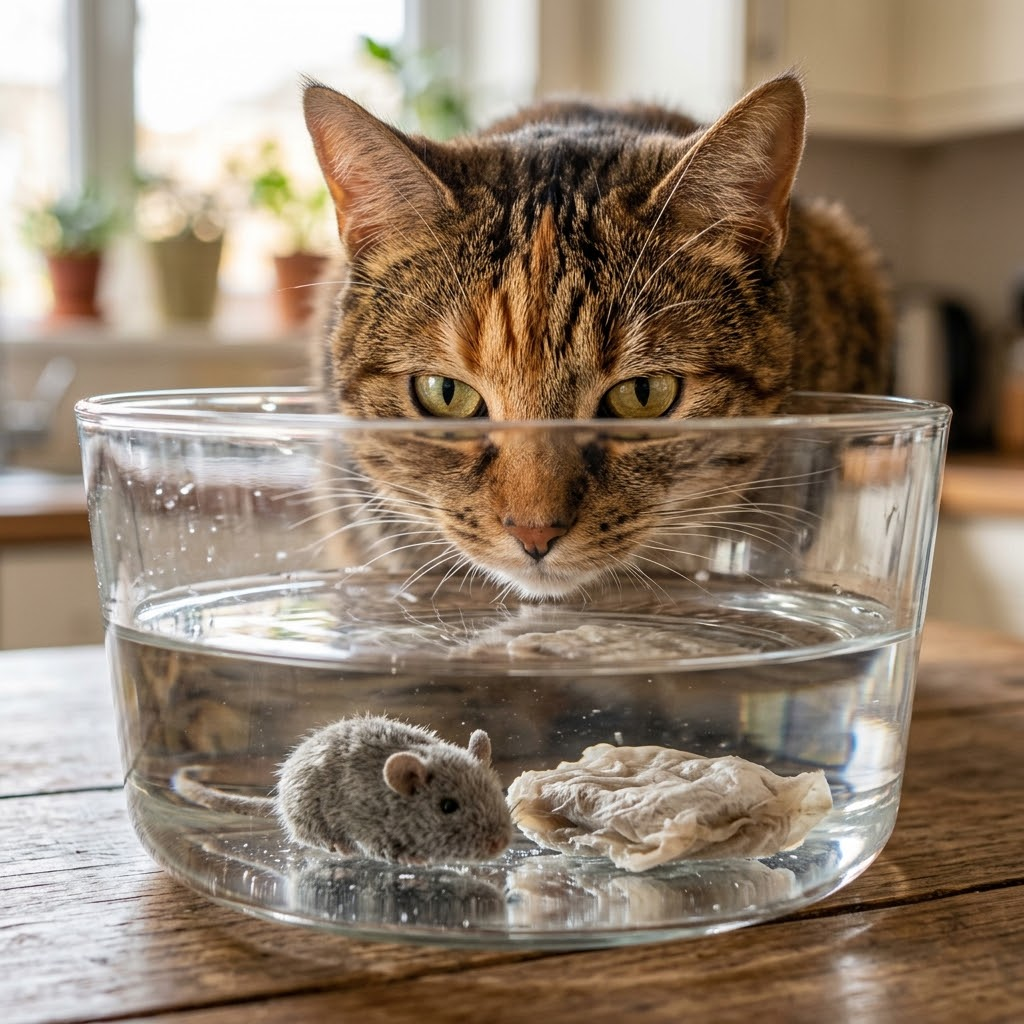
People often describe this as a cat “drowning” its prey. The idea is sometimes linked to hunting behavior, but there isn’t enough evidence to say that a cat putting a toy in a water bowl is deliberately recreating a specific prey-killing technique.
The connection to predatory play is reasonable. The exact intention isn’t known.
Your cat might simply enjoy pushing the toy below the surface because it moves differently there. The water adds resistance, changes the texture, and gives the cat something to manipulate.
Feline behavior experts at Catster have also discussed the possible relationship between hunting behavior and cats putting toys in water.
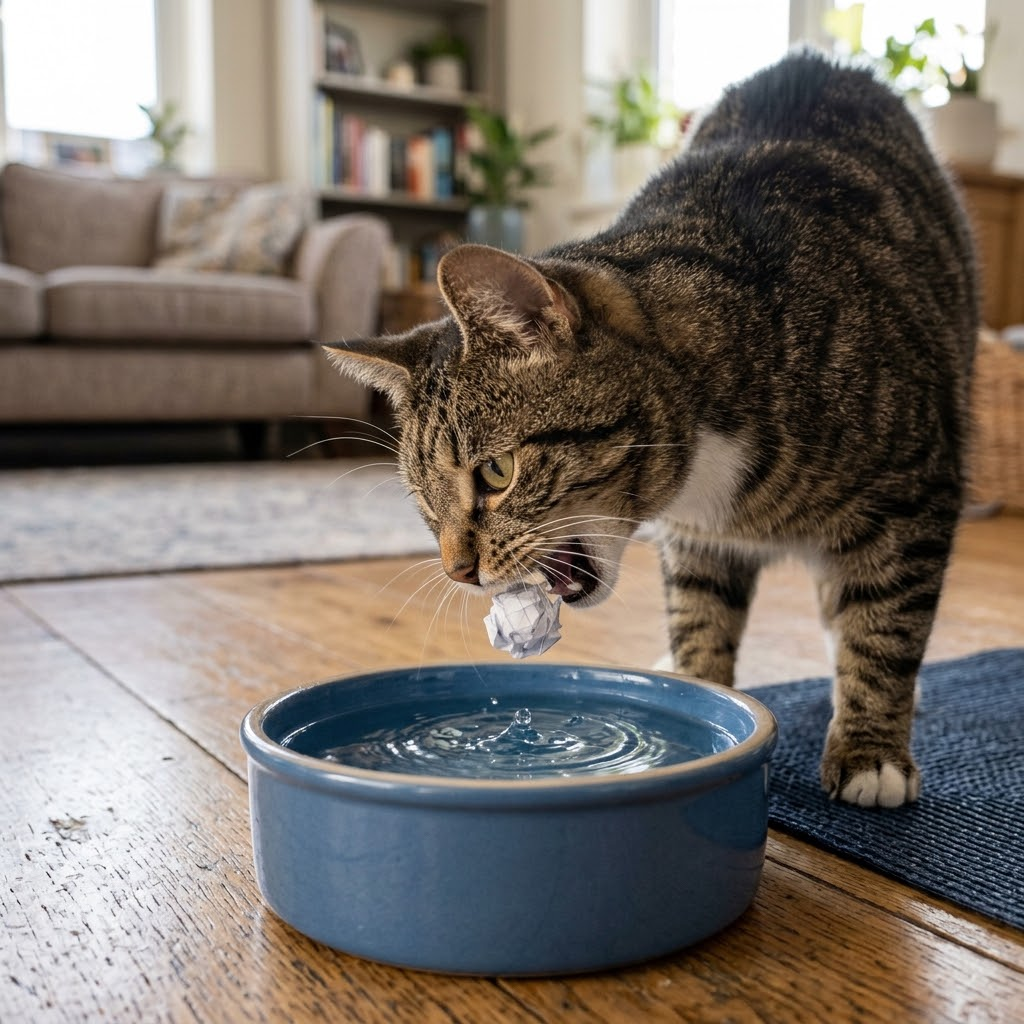
Not every wet toy has a deep explanation.
Your cat gets thirsty during play, walks to the bowl with a paper ball still in their mouth, leans down for a drink, and—plop—the toy falls into the water.
Lightweight toys are easy to drop. Sometimes the cat then discovers that the wet toy is fun to play with, turning an accident into a new routine.
Limited play opportunities may contribute to some cats, especially if the water bowl becomes an easy source of novelty. But cats with plenty of enrichment can still do it.
Your response can also become part of the routine. If your cat receives interaction each time this happens, that response may unintentionally make the behavior more interesting for some cats.
As a related example, our guide on why cats ignore their humans looks at the small ways cats interact with and respond to their people.
Blue Buffalo also discusses cats sinking toys and finding unusual ways to interact with objects around the home.
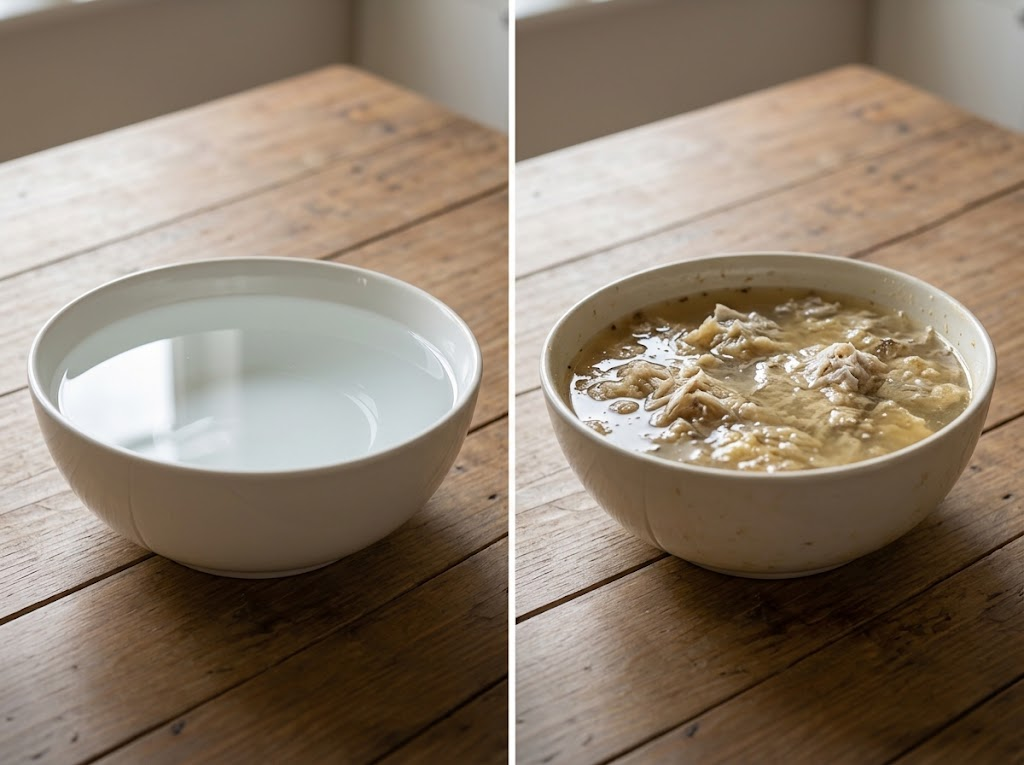
A toy landing in the water isn’t usually an emergency. The bigger concern is what happens to the water and whether your cat chews or swallows pieces of the toy.
Wet paper can fall apart and leave behind fibers, ink, or dye. Toys can also introduce dirt and debris into drinking water. Remove wet toys as soon as you notice them, and replace any contaminated water.
Keep an eye on three things:
If your cat repeatedly swallows toy material and then develops vomiting, constipation or straining, reduced appetite, lethargy, abdominal pain, or trouble keeping food down, contact a veterinarian promptly. Those signs can occur with a gastrointestinal foreign body and shouldn’t be written off as a quirky toy habit.
You don’t have to stop your cat from being curious about water. The practical goal is to keep the drinking station clean and make other forms of play more appealing.
Start by moving the water bowl away from toy baskets and busy play areas. A quieter location makes it less convenient to turn the bowl into a toy box.
If your cat carries toys around the house, try a different location.
A heavy, stable fountain is another option. Some cats seem more interested in moving water, so a fountain may encourage drinking for certain individuals. It isn’t necessary for every cat, though.
Ceramic fountains are easy to clean and don’t tend to hold odors the way some porous materials can. What matters most is the fountain’s design, how easy it is to take apart, and how consistently you clean it.
If you’re considering one, our guide to the top ceramic cat water fountains compares the hygiene and filtration features worth looking for.
A fountain isn’t foolproof. A determined cat can still drop a toy into it.
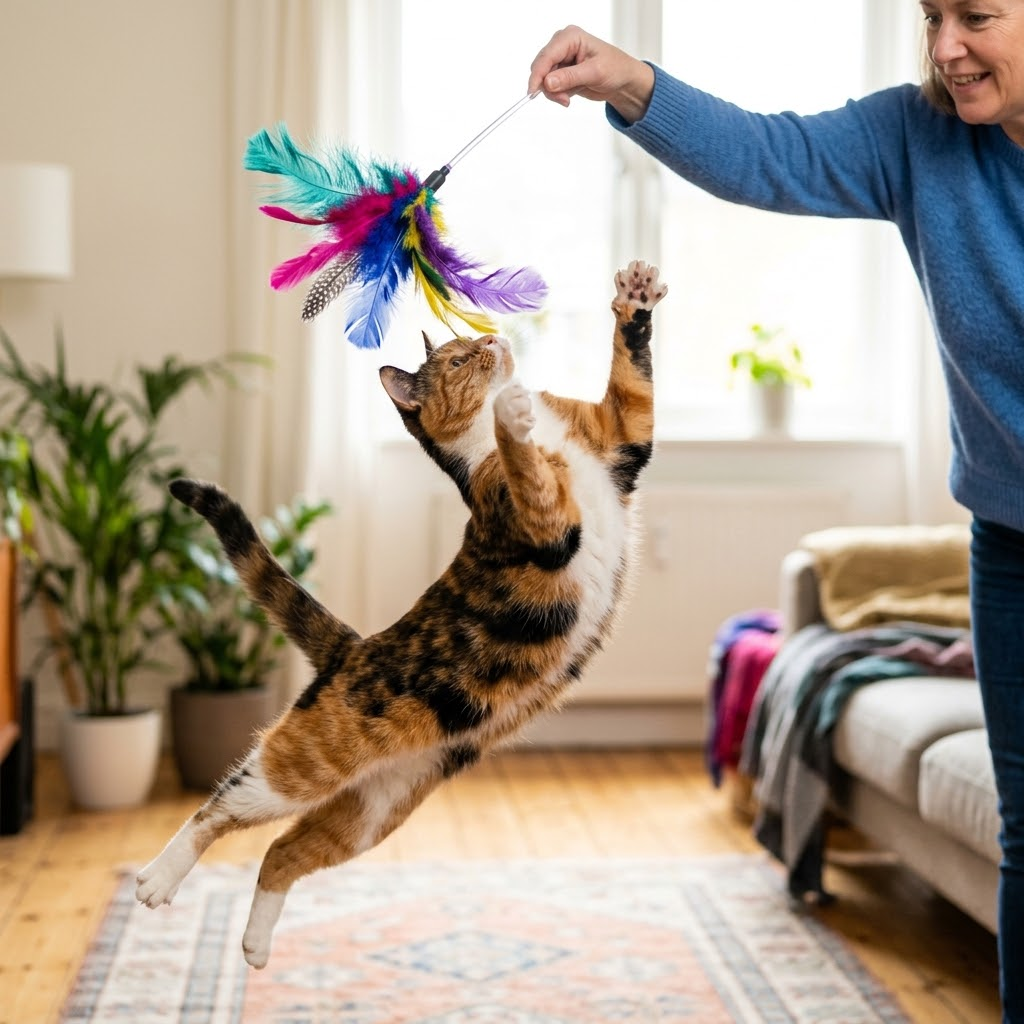
This doesn’t need to become a complicated enrichment program.
Grab a wand toy and let your cat chase it around the room. Use a puzzle feeder. Hide a few toys for them to find. Short, regular play sessions give indoor cats opportunities to stalk, chase, and pounce.
If your cat heads toward the water bowl with a toy, redirect them calmly and reward the alternative behavior. Avoid punishment or turning the incident into a big attention-grabbing event.
For another example of positive redirection, see How to Keep Cats From Scratching Leather Furniture.
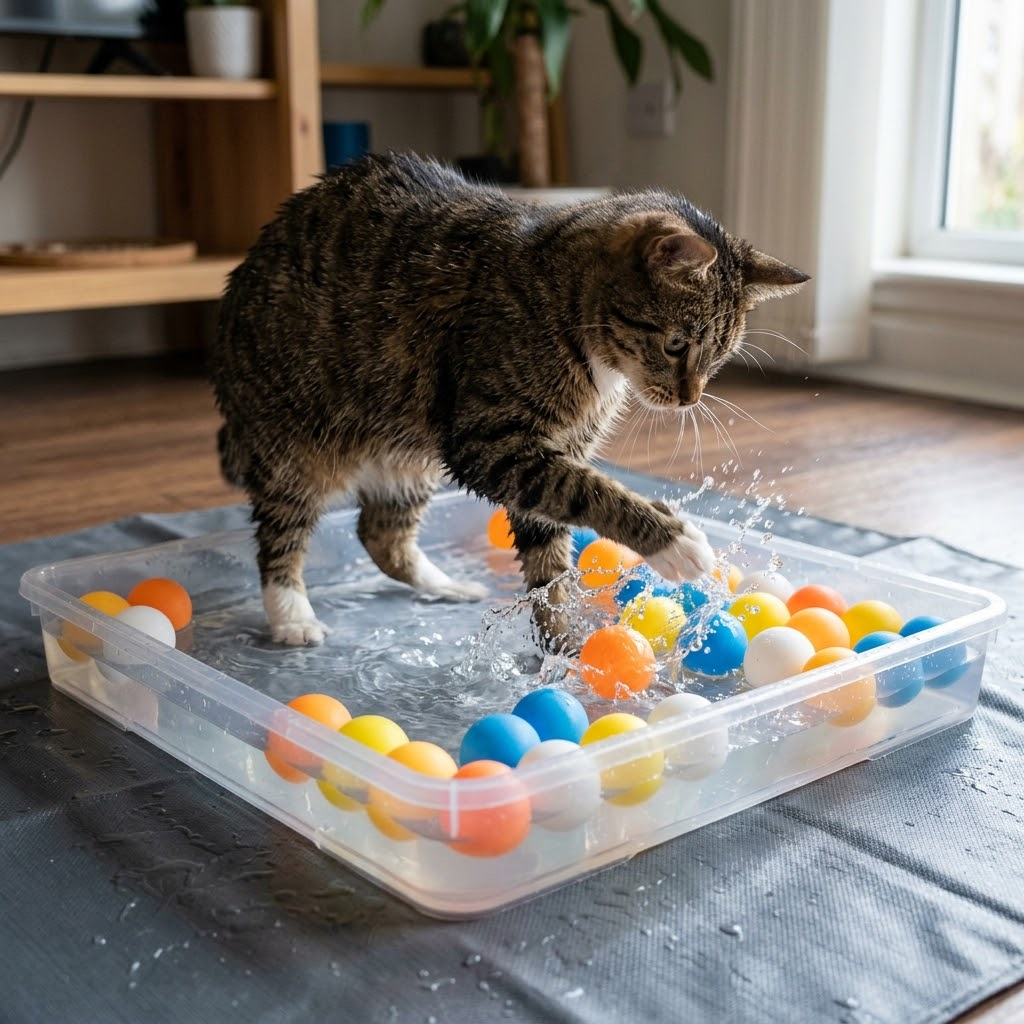
Some cats simply like water.
If yours enjoys splashing or pushing objects across the surface, give them somewhere else to do it. A shallow tray with a small amount of water can provide supervised enrichment.
Use only large, non-toxic objects that cannot be swallowed, supervise throughout, and put the tray away once playtime ends.
Keep the tray away from the drinking station. Your cat gets the water game, while their actual drinking bowl stays clean.
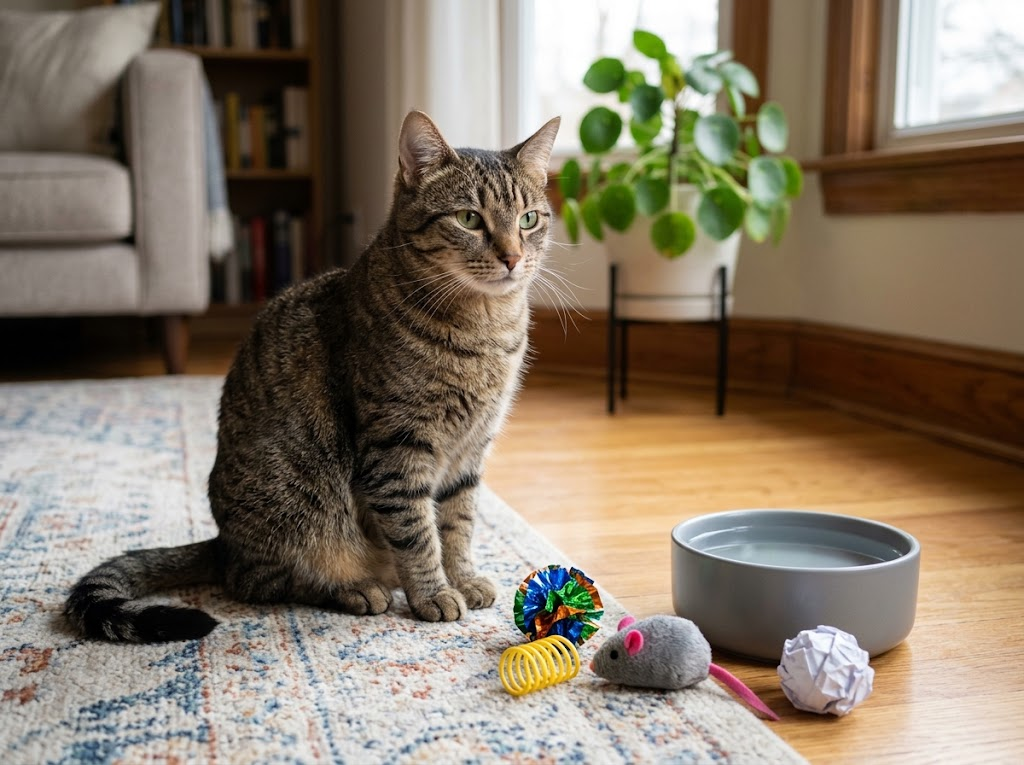
Hunting-related play, curiosity, and simple exploration all fit the behavior. Cats naturally chase, carry, bat, and manipulate objects, while water changes how those objects feel and move.
A paper ball that becomes soft, heavy, and difficult to grab is a very different toy from the dry version.
Yes. If your cat is otherwise eating, drinking, playing, and behaving normally, an occasional toy in the bowl is usually just a quirky habit.
Take it out, refresh the water, and carry on.
Frequency alone is not usually a medical concern, but it matters if your cat is drinking less, repeatedly chewing or swallowing toy material, or if the behavior is sudden and accompanied by other changes.
A cat that keeps dropping toys into the bowl but otherwise acts normally is a different situation from one that starts vomiting, loses its appetite, becomes lethargic, or struggles to pass stool.
There isn’t a single known meaning.
The behavior fits with predatory play and object exploration. The idea that a cat is deliberately recreating a wild prey-drowning technique remains uncertain, so it’s better not to treat that explanation as fact.
Move the bowl away from the main play area first. Pick up loose paper toys when you’re not supervising, keep the water fresh, and give your cat regular opportunities to chase and investigate other objects.
For cats that love splashing, a separate supervised water-play tray can help. A heavy fountain can also make the drinking station harder to disturb.
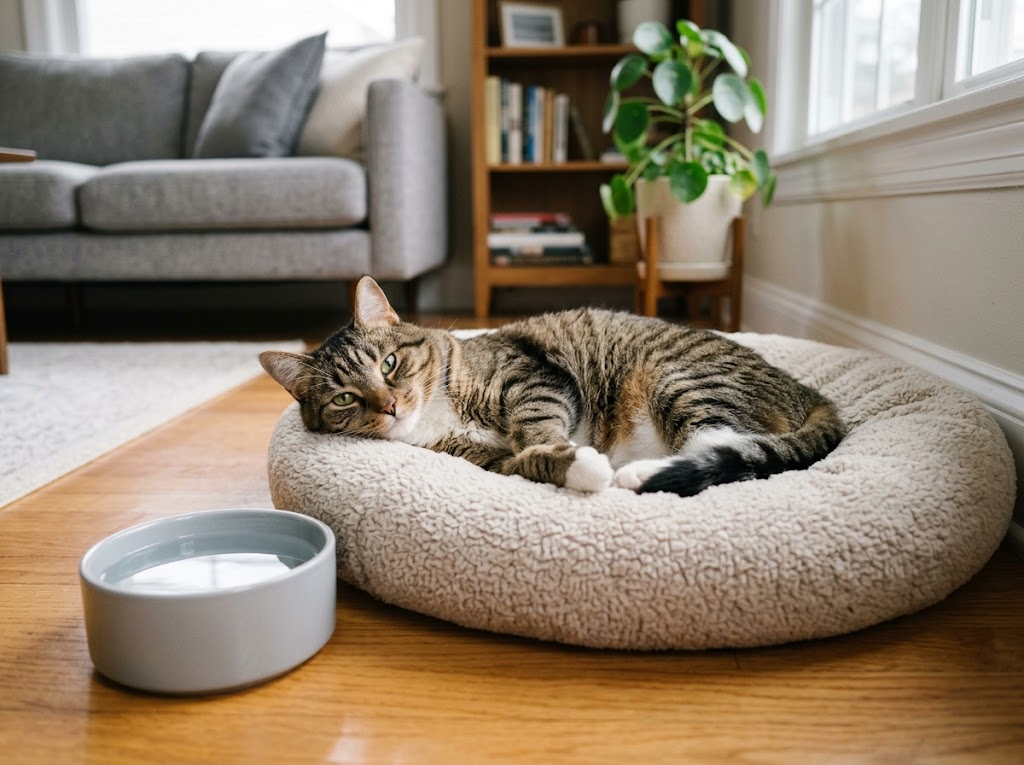
If your cat keeps dropping paper balls into the water, the behavior itself usually isn’t a reason to panic. Cats play with objects in odd ways, and water changes how an ordinary toy feels and moves.
Focus on the practical part: keep their drinking water fresh, remove wet toys, and clean the bowl regularly.
If your cat starts drinking noticeably less, repeatedly swallows pieces of toys or other non-food items, or develops vomiting, appetite loss, lethargy, abdominal pain, or other unusual symptoms, contact your veterinarian.
For more feline behavior and care guides, visit the ZezeLife blog.