
You walk over to feed your cat and find a plush mouse, crinkle ball, or feather toy sitting in their kibble dish. It may seem unusual, but many cat owners discover this curious habit. If you have searched for why your cat puts toys in their food bowl, you are not alone.
There is no single reason why a cat puts toys in the food bowl, but this behavior is often linked to play habits, familiar spaces, and a cat’s daily routine. A favorite toy may end up near their food because the area feels comfortable, because they carry objects there after playing, or because they have developed their own unique habit.
This guide explains why cats put toys in food bowls, what this behavior can reveal about your cat’s routine, and what you can do to keep toys separate from mealtime.
Cats often play with toys using movements similar to hunting, such as stalking, chasing, grabbing, and carrying. A small mouse toy, feather, or ball can become something they chase around the home before bringing it to another location.
Although indoor cats do not need to hunt for food, play allows them to practice natural movements and stay mentally active. After a play session, a cat may carry a toy to a familiar spot, and the food bowl is one of the places they visit every day.
For many cats, the feeding area is part of their normal routine. It stays in the same place, carries familiar scents, and is connected with something important: food.
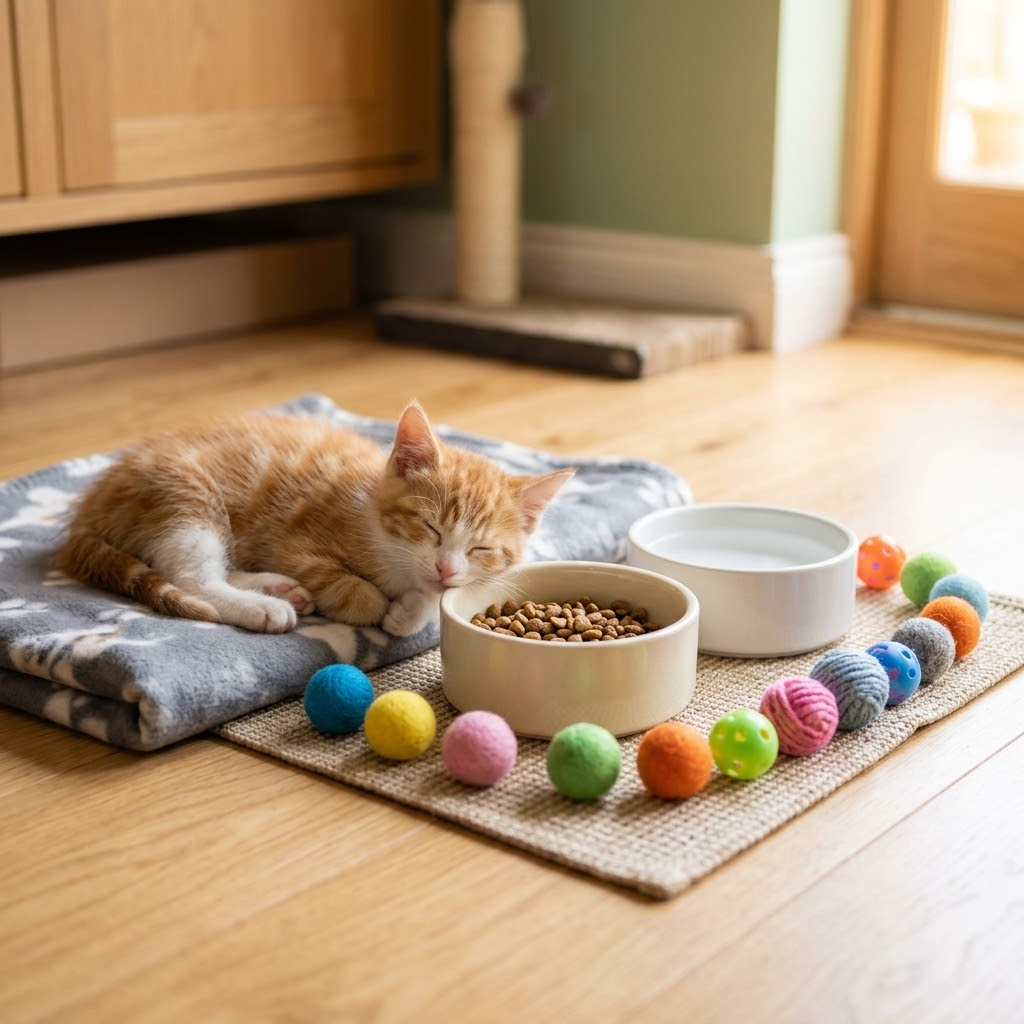
One common reason behind cats putting toys in food bowls is that the feeding area feels familiar and secure.
Cats rely heavily on routine. Their food station is a place they regularly return to, so a toy left there can simply be in a location they recognize and trust.
This behavior has sometimes been compared to the way cats carry valued objects to familiar places, although the reason may differ from cat to cat. A food bowl may become a preferred drop-off point because it is easy to find and stays in the same place.
This does not always mean your cat is protecting the toy from other pets. In many cases, the bowl is simply a convenient location that has become part of their routine.
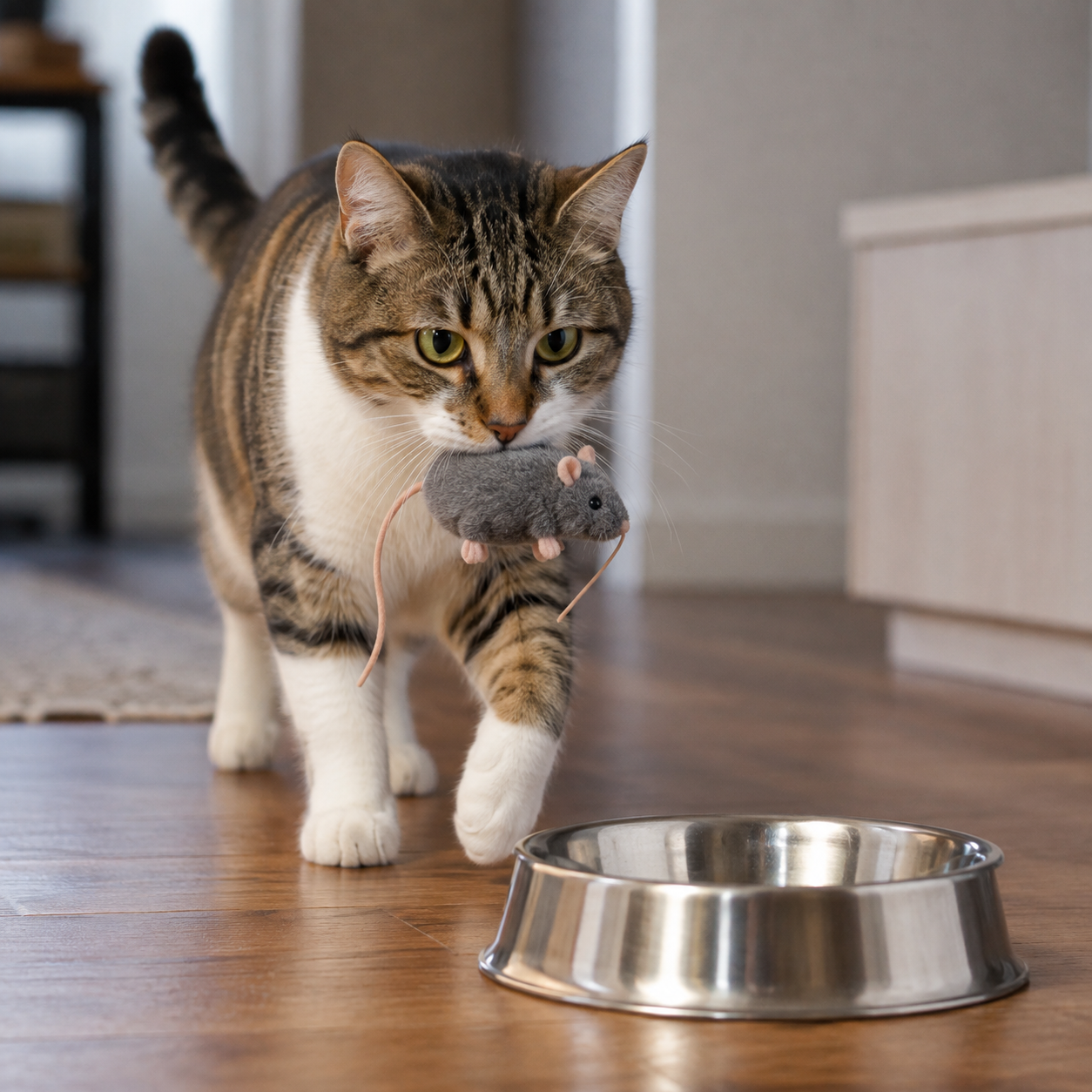
A cat may bring a toy to the food bowl because it is part of their normal movement around the home.
For example, your cat might chase a toy mouse across the room, carry it into the kitchen, and leave it beside the bowl before taking a break. What looks like a carefully planned action may simply be the result of where the cat happens to be during their daily routine.
This behavior is especially common with portable toys, such as small plush animals, lightweight balls, or feathered toys.
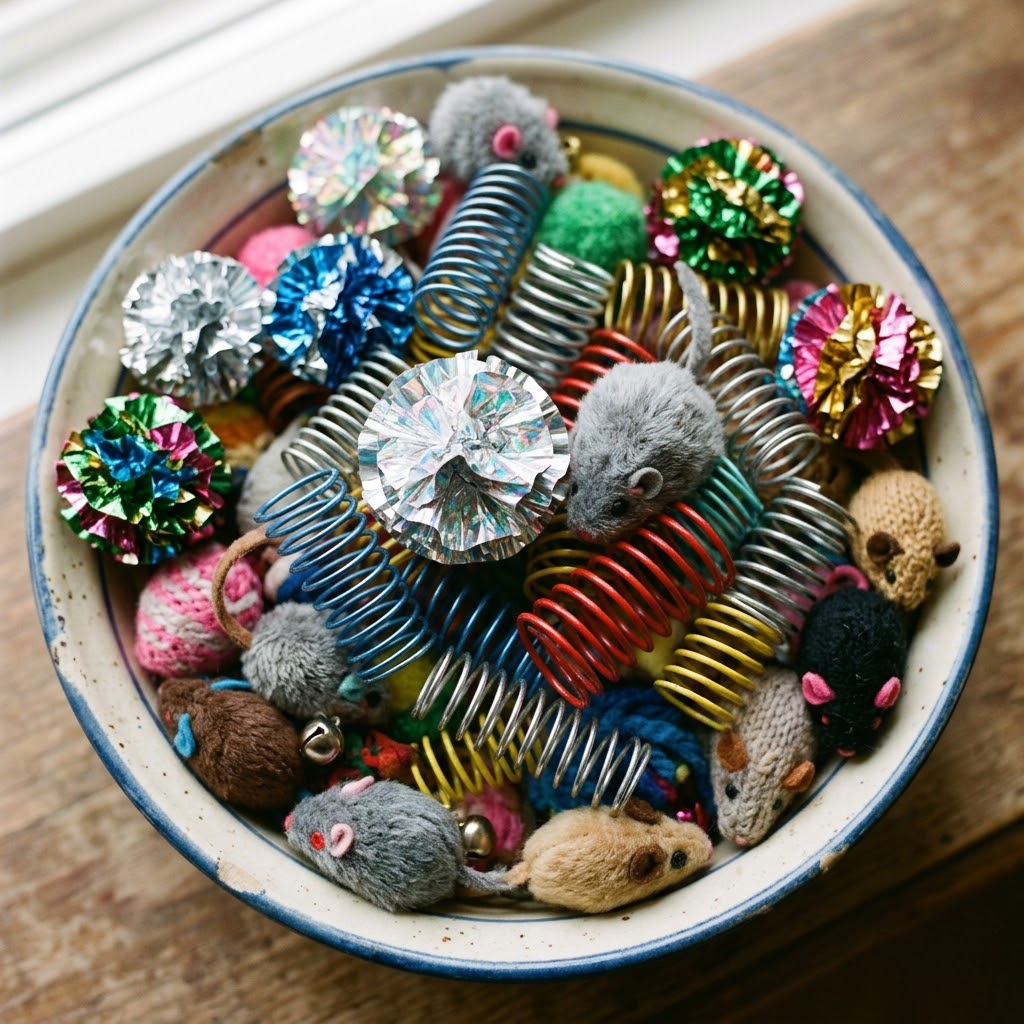
Cats often develop strong preferences for certain objects. One cat might carry the same stuffed mouse every day, while another might gather springs, balls, or small toys.
If your cat repeatedly places toys in the same bowl, they may have created a familiar storage location. The bowl is easy to spot, stays in place, and is already in an area your cat visits often.
This type of collecting is usually harmless unless it happens alongside other changes, such as aggressive guarding, anxiety, or unusual stress around food.
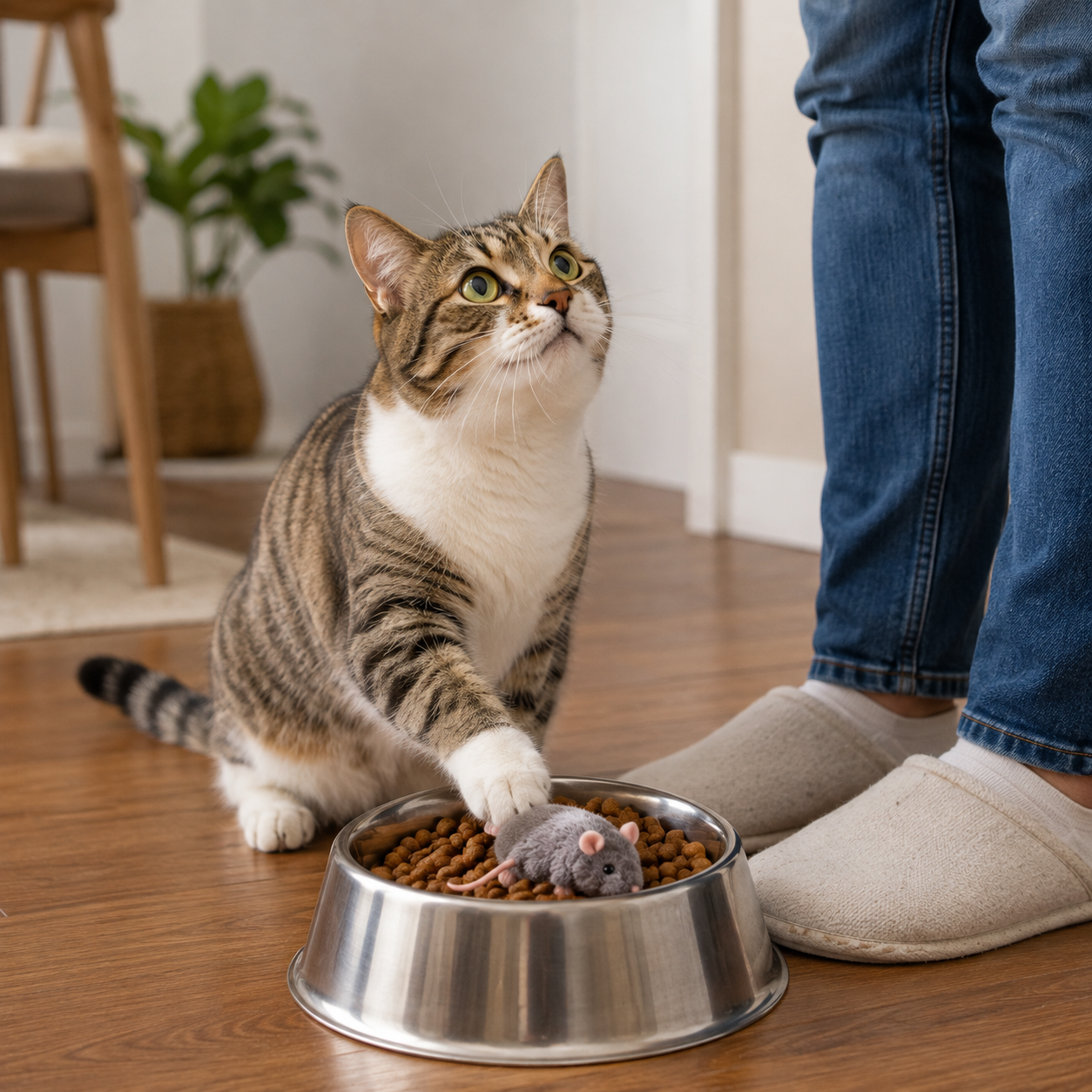
Cats quickly notice patterns in human behavior. If placing a toy in the bowl makes you laugh, talk to them, or give extra attention, the action can become part of a social routine.
Your cat is not necessarily trying to entertain you on purpose. They may simply learn that this behavior creates interaction with someone they enjoy being around.
This is similar to other attention-seeking behaviors, such as bringing toys to owners, meowing near a person, or repeating actions that receive a response.
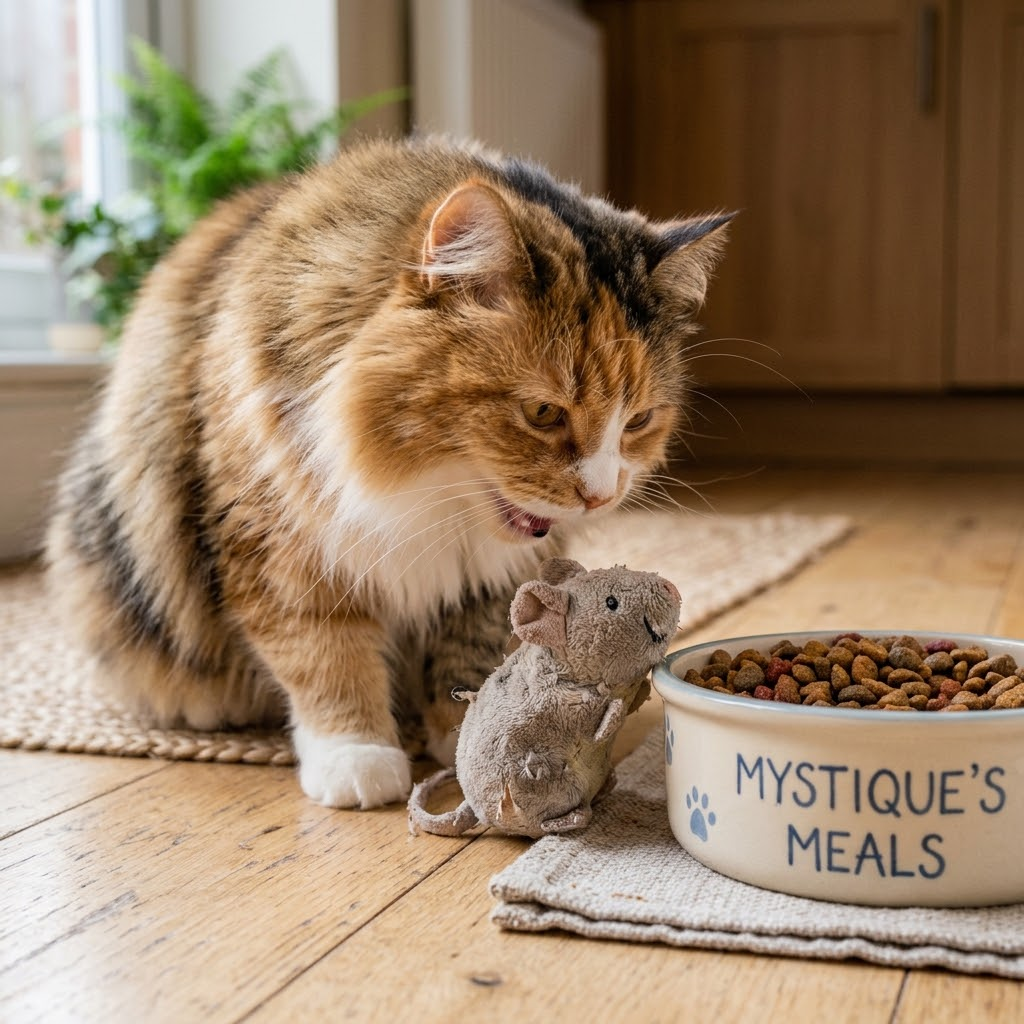
Many owners ask, Why does my cat put toys in his food bowl when the toy appears to be one of their favorites?
One explanation is that cats often return valued objects to familiar areas. A food bowl, sleeping spot, or favorite corner of the home can become a place where they keep things they enjoy.
We can’t know exactly what a cat intends when it drops a toy into a bowl, but the behavior often reflects its personal preferences and daily habits rather than a problem that needs correction.
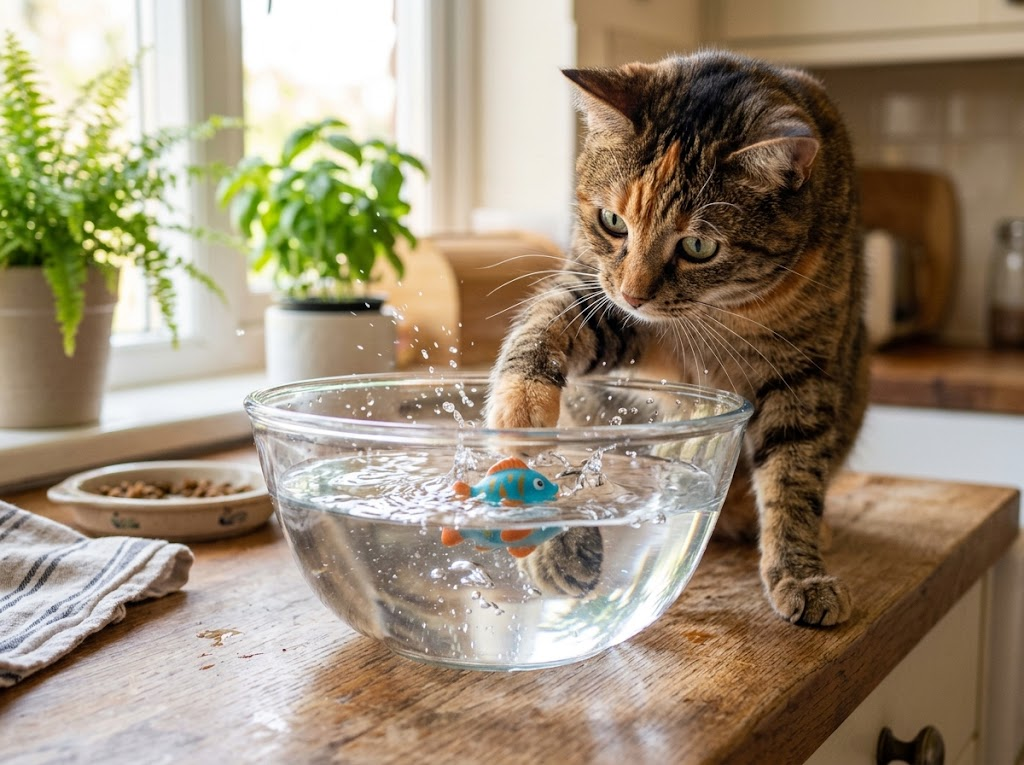
Some cats do not stop at the food dish. They also drop toy mice, balls, or springs into their water bowl, creating a different mystery for owners.
Putting toys in water is usually connected to curiosity and play. Water changes how objects move, creating floating, spinning, or shifting motions that make familiar toys more interesting. Unlike the food bowl, which is often in a consistent location, the water bowl creates a changing environment that encourages exploration.
A lightweight toy behaves differently when it lands in water. It may float, drift, sink, or move when your cat touches it.
For a curious cat, these changes can turn an ordinary toy into a new activity. Pawing at the object, watching it move, or trying to pull it out can become a form of play.
Cats often investigate new textures, sounds, and movements. A water bowl offers all three.
Some cats enjoy interacting with water because it creates a different experience from playing on a dry surface. This does not necessarily mean they are trying to wash their toys or perform a specific task. They may simply find the result interesting.
Sometimes the explanation is simple. A cat carrying a toy around the house may stop for a drink and accidentally drop it into the bowl.
If the toy moves or makes an interesting splash, the cat might repeat the action later because it has become another part of their play routine.
Finding toys mixed with kibble is usually harmless, but some owners prefer to keep feeding areas cleaner. If your cat puts toys in the food bowl, focus on changing the environment rather than correcting your cat.
This behavior is usually connected to curiosity, routine, or play. The goal is not to punish your cat but to give them another place to carry, store, or interact with their toys.
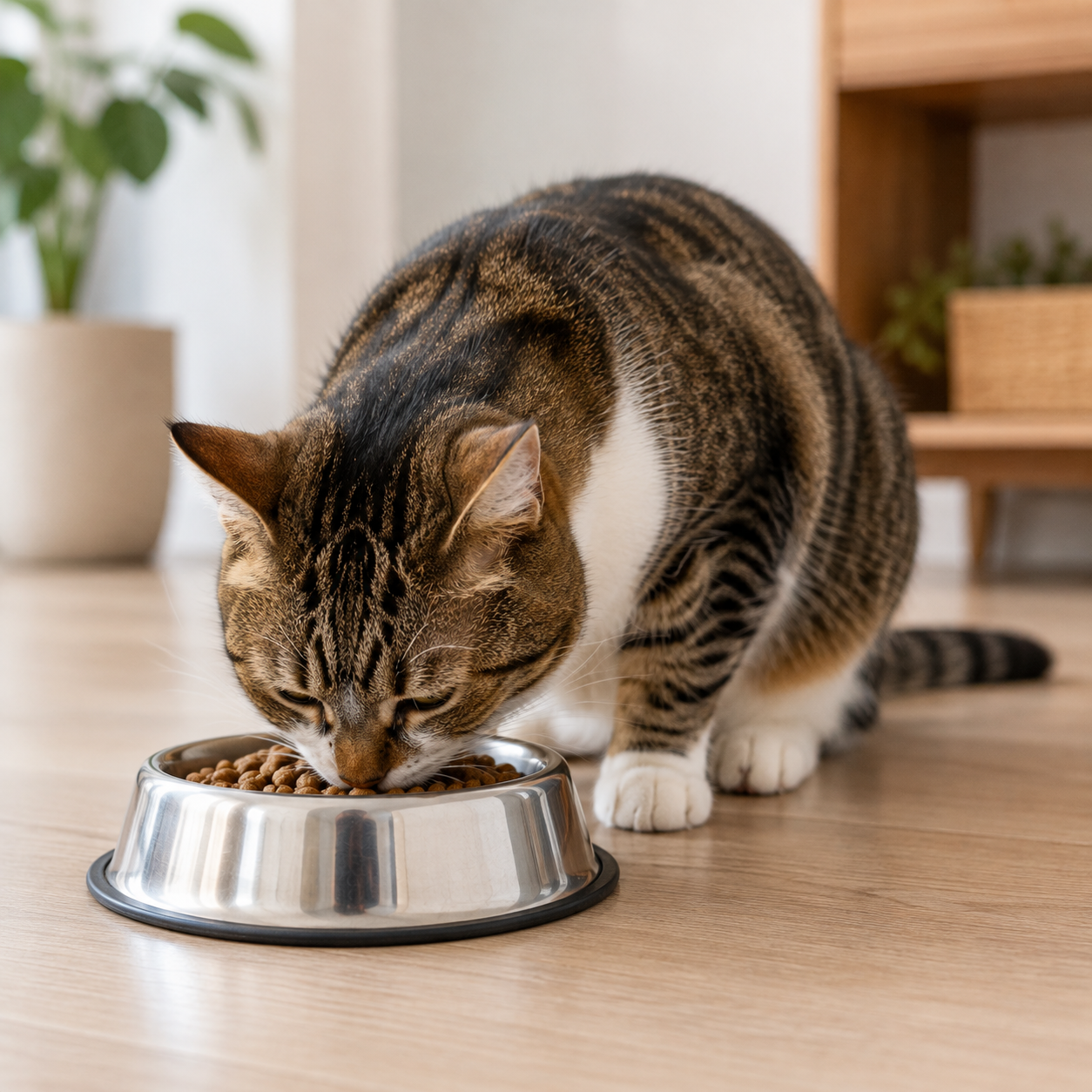
A food bowl that stays full all day gives your cat a convenient place to leave toys whenever they want.
If your cat has access to food all day, scheduled meals can make it easier to keep the feeding area clear. Serve measured meals at regular times and remove any leftovers after eating.
This also makes it easier to keep the feeding area clean and notice changes in your cat’s appetite.
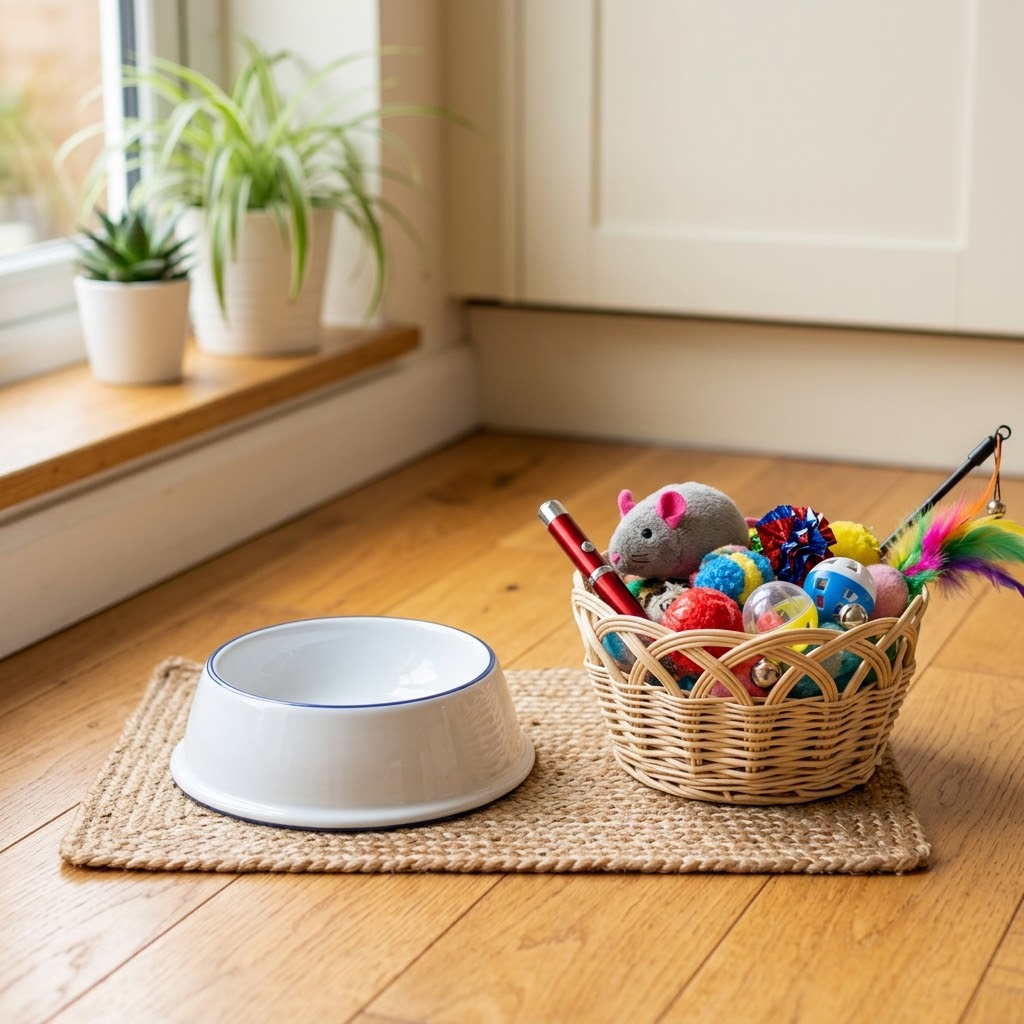
If your cat treats the food bowl like a toy box, set up another spot for their favorite items.
A small basket, open container, or toy station can give your cat a new place to collect objects. Keeping toys in the same area every day can help create a new routine.
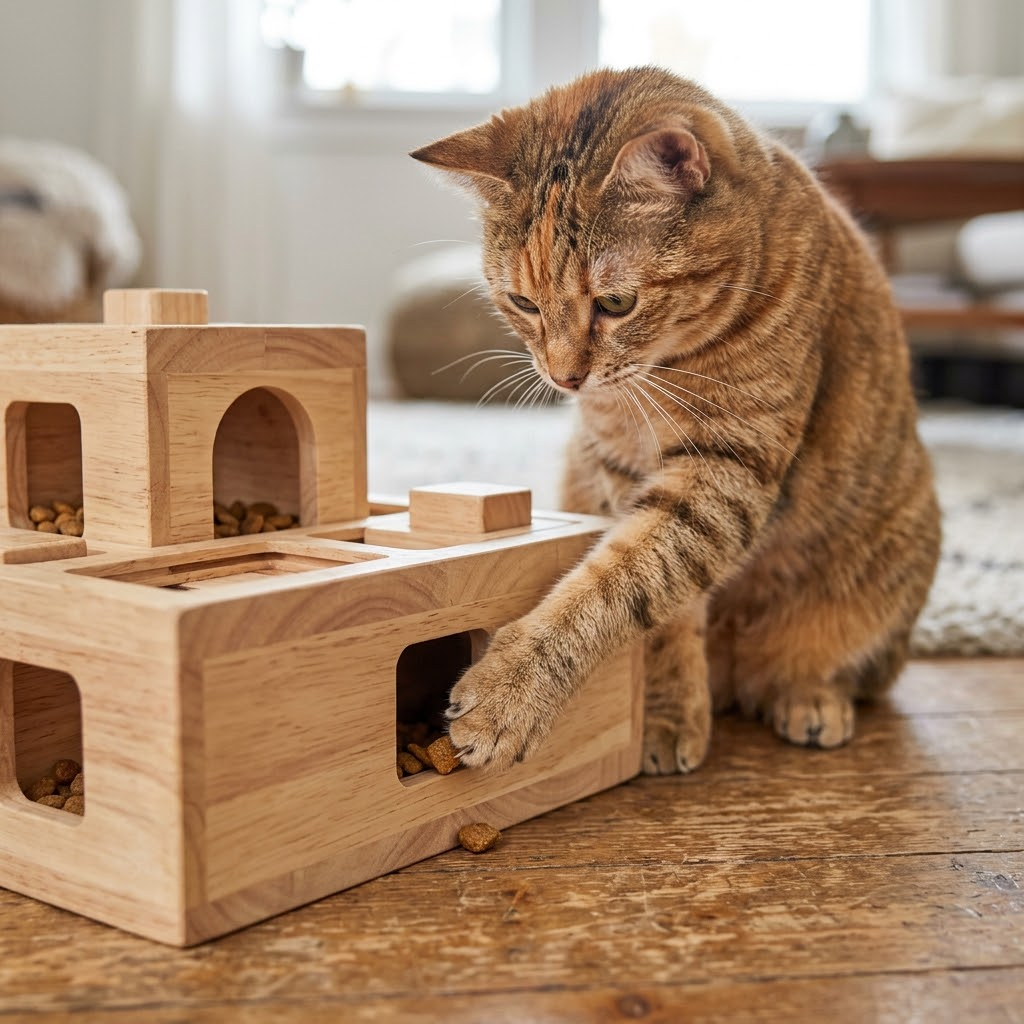
Cats enjoy activities that involve movement, searching, and problem-solving. Providing additional enrichment gives them different ways to express their natural play behaviors.
Helpful options include:
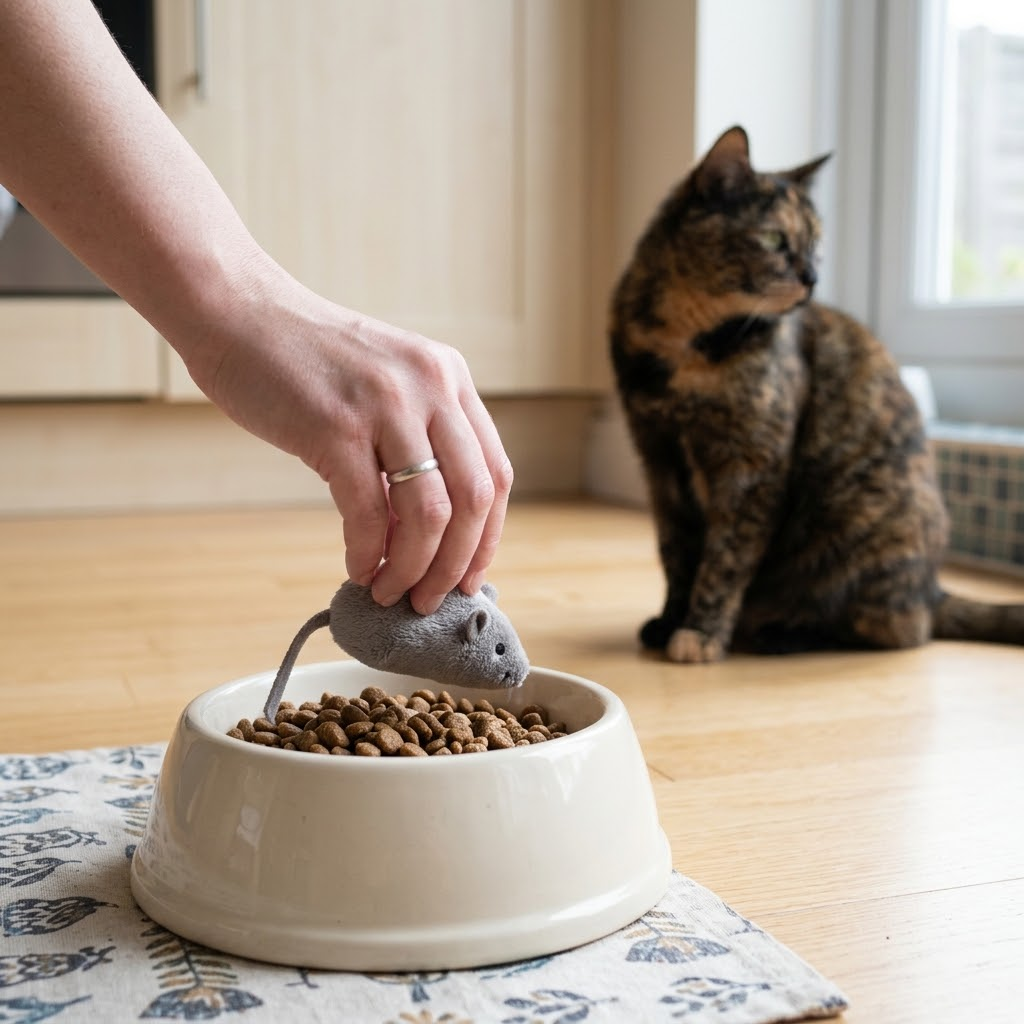
Cats notice patterns in human behavior. If placing a toy in the bowl always leads to excitement, conversation, or extra attention, the habit can become part of their routine.
To gently reduce the behavior:
Yes. For many cats, placing toys in a food bowl is simply a quirky habit. It can be related to play, carrying objects, collecting favorite toys, or choosing a familiar place to leave items.
The behavior is usually not a concern if your cat is eating, drinking, and behaving normally.
Cats often develop strong preferences for certain toys. A particular toy may have the right size, texture, smell, or movement that makes it more interesting than others.
If your cat always chooses the same toy, it is likely a favorite object rather than a random choice.
A cat playing with a toy does not necessarily mean they think it is a real animal. However, play often includes actions that resemble hunting, such as chasing, grabbing, carrying, and pouncing.
A toy placed in a food bowl is usually part of play behavior or a personal routine.
Yes. Toys that sit in food or water can collect crumbs, moisture, or bacteria over time.
Wash fabric toys according to the manufacturer’s instructions and replace damaged toys with loose parts or worn materials.
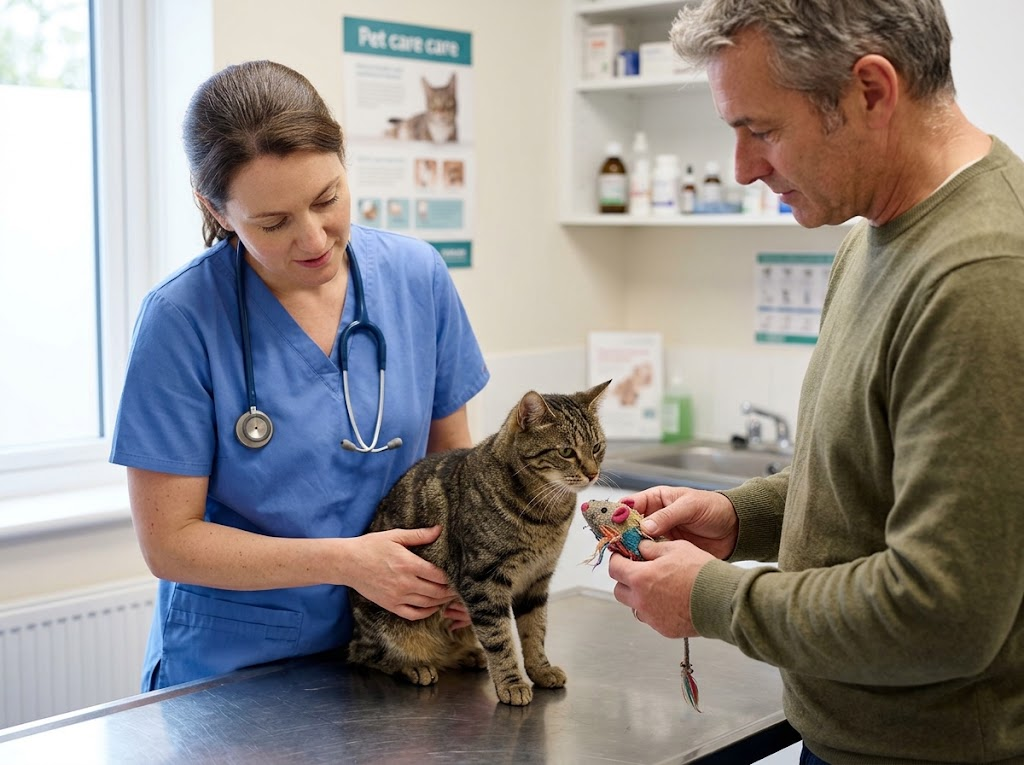
Putting toys in a bowl by itself is rarely a problem. Pay closer attention if the behavior appears alongside other changes, such as:
If those signs appear, a veterinarian can help determine whether there is an underlying issue.
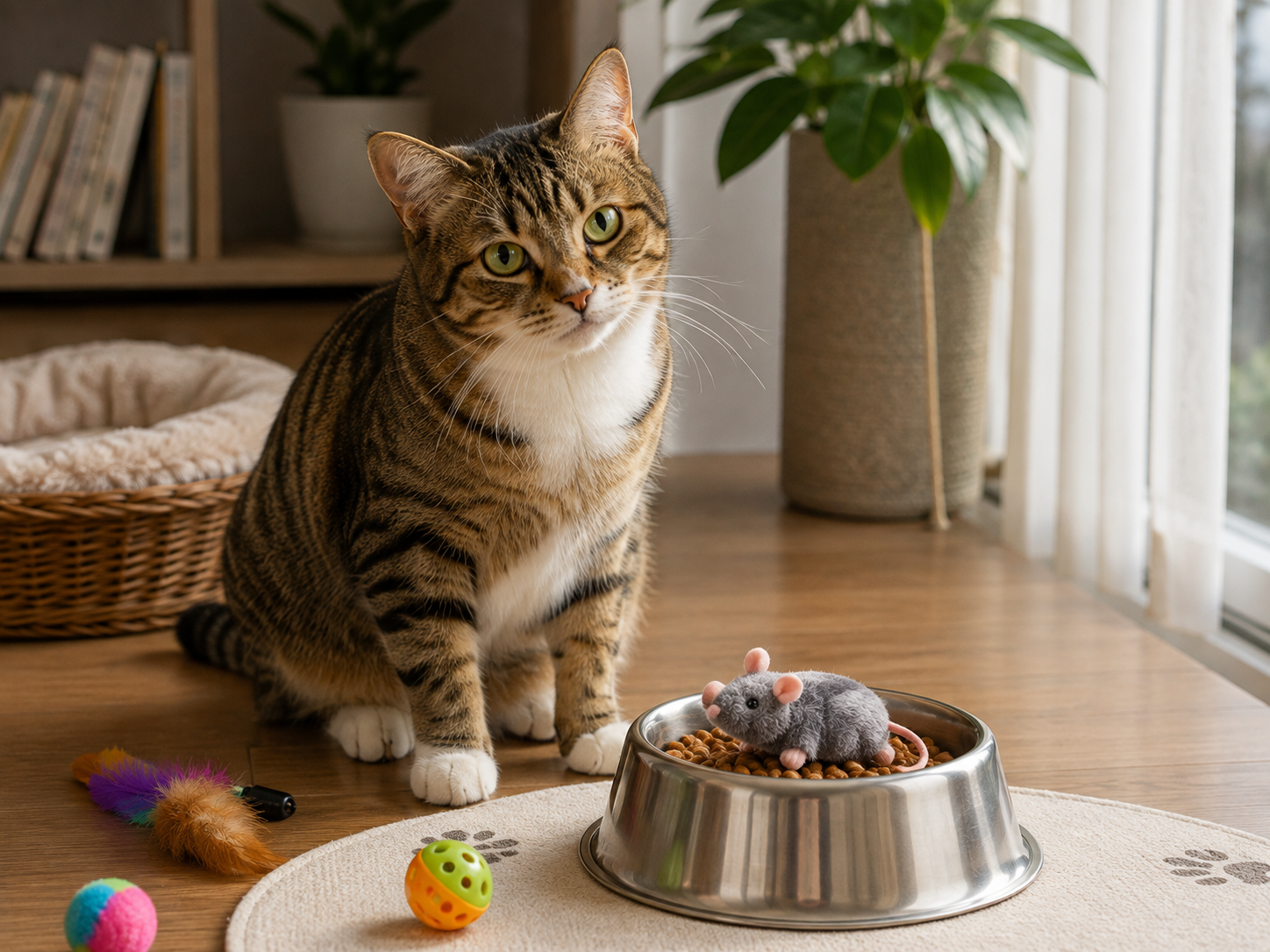
A toy sitting in a food bowl may look like a strange decision, but it often reflects your cat’s unique habits. One cat might use the bowl as a convenient drop-off spot after play, another might return the same favorite toy there every night, and another might simply enjoy the reaction it creates.
The next time you find a toy mouse beside the kibble, look at the pattern. Notice which toy appears, when it happens, and what your cat does afterward.
Those details reveal more about your cat’s personality and routine than the toy itself. For many owners, a toy-filled bowl becomes one of the small, funny behaviors that make living with a cat memorable.