
Most owners choose cat toys based on what looks fun to human eyes. A bright red mouse or neon pink wand can stand out on a pet store shelf, so it is easy to assume cats see those colors the same way we do. They don’t. Feline vision works differently from ours.
If you want to know what color toys are best for cats, start by seeing playtime from your cat’s point of view. Cats have more limited color discrimination than humans. They can distinguish some blue and yellow shades more easily than certain red-green differences, but scientists still don’t have a complete picture of feline color vision. There is no single color that every cat will prefer. Contrast, movement, texture, sound, scent, and individual preference can all affect whether a toy gets attention.
So, color can help, but it is not the whole game. A toy that stands out against the floor can be easier to spot, while one that suddenly darts across the room can grab attention even when its color is less noticeable.
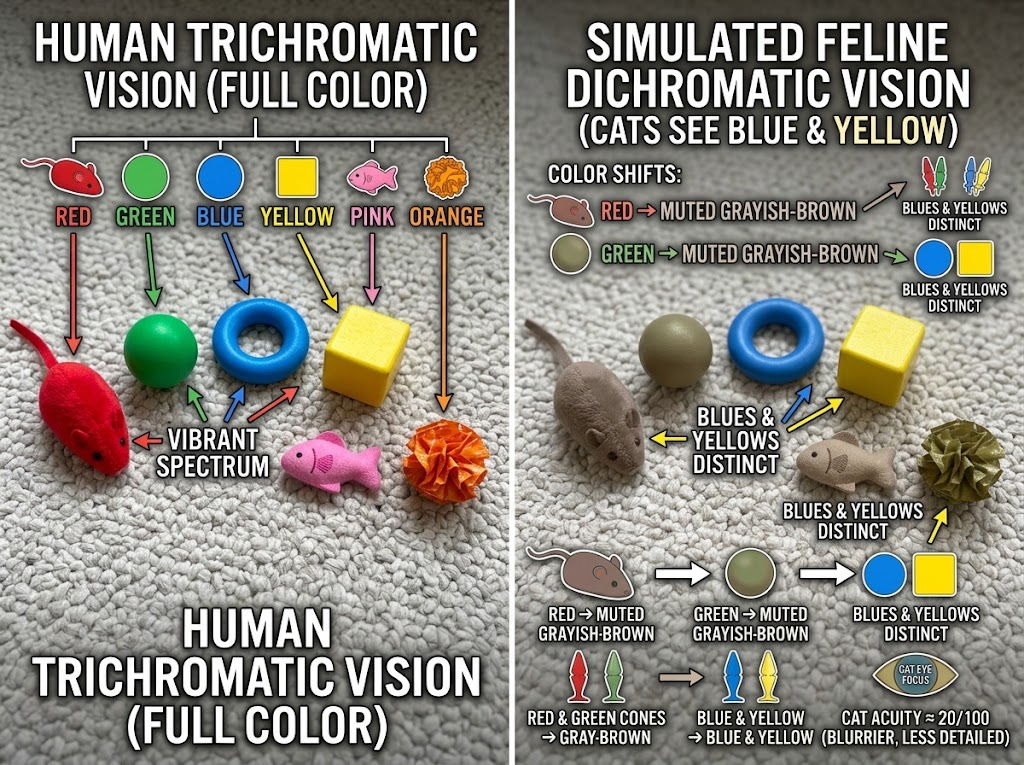
Cats do not see color exactly as people do. Human eyes have three types of cone cells, which help us detect a broad range of colors. Cats have fewer cones, giving them a more limited ability to distinguish between colors.
Some veterinary sources describe cats as dichromatic, while others note that the exact details of feline color vision are still uncertain. What researchers do agree on is that cats don’t see the same wide range of color differences that humans do.
They can identify some blue and yellow shades more easily than certain red-green differences. Red, orange, pink, and some brown shades can appear less vivid or less distinct. That doesn’t make these colors invisible, though. A cat can still spot a red toy because it moves, contrasts with the floor, makes a sound, or has an interesting shape or scent.
VCA Animal Hospitals explains that cats have fewer cones than humans, which limits the number of color variations they can distinguish. The Rover article featuring Dr. Bruce Kornreich makes a similar point about cats having fewer color-sensitive cells and difficulty separating some colors. The effect of toy color on feline attention, however, is still not fully understood.
That distinction matters when you’re shopping. A toy doesn’t need to look colorful to you to be interesting to your cat. It needs to be noticeable enough for your cat to find and engaging enough to chase.
There is no scientifically proven color that every cat will choose. Blue, yellow, and yellow-green shades are commonly suggested as colors cats can distinguish relatively well.
When choosing the best visible color for cat toys, look beyond the color itself. Think about where the toy will be used. A shade that stands out on one floor can disappear against another.
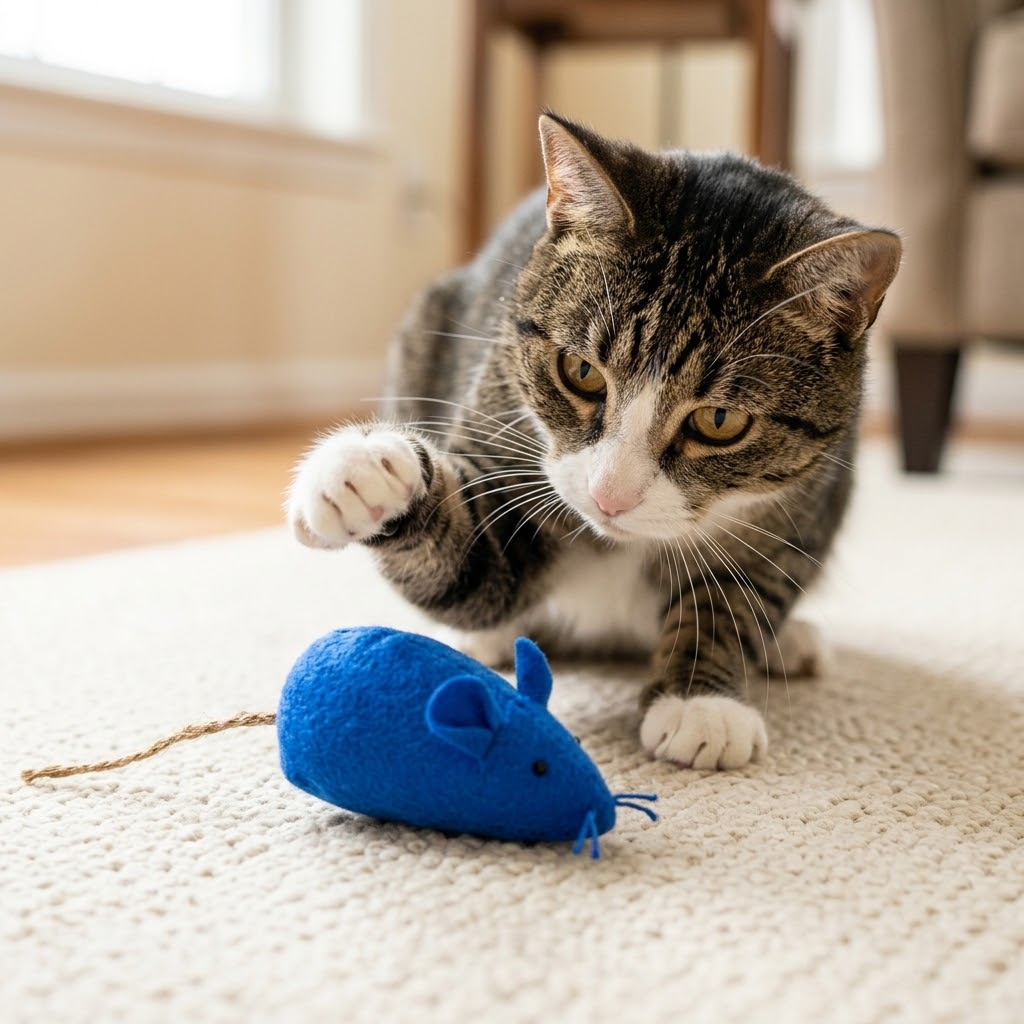
Blue is one of the colors cats can distinguish relatively well. That doesn’t mean cats automatically prefer blue. The available evidence simply doesn’t support ranking it as a universal favorite.
The background makes a difference, too. A bright blue toy can stand out nicely against a beige carpet or a pale floor. Put that same toy on a blue blanket, and the advantage can disappear. Navy can also blend into dark flooring.
In other words, don’t obsess over finding the “perfect” blue. Choose a shade that clearly contrasts with the toy’s surroundings.
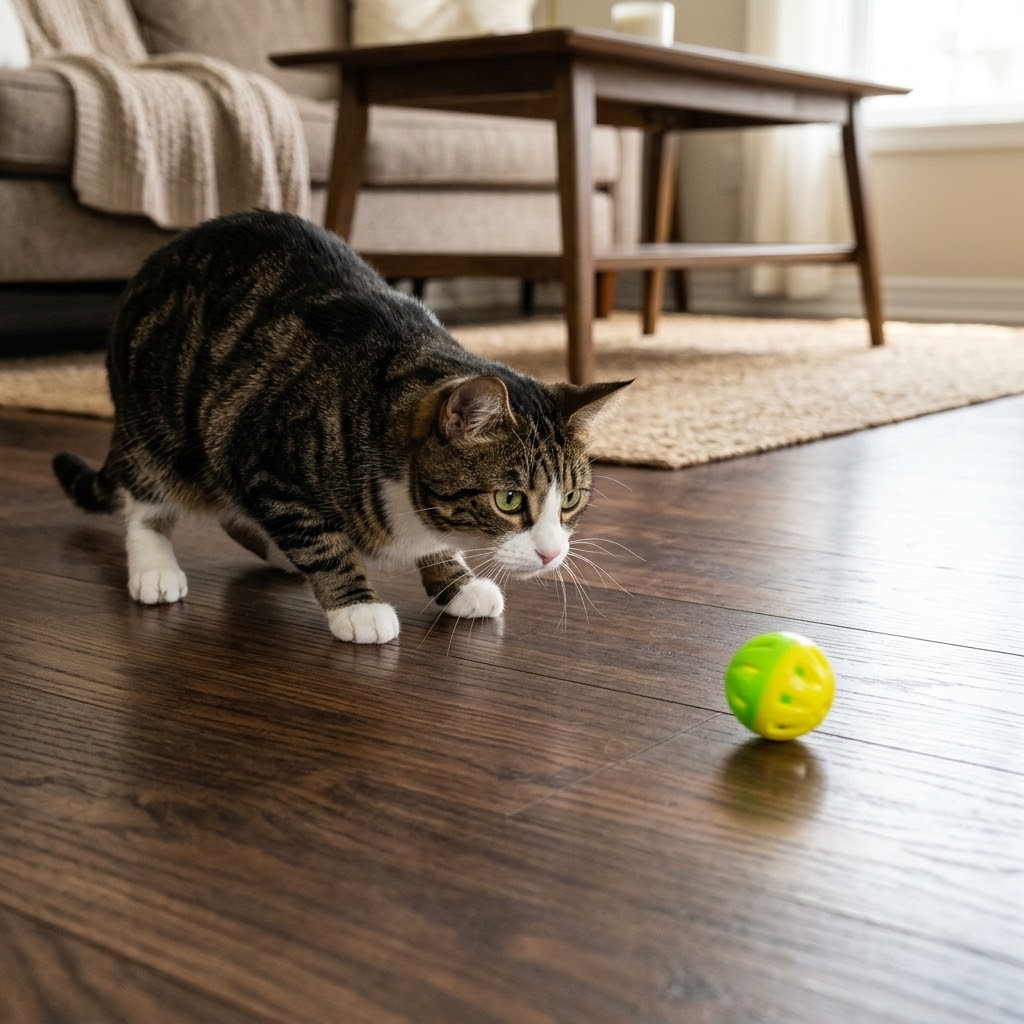
Yellow and yellow-green shades are also commonly suggested as potentially noticeable to cats. A bright yellow toy can stand out well against darker flooring, furniture, or a shaded area.
For example, a yellow ball rolling across a dark hardwood floor is much easier to pick out than a dark brown ball in the same spot. On a cream-colored carpet, however, that advantage can shrink.
Still, yellow isn’t automatically better than blue. Cats have individual preferences, and the way a toy moves can make a much bigger difference than its color.
Try a few options and watch what happens. Does your cat follow one across the room? Do they paw at it, carry it away, or come back looking for it later? Those reactions tell you more than a universal color ranking.
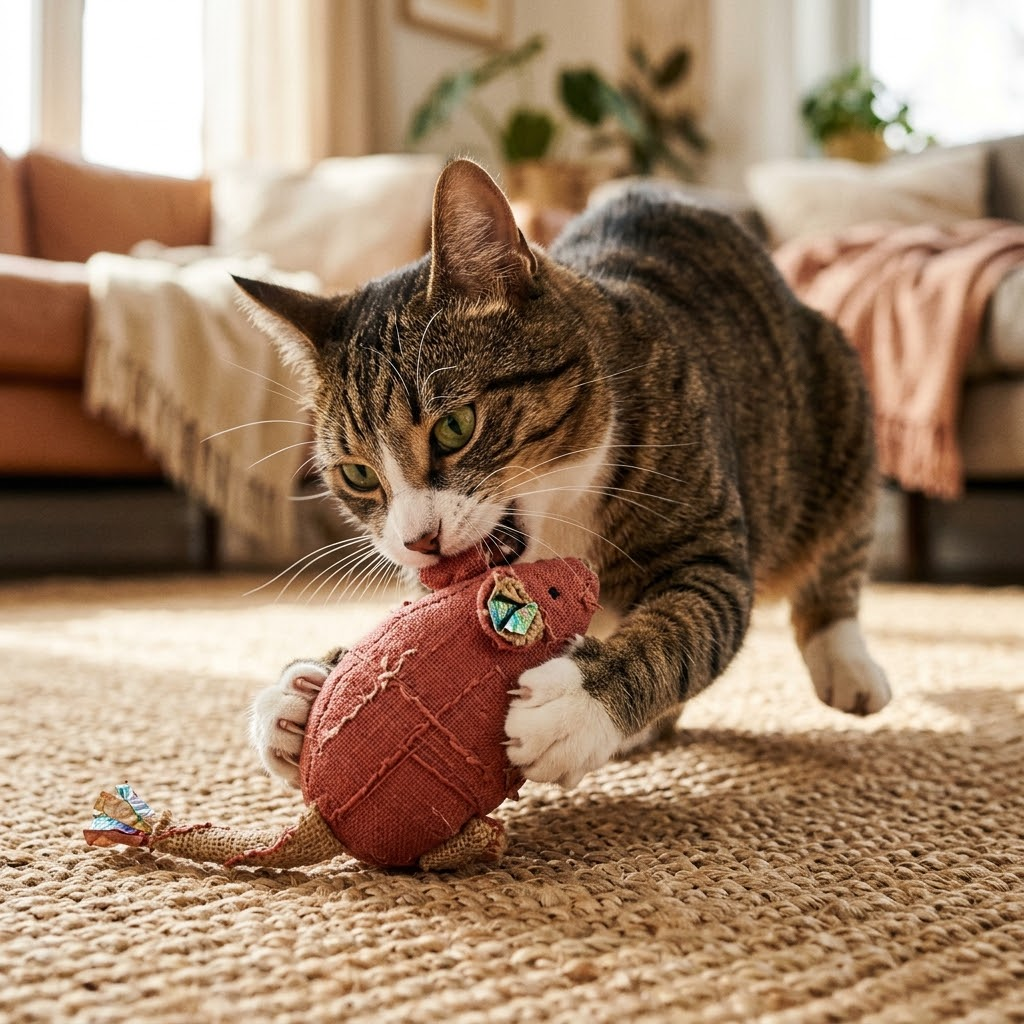
Cats can have more difficulty distinguishing some red-green differences than humans do. Red, orange, pink, and some green toys can therefore appear less saturated or less distinct.
But don’t throw those toys in the donation box just yet.
A red mouse that skitters across the floor can be hard for a cat to ignore. A pink plush toy may win them over because of its texture, shape, or scent. Brightness and contrast matter, too, so the same color can look more noticeable in one room and fade into the background in another.
When comparing cat toy colors, think about the whole design rather than judging a toy by its color alone.
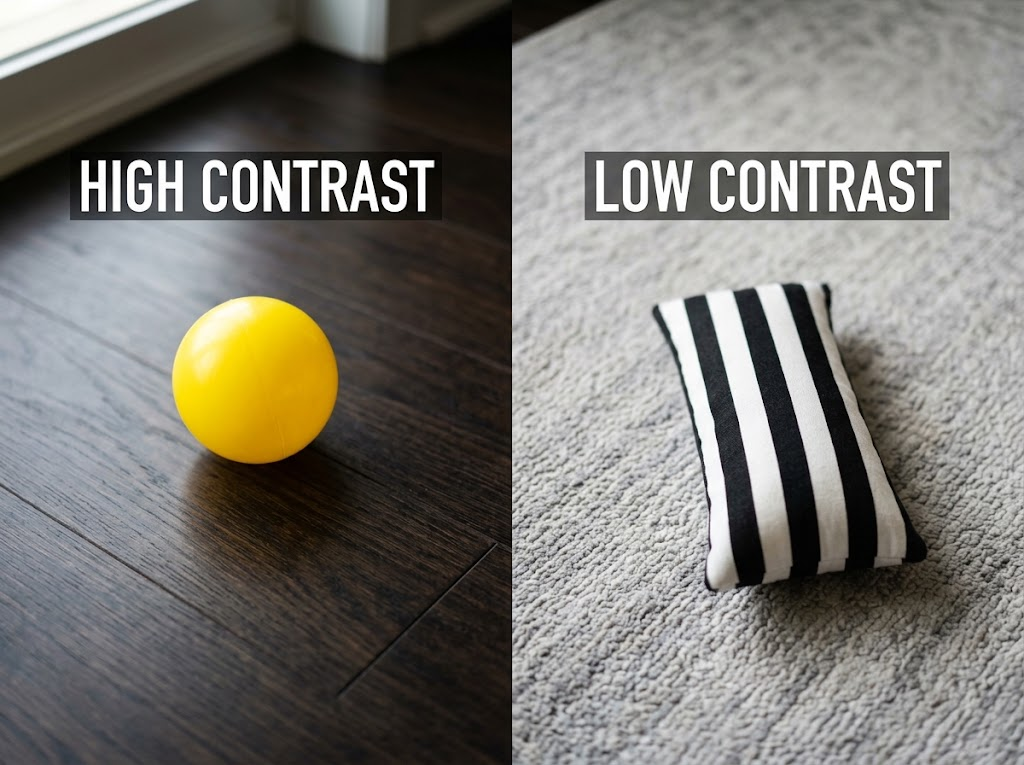
Sometimes, yes. A toy that clearly separates from its background is easier to notice than one that blends in.
Imagine a bright yellow toy on dark hardwood. It is likely to be easier to spot than a dark toy on the same floor. Move that yellow toy onto a pale carpet, though, and the difference can be much smaller.
Lighting matters as well. A toy that looks obvious in daylight might be less noticeable in a dim room.
Patterns can add another visual cue. Stripes, spots, and bold blocks of color create changes that can help you and your cat track a moving toy. There isn’t enough evidence to claim that these patterns specifically copy prey hiding in grass, so it is better to view them as a visibility aid.
Black-and-white details can also create a strong contrast when paired with blue or yellow. Sharp edges and clear patterns can help define a toy against its surroundings. Just don’t treat contrast as a guaranteed trigger for hunting behavior.
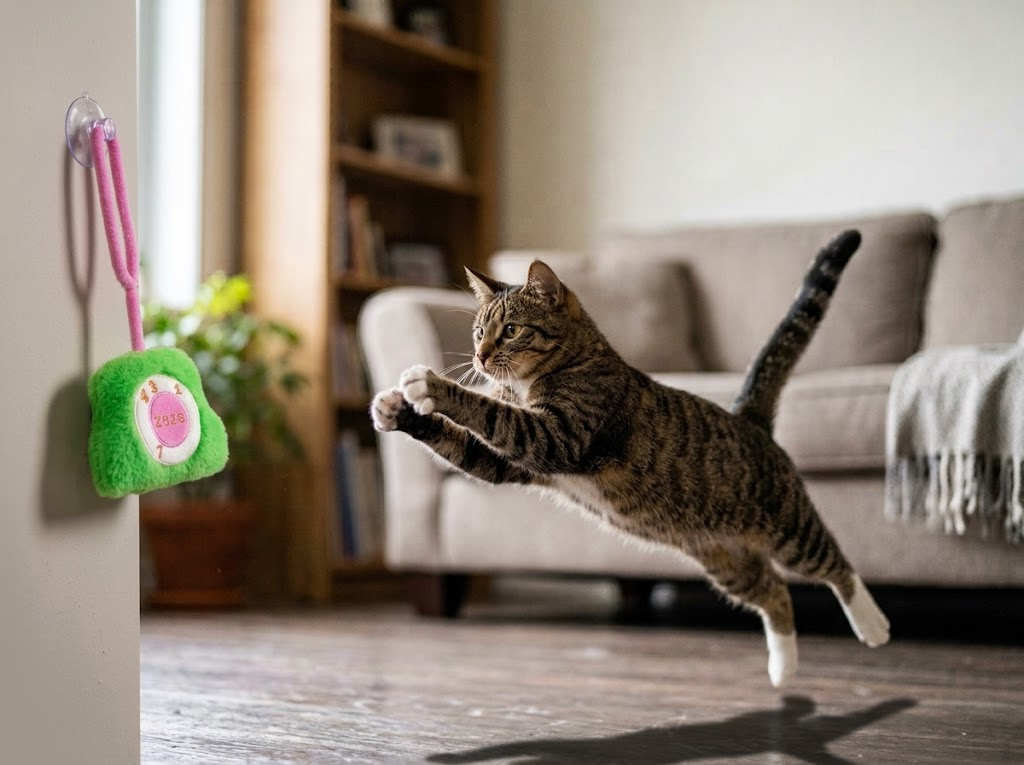
Usually, movement deserves more attention during interactive play.
An Elastic Cat Wand Toy that twitches, darts, pauses, and changes direction can be far more interesting than a brightly colored toy sitting motionless on the floor. Those quick, unpredictable movements give cats something to track and chase.
Cats naturally engage in behaviors such as stalking, chasing, pouncing, biting, and manipulating objects. PetMD recommends toys that imitate prey through actions such as twitching, skittering, and sudden dashes.
Think about it this way: a red toy that suddenly zips past your cat can become the center of attention. A blue toy that hasn’t moved since breakfast may barely register.
That makes color more of a supporting feature during interactive play. Movement gives the toy a reason to act like prey, while color and contrast can make that moving object easier to follow.
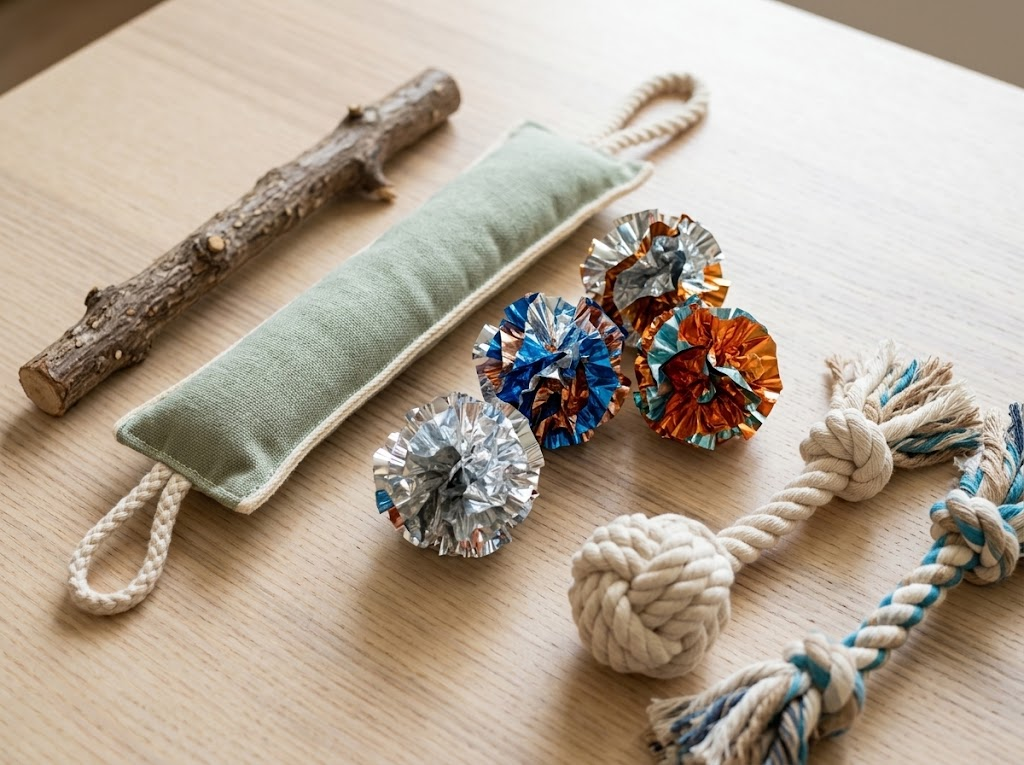
Sight is only one part of how cats explore their surroundings. Texture, sound, scent, size, and shape can all change how a cat responds to a toy.
🧶 Texture — Soft plush, bumpy fabric, crinkly paper, braided rope, and smooth wood all feel different. Some cats like soft toys they can carry, while others prefer something they can grab, chew, or kick.
🔊 Sound — Crinkles, rattles, and gentle bells can add another reason to investigate. Keep the volume comfortable. Cats have sensitive hearing, and a loud or harsh noise can make a toy less appealing.
🌿 Scent — Catnip, silvervine, and valerian root can attract some cats through smell. Not every cat responds to catnip, and some show more interest in silvervine. Others couldn’t care less about either one.
🐁 Size and shape — Mouse-sized or bird-shaped toys can appeal to cats who enjoy chasing and carrying things. Long, flexible toys may suit cats who like wrestling and kicking. Small balls can be a better match for cats who prefer batting objects around.
If you’re experimenting with different senses, the Silvervine & Catnip Toys collection gives you several scent-based options to try.
The best cat toy colors that attract cats are therefore only part of the equation. A toy can be easily spotted but ignored if it does not match your cat’s preferred way of playing.
If you’ve ever wondered why your cat proudly drops a favorite “catch” at your feet, our article on why cats bring you toys explores what that behavior can mean.
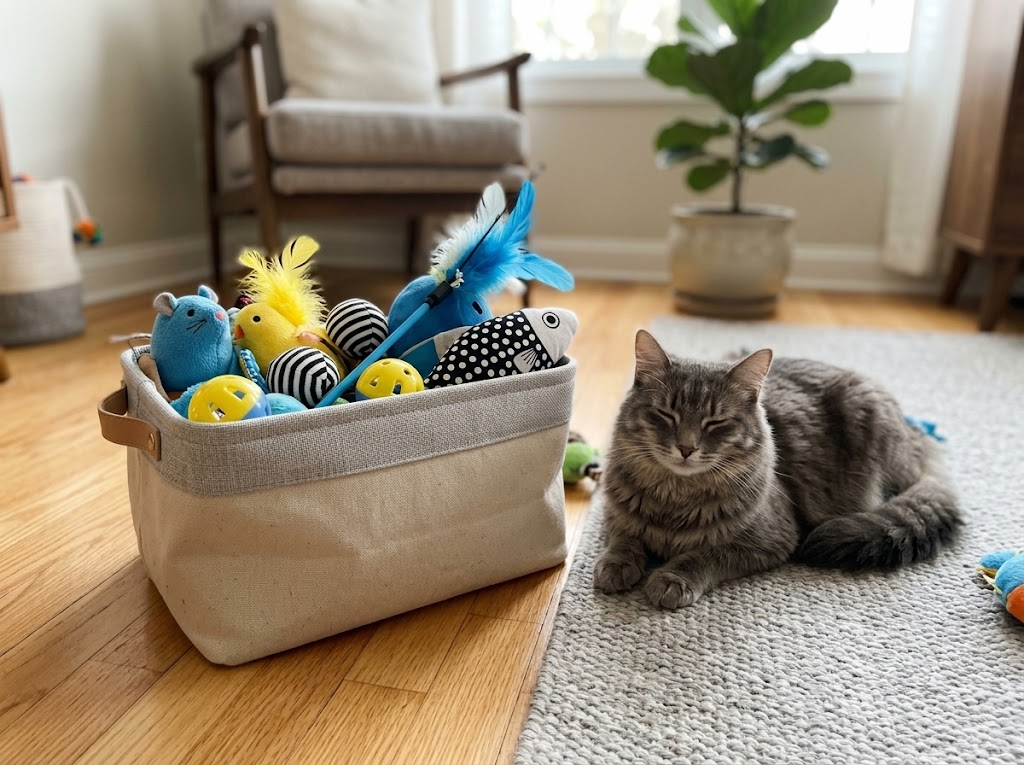
You don’t need to turn your living room into a feline color laboratory. A little testing is enough.
Start with blue, yellow, or yellow-green toys, since these shades are commonly suggested as potentially noticeable to cats. Then mix in other colors and see what your cat actually chooses.
Pay attention to contrast. If your cat plays mostly on a dark floor, a bright toy can be easier to track. On a pale carpet, a darker or more strongly patterned toy may stand out better.
Then add movement. During interactive play, use short darts, pauses, twitches, and changes in direction instead of moving the wand at one steady speed. You can also switch between different textures, sounds, and scents.
Toy rotation helps keep things fresh. Leave a few favorites available and put some others away for later. If your cat starts ignoring a familiar toy, try offering one with a different shape or texture. There is no magic rotation schedule, so let your cat’s behavior decide when it is time for a change.
Most importantly, watch your cat. Do they chase one toy but ignore another? Do they carry certain toys around the house? Are they more interested in batting small balls or wrestling with large kickers?
Your cat’s behavior is the most useful test.
You can browse the complete ZezeLife cat toy collection for toys with different colors, shapes, textures, scents, and play styles.
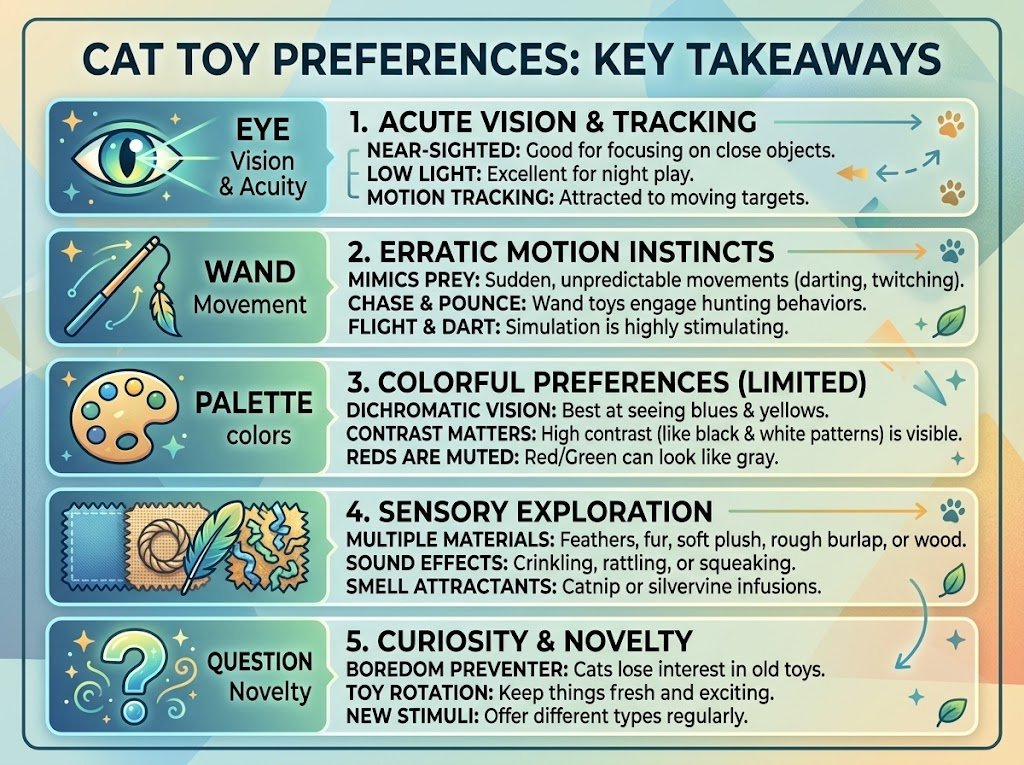
Blue and yellow are often suggested as colors cats can distinguish relatively well, but there is no strong evidence that cats universally prefer one over the other.
The better choice depends on the individual cat, the toy’s contrast with its surroundings, and how it moves. Try both and see which one your cat follows, paws at, carries, or returns to.
No. During interactive play, movement is often more important than color.
A toy that darts, pauses, or twitches can grab attention even if its color is less distinct. A highly visible toy can still be ignored if it sits in the same spot all day.
Cats can have more difficulty distinguishing some red-green differences than humans do. Red, orange, pink, and some green toys can look less saturated or less distinct.
That doesn’t mean cats can’t see them. Movement, contrast, sound, texture, shape, and scent can all make these toys interesting.
Cats can distinguish some blue, yellow, and yellow-green shades more easily than certain red-green combinations. However, the exact colors cats see best remain uncertain, and no single color is proven to be best for every cat.
Rather than relying on color alone, choose a toy that contrasts with its background and watch how your cat responds.
Movement, texture, sound, scent, size, and shape can all influence play. Catnip and silvervine can attract some cats regardless of color, while crinkly, feathery, or flexible textures may appeal to others.
Every cat has different preferences. Trying different types of toys is usually the quickest way to find what your whiskered baby likes.
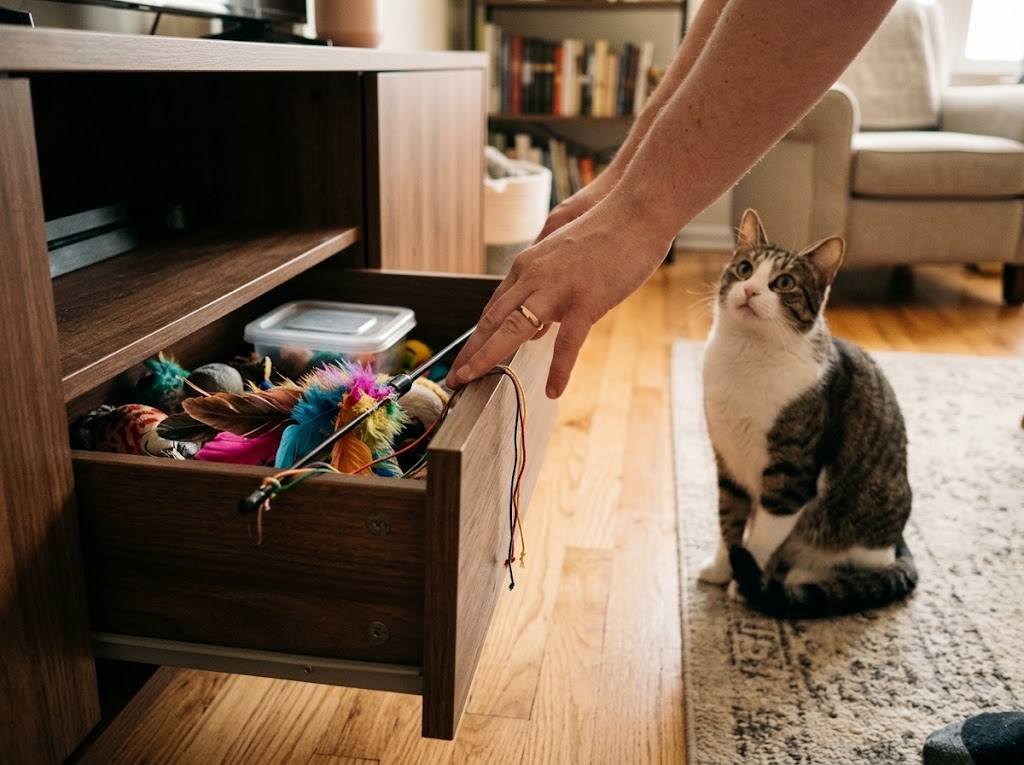
Supervise play with wand, string, elastic, feather, and small-part toys. Put these toys away after play, particularly if your cat likes to chew on them.
Loose strings, ribbons, elastic, bells, and detachable pieces can cause injury or intestinal problems if swallowed. A toy can be fun and still need a little supervision.