
It’s 3 a.m., and something just crashed in the kitchen. You find your cat sitting beside a shattered mug, staring right at you. No guilt. No rush. Just a calm look that says, “Your move.”
Here’s the thing: cats rarely break stuff out of spite. More often, they’re hunting for something to do. Understimulation, frustration, or stress from insufficient environmental enrichment can look like mischief, naps, or plain attitude. Learning how to tell if your cat is bored starts with reading those clues.
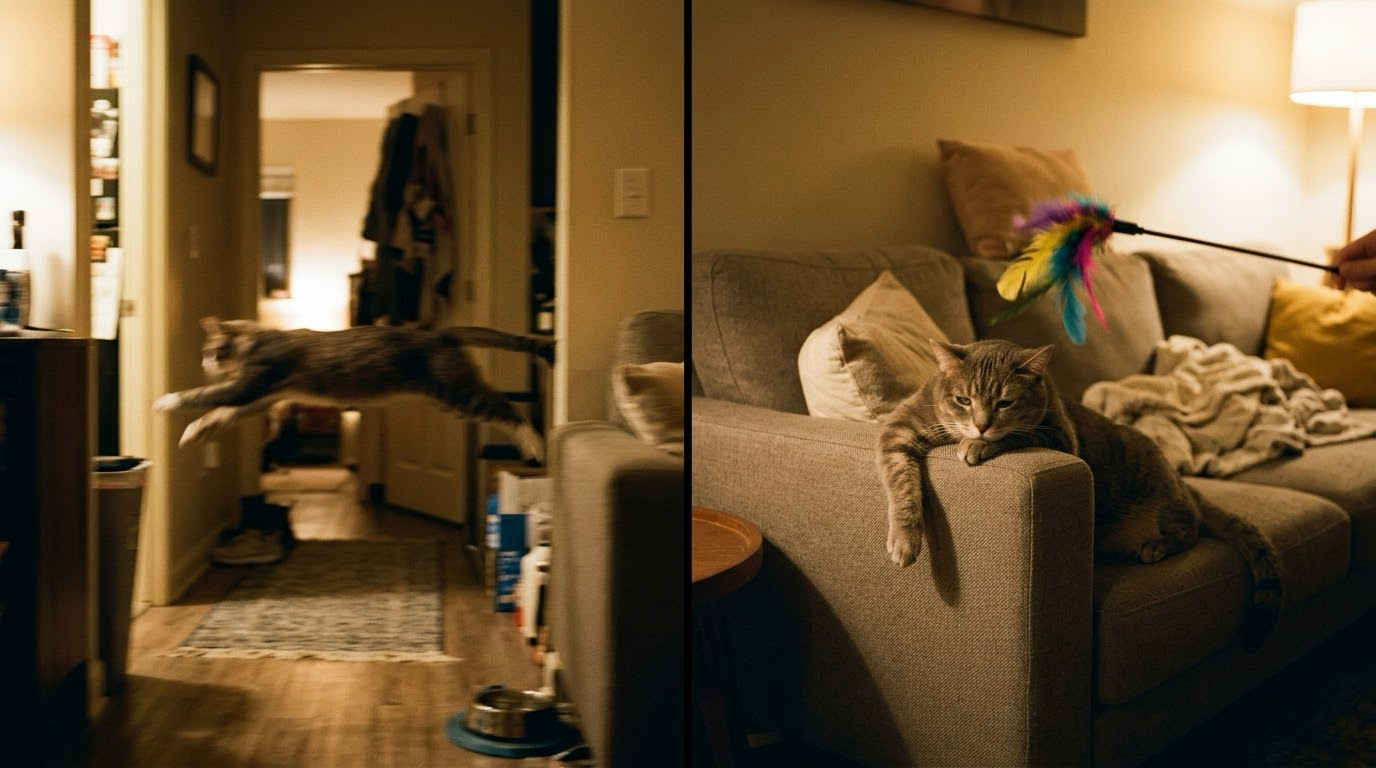
A bored cat may look restless, noisy, destructive, or oddly flat. Some cats zoom around the house at night, scratch furniture, or demand attention. Others sleep more, lose interest in toys, or seem less curious than usual.
Feline boredom does not always look the same. One cat may become a tiny midnight tornado. Another may turn into a quiet couch potato who barely reacts when you wiggle a toy. Both can be signs that your cat needs more mental and physical activity.
Cats are born with strong hunting instincts. Even a well-fed house cat still wants to stalk, chase, pounce, and “catch” something. Without a safe outlet for these instincts, cats may channel that energy into scratching, biting, loud vocalizing, or other mischief.
Spending most of their time indoors can also increase the risk of boredom. Long hours alone, the same toys, the same view, and the same routine can leave a cat with little to explore. That does not mean indoor cats are unhappy. It means they need engaging ways to use their brains and bodies.
It’s easier to recognize the five main signs of boredom when you notice how your cat behaves during quiet times.
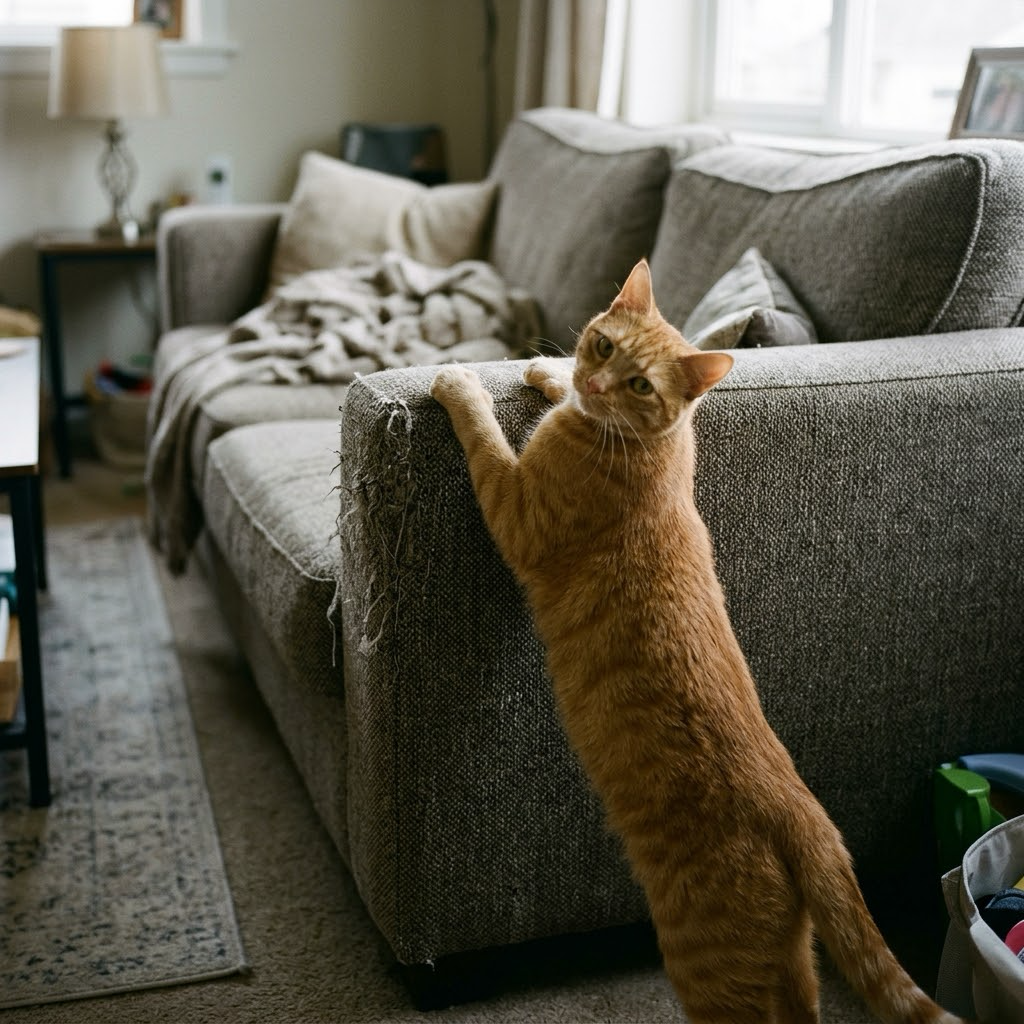
All cats need to scratch. It pulls off dead claw sheaths, stretches tight back muscles, and leaves their scent behind. Normal scratching is quick and focused. Your cat wakes up, stretches on a post, and walks away.
Bored scratching looks very different. A bored cat may scratch sofa arms, carpet corners, door frames, or even drywall, pausing to see whether you react.
When a cat has too much pent-up energy, tearing into fabric or wood feels good. Plus, it gets an immediate reaction from you. Even if you jump up and say, “Stop!” your cat still wins a moment of excitement. If your walls and couch are getting damaged, learning how to stop cats from scratching walls can protect your home while giving those claws a better job.
A quick sprint down the hall after using the litter box is normal. Wild sprints across your bed at 2 a.m. are another story. If your cat sleeps all afternoon while you work and turns into a furry race car the second the lights go out, daytime understimulation may be a contributing factor. Cats are naturally more active at dawn and dusk, so some nighttime energy is normal—but if they consistently lack daytime activity, your cat may still have energy to burn before bedtime.
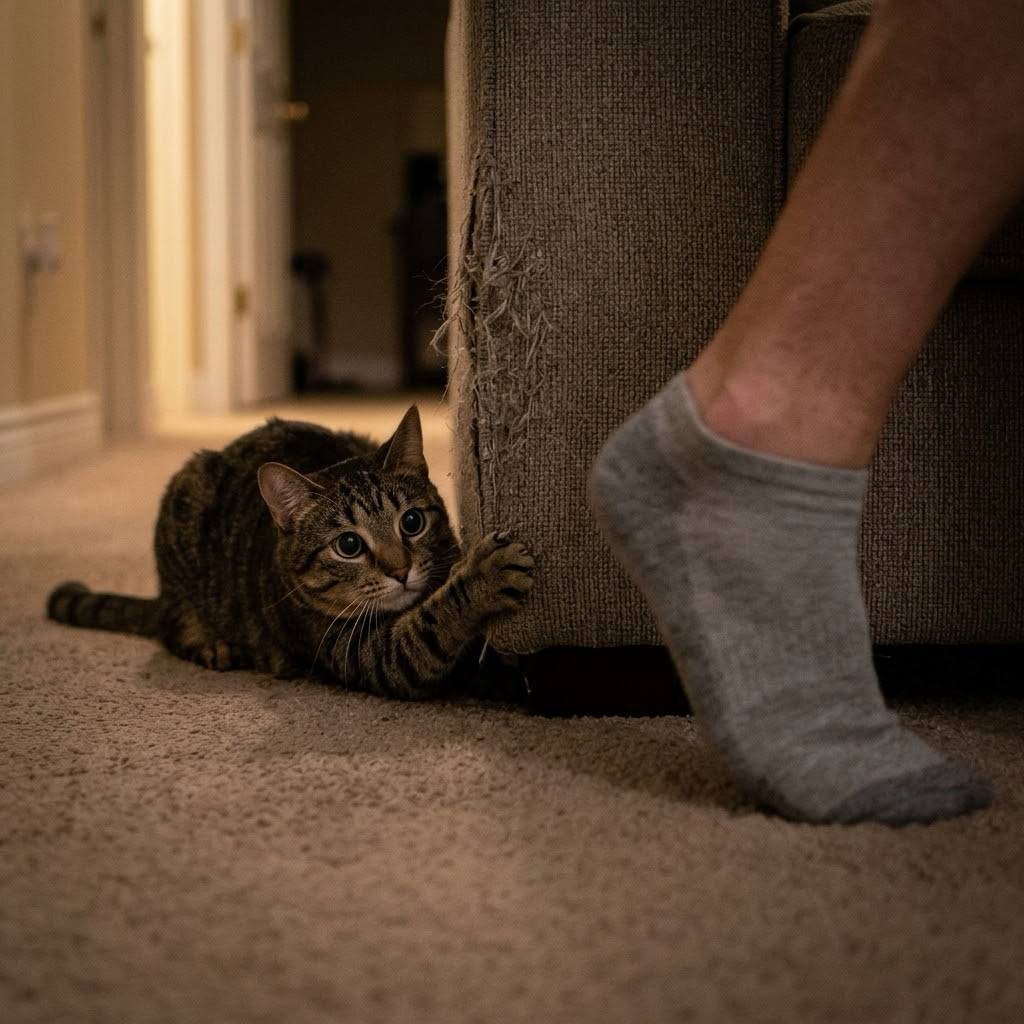
That same pent-up drive explains surprise ankle attacks. You walk past the sofa to grab a glass of water, and two furry paws wrap around your sock out of nowhere. Your cat isn’t mad at you. In a quiet house where nothing moves, your walking feet are the closest thing to a scurrying mouse. Your cat is simply turning your hallway into a hunting ground.
Some cat breeds love to chat. Siamese and vocal shelter mixes will happily tell you all about their morning. Still, you know what your cat’s normal voice sounds like.
One of the clearest signs your cat is bored is loud, drawn-out meowing that has no clear point. The food bowl is full. The water is fresh. The litter box is clean. Yet your cat follows you from the sink to the couch, yelling at your knees or staring at a blank wall and howling.
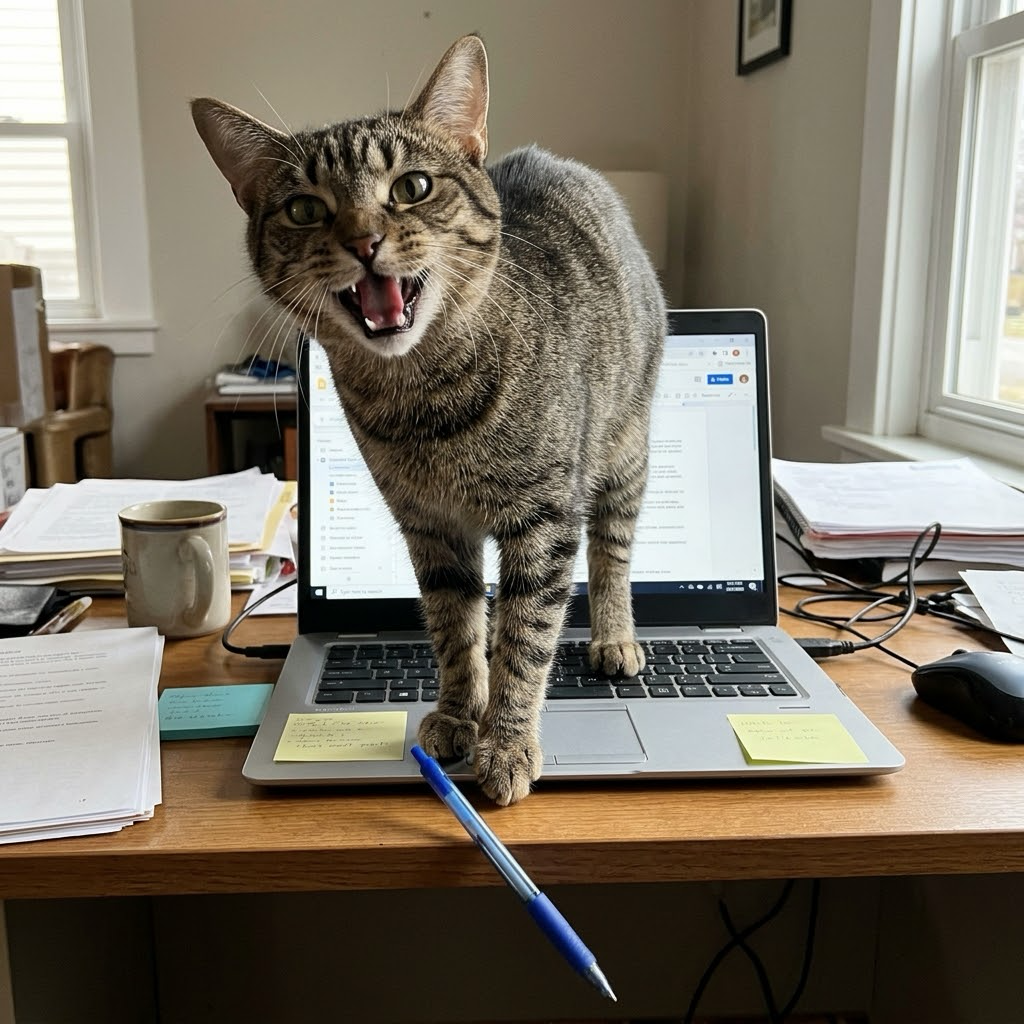
Many bored cats pair that noise with small acts of chaos. They hop onto your desk, step across your laptop keyboard, or tap a pen toward the edge of the table while watching your face. Once the pen hits the floor and you look over, your cat learns a simple lesson: making noise or dropping things makes the room lively again.
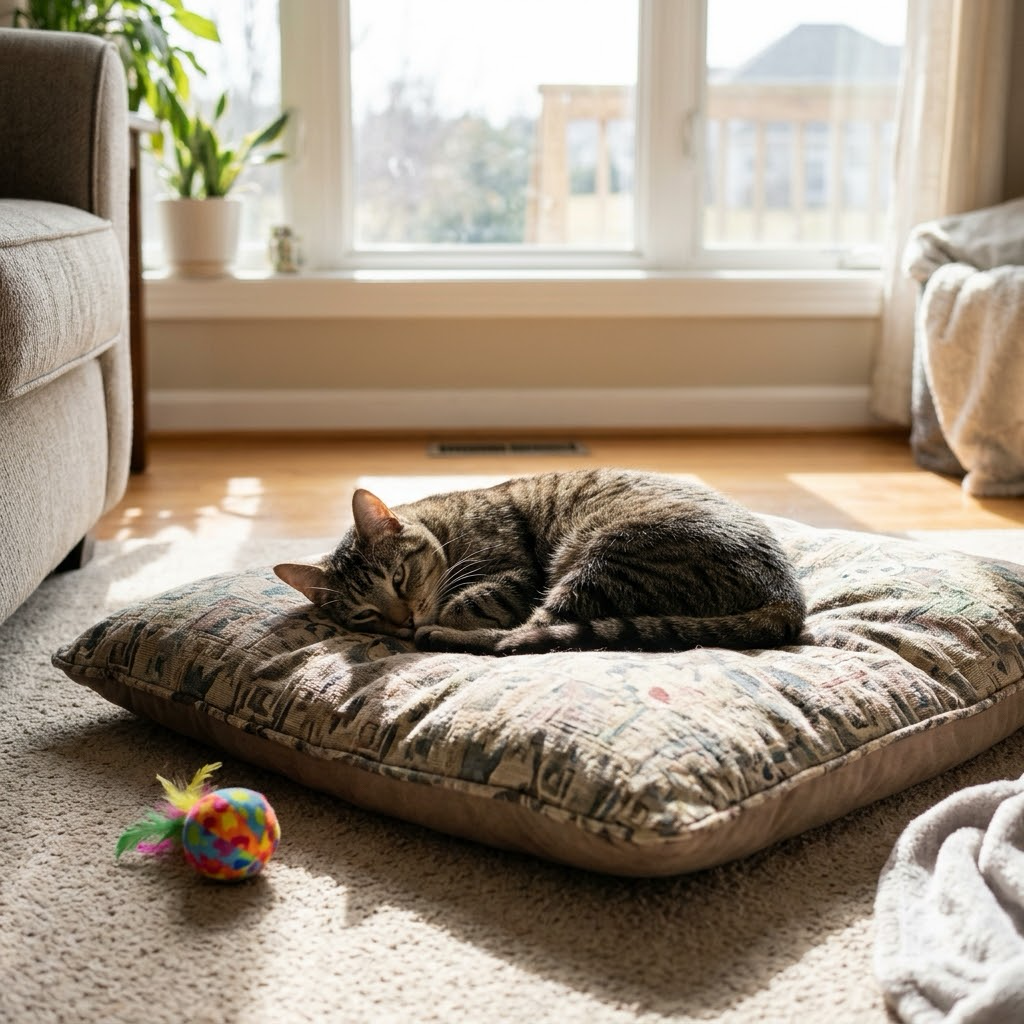
Cats are famous for sleeping. An adult cat can easily nap for 12 to 16 hours a day and still be in excellent shape. Because of that, extra sleep is one of the easiest signs that a cat’s bored behavior may be hiding behind.
To spot boredom, watch for changes in your cat’s usual routine and a subdued mood while they’re awake. Pay attention to what happens between naps. A happy, well-rested cat wakes up ready to stretch, check out the window, greet you at the door, or bat a toy around. A bored cat who sleeps to pass the time wakes up looking sluggish. They might open one eye when you walk into the room, skip their afternoon window watch, and go right back to sleep because nothing in the house feels worth getting up for.
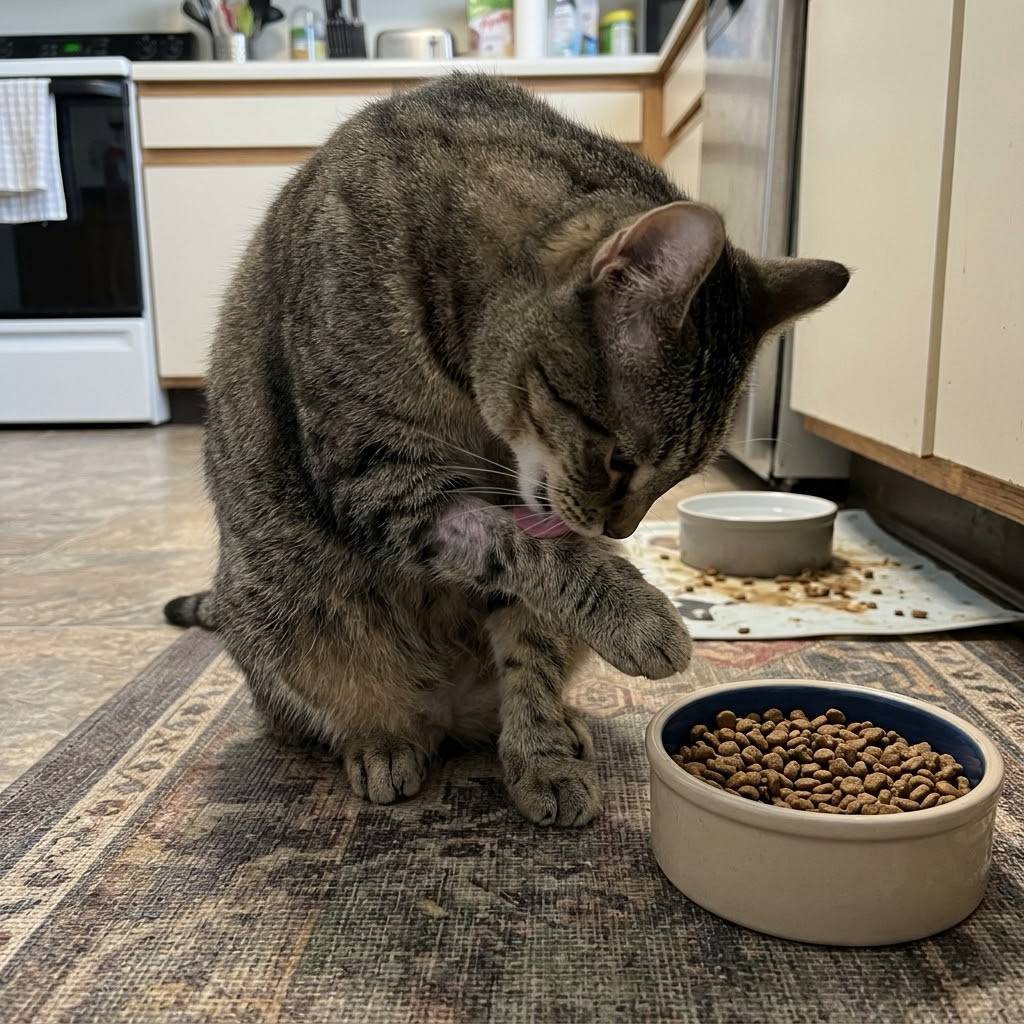
When humans get stuck at home with nothing to do, we often wander back to the fridge for a snack or chew our nails. Cats do almost the exact same thing. If a cat’s day feels empty, repetitive habits help fill the hours and soothe mild frustration.
Some cats camp out by their food dish, begging for treats whenever you walk near the kitchen or crunching through dry food just to stay occupied. Over time, those extra bites pack on unhealthy weight.
Some cats repeatedly lick the same spot on their belly, front legs, or paws, thinning the fur or leaving bald patches. Keep in mind that sudden hunger or sore, patchy skin can also point to allergies, fleas, pain, or thyroid trouble, so always take a closer look if these habits start fast.
Boredom and depression can look similar, but they aren’t the same. A bored cat often looks for something to do and may become noisy or restless. A cat with low mood may seem withdrawn, lose interest in familiar activities, or avoid social contact.
A few key differences can help you understand what your cat may be experiencing.
| Behavior | Bored Cat | Cat With Low Mood |
| Energy | May become restless, noisy, or destructive | May seem withdrawn or less active |
| Appetite and social behavior | May beg for food or demand attention | May lose interest in food or avoid people |
| Response to play | Often becomes interested when offered a fun activity | May show little interest, even in favorite games |
These signs can offer general guidance, but they can’t diagnose your cat. Some cats with medical problems may also show changes in energy, appetite, and social behavior.
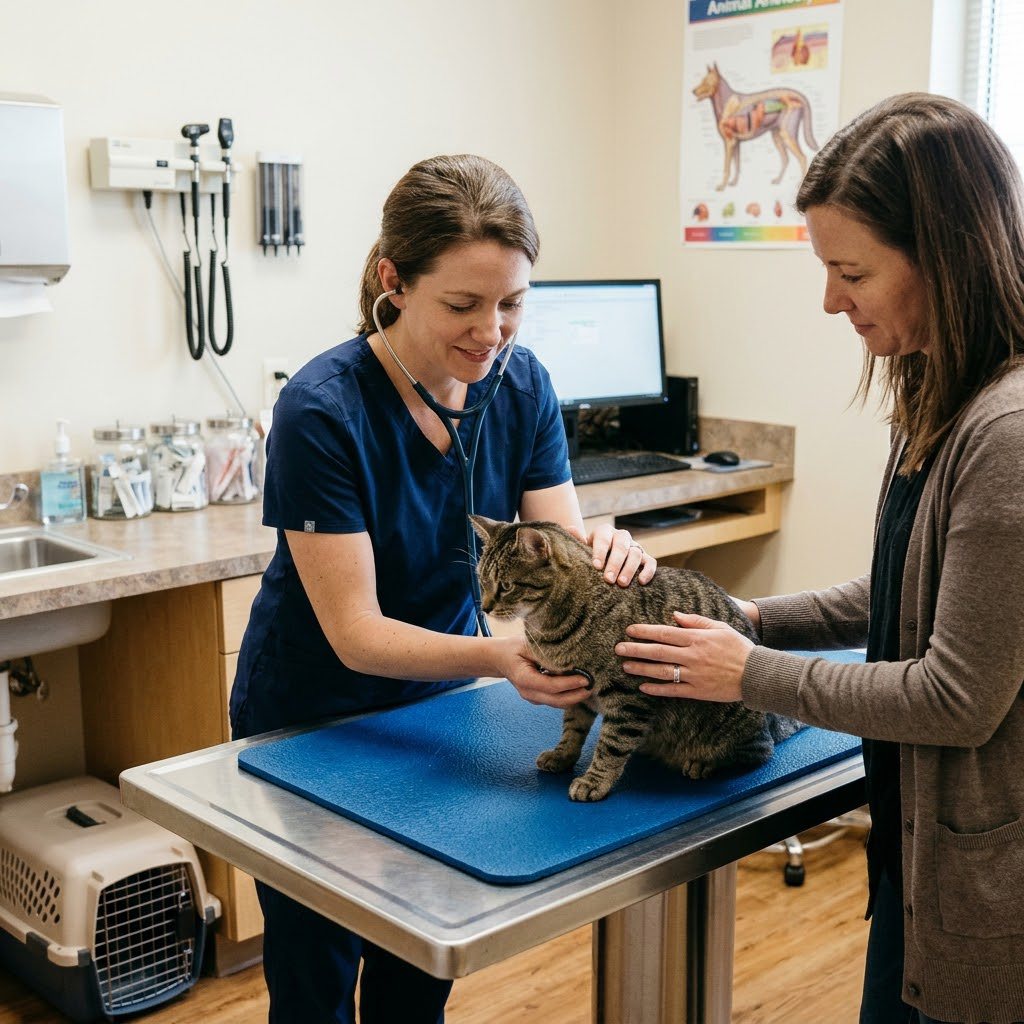
If you’re asking, “Is my cat depressed or bored?” don’t rely on behavior alone. A sudden change in your cat’s habits deserves attention.
Watch for signs such as:
If you notice these changes, arrange a vet visit. Pain, illness, and stress can affect your cat’s behavior. It’s best to rule out these problems before treating the behavior as simple boredom.
If your vet finds no health concerns, you can focus on making your cat’s daily routine more engaging. Small changes at home may help your pet become more active and curious again.
You don’t need a huge budget or a whole home makeover—small, steady changes make the biggest difference.
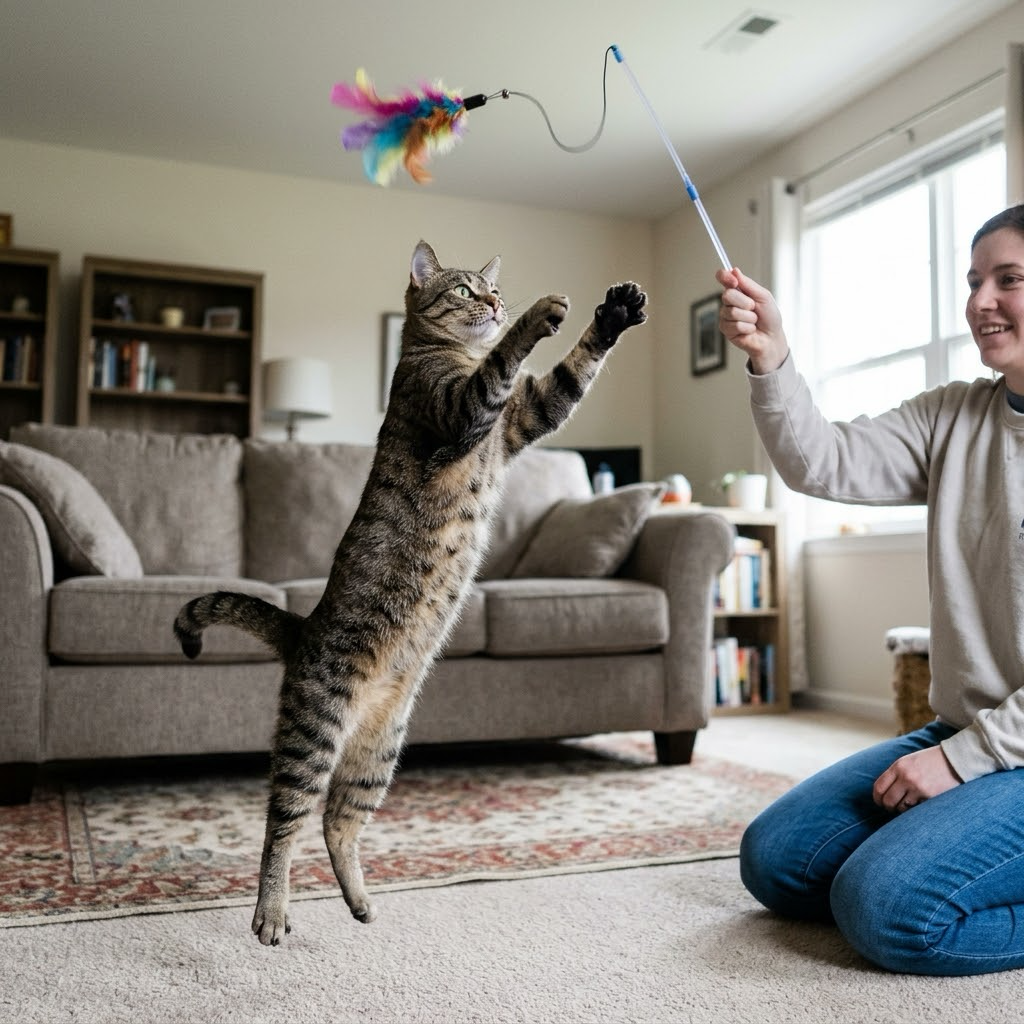
Long play sessions often fizzle out before your cat gets satisfied. Try two or three short rounds each day instead—10 to 15 minutes at a time works best.
Mimic real prey: let the toy dart, pause, “hide,” and move away. Consider ending a session with a treat or meal so your cat feels like they “caught” something—this can build confidence and satisfaction, though it is not necessary for every cat or every play session. Find great options to keep them engaged here: interactive cat toys.
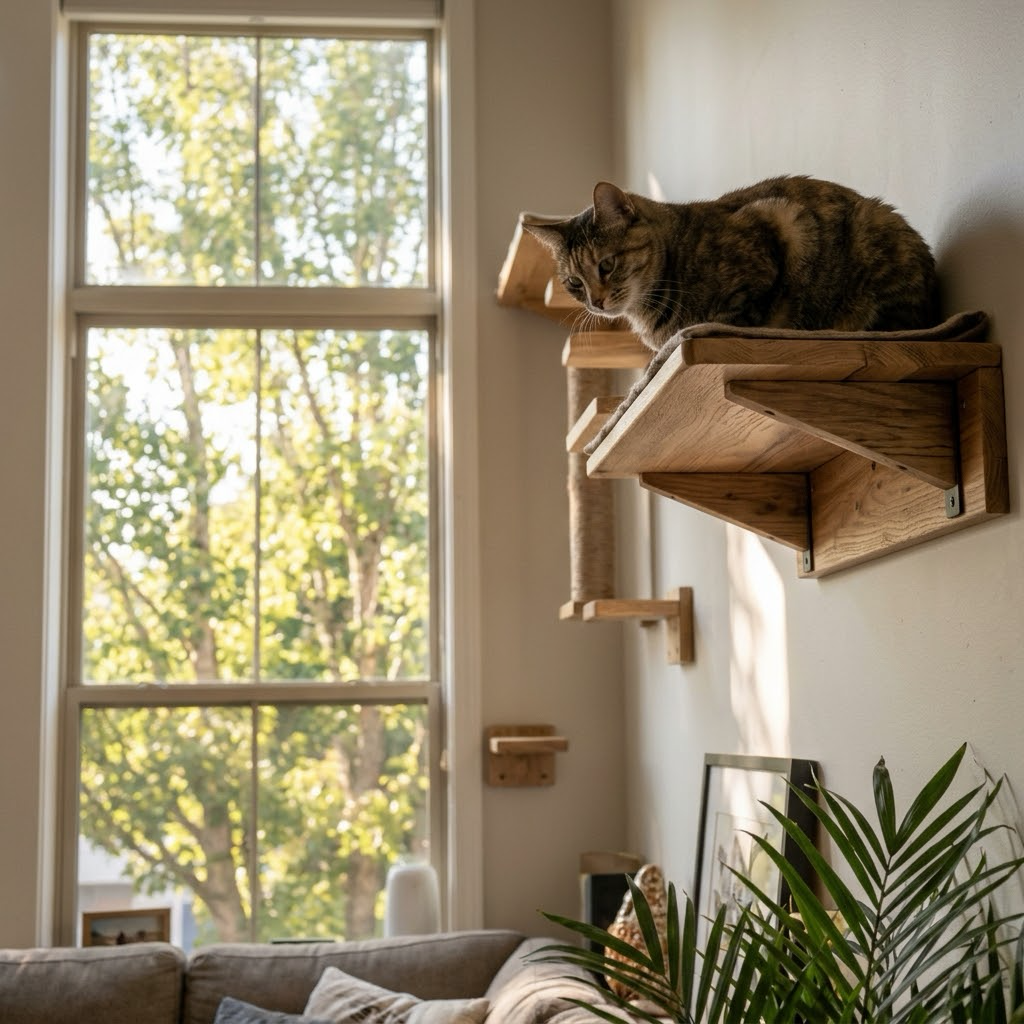
Cats often enjoy climbing and looking down. Elevated perches can provide security and a better view, though not every cat seeks height or feels safer there. Clear space on a windowsill, add a wall shelf, or set up a sturdy cat tree. A perch overlooking the street, trees, or birds outside gives them free entertainment all day long.
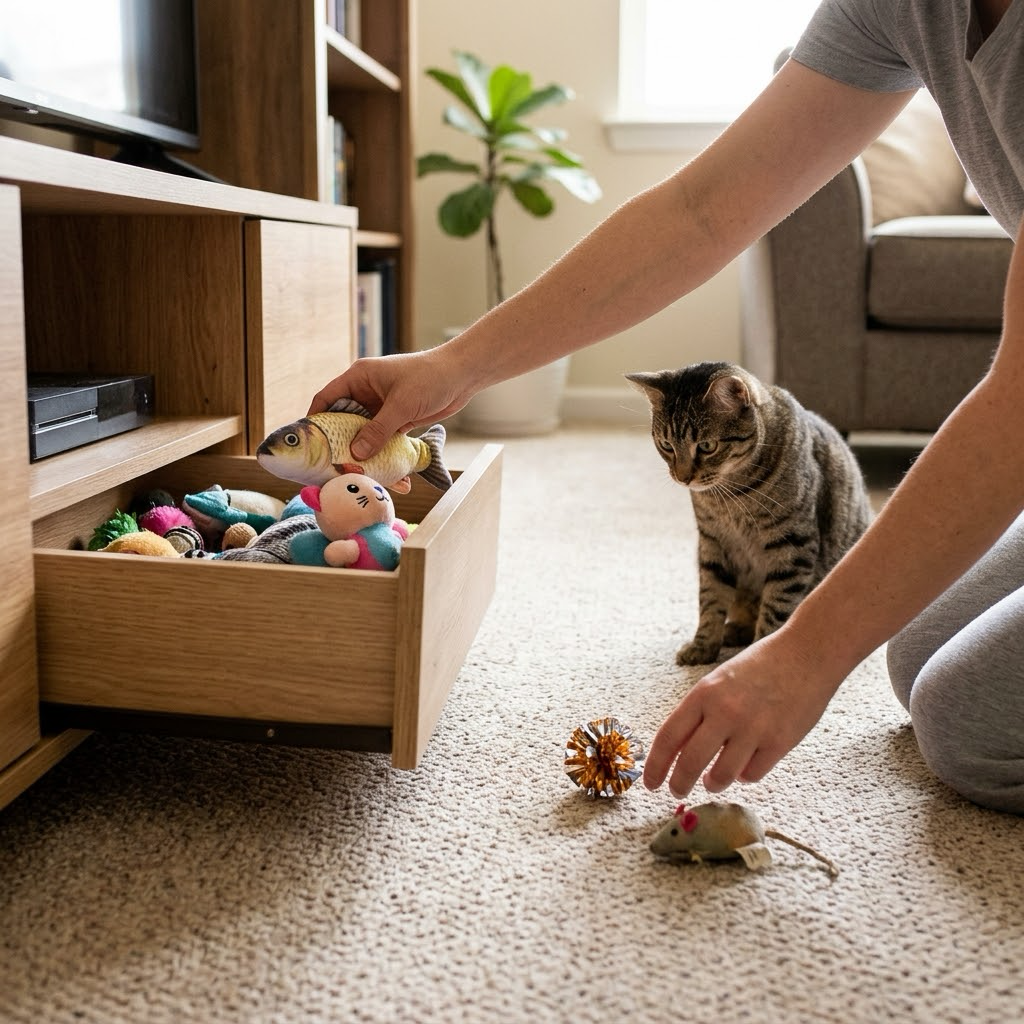
New doesn’t mean expensive. Keep playtime fresh by putting a few familiar toys away for a while and bringing out some that have been tucked in a drawer.
A toy that’s “new again” feels exciting. Keep only two or three out at once—too many choices can make them ignore all of them.
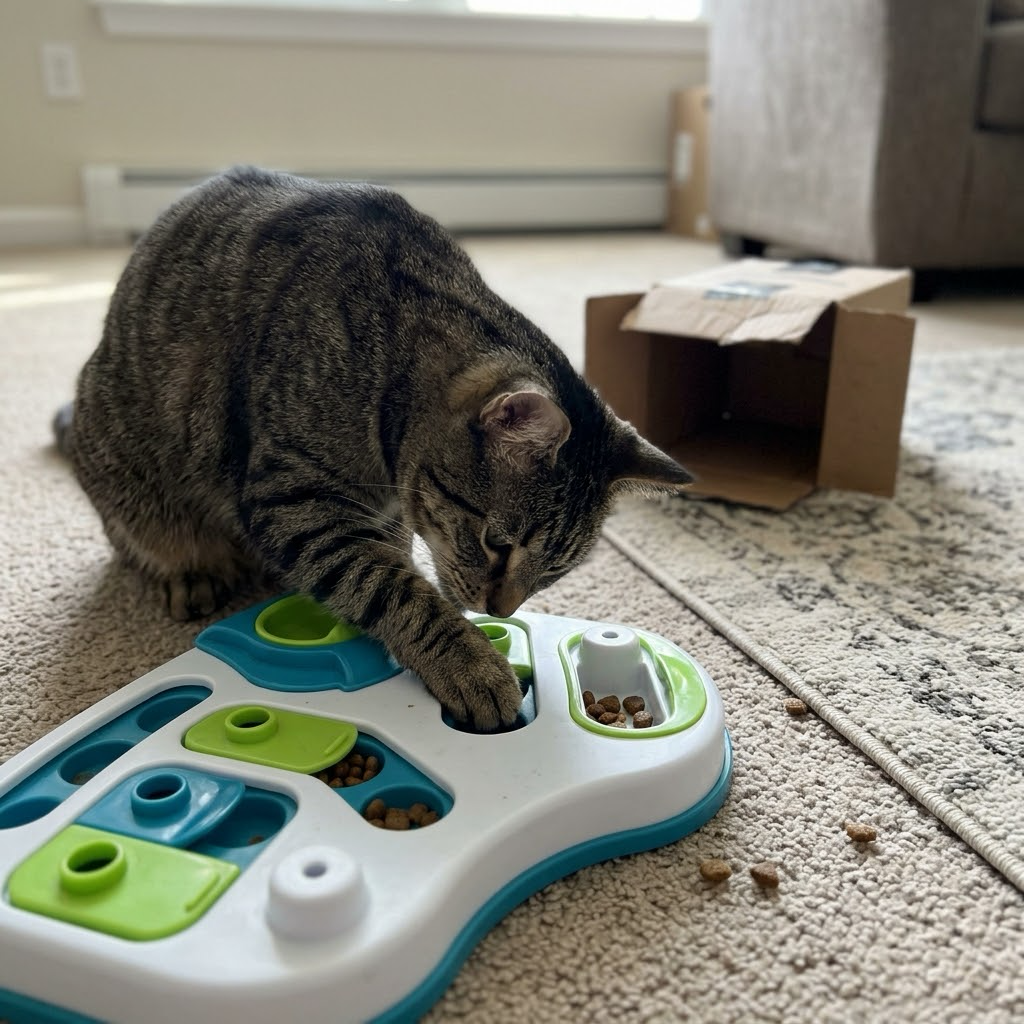
Instead of setting down a full bowl, hide small portions around the room—behind a chair, on a low shelf, inside a box. Puzzle feeders or treat balls also work well. Mealtimes become an engaging challenge, giving your cat’s hunting instincts the effort and focus they crave.
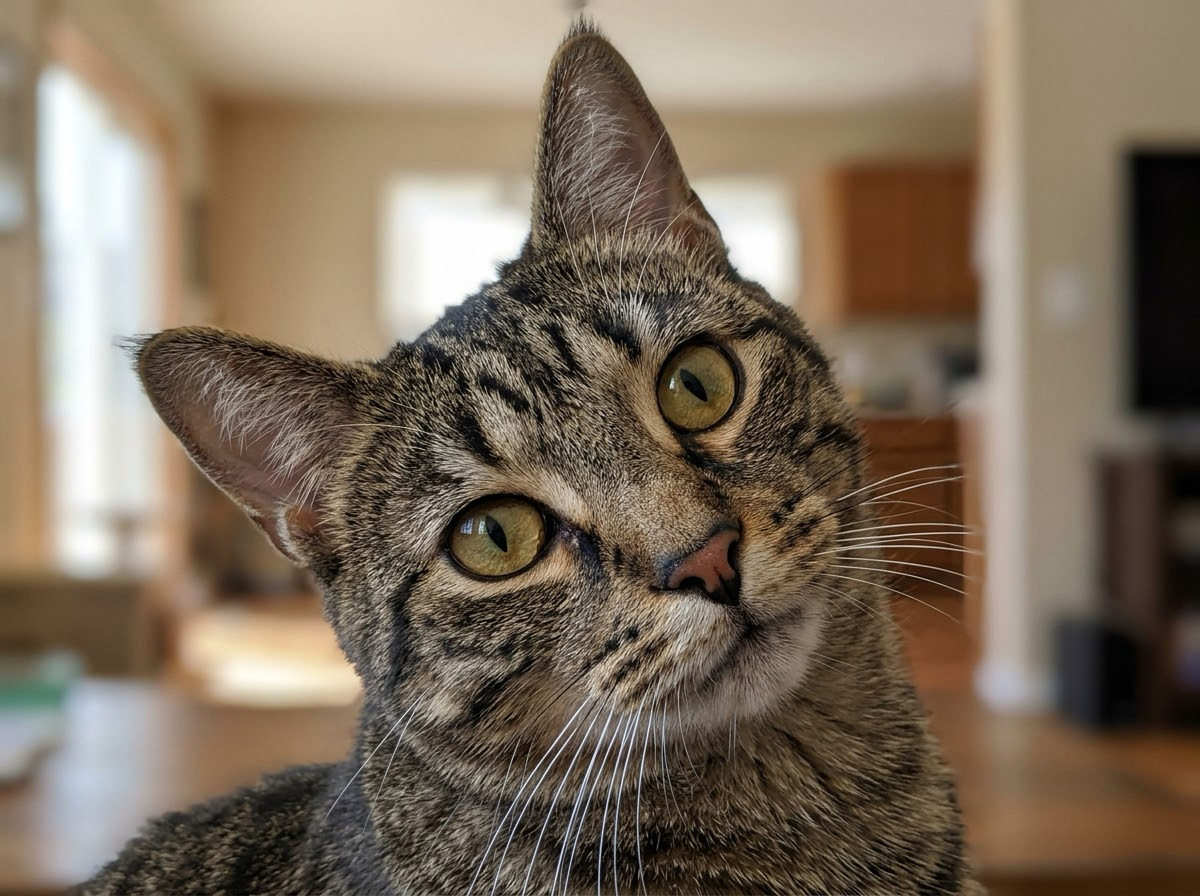
An understimulated cat may pace, meow a lot, scratch furniture, overgroom, gain weight, or get into mischief. Some cats become more clingy, while others lose interest in play and exploration.
Search for changes from your cat’s normal behavior, not just one odd day. If several signs appear together, add more play and enrichment, then check with your vet if the behavior continues.
Yes, some cats sleep more when they are bored. Cats naturally sleep a lot, but boredom may show up as extra sleep along with less interest in toys, play, or exploring.
If your cat’s sleep increases suddenly, or they also eat less, hide, or stop using the litter box normally, contact your vet. Those changes can have medical causes.
Long-term understimulation can contribute to low mood, stress, and withdrawal in some cats. A cat may sleep more, lose interest in play, groom too much, or become less social.
Add daily play, climbing spots, food puzzles, and safe places to watch the world. If the signs last more than a few days, or your cat stops eating or hides constantly, make a vet appointment to rule out health problems first.
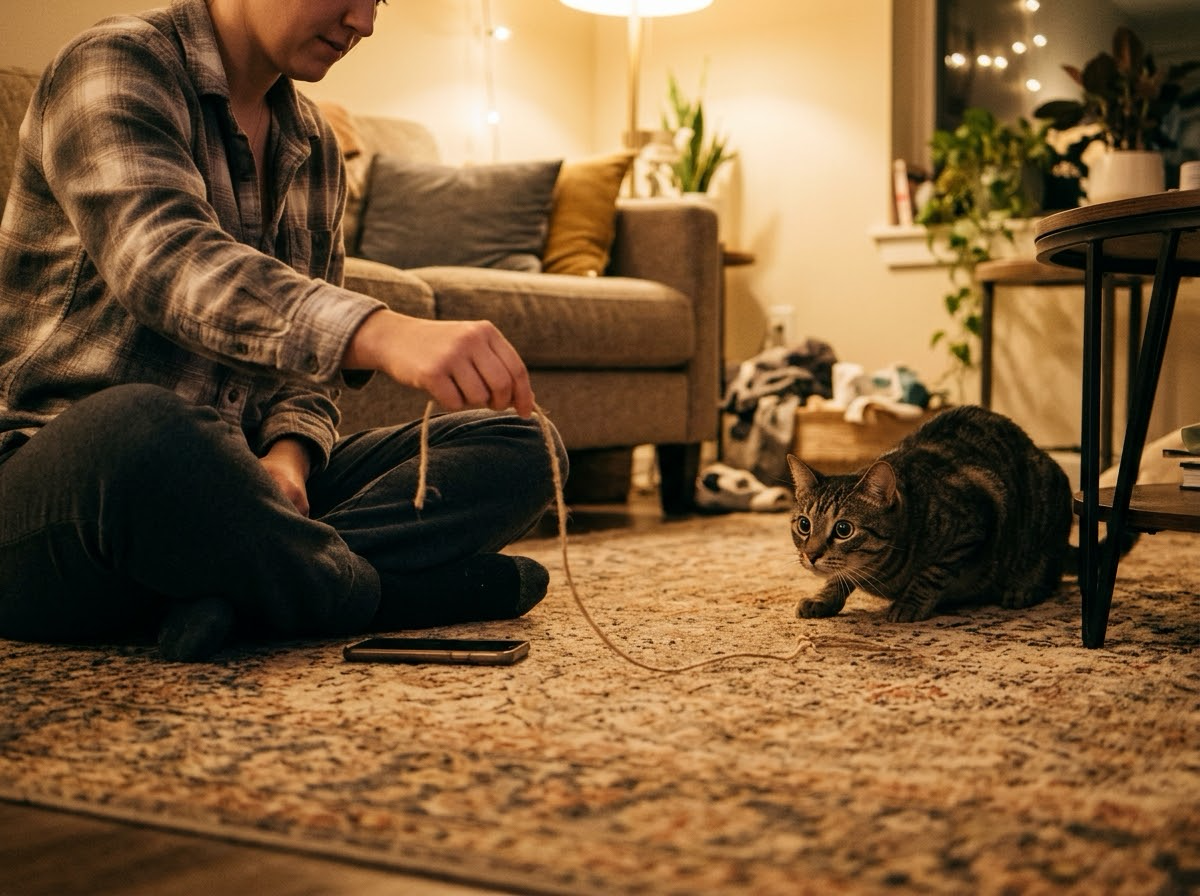
Tonight, try one small thing. Put your phone down, sit on the floor, and drag a string across the rug. Watch how fast your cat’s pupils widen. That moment tells you more than any checklist can.
Your cat isn’t asking for a bigger home or fancier gadgets. Your cat’s asking you to notice. And you already are.