
You walk into the living room and spot three pale claw marks running down the wall. Your drywall didn’t deserve that. Still, your cat isn’t trying to ruin your home. Scratching lets cats stretch, maintain healthy claws, and mark their territory with their scent.
Your cat needs an acceptable place to scratch, and the best solution depends on why it keeps returning to the wall. The right scratching surface, a few changes around the home, and rewards for good habits can help protect your walls without making your cat feel threatened.
Wall scratching often starts with ordinary feline behavior. Cats need to scratch, but the surface they choose depends on its texture, location, and how it feels under their claws. Drywall can become a favorite if it offers a satisfying stretch or sits in a spot the cat regularly visits.
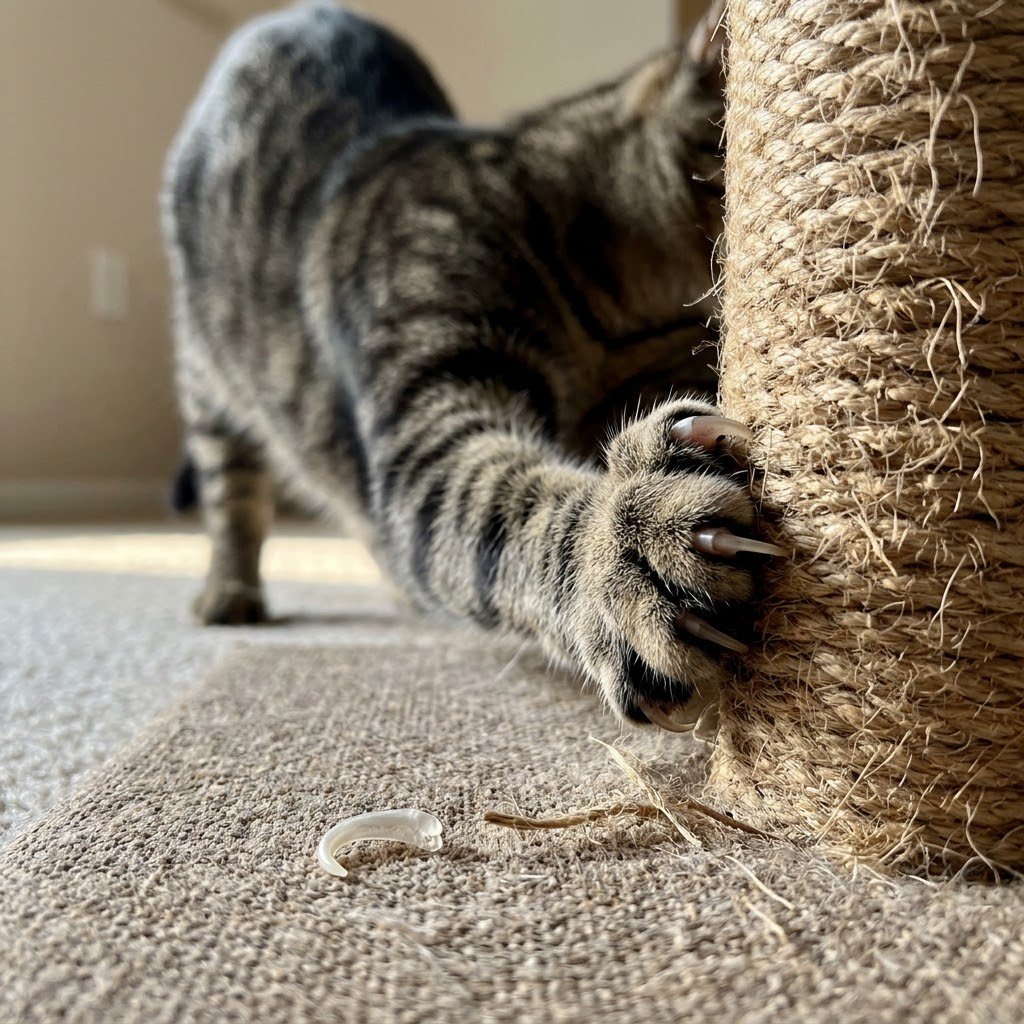
Cats scratch for several reasons. Reaching up and pulling their claws down a surface stretches the muscles in their shoulders, back, and paws. Scratching also helps remove the old outer sheath of each claw, exposing the sharper claw underneath.
There’s a marking element, too. Cats have scent glands in their paws, so scratching leaves both visible marks and scent signals. A cat may return to the same spot because it already carries familiar scent cues. That’s one reason simply covering the damage may not solve the problem.
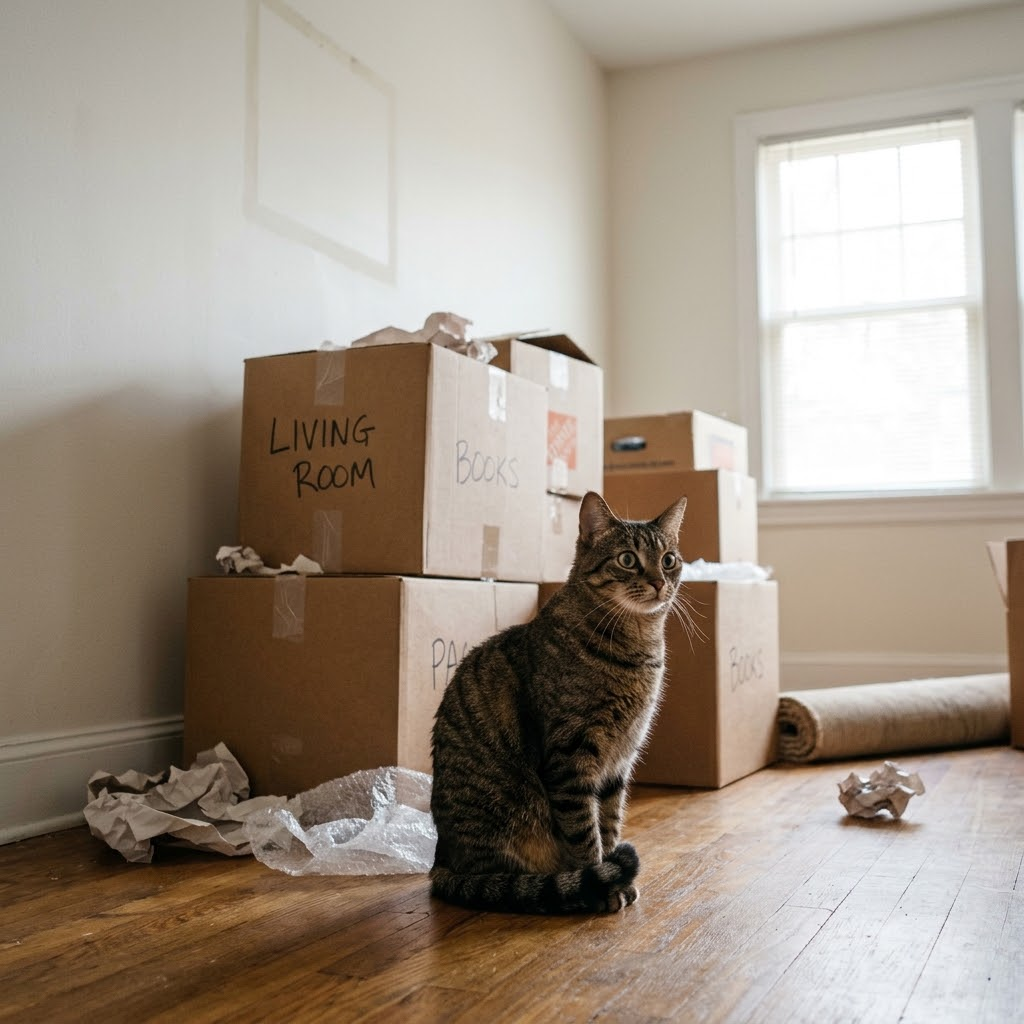
A sudden change in scratching habits deserves a closer look. A new pet, a baby, a house move, unfamiliar smells, or a shift in your daily schedule can unsettle a cat. Some cats respond by scratching more often or choosing new locations.
Boredom can contribute as well. Indoor cats need chances to play, climb, explore, and watch what’s happening around them. If those needs aren’t met, a wall may become an easy outlet for pent-up energy. Monitor when the behavior happens and consider any recent changes in your home.
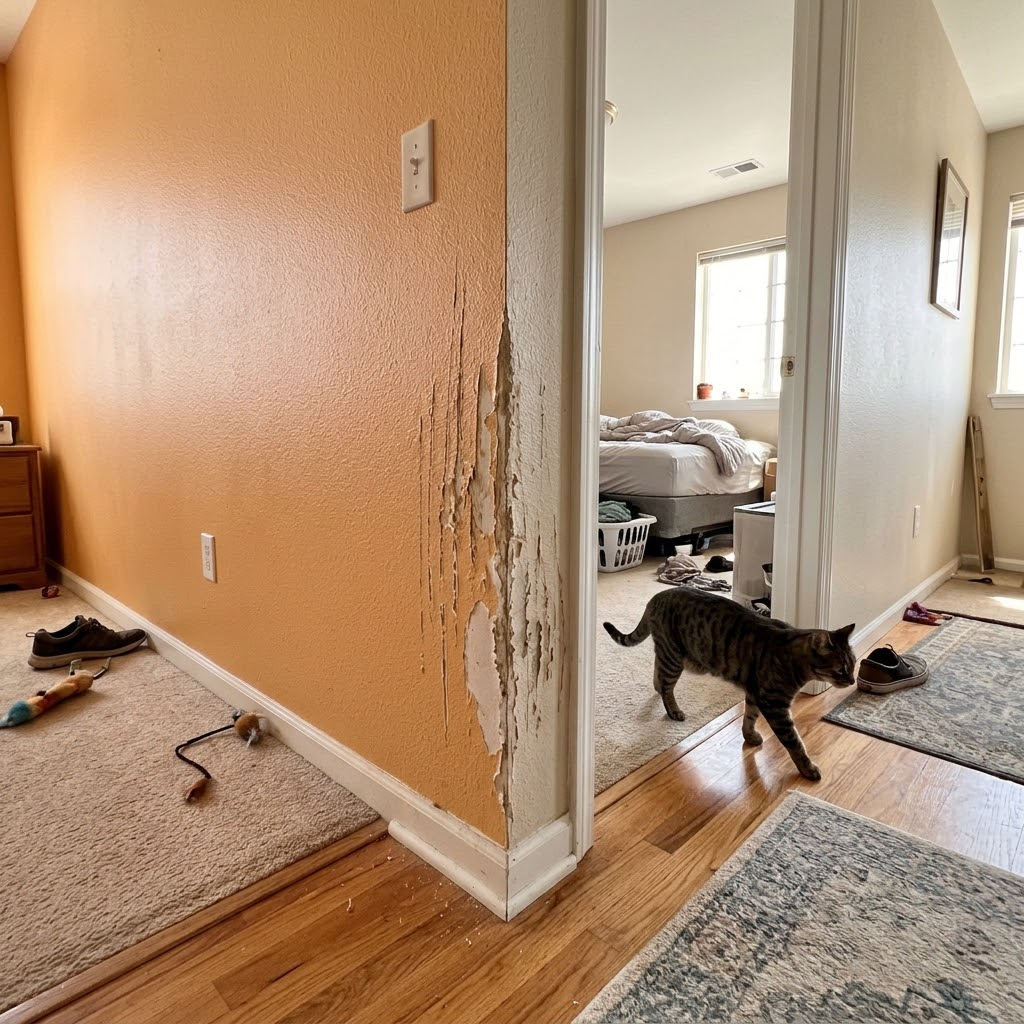
Drywall offers a broad, upright surface that lets cats stretch their bodies while scratching downward. Painted walls may also have a texture that some cats enjoy. Corners and doorways can be especially attractive because cats often use these areas to patrol and mark their territory.
A cat that scratches beside a bedroom door may be responding to a routine or a particular household traffic pattern. Another cat might prefer a living room corner with enough space to stretch out fully. Identifying the preferred spot gives you a useful starting point for changing the behavior.
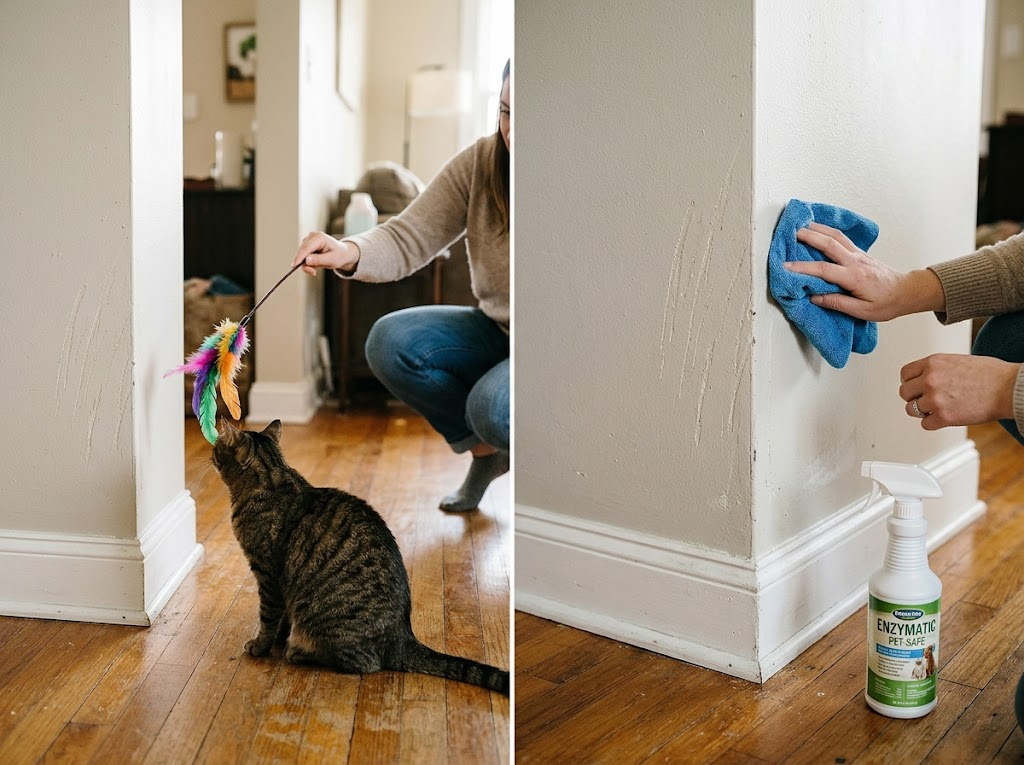
If you catch your cat working on the drywall, resist the urge to shout or rush over. A sudden reaction may frighten your cat without showing it where it’s appropriate to scratch.
• Interrupt calmly. Use a gentle sound or redirect your cat’s attention with a toy. Avoid yelling, chasing, or spraying water.
• Clean the damaged area. Follow the directions on a pet-safe odor neutralizer or enzymatic cleaner if appropriate for the surface. Check that the product is safe for your wall paint and test it on a hidden patch first.
• Observe the pattern. Note whether the scratching happens after naps, near doorways, when you leave home, or at a particular time of day. These clues can help you identify a suitable location for a scratcher.
• Repair rough damage. Fill in small gouges and smooth the wall once your cat can no longer easily reach the area. Loose paint and torn drywall can make the surface easier to damage further.
• Avoid punishing the behavior. Prevent further damage while you work out why that particular spot appeals to your cat.
Once your cat has chosen a wall as a favorite scratching spot, simply blocking access may not be enough to change the habit. Offer a suitable alternative that matches your cat’s preferred scratching style, then make it easy to use. The right placement and surface can help your cat switch from the wall to an approved scratcher.
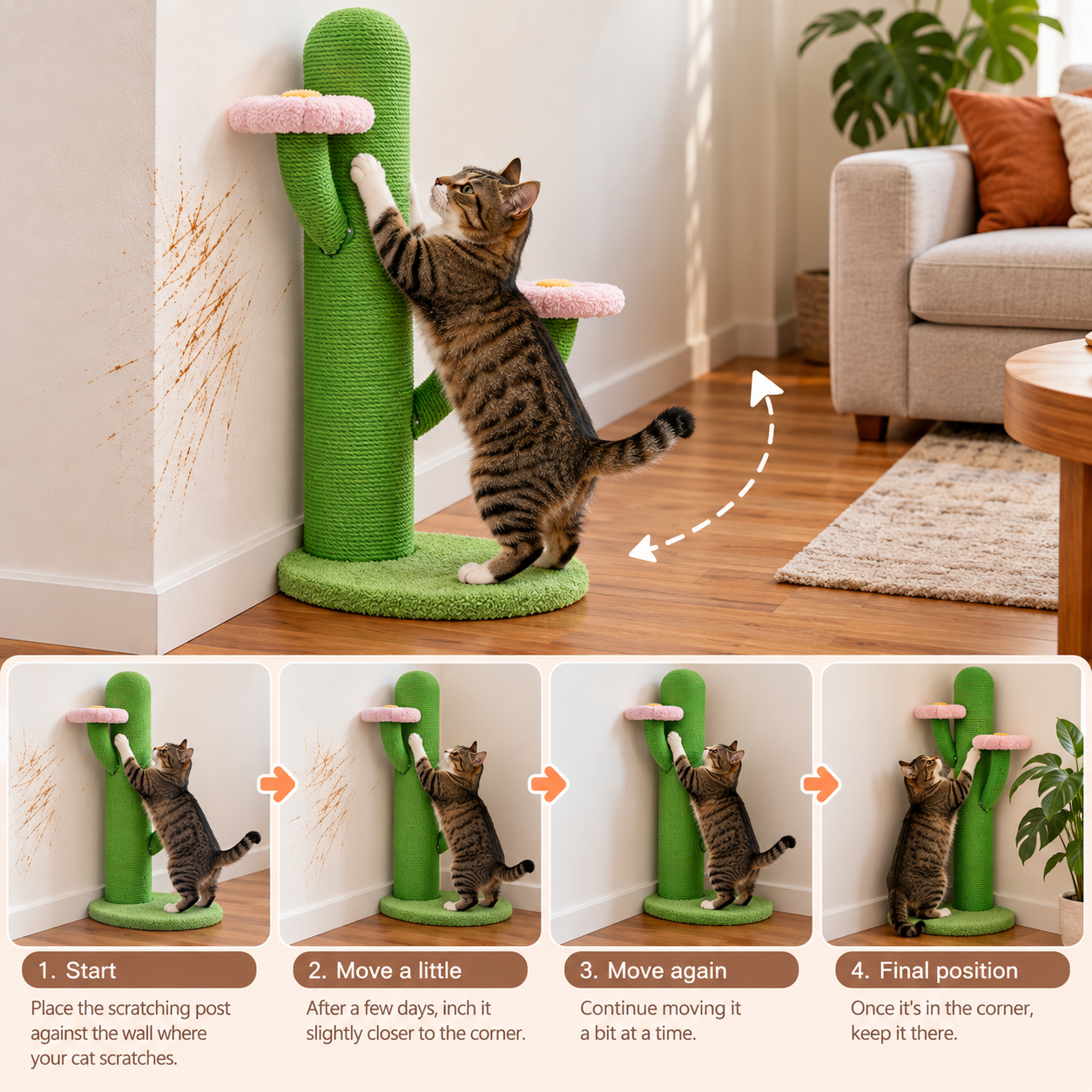
Place a scratching post or pad directly beside the damaged wall. This may not be your favorite decorating choice, but it gives your cat an easy alternative when it would normally scratch the drywall.
Leave the scratcher there while your cat gets used to it. Once your cat uses it consistently, gradually move it to a more convenient spot. If your cat starts scratching the wall again, slow down or return the scratcher to its previous position.
Browse scratching posts and pads to compare surfaces and designs for your cat’s scratching habits.
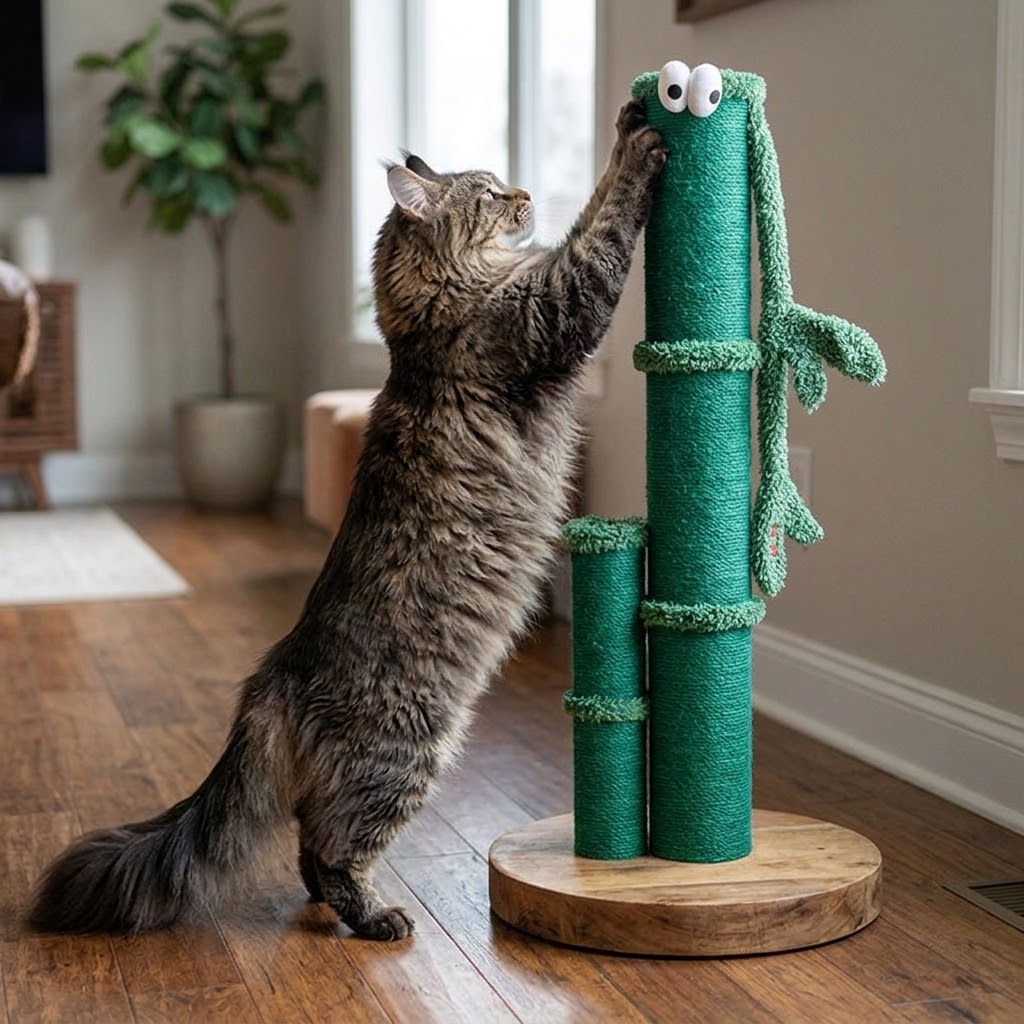
Cats may avoid a scratcher that tips over or slides across the floor. Choose one that stays firmly in place when your cat pulls against it.
Look for these features:
• A heavy base that resists tipping
• Enough height for your cat to stretch fully
• Sisal rope, sisal fabric, cardboard, or another texture your cat enjoys
• A vertical surface if your cat scratches walls, rather than relying only on horizontal pads
Tall cats may struggle to stretch properly on a short post. If your cat is large or particularly enthusiastic about scratching, consider sturdy, tall scratching posts that provide more room and stability.

Some cats investigate a new scratcher right away, while others need time to get comfortable with it. Make the surface inviting without forcing your cat to use it.
• Try different textures. Offer sisal rope, cardboard, or sisal fabric to find out which material your cat prefers.
• Add familiar scents. Sprinkle a little catnip or silvervine on the scratcher if your cat responds to either one.
• Use play to spark interest. Move a wand toy around the base or along the surface to encourage your cat to investigate.
• Make exploration rewarding. Place a few treats beside the scratcher so your cat has a reason to approach and sniff it.
Give your cat time to explore at its own pace. Don’t grab its paws and drag them down the post, as this can make the experience unpleasant. If your cat ignores the scratcher, try a different texture or move it closer to a favorite resting spot.
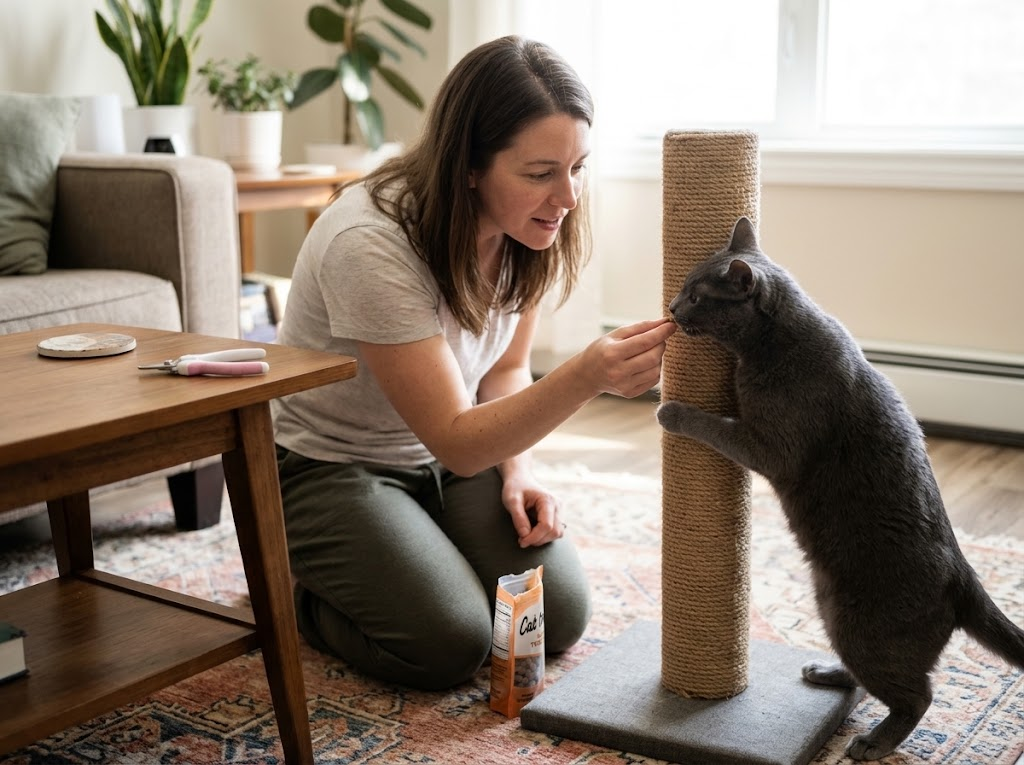
When your cat first starts using the scratcher, offer positive reinforcement to encourage it to keep going. The goal isn’t to stop scratching altogether but to teach your cat which surfaces are acceptable.
• Reward the behavior you want. When your cat scratches the approved surface, offer a treat or calm praise immediately afterward if your cat enjoys the attention. Rewarding the action itself helps distinguish scratching the post from simply approaching it.
• Work with your cat’s routine. Many cats scratch after waking up or before settling down. If yours tends to scratch the wall after a nap, make sure the approved scratcher is within reach then. You can also use a wand toy to encourage play near the scratcher, but let your cat make contact with the surface voluntarily.
• Keep household rules consistent. Make sure everyone in the home responds to wall scratching in the same way and encourages the use of approved surfaces. Inconsistent responses can make it more difficult for your cat to develop a new habit.
• Trim claws when needed. Regular nail trims can reduce the damage sharp tips cause, although trimming won’t remove the urge to scratch. Many cats need their claws trimmed every few weeks, but the right interval varies. If you’re unsure how to do it, ask your veterinarian to show you safe trimming.
Your cat may still return to the wall during training. Check the scratcher’s stability, placement, and texture before adjusting your approach, and keep rewarding the behavior you want to encourage.
Once your cat has a suitable scratching surface, look at the rest of the home. Make approved scratching spots easy to reach and protect areas that are still being damaged.
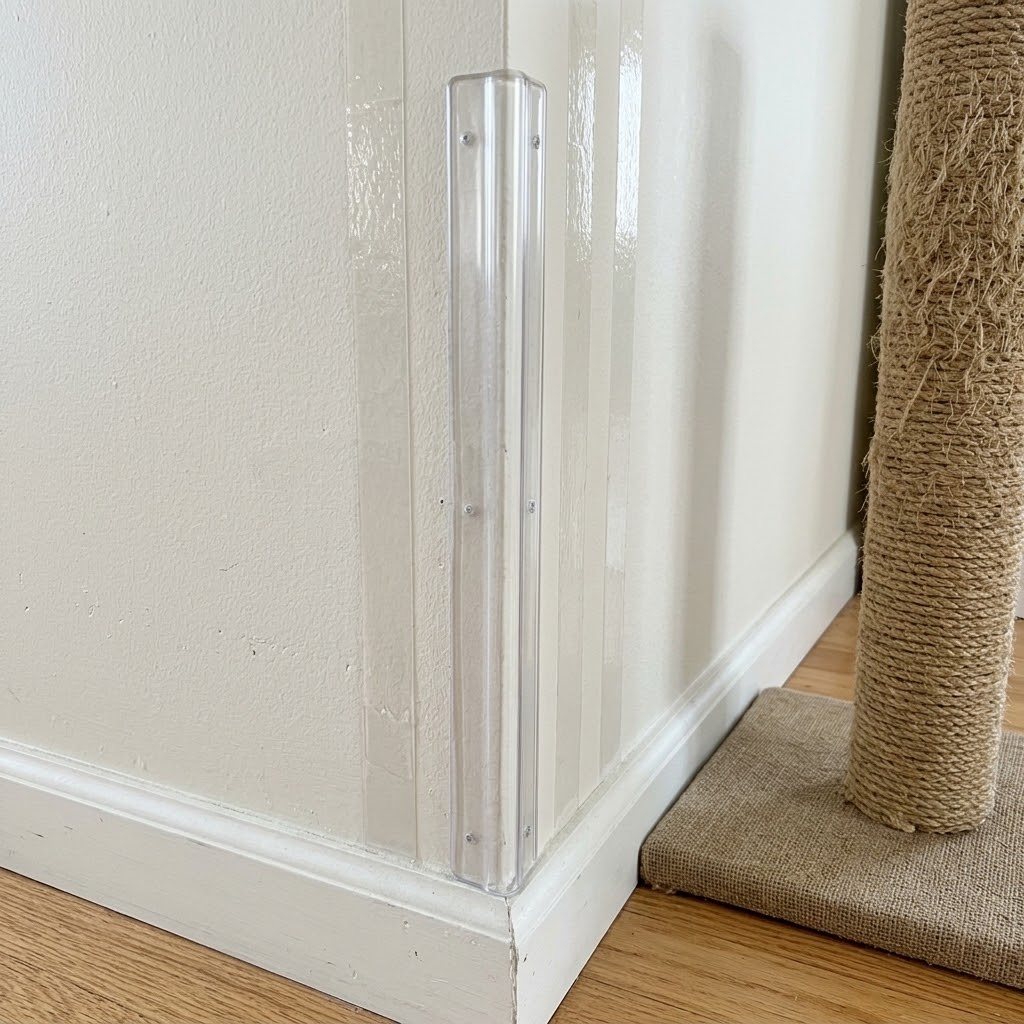
Temporary barriers can help protect vulnerable areas during training. The sticky texture of pet-safe double-sided tape can deter cats from scratching. Clear plastic wall protectors and corner guards can shield paint and drywall from claws.
A secure bookshelf, console table, or cat tree can also shield a frequently scratched area without obstructing the walkway.
Select barriers that attach securely and won’t damage your wall’s finish. Check them regularly to ensure your cat can’t pull them loose or chew on exposed edges. Keep an appropriate scratcher nearby so your cat has somewhere else to go.
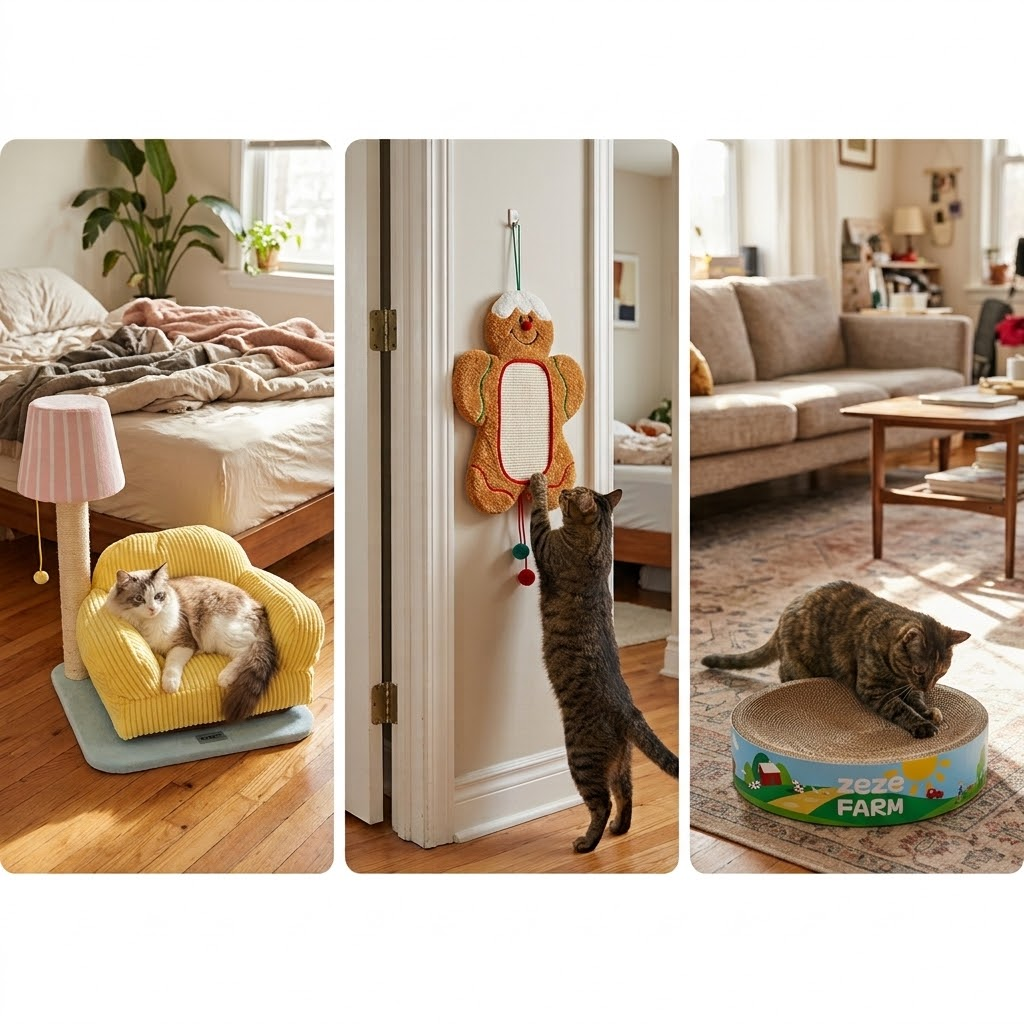
Cats often scratch in several locations rather than relying on a single post. A scratcher near a sleeping area can be useful after a nap, while another near a doorway may suit a cat that scratches when moving between rooms.
Start with the spots your cat uses most. A vertical post may work beside a frequently scratched wall, while a horizontal pad might suit a cat that prefers scratching carpets. Add another surface if needed rather than filling every room with cat furniture.
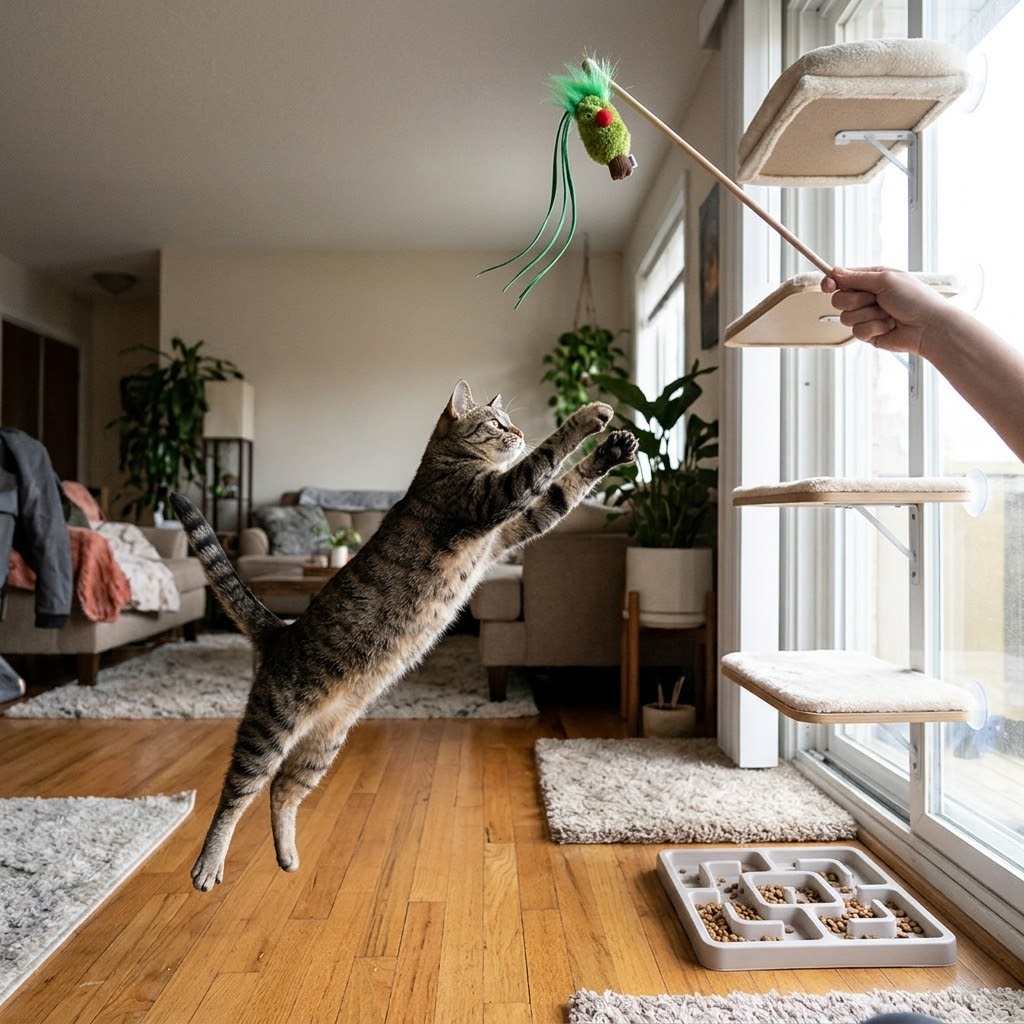
A lack of stimulation can contribute to unwanted scratching, especially when a cat spends most of its time indoors. Short, regular play sessions with a wand toy give your cat an outlet for stalking, chasing, and pouncing. If you use a laser pointer, finish with a physical toy your cat can catch so the game has a clear ending.
Vertical spaces can help, too. Cat trees, shelves, and window perches give cats places to climb and observe their surroundings. Puzzle feeders offer a simple way to add mental activity to mealtimes.
| Method | Best for | What to watch for |
| Double-sided tape | Small, frequently scratched areas | Check whether the tape needs replacing and whether it affects the paint. |
| Clear wall protectors | Corners and heavily used spots | Secure them properly and check for loose edges. |
| Furniture as a barrier | Accessible corners and doorways | Make sure the furniture is stable and doesn’t block access. |
| Additional scratchers | Homes with several preferred scratching spots | Choose suitable textures and locations rather than adding posts at random. |
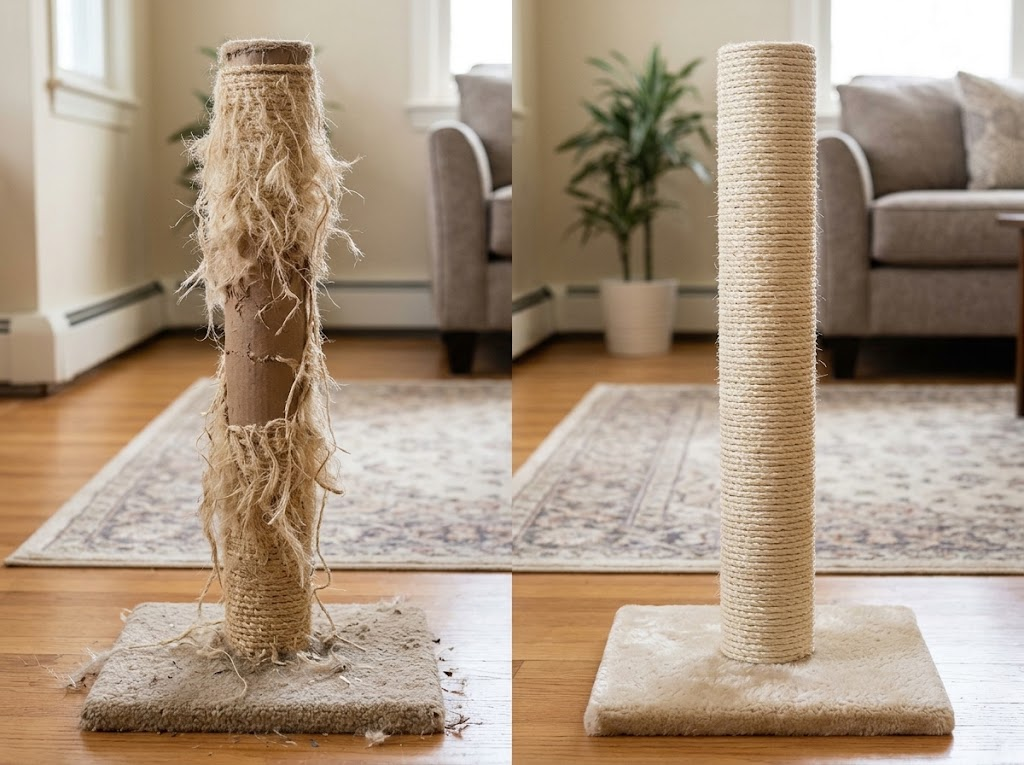
Check the setup regularly and adjust it if your cat loses interest or returns to the wall.
• Replace worn scratchers. Replace posts once their surfaces become too worn to provide a secure grip.
• Keep the environment predictable. If a change at home seems to upset your cat, give it a quiet hiding place and keep familiar routines as much as possible.
• Watch for other behavioral changes. If wall scratching begins suddenly and is accompanied by hiding, reduced appetite, unusual aggression, or other signs of distress, contact your veterinarian. A health problem or significant stress may be contributing to the change.
If the behavior continues despite changes at home, a veterinarian or qualified feline behavior professional can help you decide what to try next.
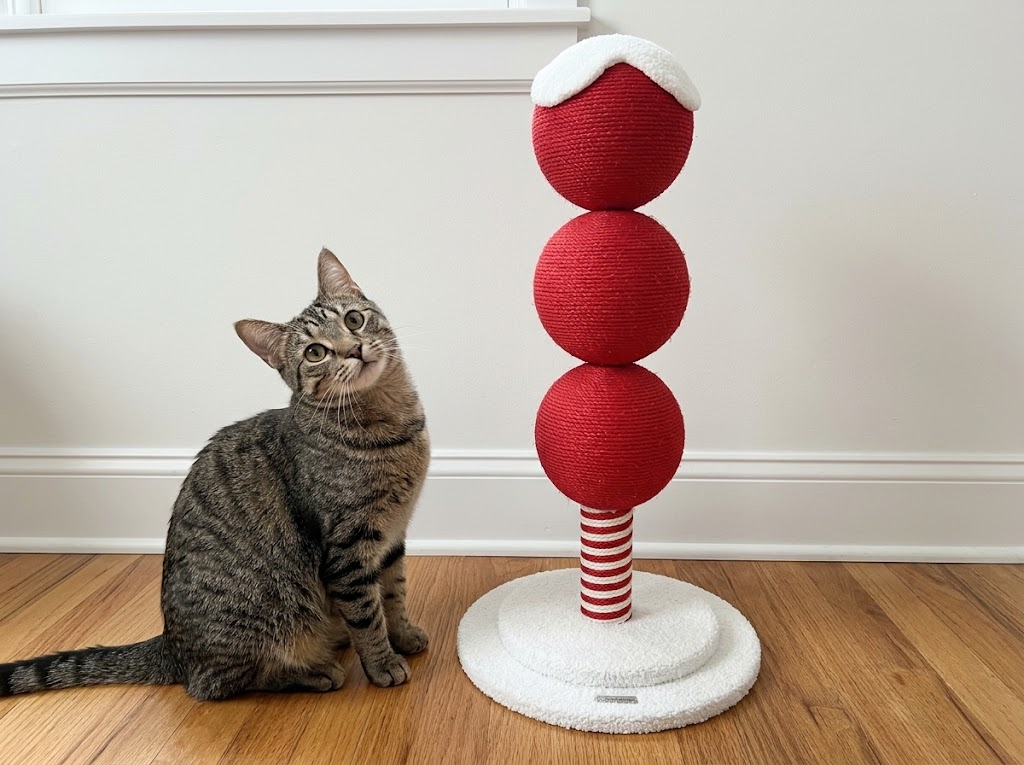
A sudden change may be linked to stress, boredom, unfamiliar scents, or a change in routine. Look for recent changes at home and check whether your cat has suitable scratching surfaces. Contact your veterinarian if the behavior continues or is accompanied by other changes in health or mood.
Pet-safe double-sided tape, securely fitted plastic protectors, and suitable wall guards can help. Test products on a hidden patch first to avoid damaging the paint, and place a scratching surface nearby to give your cat an alternative.
Your cat may be stretching, marking the area, or reacting to its litter box setup. Keep the box clean and easy to access. A nearby scratcher may help, provided it doesn’t obstruct the entrance.
Place a stable post beside the damaged area and reward your cat for using it. Keep it there until the new habit becomes regular, then move it gradually if needed.
Some sprays may discourage scratching, but results vary. Choose products labeled for use around cats and follow the directions. Avoid essential oils or homemade mixtures that may be unsafe for pets.
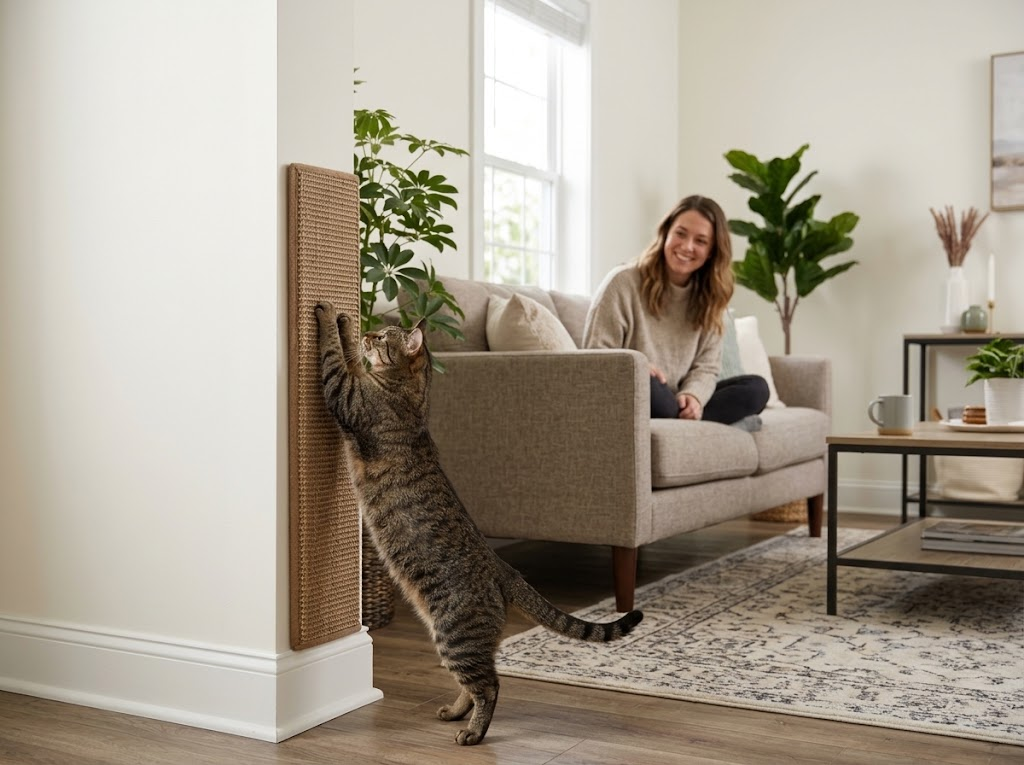
A few claw marks can be frustrating, especially on a freshly painted wall. But scratching serves a purpose, and figuring out why your cat favors that spot is more useful than trying to suppress the behavior.
Choose a solution that fits your home and give your cat time to adjust. If the habit changes suddenly or comes with signs of distress, check with your veterinarian rather than treating it as a simple training problem.