
Your cat stretches up, digs in, and the whole post starts to wobble. A second later, they’re off and heading for the couch. Sound familiar? A small, lightweight post may not give a big cat enough room or support.
The best scratching posts for large cats offer enough height for a full stretch, a stable base, and a scratching surface that holds up to daily use. These features matter more than a “large cat” label on the box.
This guide explains what to look for, which scratcher styles suit bigger cats, and whether ZezeLife’s Trophy post is a good option for your feline friend.
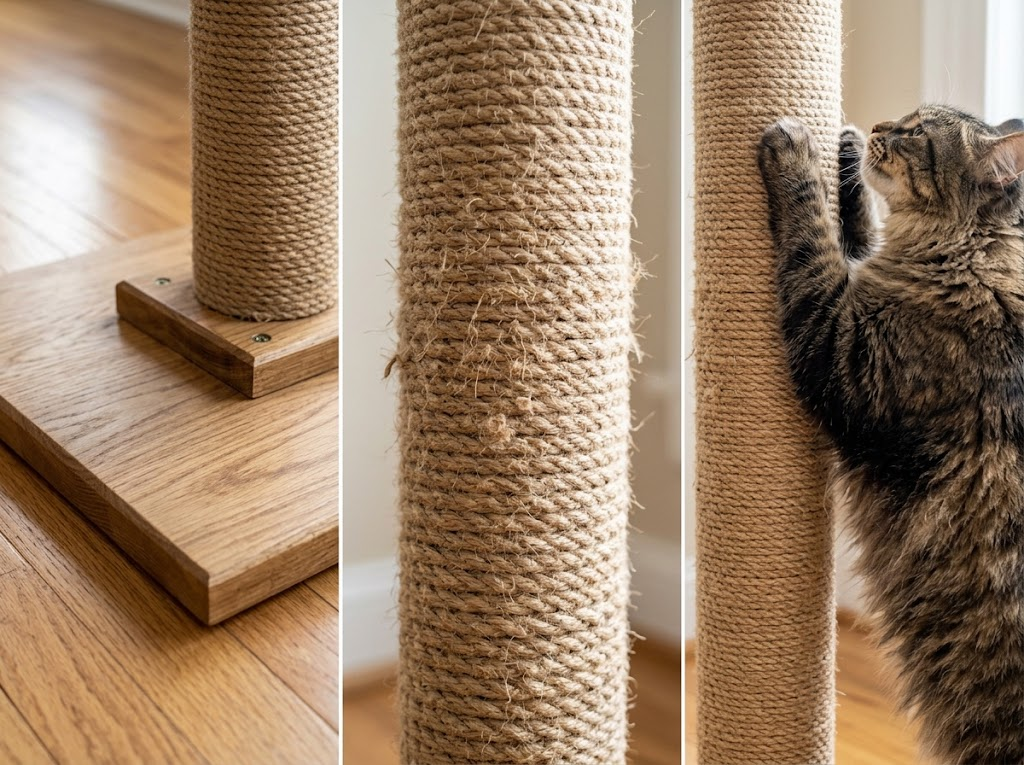
A large cat can put considerable force into a scratching session. They stretch, pull, and lean against the post, sometimes with much of their body weight behind each movement. A lightweight model may wobble or develop loose connections with regular use.
So what should you look for in the best scratching posts for large cats? Start with three important features:
A good big cat scratcher combines these features. A tall post with a weak base is no better than a sturdy one that’s too short. Check the complete design before choosing a model.
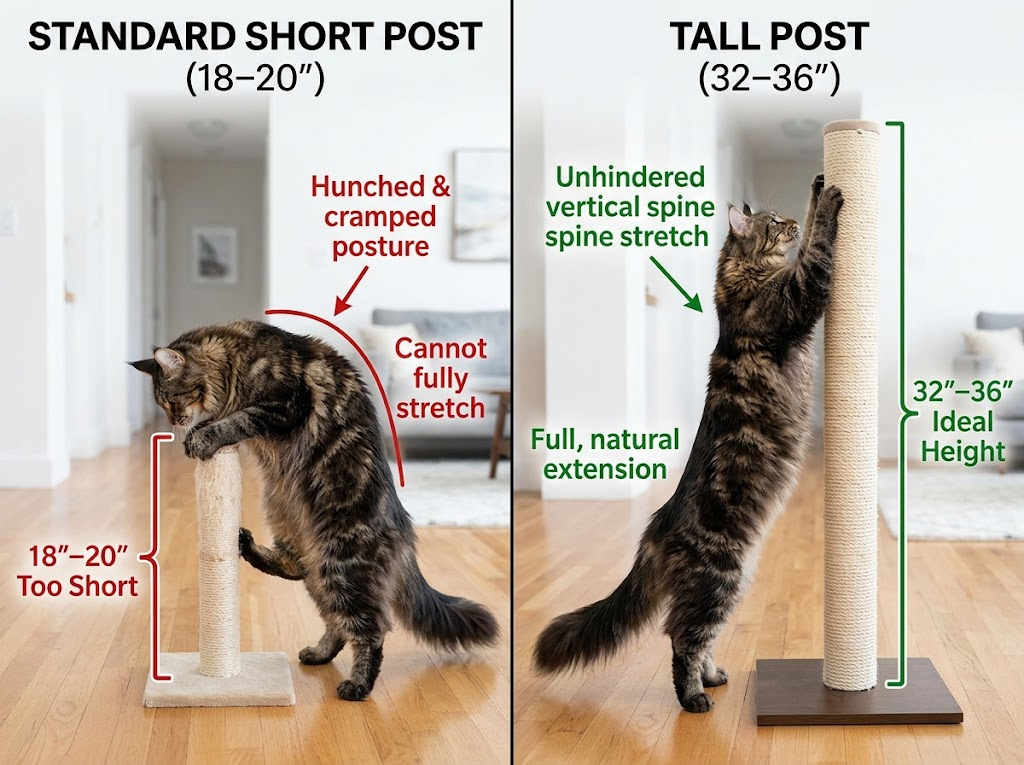
Height is one of the first things to check when shopping for a large cat. Cats often stretch their front legs upward while scratching, so a short post can limit their movement.
A tall sisal scratching post for large cats gives your pet more room to reach upward, extend its body, and pull its claws along the surface. Choose a post that extends beyond your cat’s full stretch, with a few extra inches for clearance.
Sisal is a popular scratching material because its rough fibers give cats a firm surface to grip. When wrapped tightly around a post, sisal rope can provide a durable scratching area.
However, sisal isn’t every cat’s favorite. Some prefer carpet, woven sisal fabric, or cardboard. Pay attention to the surfaces your cat already scratches at home. Those habits can help you choose a post they’re more likely to use.
Quick tip: Measure your cat while it stands on its hind legs with its front paws stretched upward. A treat held above its head can encourage the full stretch. Measure from the floor to the top of its paws, then add a few inches. Use that measurement as your minimum post height.
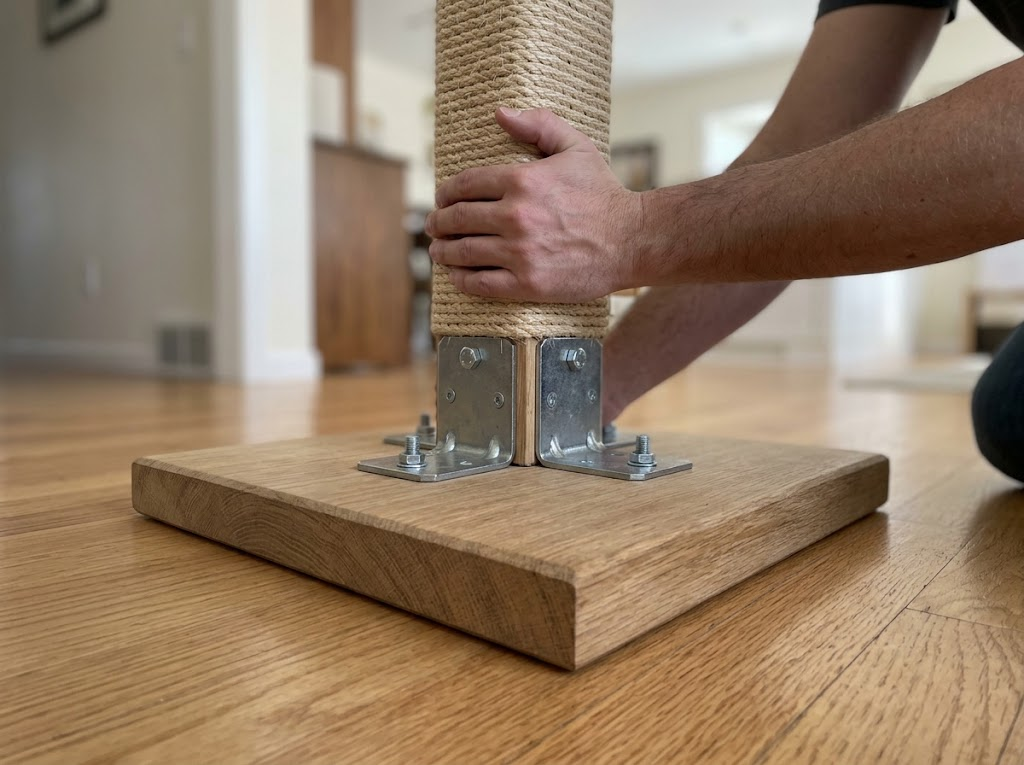
A tall post won’t help much if it falls over when your cat uses it. Look for a stable scratching post that won’t tip over during vigorous scratching.
Start with the base. A wide, sufficiently heavy base helps keep the post grounded. The pole should also connect securely to the base, with strong fasteners that can withstand repeated pulling and pressure.
The pole’s construction matters, too. A solid wood core, a sturdy engineered wood structure, or a well-built thick tube may work, depending on the complete design. The material alone doesn’t determine stability.
To check a post, apply gentle pressure to the upper section while keeping your other hand ready to steady it. Watch for movement at the base and looseness around the joints. Avoid forceful testing that could damage the product or cause it to fall.
A wobbly post may discourage your cat from using it. Before buying, check the product dimensions, base construction, and assembly instructions. Once the post is assembled, inspect the fasteners periodically and tighten them when needed.
For a sturdy scratching post for heavy cats, look for a secure connection between the pole and base rather than focusing only on the weight of the materials.
A heavy-duty cat scratcher needs more than a rough covering. Its durability depends on the scratching material, the structure underneath, and how securely everything is assembled.
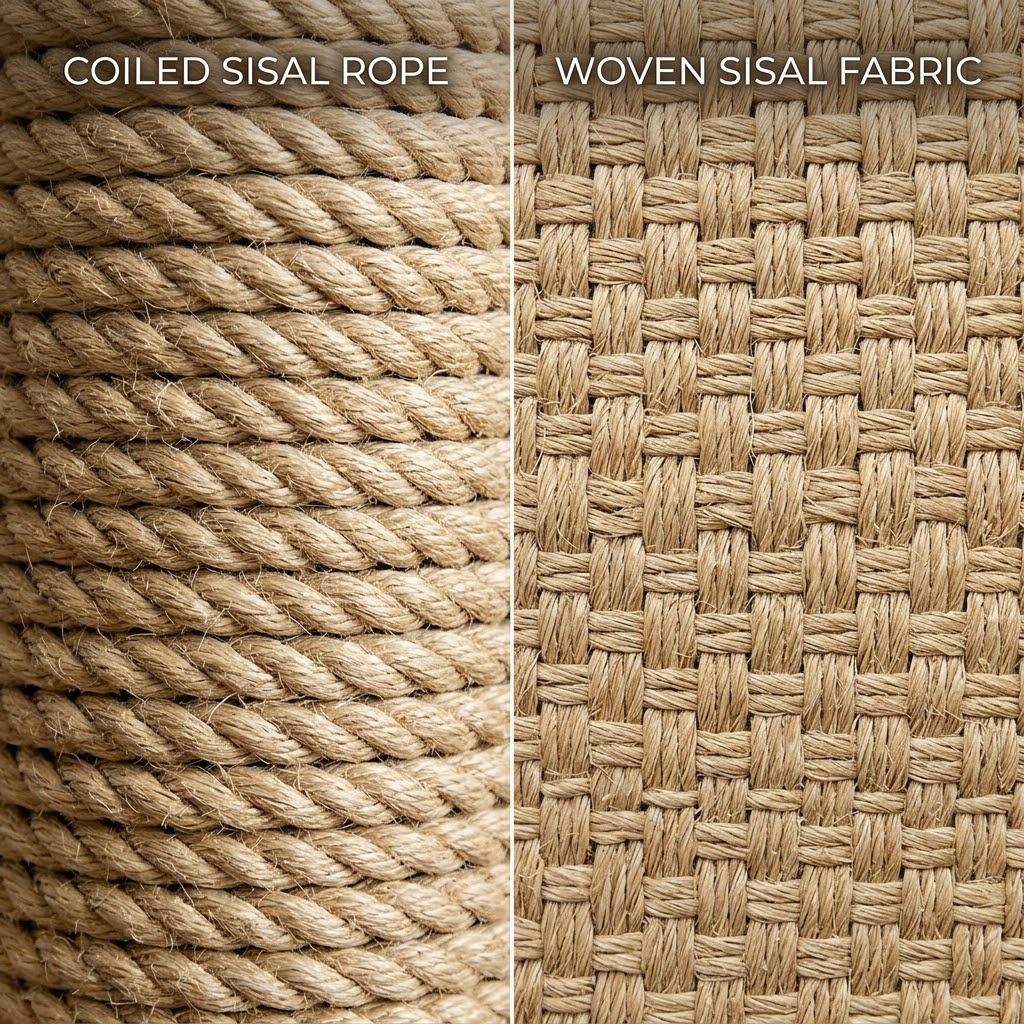
Sisal rope is a common choice for scratching posts. Its rough texture gives cats something to grip, and tightly wrapped rope can withstand regular scratching. Look for close wrapping without gaps or loose ends.
Sisal fabric offers a different texture. It has a woven surface rather than the ridges found between rope wraps. Some cats may prefer this smoother scratching path.
Neither option is automatically better for every cat. Consider the material’s quality, how firmly it is attached, and whether the scratching surface can be replaced when it wears out.
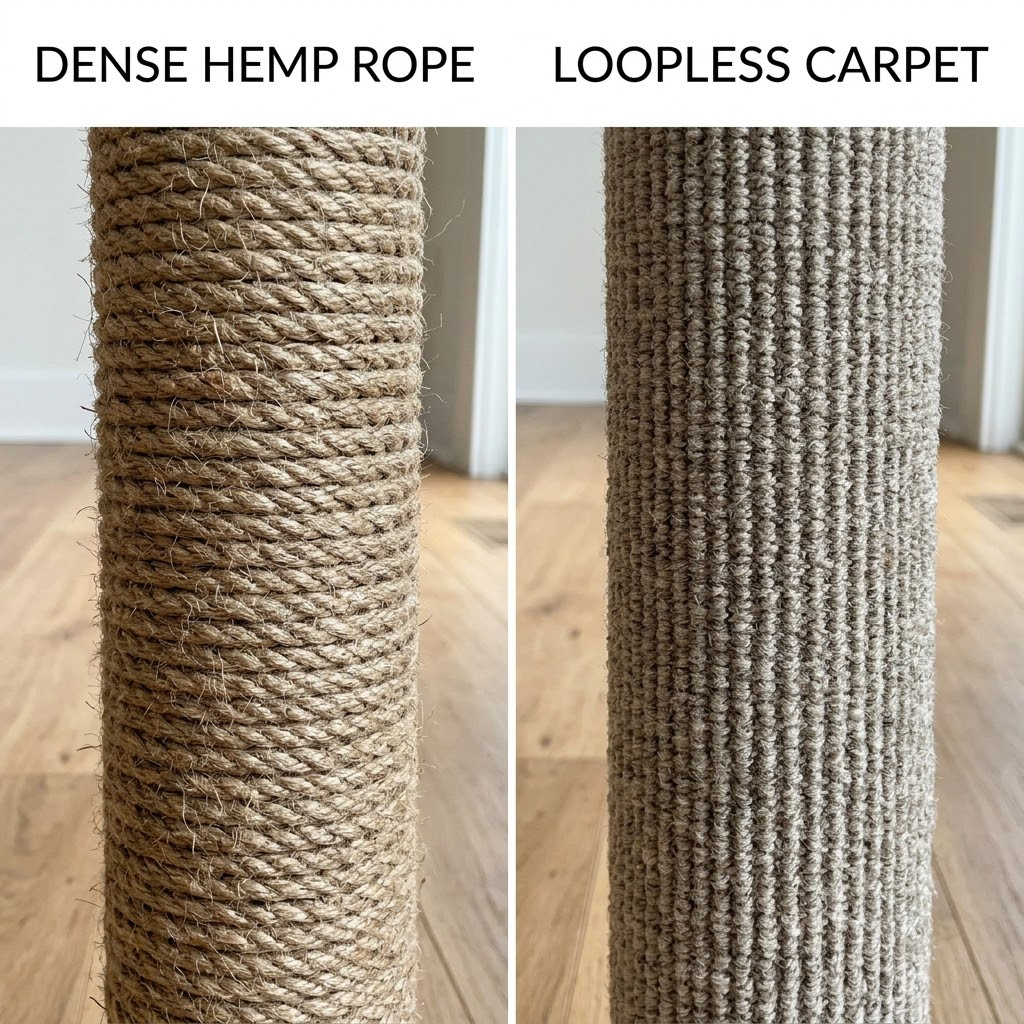
Hemp rope is another material used in cat scratchers. Its name alone doesn’t mean it will last longer than sisal. Rope thickness, construction, attachment methods, and replacement options all affect how well a scratcher holds up.
Carpet is also worth considering, particularly if your cat already likes scratching that texture. If your cat ignores one material, try another rather than assuming it doesn’t like scratching posts altogether.
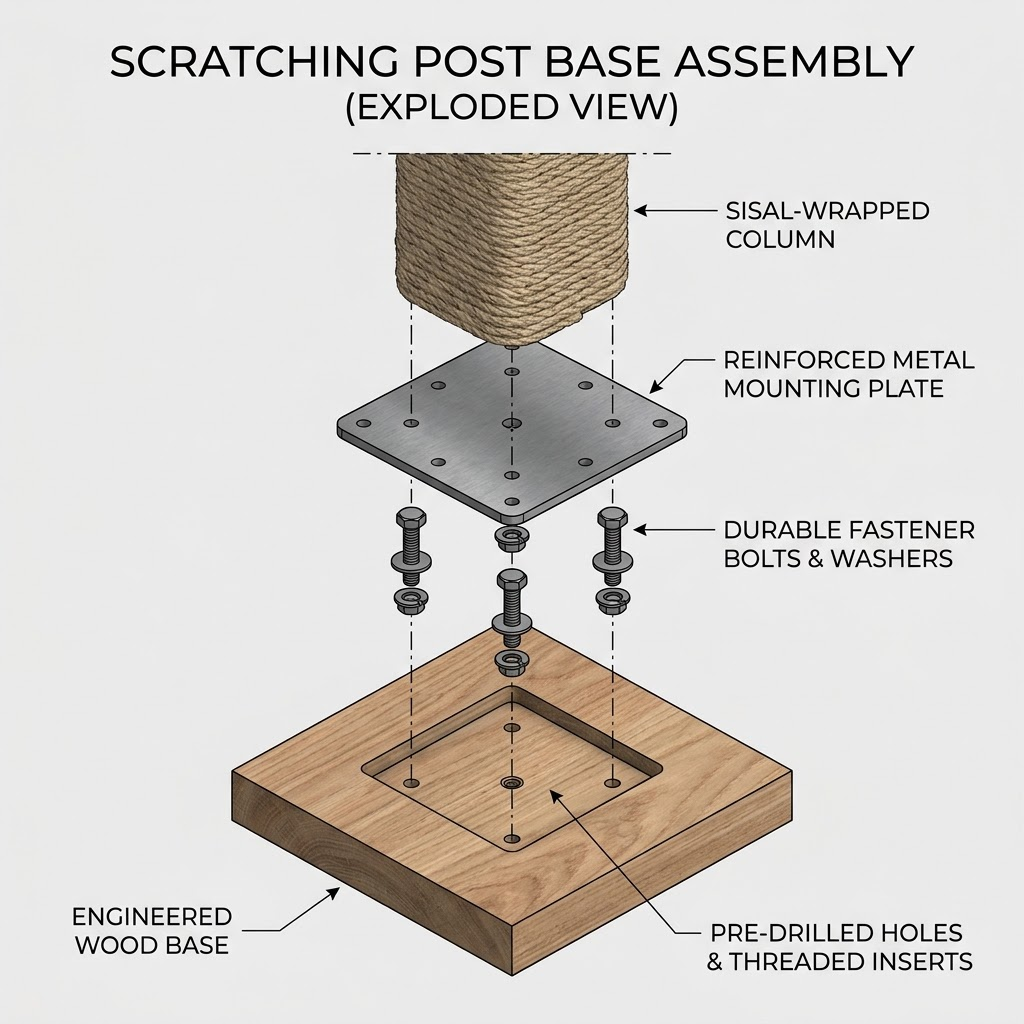
The outer material is only part of the picture. The core, joints, and base deserve just as much attention when choosing a heavy-duty model.
Before buying, ask:
A well-built post with replaceable parts may offer better long-term value than one that needs replacing as soon as its surface wears out.
If you’re ready to shop, start by browsing our sturdy scratching posts and pads. You can compare different designs, heights, and scratching surfaces in one place. Horizontal pads are worth considering, too, because some cats prefer scratching flat surfaces rather than upright posts.
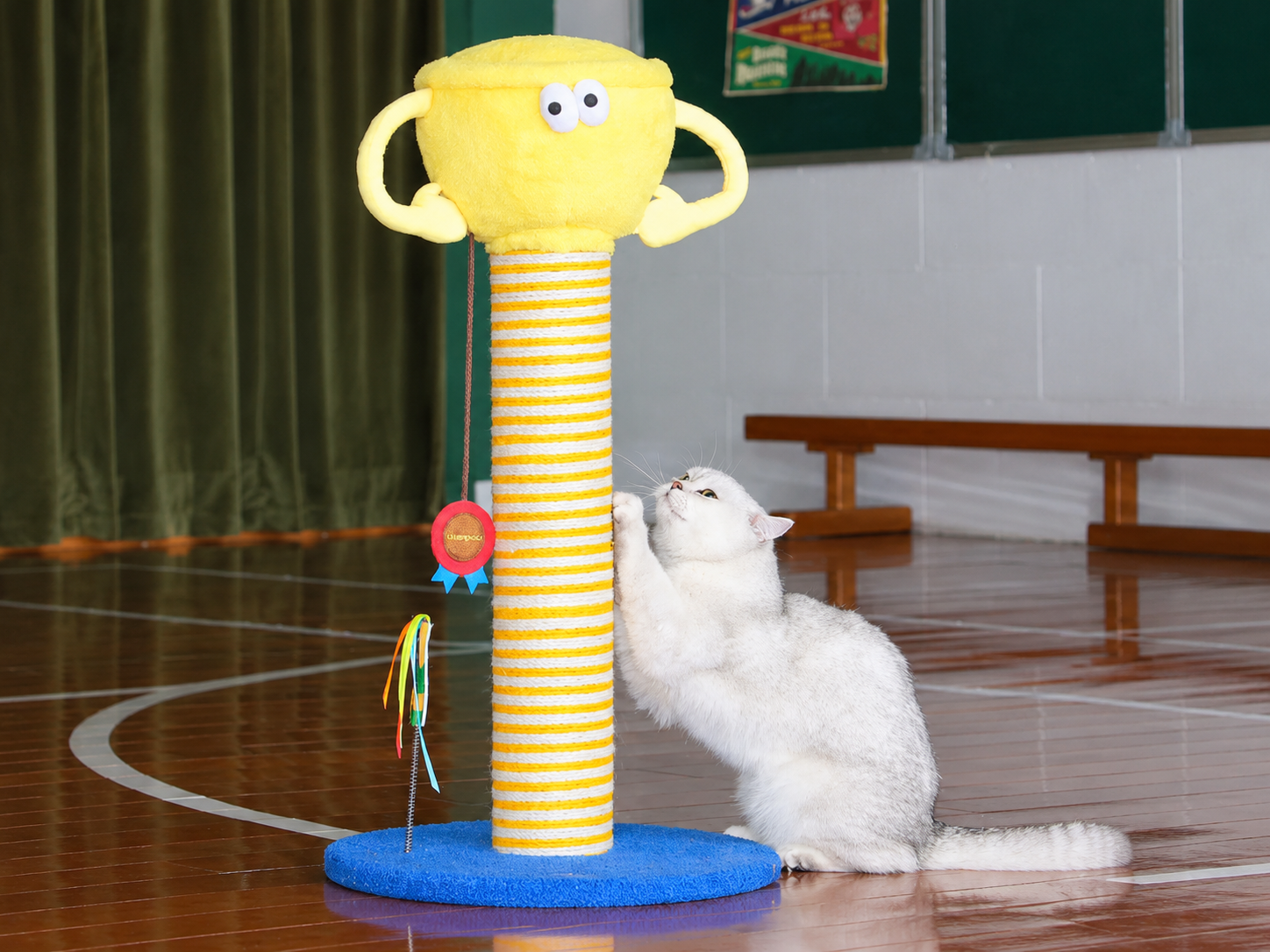
One option is the Trophy Cat Scratching Post. The Trophy post is listed at approximately 33.5 inches tall, with a 16.9-by-16.9-inch base. Its structure includes engineered wood, a paper tube, rope, and a plush top surface. The product description presents the base as stable and designed to resist wobbling. The listed price is $98, although prices may change.
There’s also a playful feature: a hanging medal with catnip that doubles as a teaser toy. This gives your cat another reason to investigate the post, although individual cats will respond differently to toys and catnip.
One detail to check before purchasing is the exact rope material. The product description mentions both natural sisal and hemp rope, so check the current listing if the rope material matters to you.
The Trophy post isn’t marketed exclusively for giant cats, and its dimensions alone don’t prove that it will suit every heavy scratcher. Still, its height and broad base make it an option worth comparing with other models.
Before deciding, make sure the post’s size, construction, and scratching surface suit your cat’s needs.
Even cats of similar sizes can have different scratching habits. Before choosing a model, consider your cat’s adult size, preferred scratching style, and favorite spots.
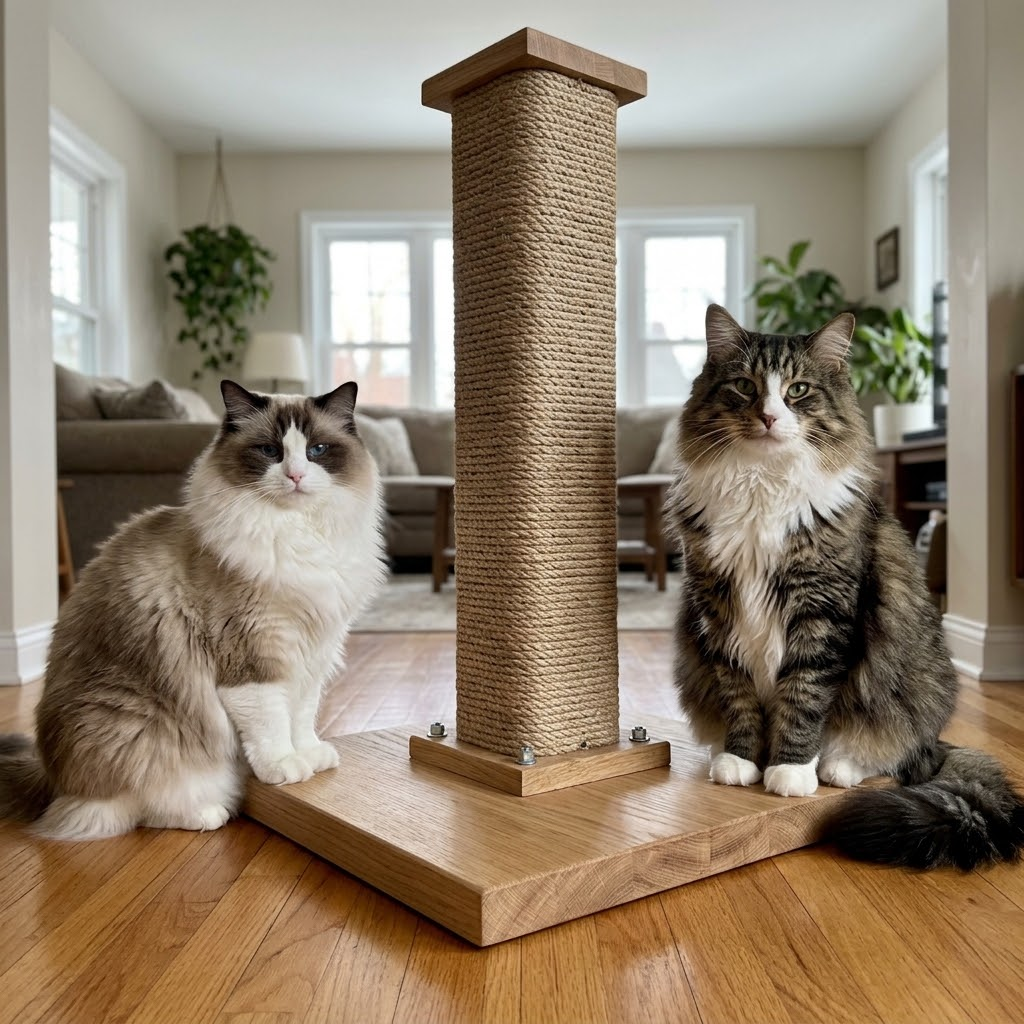
Large breeds often benefit from taller, sturdier posts, but breed alone shouldn’t determine your choice.
If your cat is still growing, consider its expected adult size rather than buying a post based only on its current measurements.
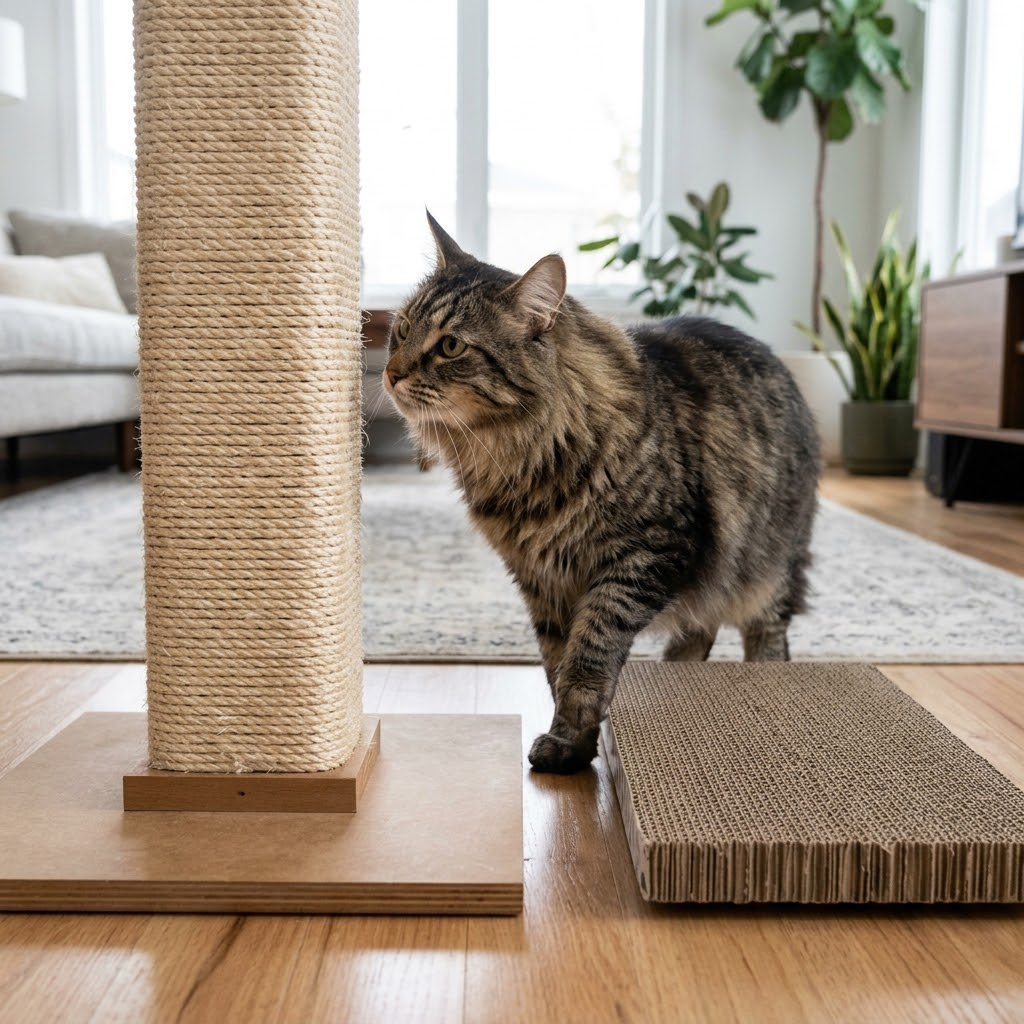
Watch your cat for a day or two. Its behavior can tell you which design to choose.
Matching the post to your cat’s existing habits can make the transition easier.
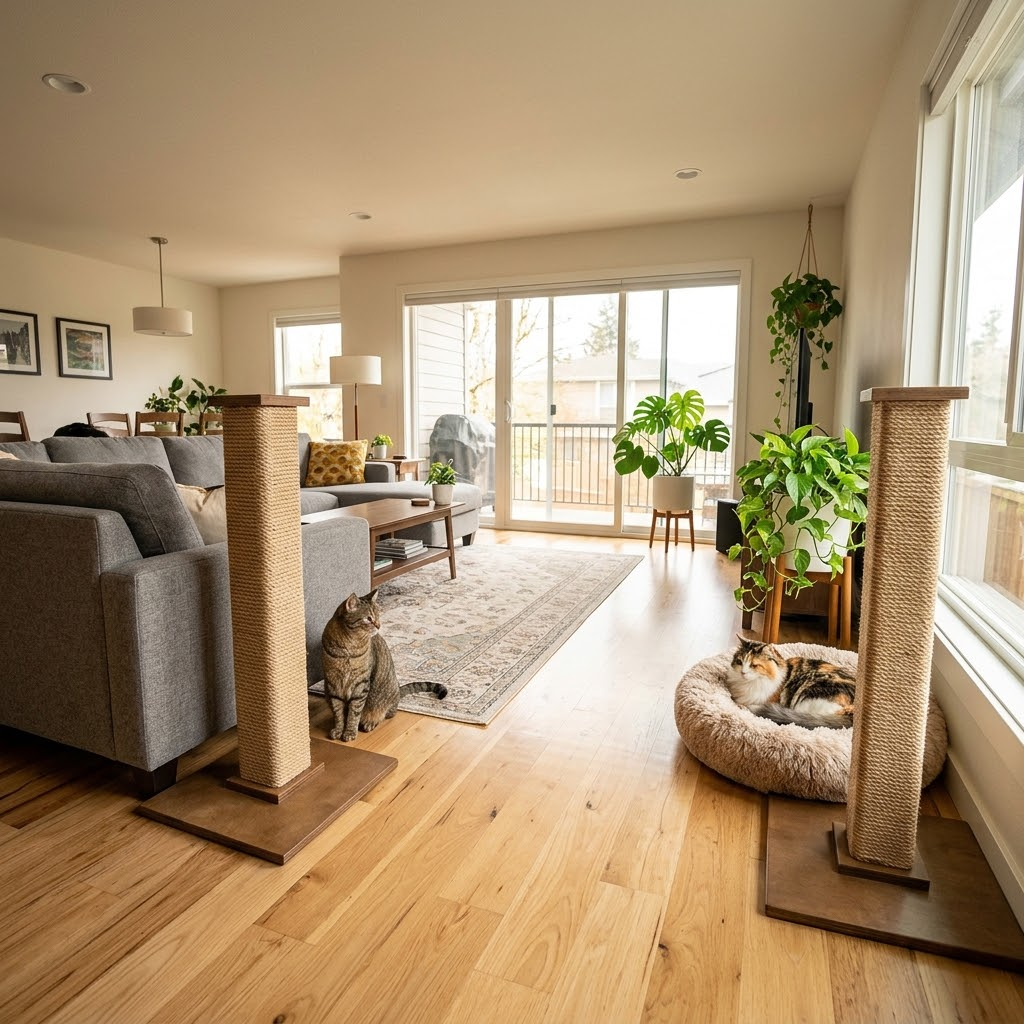
Even a well-built post may go unused if you put it in the wrong spot.
Choose a location that’s easy for your cat to reach and where the post can stand securely on a level surface.
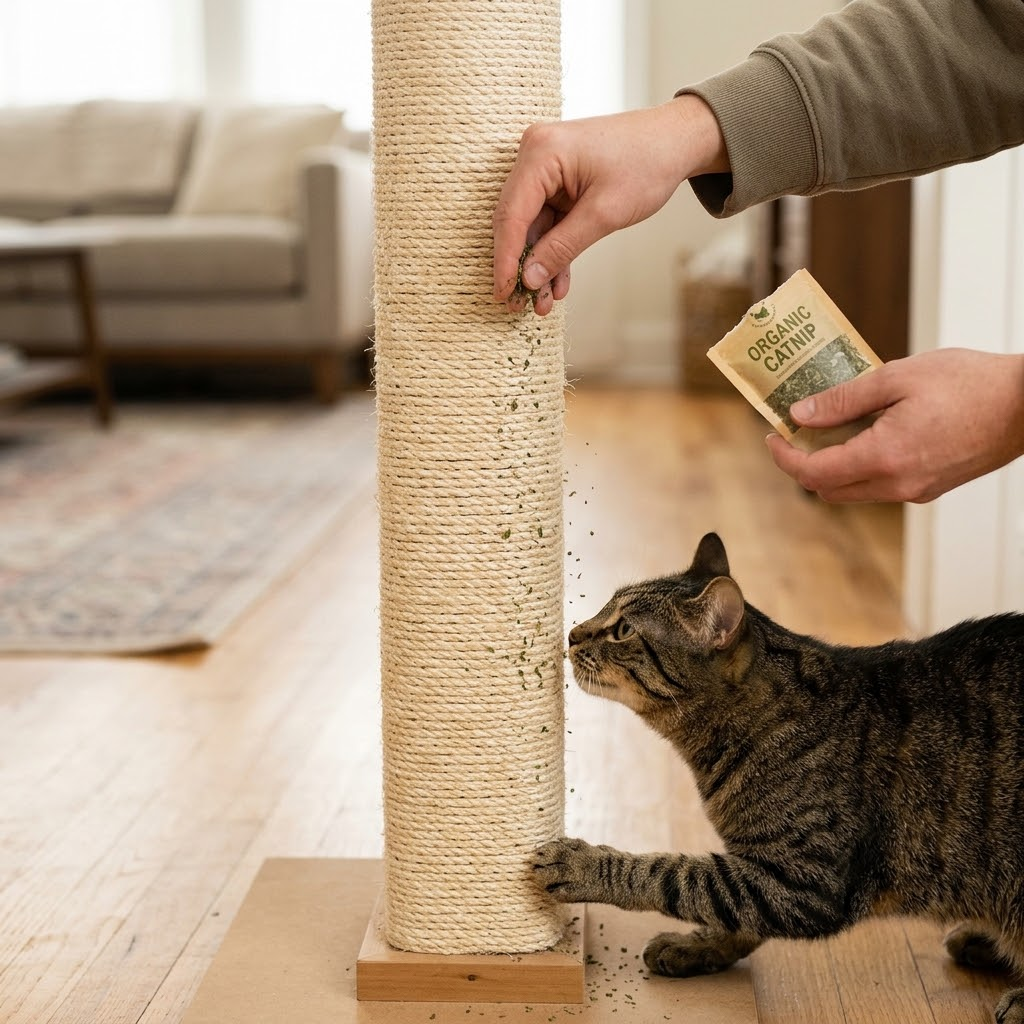
Give your cat time to explore the new post. If your cat enjoys catnip, sprinkle a small amount on the scratching surface, or wave a wand toy near the top to encourage reaching and scratching.
You can also gently demonstrate the texture by running your fingers over the surface. Reward your cat with praise or a treat when it uses the post.
If your cat doesn’t take to it immediately, try moving it closer to a favorite scratching spot. Some cats need time to accept a new object, especially if their previous post was unstable.
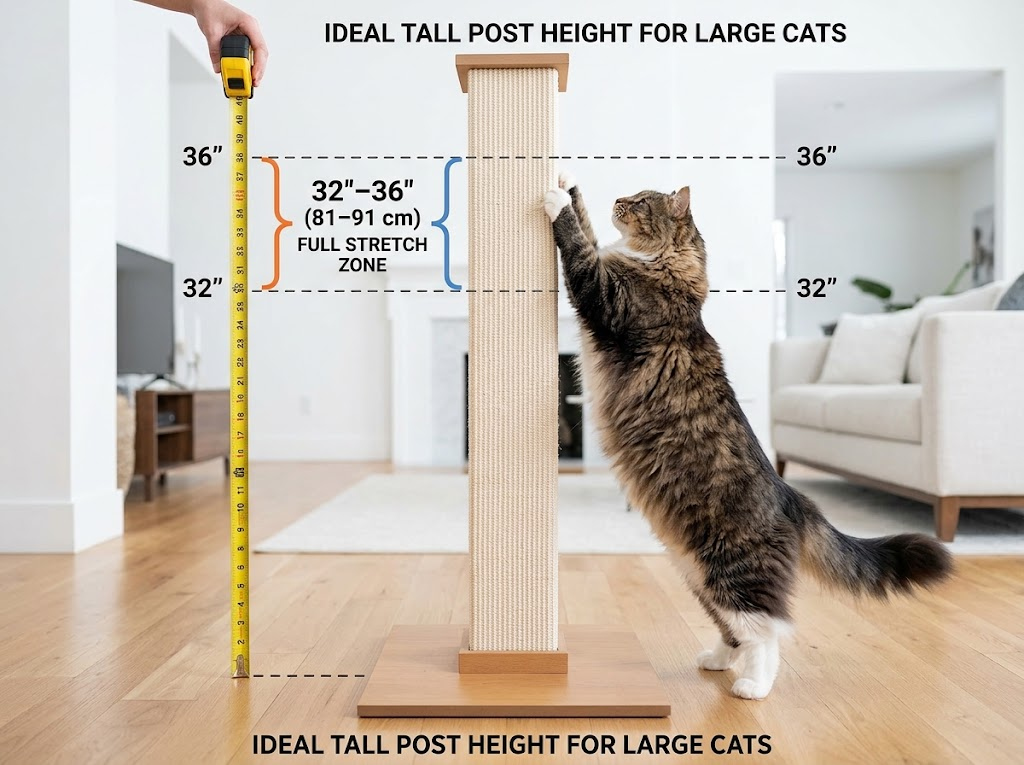
Many large cats can use posts around 30–36 inches tall, but your cat’s measurements are a better guide. Measure from the floor to the top of its paws when fully stretched on its hind legs, then add a few inches of clearance.
Look for a wide, heavy base, a secure pole connection, and a structure that can handle repeated pulling. Check the product’s dimensions and assembly instructions, then inspect the assembled post for wobbling or loose joints. Base width alone doesn’t guarantee stability.
Sisal is a durable, popular option for many cats, but it isn’t automatically the best choice for every heavy scratcher. Tight wrapping, strong attachment points, and a sturdy core all affect its lifespan. Sisal fabric and carpet may also work well if they suit your cat’s preferences and the post is well constructed.
Look for tall vertical posts with broad, stable bases and durable scratching surfaces. Maine Coons, Ragdolls, and Norwegian Forest Cats may need more room to stretch than smaller cats, but individual size and scratching habits matter more than breed alone. Compare each post’s dimensions and construction before choosing one.
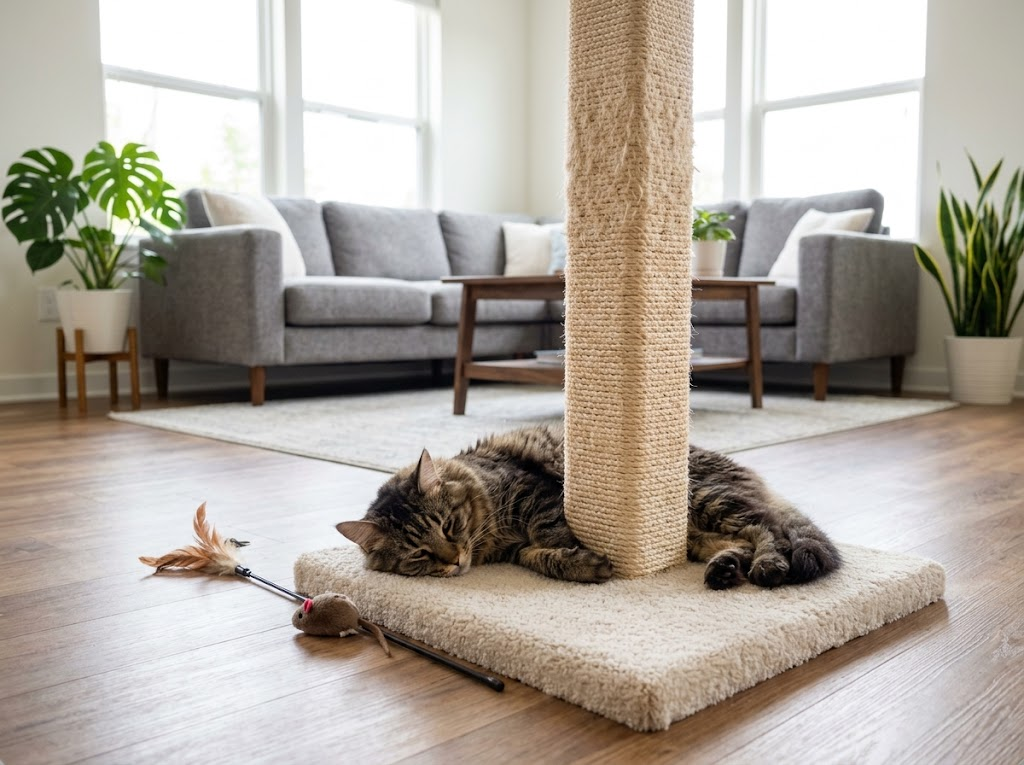
The right scratching post gives your cat room to stretch, a surface it enjoys, and a stable place to scratch.
Before buying, measure your cat, note its scratching habits, and compare the construction of several models. Place the post near a spot your cat already likes to scratch, then give it time to explore.
With the right fit and placement, you can encourage regular scratching and give your furniture a better chance of staying intact.