
Have you ever looked outside and seen a worried cat high in a tree, crying for help? Many pet owners have seen this before. So they ask, do cats really get stuck in trees, or do they wait until it’s safe to come down?
Yes. Cats can get trapped in trees, and it happens more often than many people think. Their bodies make climbing up easy, but climbing down is much harder. A scared cat may stay in a tree for hours or days, unsure how to climb down safely.
Learn why cats get stuck so you can stay calm and help safely. When you understand how cats climb, why they hesitate, and what risks they face, you can help them more safely.
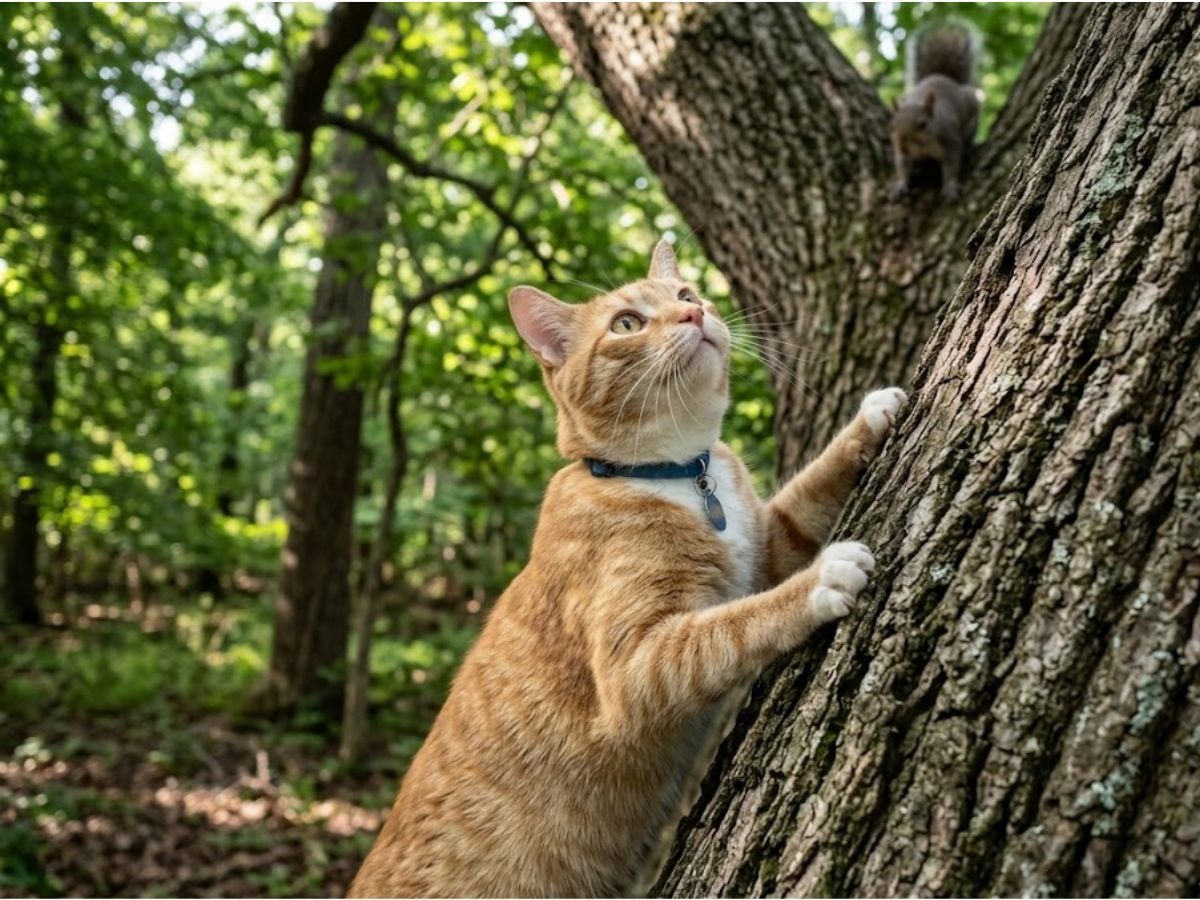
You might see a furry friend perched high up and think they are perfectly fine. But do cats really get stuck in trees often? Cats often get trapped in trees in neighborhoods everywhere.
A stuck cat usually ends up in a tight spot because of their natural predatory drive. They might chase a neighborhood squirrel up the trunk without thinking about the trip back down. Sometimes a barking local dog spooks them, sending them running for higher ground.
You can read more about why cats climb trees to understand what triggers this specific behavior. They love to explore their local territory from a high vantage point. Getting back to the ground simply becomes an afterthought until panic sets in.
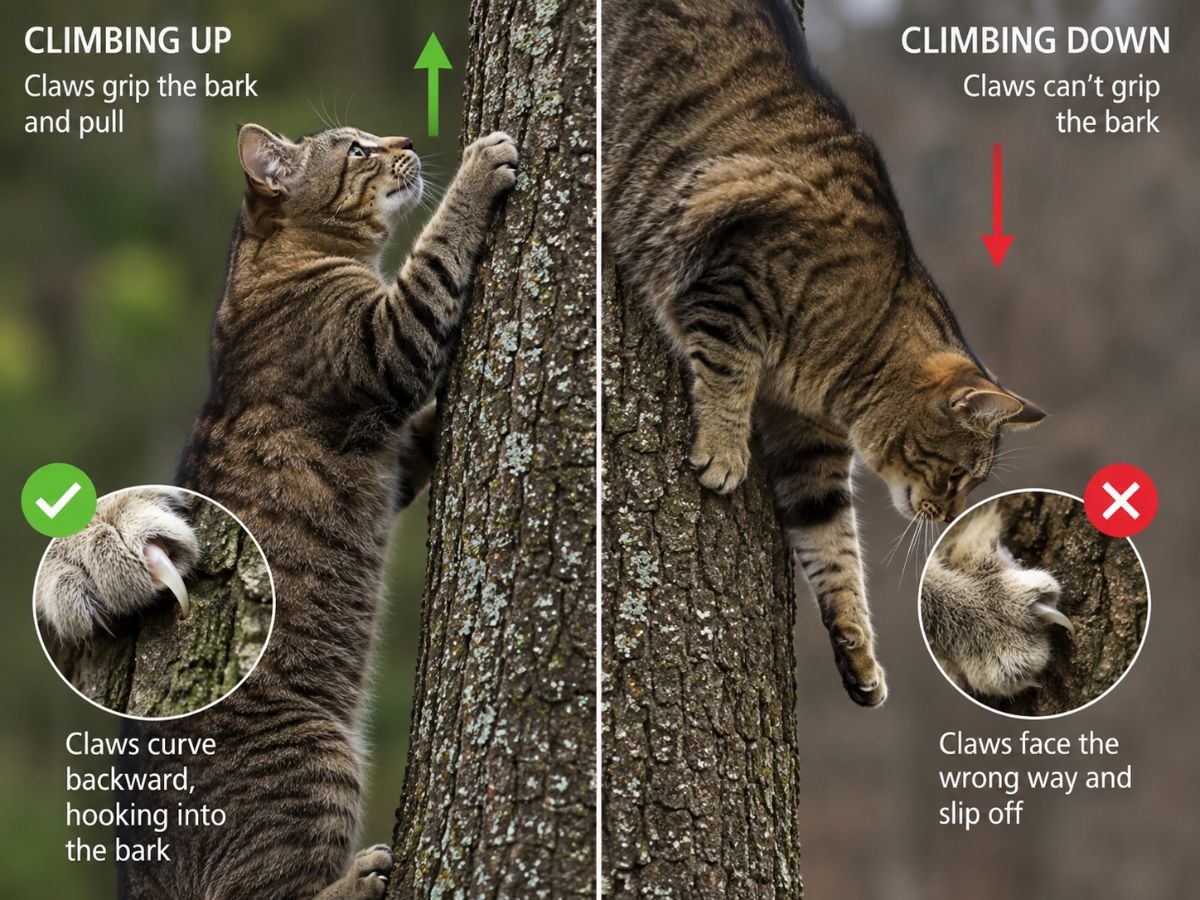
Cats climb up easily because their backward-curved claws hook into tree bark. It’s a perfect setup for going high.
But when they try to climb down headfirst, those same claws offer no support. The bark slips under their weight, and they can’t grip. That’s why most domestic pets get stuck.
Most house cats lack the instinct to climb down backward. Wild cats might know this trick, but domestic ones don’t. They freeze, scared and confused.
Without that backward-climbing instinct, they’re stuck. They wait, hoping someone will help. Their fear makes them even less likely to try jumping.
Their body position also makes the climb down difficult. Going backward feels unnatural for many cats, especially when they are already frightened and high above the ground.
Cats may also struggle if the tree has smooth bark, thin branches, or very few places to turn around. Once they reach a narrow spot, they may not know how to shift their weight safely.
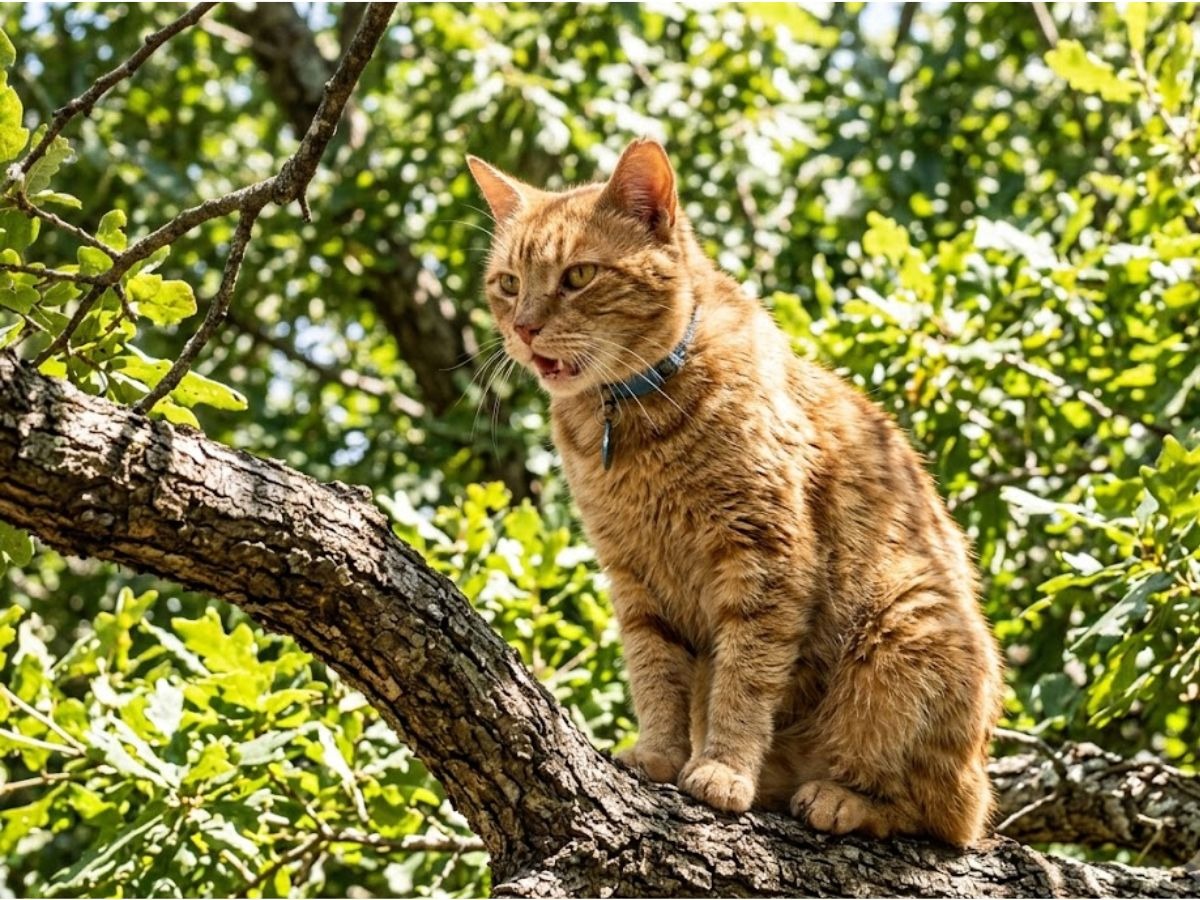
Time matters more than most people think once a cat gets trapped. Their bodies start feeling the effects surprisingly fast.
Cat starvation isn’t an immediate risk, but severe dehydration is. Vets warn that dehydration can become dangerous after 24 to 48 hours without water, especially in warm weather.
Weather can raise these risks. Hot sun causes dehydration faster, while cold nights drain your cat’s energy. A stuck cat facing extreme temperatures needs help sooner rather than later.
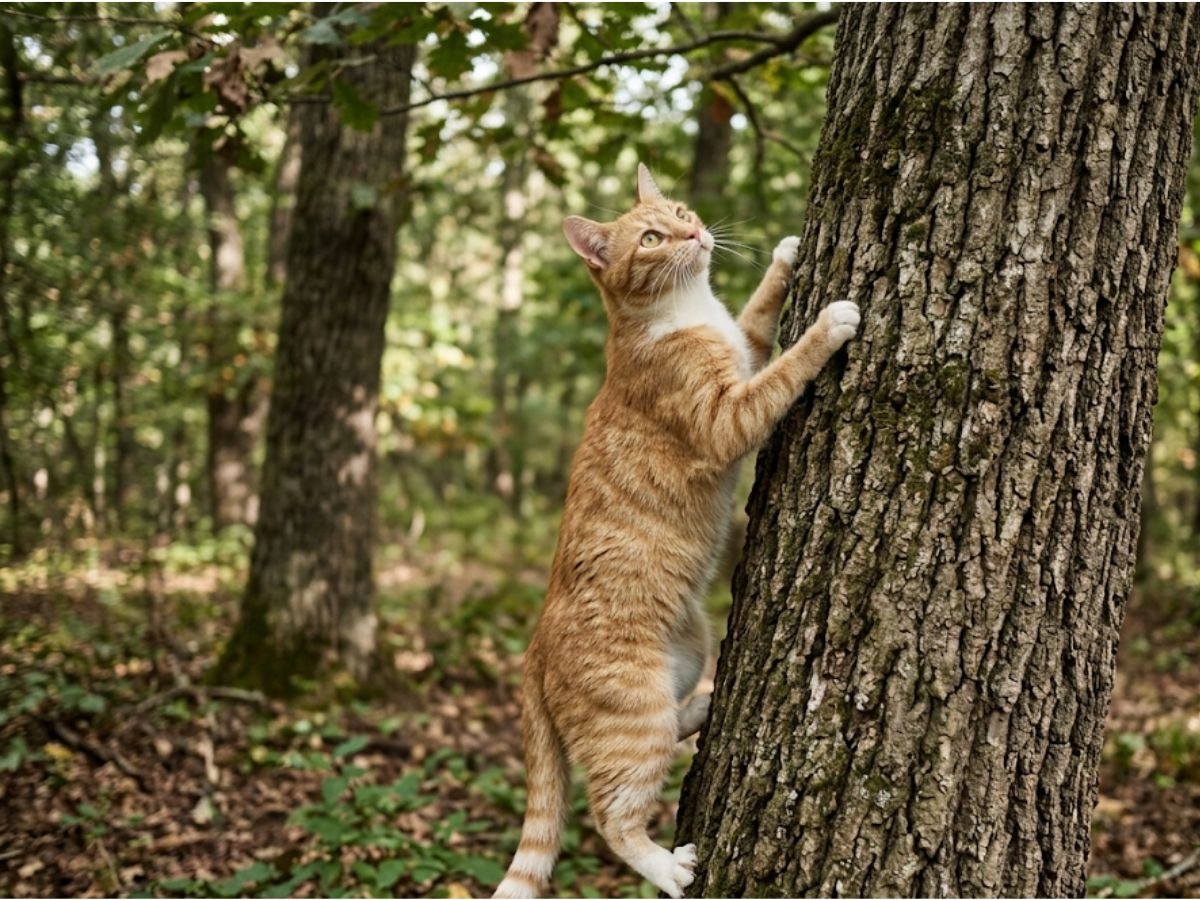
You may have heard people ask, “Do cats eventually come down from trees? Yes, they always do!” There’s some truth to this, but it’s not a guarantee.
Many cats will work up the courage to jump or climb down once they calm down or get hungry enough. If they found a good route up, they might figure out how to backtrack slowly. Sometimes they’ll wait until dusk, when it’s cooler and quieter, to make their move.
On the other hand, fear can completely override their instincts. The longer they stay up, the more nervous they become, and hunger can leave them weak and wobbly. Instead of moving, they’ll freeze and cry out, too scared to try even if the path looks clear. Waiting is fine at first, but you shouldn’t wait forever.
You need a solid game plan when you spot your pet high up in the neighborhood branches. Knowing what to do when your cat gets stuck in a tree can reduce stress and help you act safely. Here are the main steps you should consider taking.

You want to try getting them to come down voluntarily before calling for backup. Coaxing a cat out of a tree takes plenty of patience and a calm environment.
Start by clearing your yard of loud kids and barking dogs. A quiet neighborhood space helps your pet feel less threatened. Place tuna or strong-smelling wet food near the tree to lure your cat down.
Bring out a favorite toy to make the ground feel safe. Use a calm, gentle voice throughout. If your cat is still alert and calm, give it space and time. Standing too close to the tree may make it feel trapped. You can read how to get a cat out of a tree for more detailed rescue methods.

Many people immediately grab their phones to dial emergency services for help. Unfortunately, that old television trope rarely happens in real life anymore.
Most city fire stations simply cannot spare a heavy truck for a pet rescue. They prioritize life-threatening emergencies, so their trucks, ladders, and crews must stay ready for people in danger, not pet rescues.
Some small towns might help out during a slow shift if you ask nicely. You really should not count on them for your primary backup plan, though. Call a dedicated professional instead to save time.
You might think the local animal shelter has a special truck for this exact problem. Animal control may offer advice, but they usually won’t rescue cats from trees.
Most municipal shelters do not have the tall ladders or climbing gear required for height. They focus on catching stray animals on the ground level.
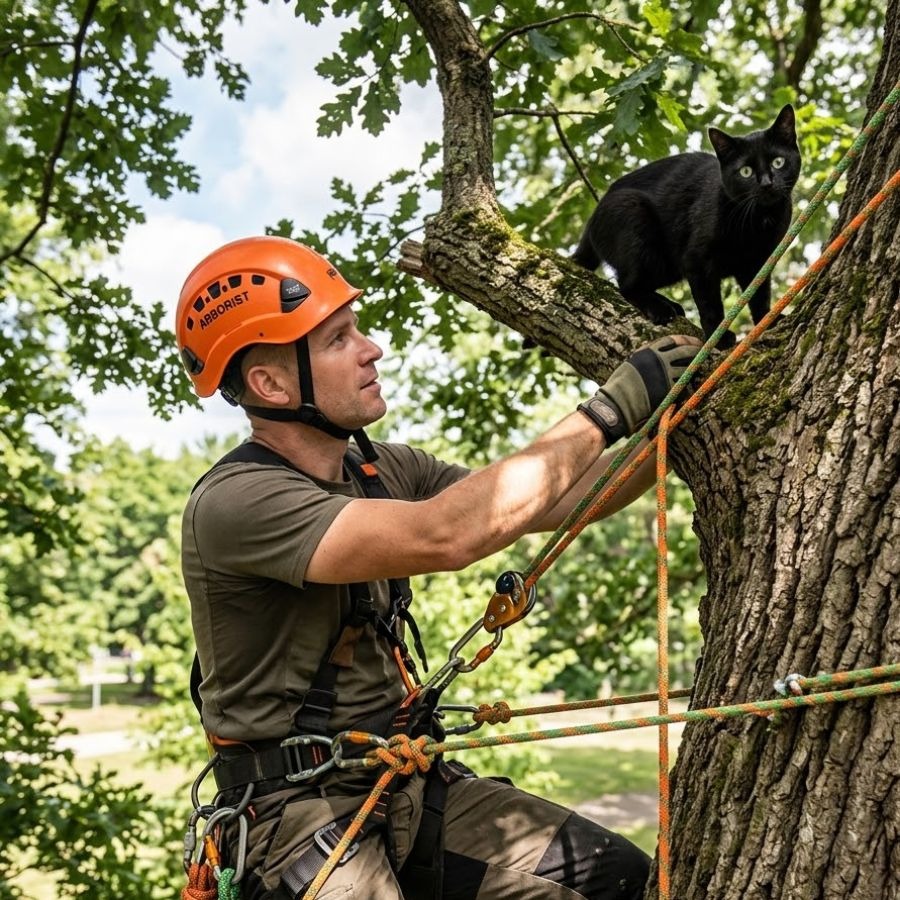
You are much better off calling a local arborist for immediate help. These local tree experts have the ropes and safety harnesses to reach your pet safely. Never try a risky DIY ladder rescue by yourself.
The best rescue is the one you never have to make. Giving your cat safe places to climb at home can satisfy its curiosity and make outdoor trees less tempting.
Indoor climbing spaces give cats exercise, mental stimulation, and a safe place to observe their surroundings. For outdoor cats, supervision can lower the risk of another tree rescue. Keeping your cat inside during storms, busy hours, or when dogs are nearby can also help.
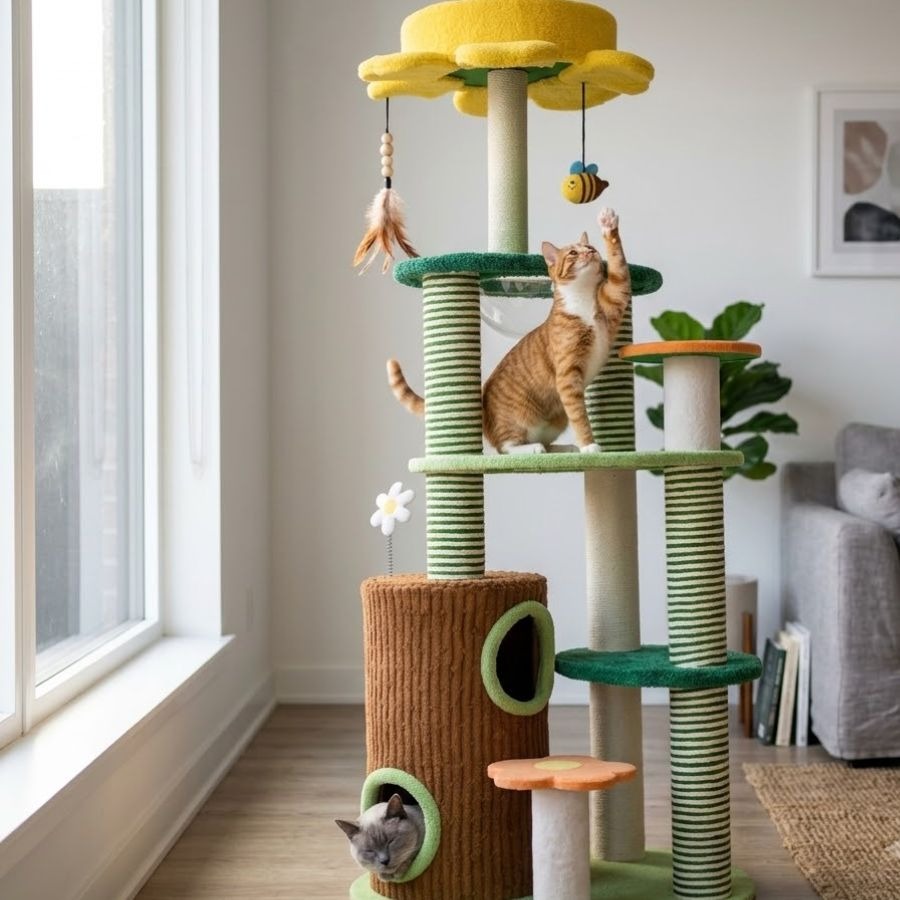
A sturdy cat tree or tower gives your cat a safe place to climb. Put it near a window so your cat can watch outside while staying indoors.
Regular playtime helps cats burn energy. Puzzle toys, climbing shelves, and interactive games keep them active and curious.

Healthy claws help cats climb and balance. Cardboard scratchers let your cat stretch and care for its claws without damaging furniture.
Regular nail checks help too. Overgrown or damaged claws can make it harder for your cat to grip and climb, especially outdoors.
Once your cat is back on the ground, check for cuts, limping, or exhaustion. Watch for unusual behavior over the next day or two. After the rescue, keep your cat indoors for a while so it can rest. Offer water, food, and a quiet place to recover.
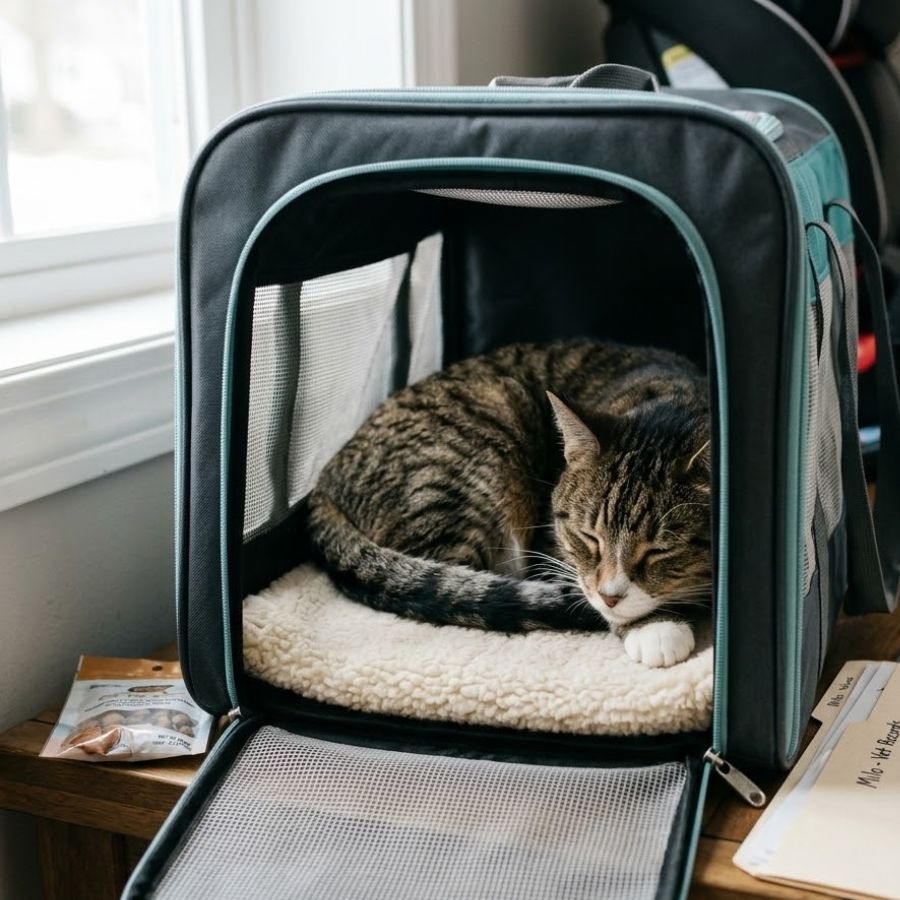
Having a sturdy pet carrier ready makes transportation much easier if your veterinarian recommends an examination. A quick checkup can provide peace of mind, especially after a long stay in a tree or a difficult rescue.
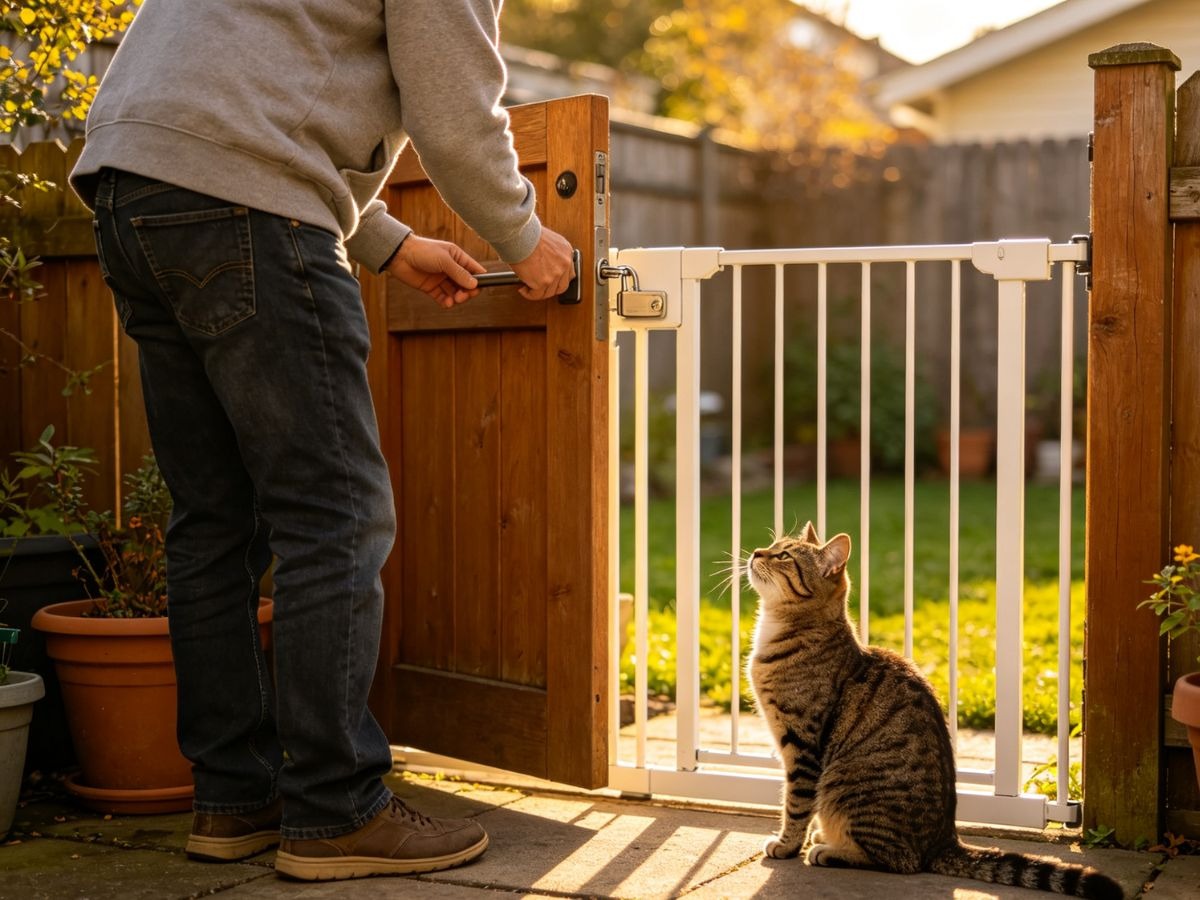
Think about your pet’s outdoor freedom. Is it worth the danger in your own backyard? A tree might look safe, but it’s a trap for many cats.
Channel their climbing drive into safe spaces. Prevent future emergencies by giving them vertical space at home.
Your pet’s safety is your responsibility. Don’t wait for a stuck cat to become a crisis. Act now.
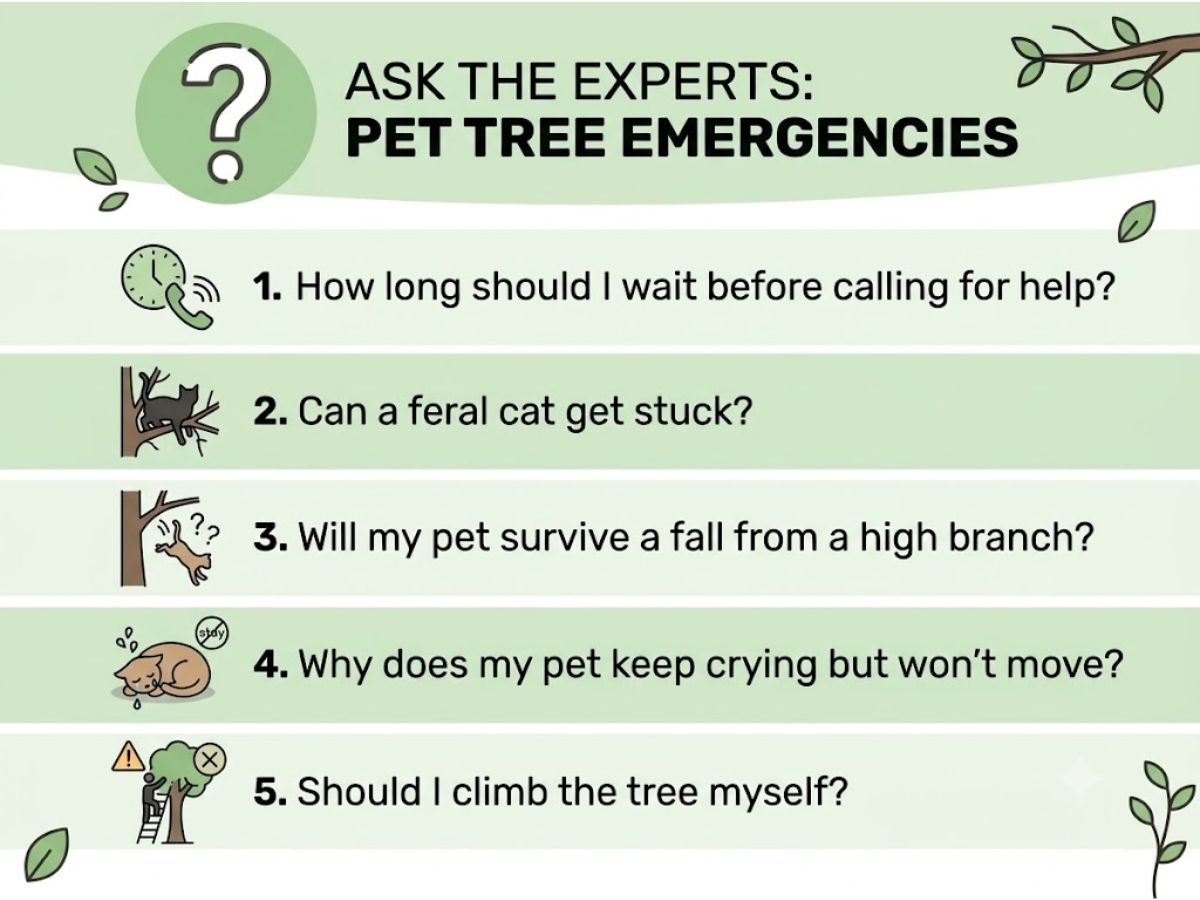
How long should I wait before calling for help?
Give your cat 12 to 24 hours first, as many will come down on their own. If it takes longer or your cat seems weak or dehydrated, call an arborist or rescue service right away.
Can a feral cat get stuck?
Yes, even a feral cat can get stuck. While they have stronger feline instincts than house cats, they can get trapped by curved claws and fear.
Will my pet survive a fall from a high branch?
Cats can turn midair to land on their feet, but this reflex doesn’t prevent every fall injury. Falling from very high tree branches or landing on hard surfaces can still cause serious injury or worse.
Why does my pet keep crying but won’t move?
They’re crying because they’re scared. Fear can make cats freeze and cry instead of climbing down.
Should I climb the tree myself?
Never try to climb the tree or do a DIY ladder rescue unless you are trained. You could fall, or your sudden movement could scare the cat into jumping. Let professionals handle the rescue. It’s safer for you and your cat.