
It’s late, and your cat is back in the litter box, struggling to pass stool. You head to the pantry and spot a can of pumpkin behind the soup. Perhaps a friend has recommended it, or you’ve seen other cat owners use it for digestive issues. Before adding a spoonful to your cat’s food, though, it’s worth checking whether pumpkin is actually safe.
Cats don’t digest every food the way people do. Plain pumpkin is generally safe in small portions, but that doesn’t mean you can scoop any canned variety into their bowl. You should also consider the ingredients, serving size, and your cat’s overall health.
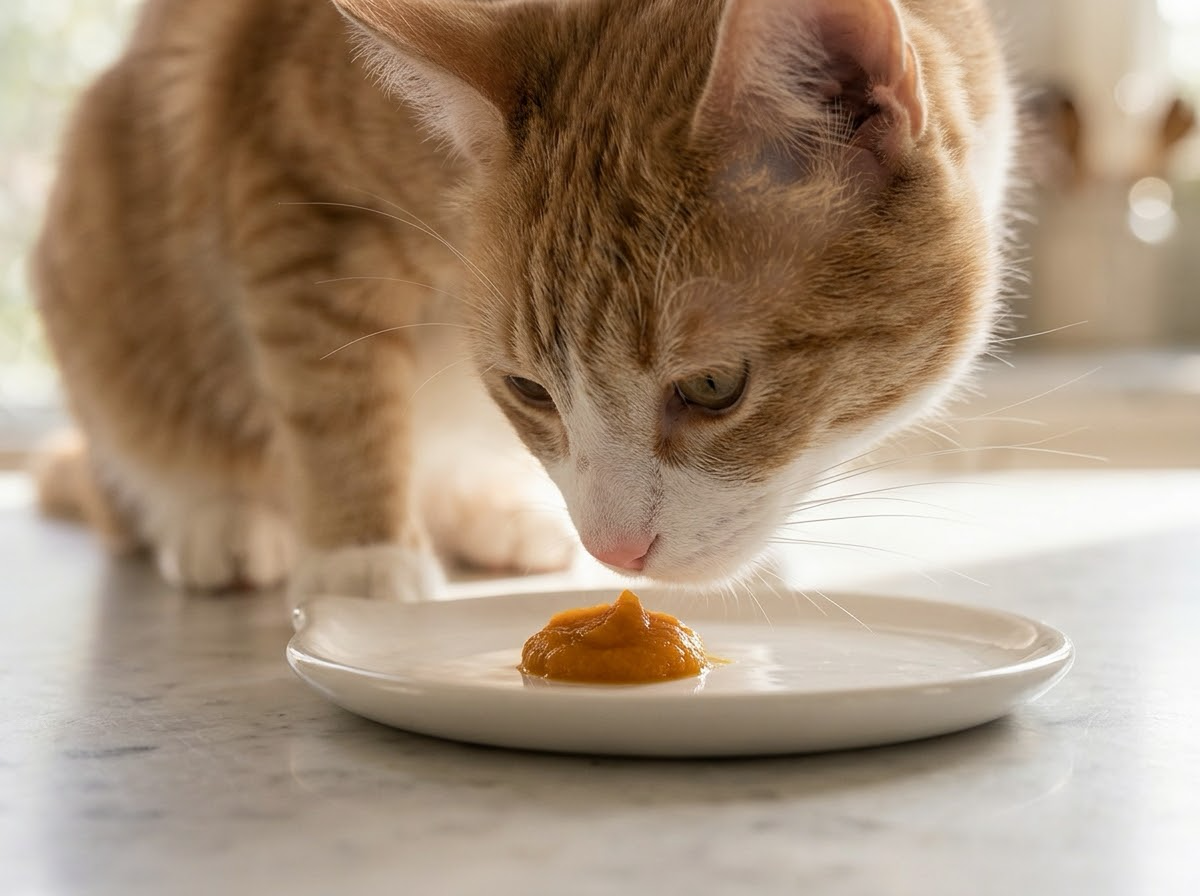
Yes, cats can eat pumpkin puree in small amounts, as long as it is plain and unsweetened. Pumpkin itself is not toxic to cats. It contains water and fiber, which is why some pet owners and veterinarians use it as a dietary addition for cats with mild digestive issues.
Still, pumpkin puree for cats should only be an occasional extra or a vet-recommended addition to their regular meals. Cats are obligate carnivores, meaning they depend on animal-based foods for essential nutrients. They need complete and balanced cat food to meet their nutritional needs. Pumpkin can complement their meals, but it cannot replace them.
It’s also important to understand when pumpkin isn’t enough. Persistent diarrhea, constipation, vomiting, or low energy may indicate an underlying health problem. Adding pumpkin won’t necessarily solve it, so have your veterinarian check your cat if these symptoms persist.
Pumpkin offers three things that may make it a useful small addition to your cat’s meals: fiber, moisture, and relatively few calories. Whether it helps depends on your cat’s health, current diet, and the reason you’re considering it.
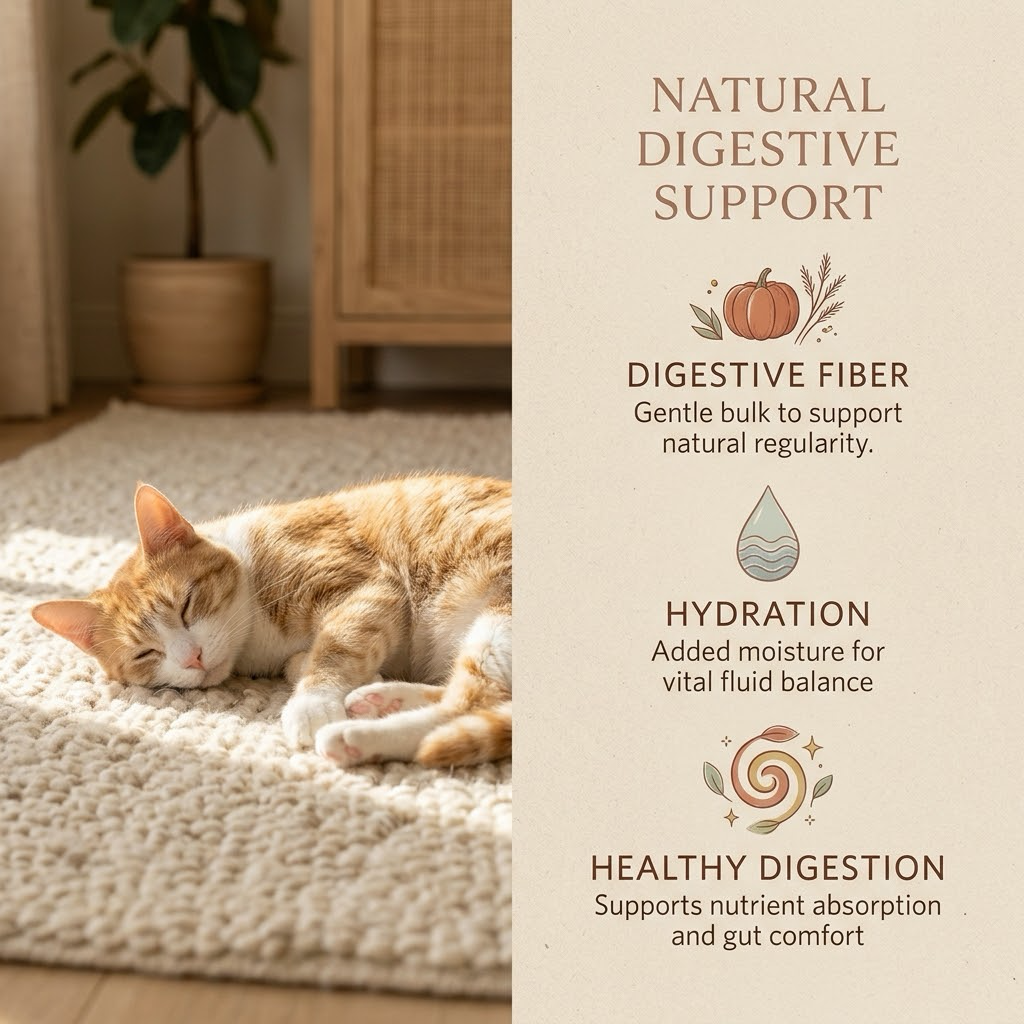
Here are some ways plain pumpkin can complement your cat’s regular food:
• Supports stool consistency: Pumpkin contains soluble and insoluble fiber. Both types may help support normal bowel movements and healthy stool texture.
• Adds moisture: Pureed pumpkin contains water. Mixing a small amount into wet food can increase the moisture in your cat’s meal.
• Provides fiber without many calories: Plain pumpkin is relatively low in calories, making it a useful way to add a little fiber without significantly increasing your cat’s calorie intake.
These two types of fiber work differently. Soluble fiber absorbs water and can help firm up loose stools. Insoluble fiber adds bulk to stool and may help support regular bowel movements.
This explains why some veterinarians recommend pumpkin for cats with mild digestive issues. However, the evidence for pumpkin as a treatment is limited, and serving size matters. Too much fiber can upset your cat’s stomach and worsen digestive problems.
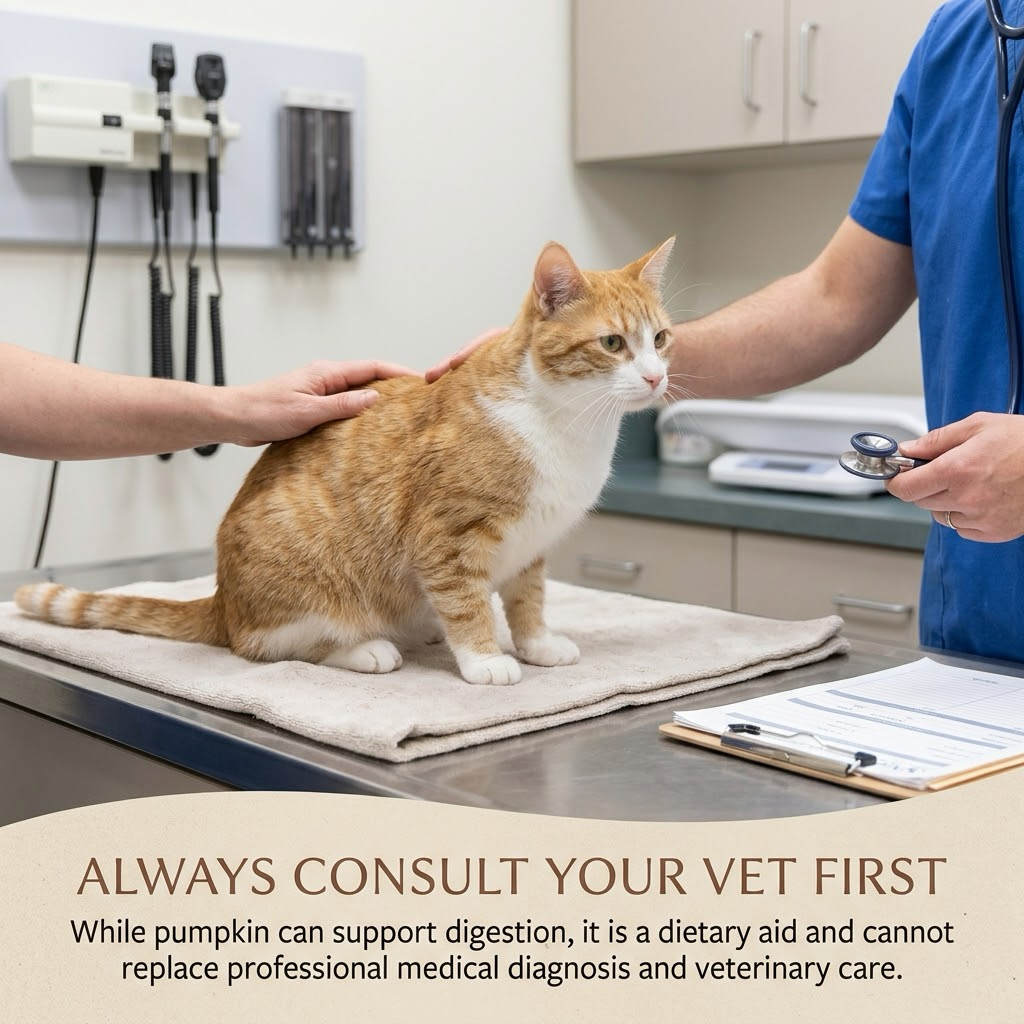
Pumpkin is not a complete source of nutrition for cats. It lacks the animal-based protein and other essential nutrients they need to stay healthy.
It also won’t cure digestive problems. Diarrhea and constipation can result from several issues, including parasites, infections, dehydration, sudden diet changes, and other health conditions.
If you don’t know what’s wrong, adding pumpkin might only hide the symptoms for a short time. A cat that keeps struggling in the litter box needs more than just a dietary adjustment. Your veterinarian can help identify the cause and recommend the right treatment.
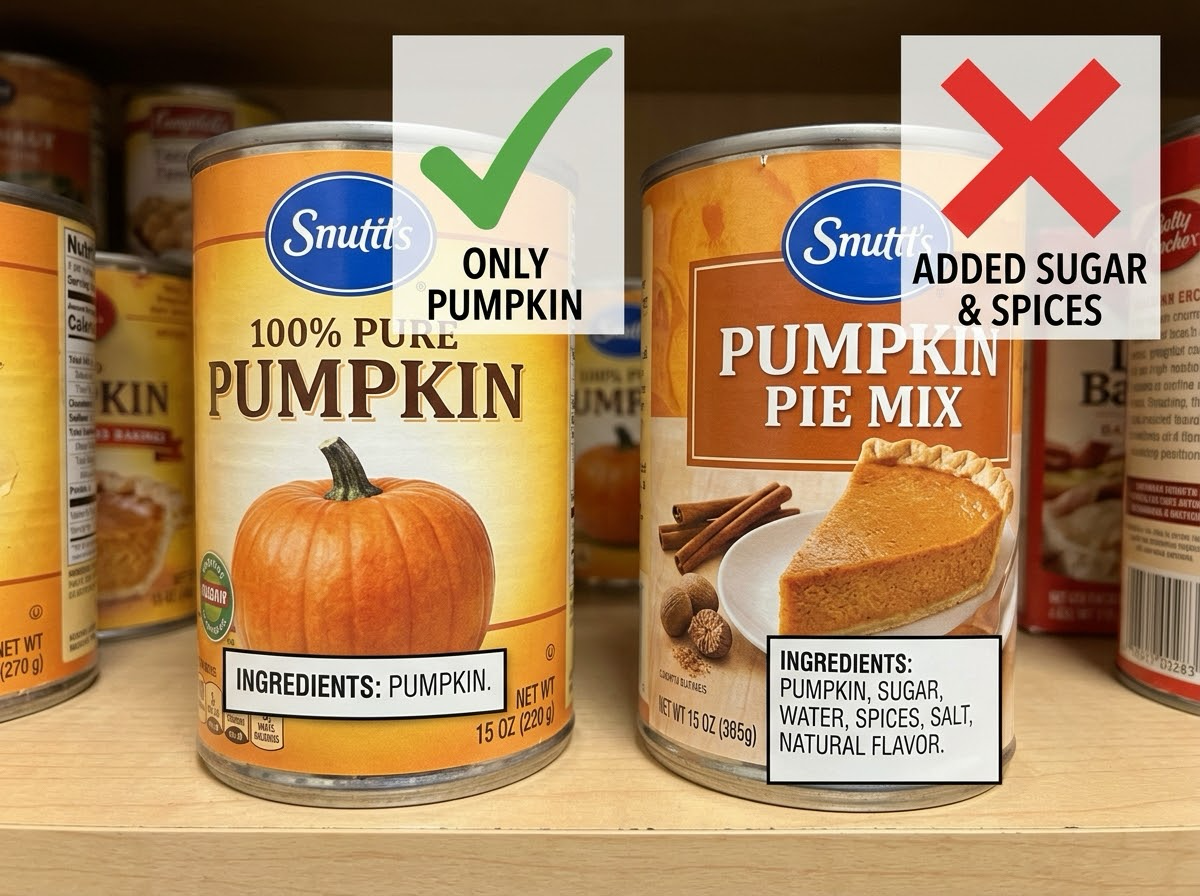
A quick look at the grocery store baking aisle can leave you with several options. Two cans of cat food may appear to have nearly identical ingredient lists. Before buying pumpkin for your cat, check the label rather than relying on the picture or product name.
The safest option is 100% pure pumpkin puree, with pumpkin as the only ingredient.
Avoid pumpkin pie mix and spiced canned pumpkin. These products often contain added sugar, corn syrup, salt, and spices. Nutmeg contains myristicin, which can cause neurologic and cardiovascular signs after a substantial ingestion. Small amounts used in recipes are unlikely to cause serious toxicity, but spiced pumpkin products still are not appropriate for cats.
Be careful with products marketed as sugar-free, too. Some pet owners may assume these products are safer by default, but it’s still important to check the added ingredients. Xylitol, sometimes listed as birch sugar, is highly toxic to dogs. Cats are not known to develop the hypoglycemia or liver injury seen in dogs after xylitol exposure, but sugar-free products may contain other unsuitable ingredients, so avoid giving them to cats.
Before putting a can in your shopping basket, take a moment to check its ingredients.
• Does the ingredient list contain only “pumpkin”?
• Are there added sugars, syrups, or artificial sweeteners? These should be absent.
• Does the product contain spices, added salt, or unnecessary preservatives?
• Does the label say “Pie Mix” or “Pumpkin Pie Filling”? If so, choose something else.
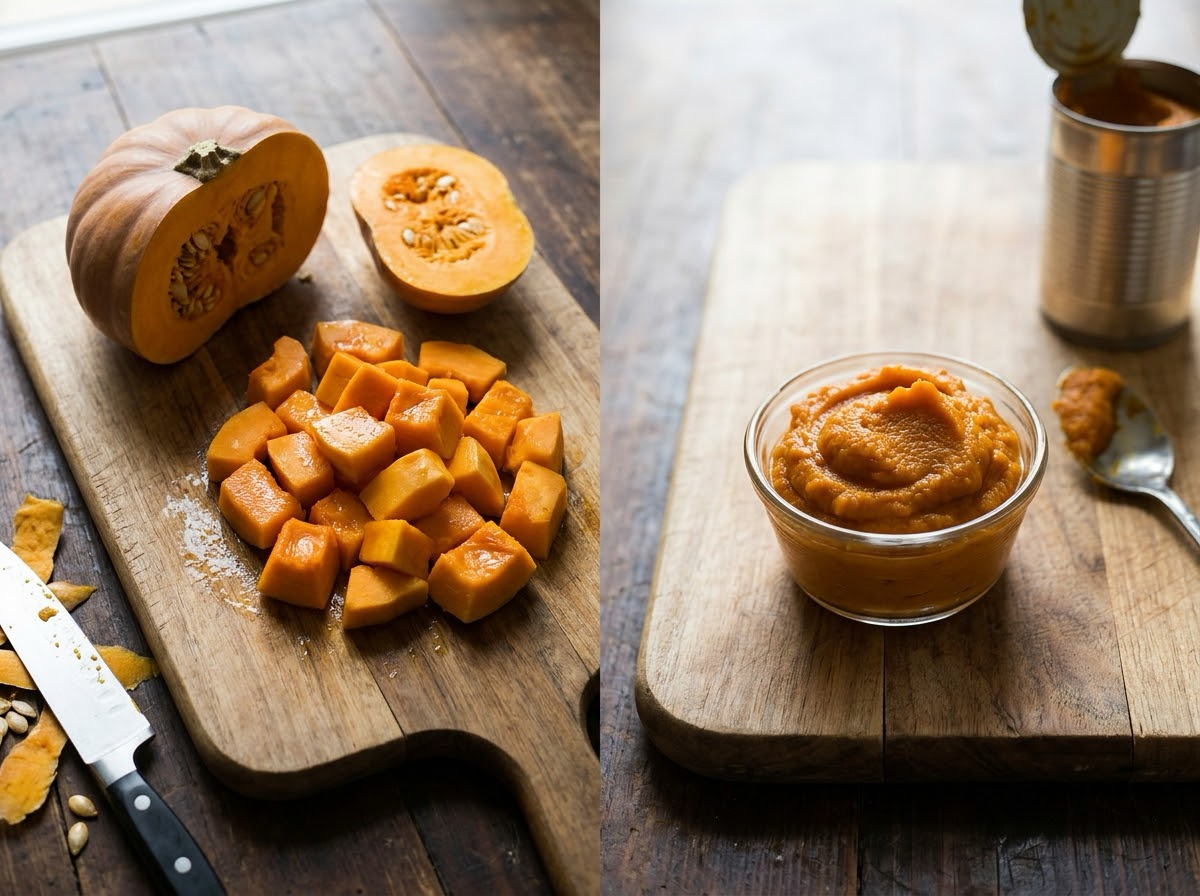
Plain canned pumpkin is an easy option, while homemade puree lets you choose exactly what goes into it. Either can be suitable when prepared properly.
Canned Pumpkin: Plain canned pumpkin is usually the easier option for pet owners. It has a smooth consistency, mixes well with wet food, and offers a convenient way to add fiber to your cat’s meals. Check the label to make sure pumpkin is the only ingredient. Once opened, keep it refrigerated or frozen to preserve its freshness.
Fresh Pumpkin: You can also prepare pumpkin at home if you prefer using fresh ingredients. Start by removing the outer skin and seeds, then steam or bake the flesh until it’s completely soft. Mash the pumpkin until it’s smooth, with no large chunks. Avoid adding cooking oil, butter, salt, or brown sugar. Raw pumpkin flesh, tough rinds, and stems aren’t suitable because they can be difficult to chew and may cause choking or digestive problems.
Plain pumpkin seeds aren’t considered toxic to cats, but they aren’t needed in their diet. Whole seeds and shells can pose a choking risk or contribute to stomach upset, especially if a cat eats several at once, so avoid offering them unless your veterinarian specifically advises it.
Whichever option you choose, let the pumpkin cool before serving it to your cat.
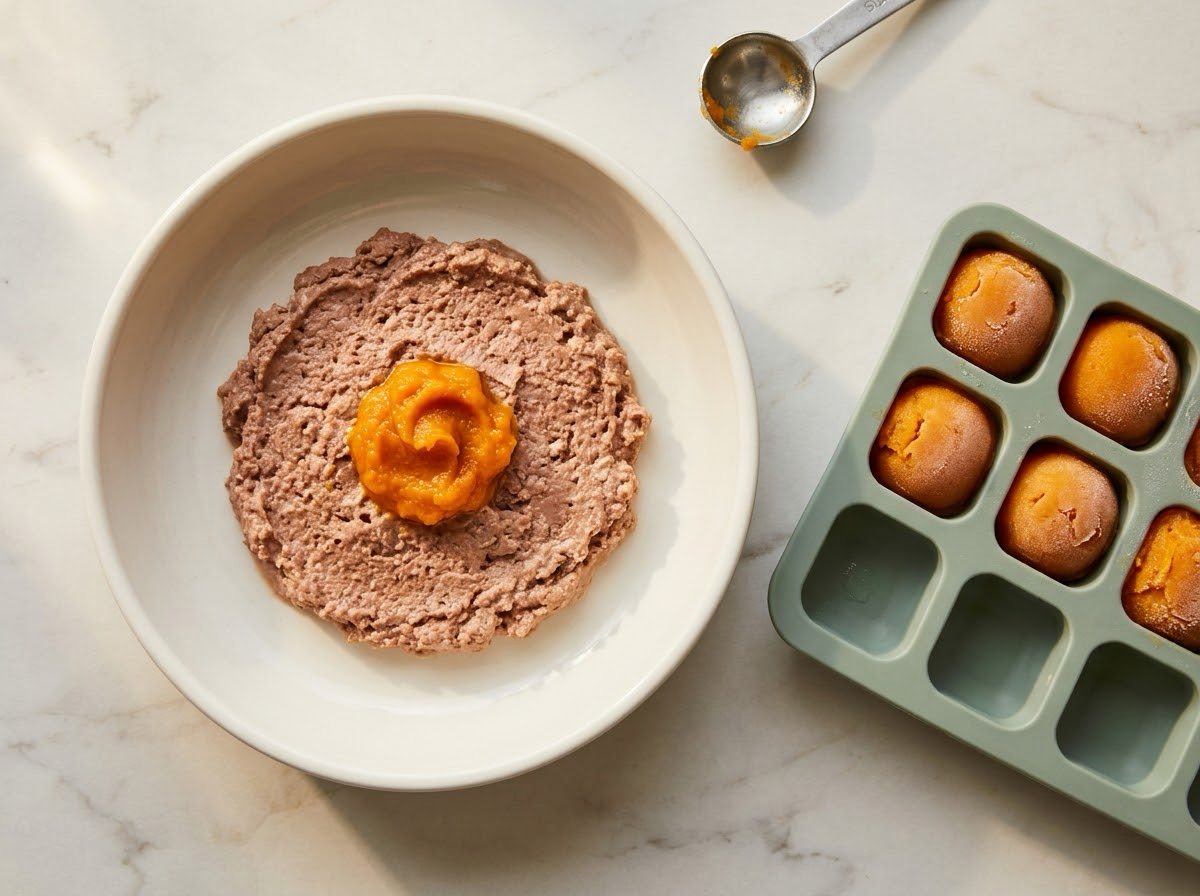
Mix about half a teaspoon of pumpkin into your cat’s wet food for the first serving. If your cat tolerates it without digestive upset, ask your veterinarian whether a slightly larger portion is appropriate.
Some cats prefer pumpkin mixed into their usual food rather than served on its own. You can also warm it slightly to make the smell more appealing. Just check the temperature before serving. It should be barely warm, never hot. A small dab offered from your finger may work for cats that are curious about new foods.
Don’t force your cat to eat it, though. Some will happily lick the bowl clean, while others won’t touch it. If yours refuses pumpkin, that’s perfectly fine.
After introducing pumpkin, monitor your cat’s stool, appetite, and behavior. Stop feeding it if your cat develops loose stools, gas, vomiting, or a sudden loss of appetite. If symptoms persist, contact your veterinarian.
Keep leftover pumpkin in a sealed container in the refrigerator. It should generally last around five to seven days when stored properly. If you won’t use it within that time, freeze it in small portions in an ice cube tray. Each cube holds about a tablespoon, which makes it easier to prepare individual servings later. Thaw frozen portions in the refrigerator before use.
When serving pumpkin with wet food, choose a shallow dish that’s easy to clean. A wide, low-sided cat bowl gives your cat plenty of room to eat comfortably and is easier to wipe clean if pumpkin sticks to the sides.
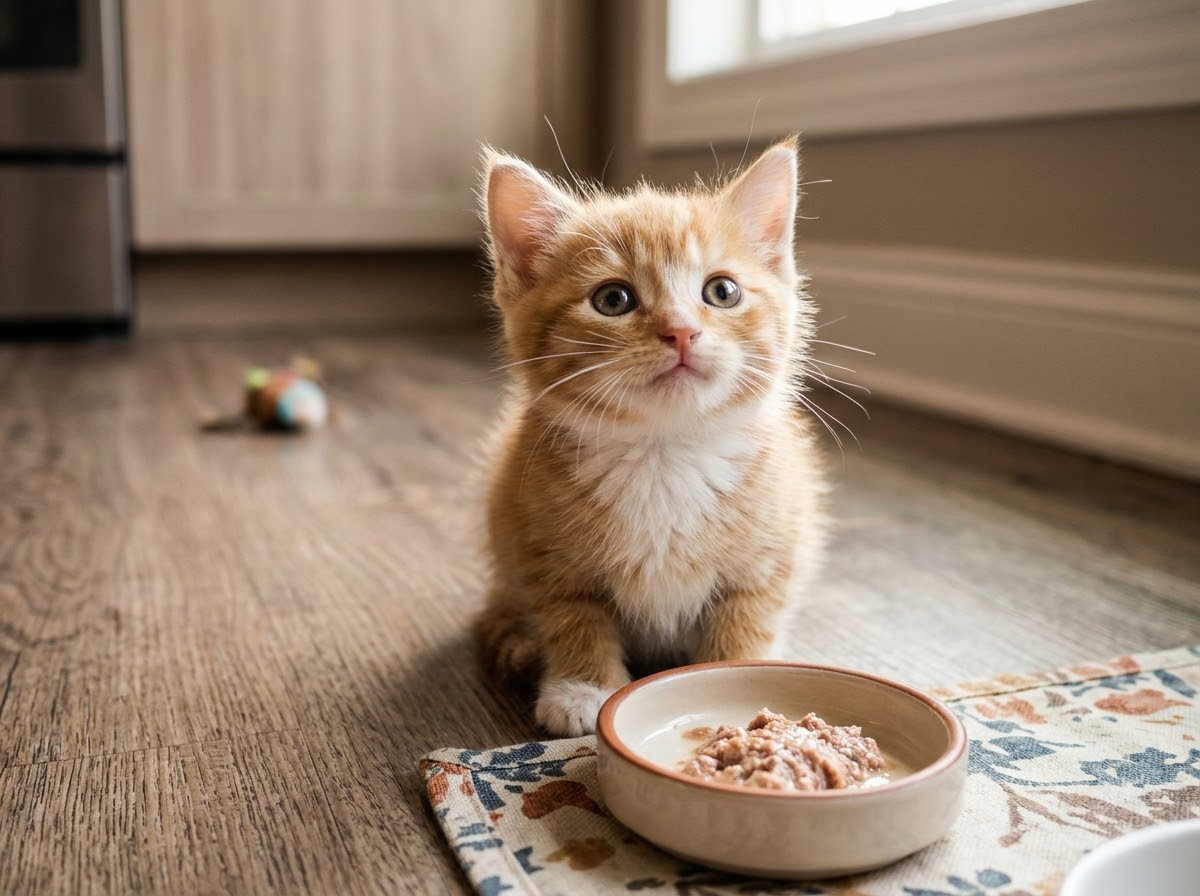
Weaned kittens may be able to eat a tiny amount of plain pumpkin puree, but it’s best to check with a veterinarian first. Young cats have still-developing digestive systems, so sudden diet changes can upset their stomachs.
Kittens also have different nutritional needs from adult cats. Their food should provide enough protein, fat, vitamins, and minerals to support healthy growth. Pumpkin doesn’t offer everything they need, so it should never replace their regular kitten food.
If your kitten is younger than eight weeks, speak with a veterinarian before offering pumpkin. The same applies if your kitten has diarrhea, constipation, or a poor appetite.
Pay particular attention to diarrhea in young cats. Kittens can lose fluids quickly, and dehydration can become serious in a short amount of time. Don’t rely on pumpkin to manage ongoing digestive problems. A veterinarian can check for parasites, infections, food-related issues, and other possible causes.
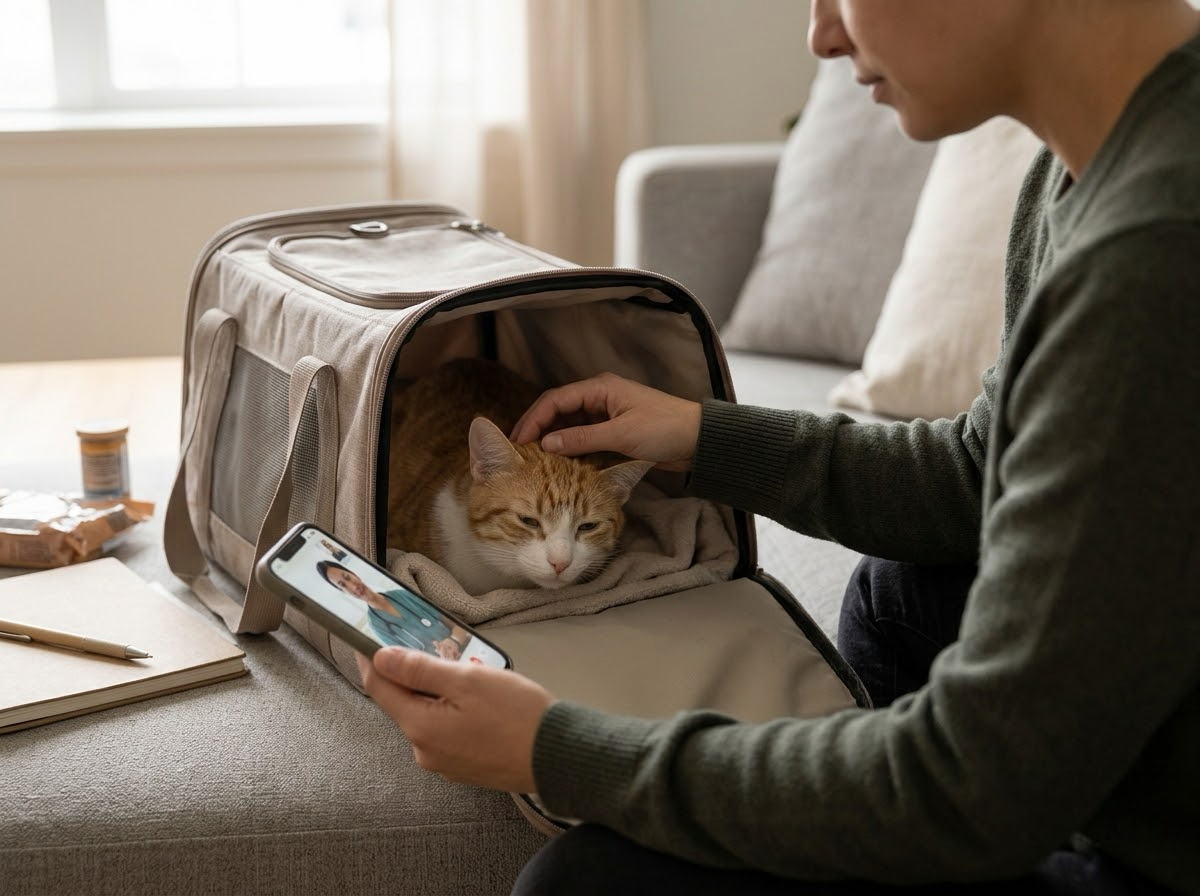
Plain pumpkin is generally safe in small amounts, but certain symptoms point to problems that need veterinary attention.
Contact your veterinarian if you notice any of the following:
• Blood in your cat’s stool
• Repeated vomiting
• Straining in the litter box with nothing coming out
• No bowel movement for more than 48 hours
• Unusual tiredness or increased hiding
• Signs of pain, such as crying or a hunched posture
• Diarrhea that continues for more than a day or two
Straining without producing urine is an emergency, particularly in male cats. Don’t assume your cat is constipated if you aren’t sure what’s happening in the litter box.
Cats with diabetes or other existing health conditions should also get veterinary approval before trying pumpkin. If your cat seems unwell after eating it, stop serving it and seek advice.
You know your cat’s usual habits better than anyone. Changes in appetite, energy, and litter box behavior can help you spot problems early.
There is no universal, clinically validated pumpkin dose for every cat. For many healthy adult cats, a conservative practical starting amount is about 1/4 to 1/2 teaspoon mixed into food once daily. Some veterinary sources use up to 1 teaspoon, and larger cats may tolerate a little more, but the right amount depends on your cat’s size, diet, hydration, and health.
| Cat size | Conservative starting amount | Possible upper range with vet guidance |
| Small cat, under 8 lbs | 1/4 teaspoon | 1/2 teaspoon |
| Average cat, 8–12 lbs | 1/2 teaspoon | 1 teaspoon |
| Large cat, over 12 lbs | 1/2–1 teaspoon | Up to 1 tablespoon |
These are conservative practical starting points, not clinically validated dose ranges. Check with your veterinarian before increasing the serving size, especially if you’re using pumpkin to manage a digestive problem.
Choose plain, 100% pure canned pumpkin or homemade pumpkin that’s been steamed or baked without seasoning. Choose a product that contains only pumpkin.
Avoid pumpkin pie filling and other flavored varieties. These may contain added sugars, salt, and spices that aren’t suitable for cats. Always read the ingredient label before serving.
Pumpkin may help support normal stool consistency because it contains both soluble and insoluble fiber. Soluble fiber absorbs water and may help firm up loose stools, while insoluble fiber adds bulk.
However, pumpkin is not a proven or guaranteed treatment for either condition, and it won’t address every cause of diarrhea or constipation. Make sure your cat has access to fresh, clean water, too. Use these safety tips to keep your cat’s water fountain clean and encourage healthy hydration.
If your cat’s symptoms continue, consult a veterinarian instead of relying on pumpkin alone.
Small amounts may be appropriate for a few days to ease mild digestive changes, as long as your cat tolerates them. Consult your veterinarian before making pumpkin a regular part of your cat’s diet.
Cats don’t need large amounts of plant fiber in their diets. Feeding too much pumpkin may upset their stomach or disrupt the balance of their regular food. Keep portions small and make sure your cat continues eating a complete, balanced diet.
The time it takes to see a change can vary from one cat to another. Some cats may improve within 24 to 72 hours, but pumpkin is not a guaranteed treatment for constipation.
If your cat hasn’t passed stool after two days, seems uncomfortable, or keeps straining, contact your veterinarian. Avoid giving your cat more pumpkin in an effort to make them have a bowel movement.
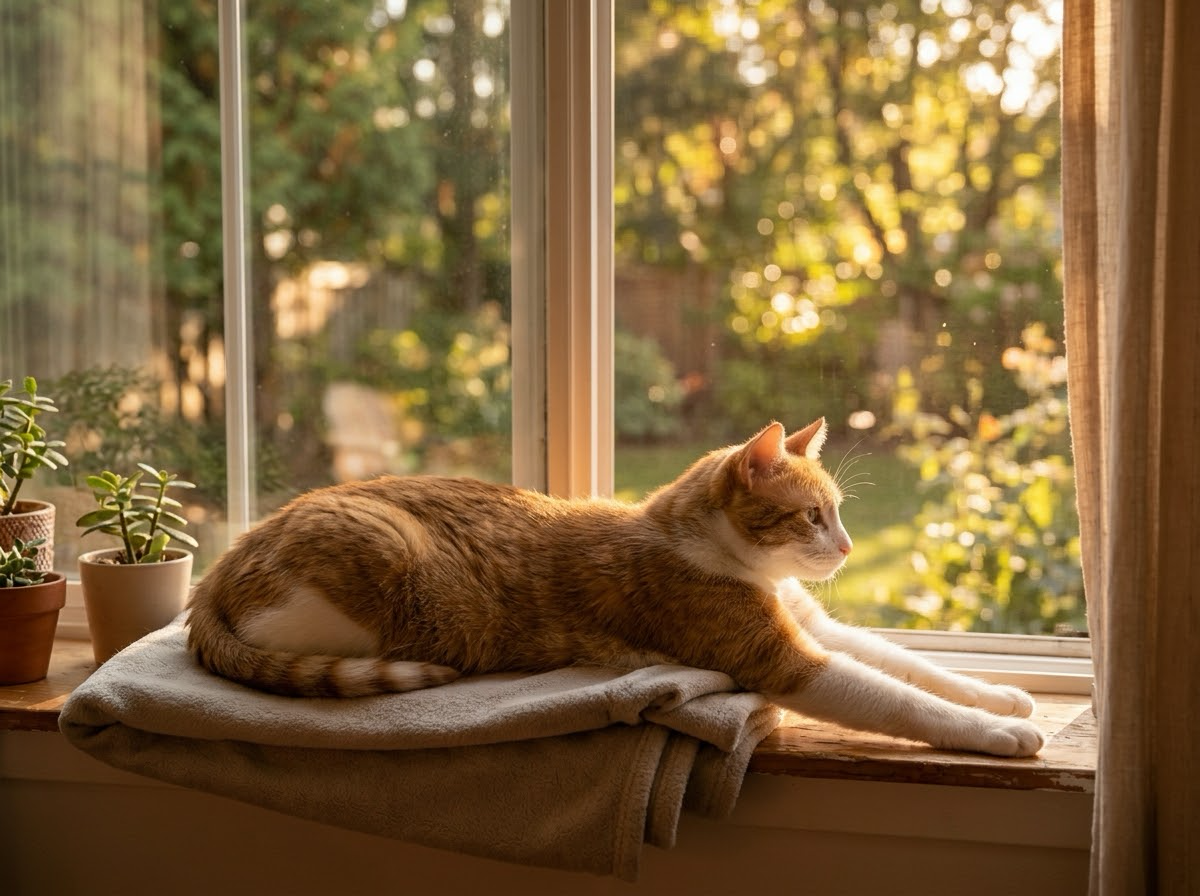
Every cat has its own food preferences. Yours might lick the pumpkin spoon clean, while another may sniff it once and walk away. Either way, there’s no need to force it.
If your cat likes pumpkin puree, keep portions small and watch for any changes in appetite, stool, or energy. Pumpkin can be a useful addition to some cats’ meals, but it isn’t a substitute for veterinary care when digestive problems persist.