
Your cat sits in the same spot for twenty minutes, watching a patch of sunlight slowly move across the floor. A few minutes later, they inspect the corner of a cardboard box, nap on the couch, and stare out the window at a passing bird. These small moments may seem ordinary, but they show how much your cat pays attention to their surroundings.
For indoor cats, home is their entire world. The furniture, toys, sounds, smells, and daily routines shape what they experience. When that world becomes predictable, your cat may start looking for something more interesting to do.
The good news is that you don’t need expensive equipment or a complete home makeover. The best indoor cat enrichment ideas often involve simple changes that give your cat more choices. Simple feline enrichment can make their daily life more engaging, keeping them curious, active, and content.
Cats love a high spot. Up there, they can watch the whole room and keep an eye on you. Climbing also gives them a chance to stretch, jump, and explore. Not every cat enjoys heights, but most appreciate having a perch they can reach comfortably.
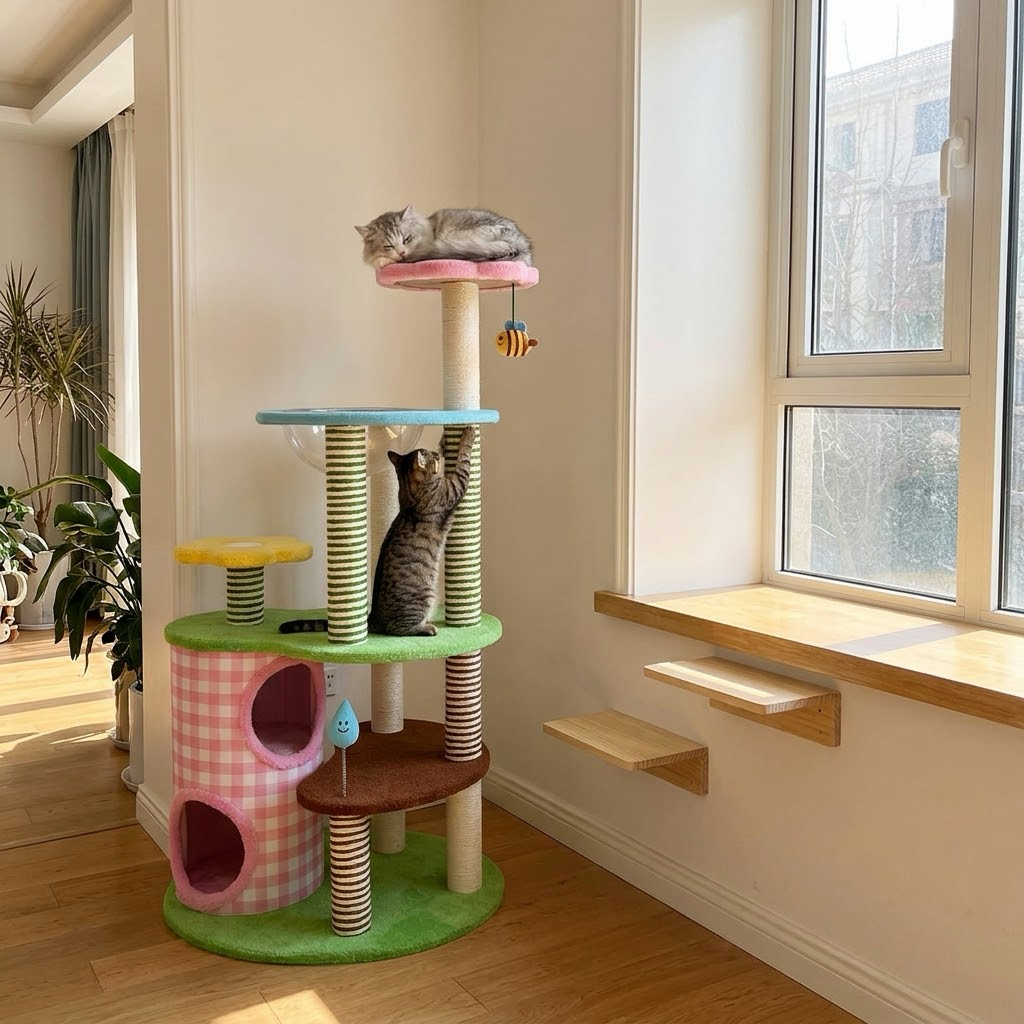
Start small. A single perch by a window can change how your cat spends the day. If you’ve got the room, try cat trees and towers with a few levels. They give your cat a place to climb, nap, and people-watch.
Short on space? Wall shelves or a cleared windowsill work well too. You can even place a sturdy chair beside a window to create a simple lookout. Pick something that fits your home and your cat’s physical abilities.
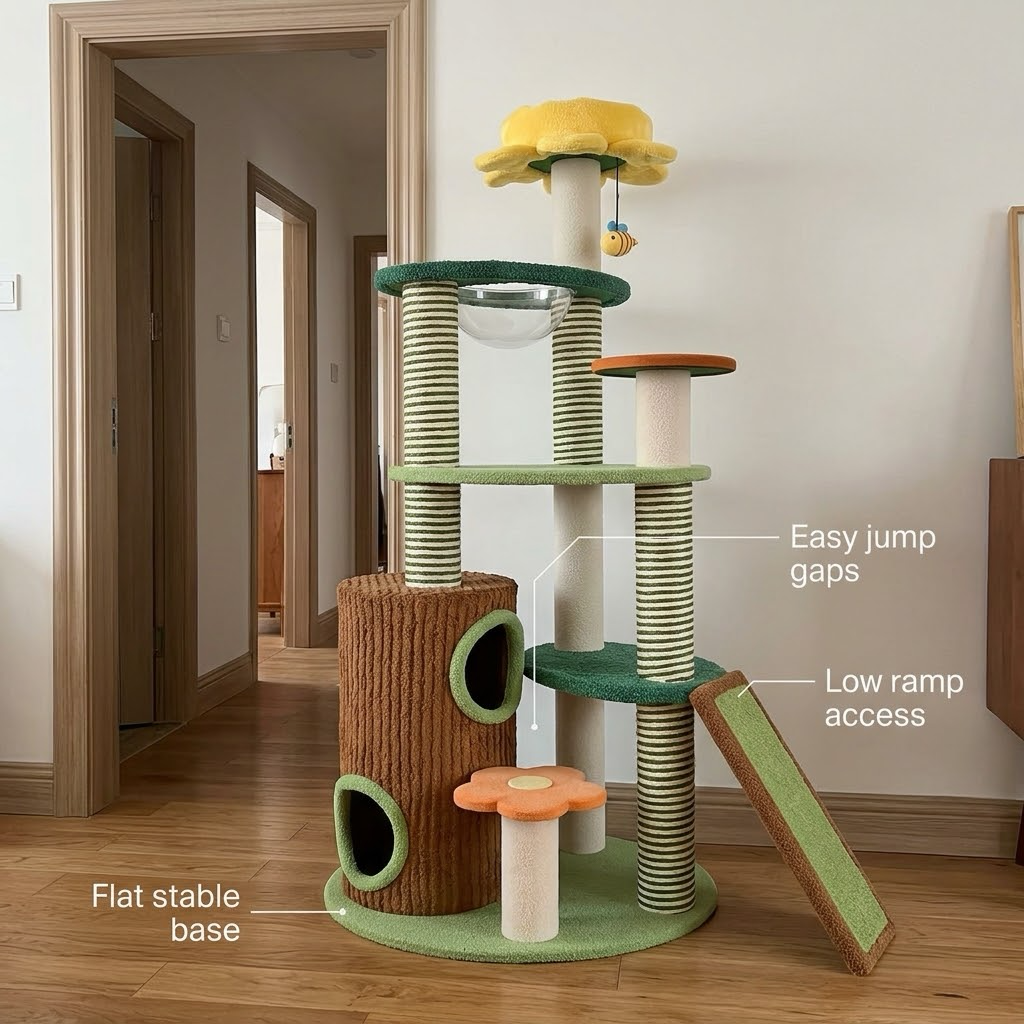
Stability comes first. A wobbly tower can scare your cat away or cause an injury. Set the base on a flat floor, secure tall furniture when needed, and leave gaps between levels that are easy to jump.
Kittens and older cats may need lower steps or ramps. Some cats also prefer climbing routes that let them get down without jumping from a great height.
Next, think about location. Put perches near the action, like a window, a doorway, or the living room. Cats like being close to you, even when they pretend they don’t.
Cats naturally use their senses and hunting skills to find food. When every meal comes from the same bowl in the same spot, feeding can become a quick and predictable activity.
A food puzzle or simple foraging game gives your cat another way to work for part of their meal. It can encourage movement, sniffing, pawing, and problem-solving while making mealtime more interesting.
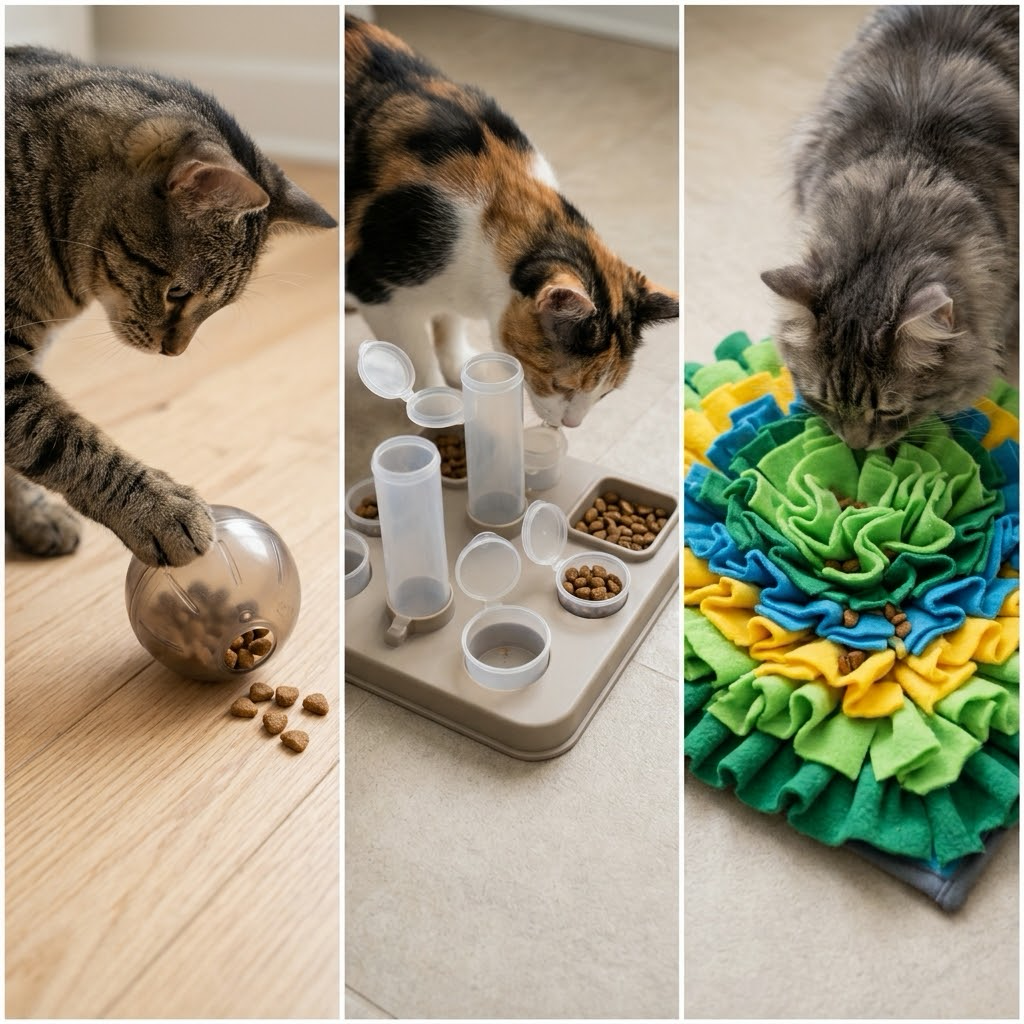
Food puzzles slow down fast eaters and turn dinner into an engaging brain game. Rolling treat balls release kibble a few pieces at a time when nudged with a paw or nose. Stationary puzzle feeders ask cats to scoop food out of cups, tubes, or sliding compartments. Soft snuffle mats let cats sniff through fabric strips to locate hidden dry food.
Start with the easiest setting possible so your cat can figure it out without getting frustrated. Leave puzzle lids open or fill a treat ball so food falls out with barely a tap. Once your cat understands how the game works, you can gradually raise the difficulty.
Puzzle feeders are particularly useful because you can use a portion of your cat’s regular food instead of adding extra treats. The AAFP and ISFM guidelines, published by NCBI, also recognize food puzzles for encouraging natural feeding behaviors and mental stimulation.
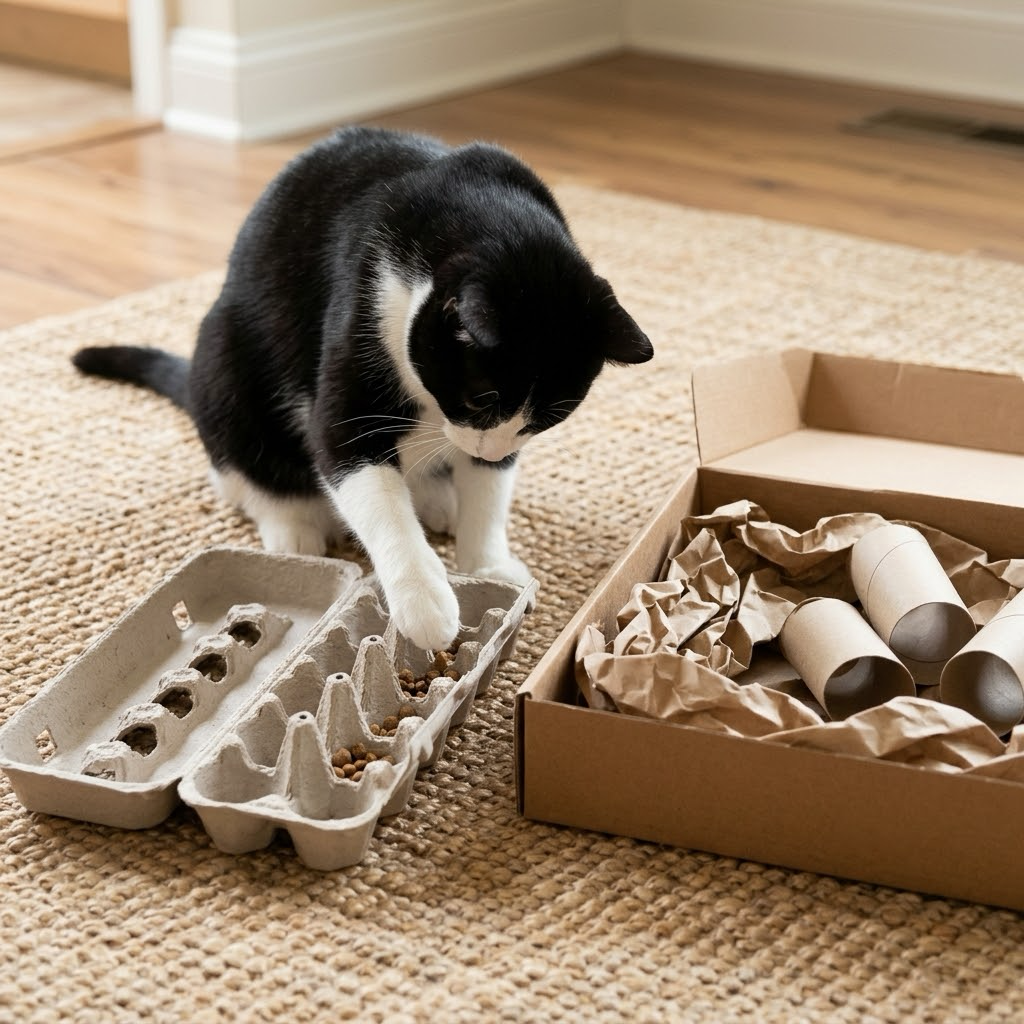
You can build great foraging games with items already sitting in your recycling bin. Drop a handful of dry kibble into a clean cardboard egg carton, or scatter treats inside a shallow box filled with crumpled packing paper.
You can also hide tiny portions of food in easy-to-reach spots around the room. Let your cat sniff around chair legs, cardboard tubes, or low shelves to find them.
Keep homemade puzzles simple and safe. Avoid staples, sharp edges, loose plastic, or materials your cat may chew and swallow. Remove the setup if your cat starts eating the cardboard or paper instead of searching for food.
If your cat spends hours sitting by the glass, you already know this works. A window offers a changing view of birds, people, trees, and passing cars. But a bare windowsill isn’t always enough to keep them comfortable while they watch.
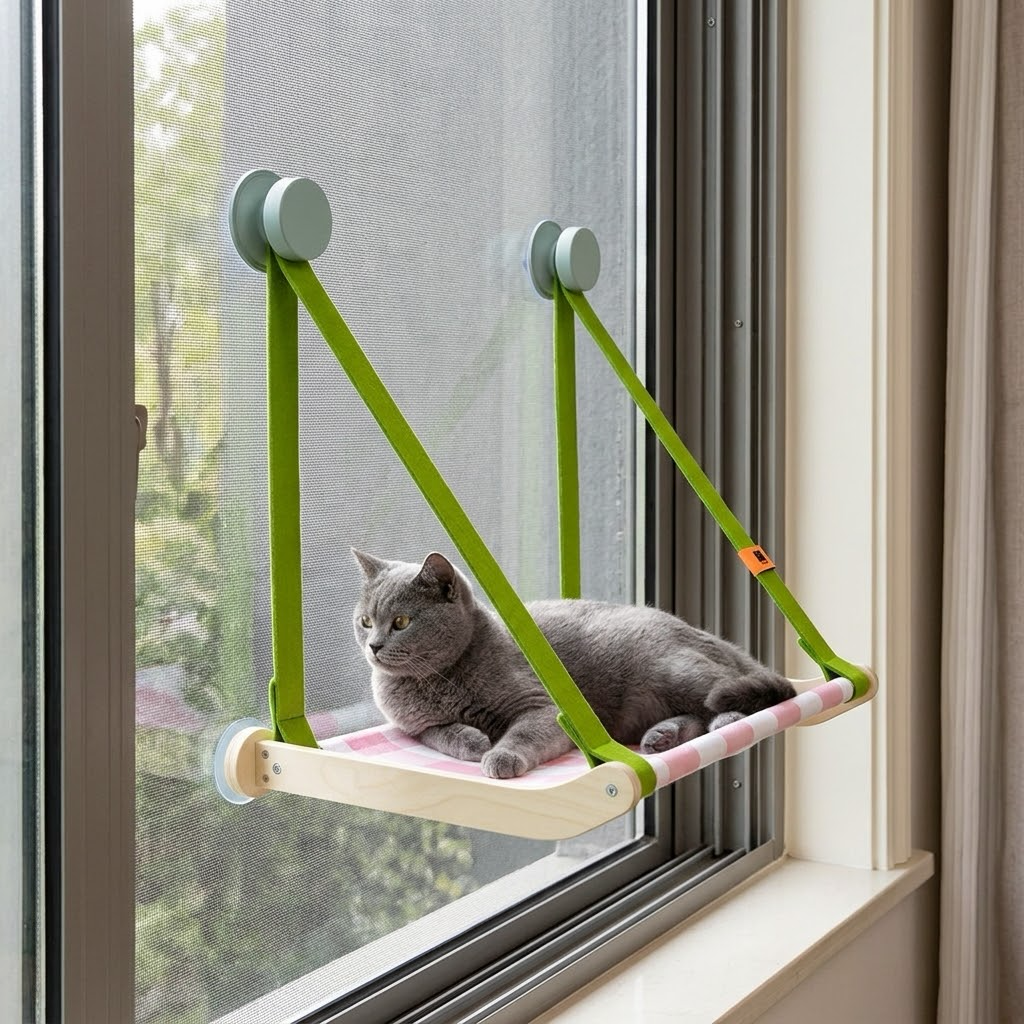
First, make sure they can get close and stay safe. A sturdy, wide perch placed right against the glass or on a cleared, stable sill lets them lean in without slipping.
Most importantly, always use secure screens. Open windows without them are dangerous; even a curious, well-behaved cat can slip through or fall from surprising heights. If your windowsill is narrow, a suction-cup window bed or a small shelf mounted below the glass may provide a better resting spot.
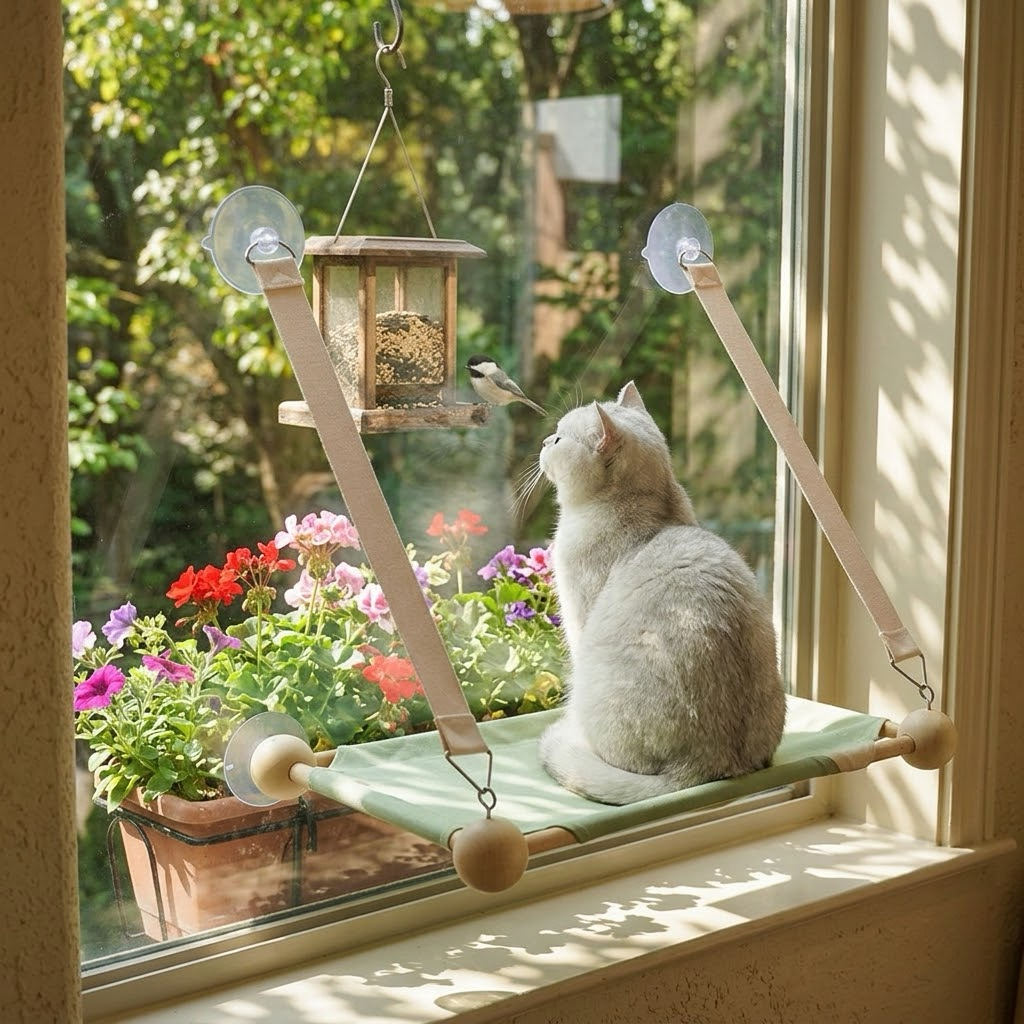
You can boost the entertainment value without spending much. Put up a bird feeder or a hanging planter with flowers or seed heads visible just outside the window. Even a shallow birdbath may attract visitors.
If the view is mostly a wall or fence, position the perch where sunlight hits it. Watching shadows move and light shift can hold your cat’s attention. Rotate which window they use, too. One faces the street, while the other looks out at the trees in the backyard. Different views at different times give them something new to observe.
Cats experience the world through their noses much more than we realize. A new smell can turn an ordinary cardboard box into something worth investigating. Scent play gives your cat another way to explore familiar surroundings.
You can also add different textures, sounds, and hiding places. These features let your cat investigate at its own pace without needing much space.
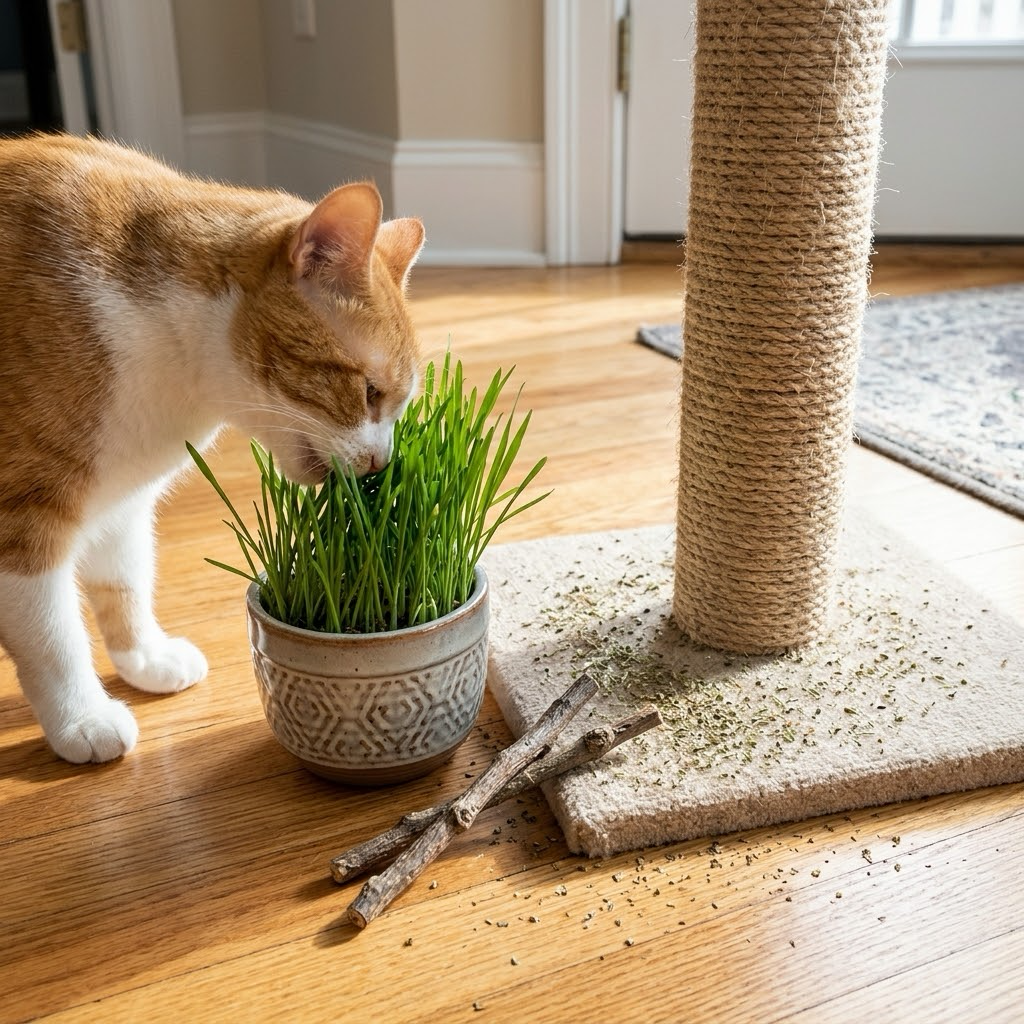
Catnip is the best-known scent for cats, but it does not work for every cat. Some become playful and roll around. Others may ignore it completely. That is normal.
You can also try silvervine, which many cats enjoy even if they do not react to catnip. Cat grass is another option that gives your cat something to sniff, nibble, and explore.
Use these scents in small amounts. Sprinkle a little on a scratching post, place dried catnip inside a toy, or offer a small pot of cat grass. Watch how your cat reacts and stop if they seem uncomfortable.
Avoid concentrated essential oils around cats. Many common oils can harm your cat if they breathe them in, lick them, or get them on their fur. If you’re unsure, keep scented products away from your cat’s space.
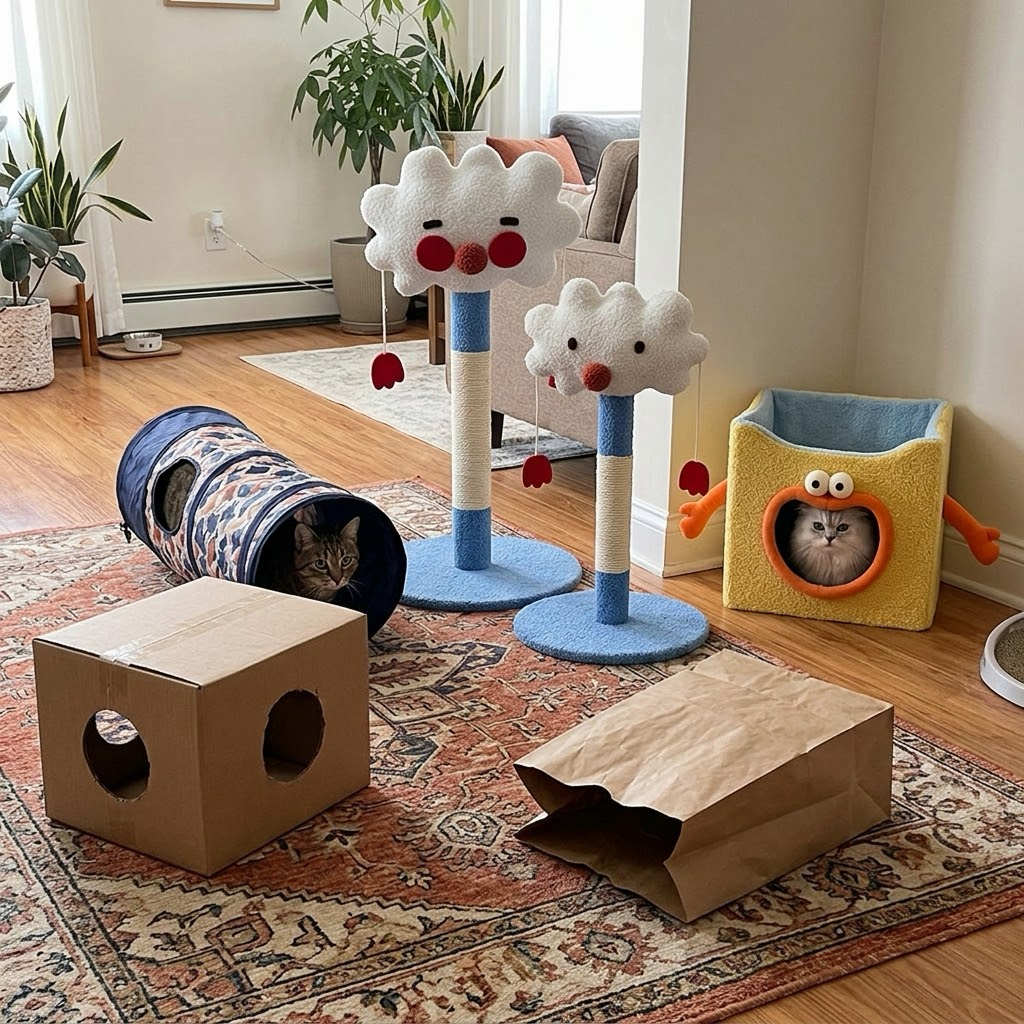
Give your cat more than one kind of surface to enjoy. A crinkle tunnel, a cardboard box, a soft blanket, and a sisal scratching post all feel different under their paws.
Try adding:
• A cardboard box with one or two entry holes.
• A paper bag with the handles removed.
• A crinkle tunnel for hiding and darting through.
• A soft bed in a warm, quiet corner.
• A covered bed or cat cave for privacy.
• A blanket with a familiar smell in a favorite resting spot.
Not every cat wants constant action. Some cats need a quiet den where they can retreat when the house feels busy. A safe hiding spot gives them a place to relax and feel secure, so don’t pull your cat out of their hiding place to encourage play.
Even the most exciting toy loses its charm when it sits in the middle of the living room rug for three months straight. Cats often respond to movement and novelty, so toys that remain available all the time may become less interesting.
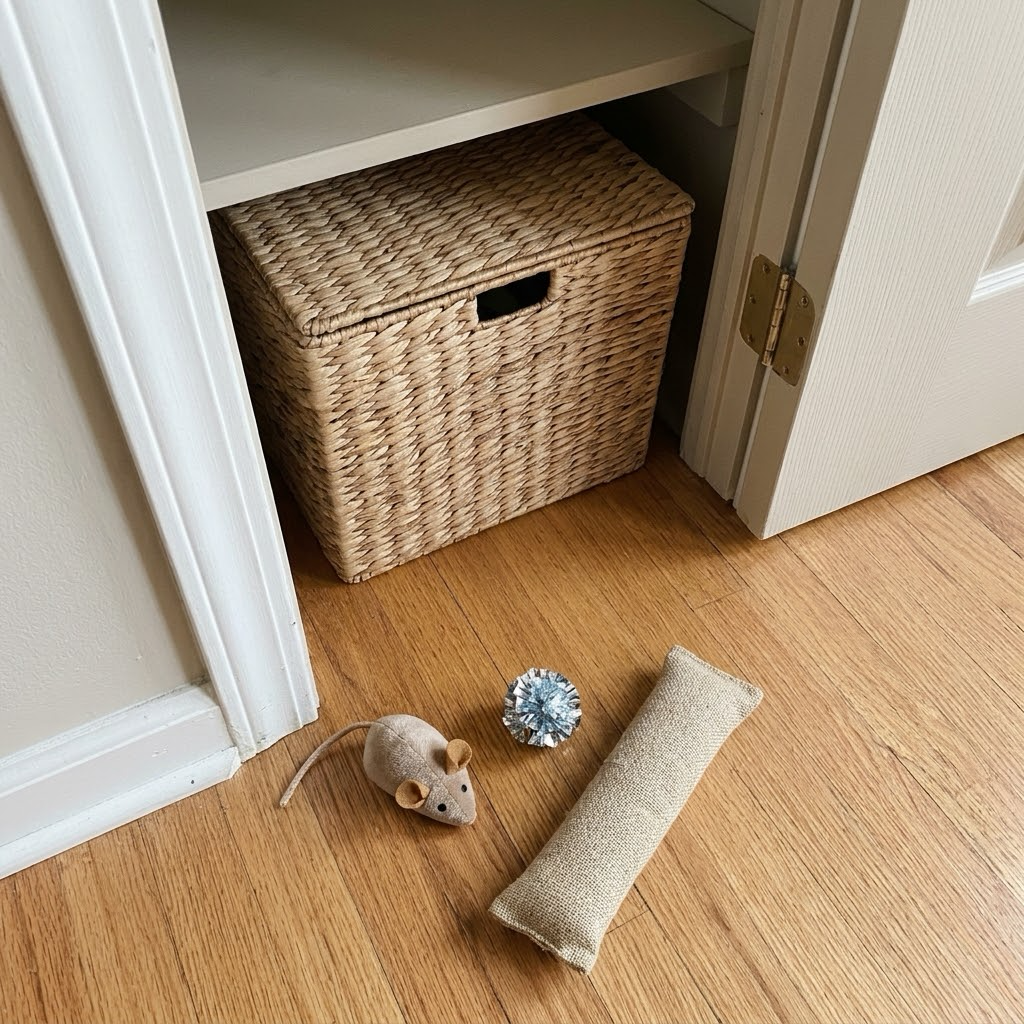
Gather your cat’s toys into a closed bin or closet drawer, then leave only two or three out on the floor. Every Sunday, put those away and bring out a different trio. Because your cat hasn’t seen those toys in a while, they may be more interesting when they come back.
Group toys by play style so each weekly batch offers variety. Put out one small plush mouse for batting, one crinkly ball for chasing, and one textured kicker toy for wrestling.
This simple habit helps you get more use out of toys you already own. It also makes it easier to notice which toys your cat actually enjoys, rather than buying more and watching them collect dust.
Toys are wonderful, but nothing beats the time you spend playing together. Focused play offers your cat the chance to chase, pounce, and practice hunting time spent with you.
A few minutes of play can be enough to get an older or less active cat moving. Younger cats may want longer or more frequent sessions, depending on their energy levels.
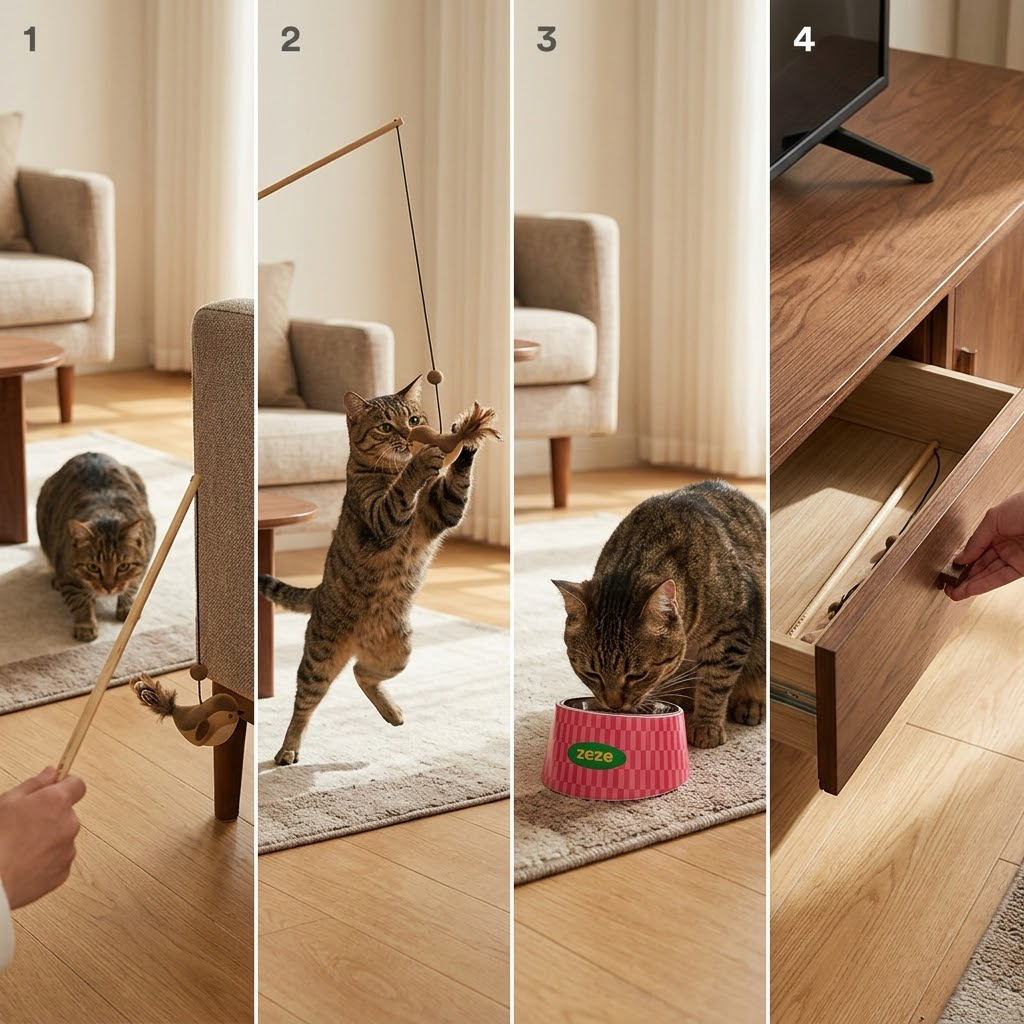
When you wave a wand toy, don’t just wave it in circles. Make it act like a real creature. Dart it behind furniture, let it pause, move it slowly, then zip it away. Let your cat chase, pounce, and catch it.
End each session with a successful catch. After play, offer your cat a small treat or their regular meal. This lets them complete the hunt and settle down.
Short play sessions that mimic hunting can help indoor cats express natural predatory behaviors. The VCA Animal Hospitals’ guide to enrichment for indoor cats also recommends providing opportunities for play, exploration, climbing, and problem-solving to support a cat’s physical and mental well-being.
Safety note: Put string, ribbon, and wand toys away after play. Because swallowing string can be dangerous, supervise your cat whenever they use these toys.
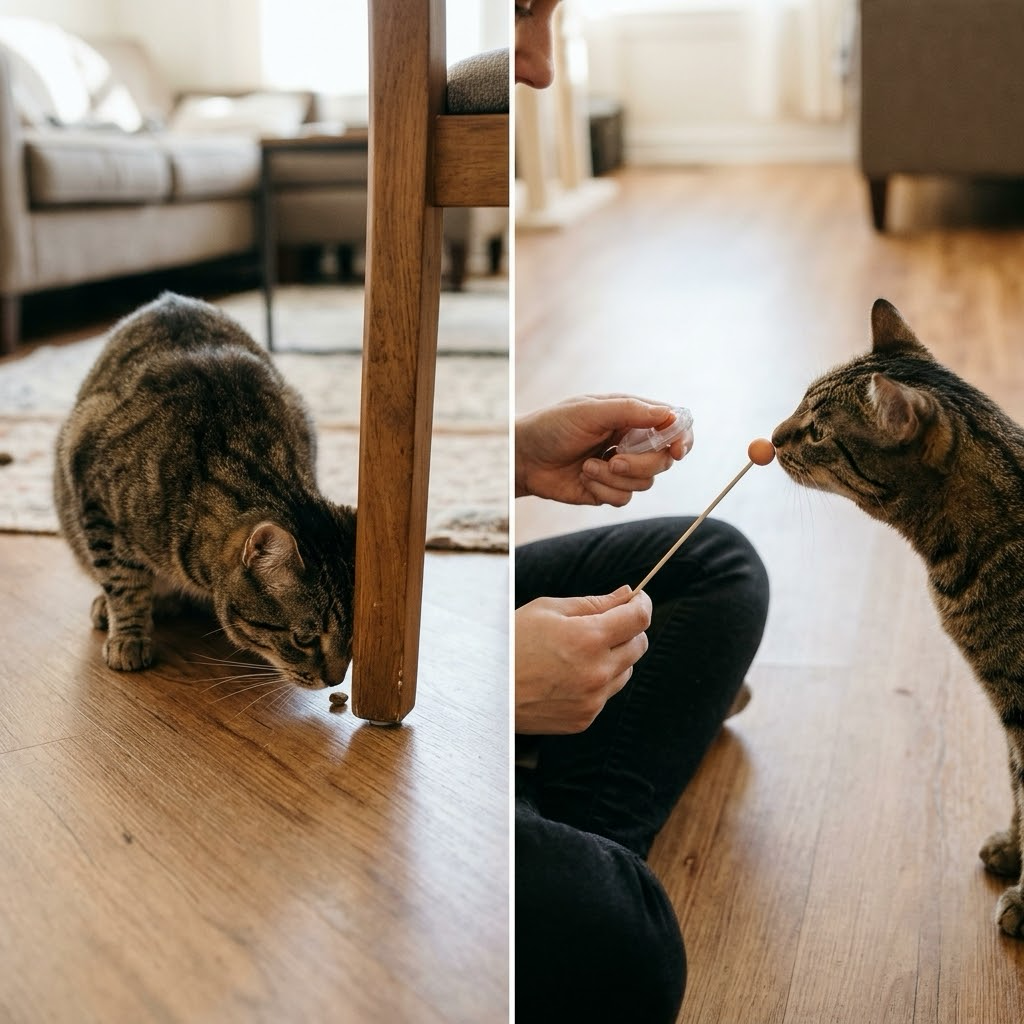
Wand play is a great start, but there are plenty of other mentally stimulating games for cats that stretch their brains as much as their paws.
Try a simple “find it” game. Show your cat a treat, let them sniff it, then hide it behind a chair leg or under a paper bag and say, “Find it!” Once they get the idea, you can hide it in trickier spots.
Even basic clicker training—teaching them to come when called or touch a target—gives them something to focus on. Keep training sessions short and reward progress. A few minutes of practice is plenty for most cats.
You don’t need to spend hours entertaining your cat. A realistic routine can provide enough variety without taking over your schedule.
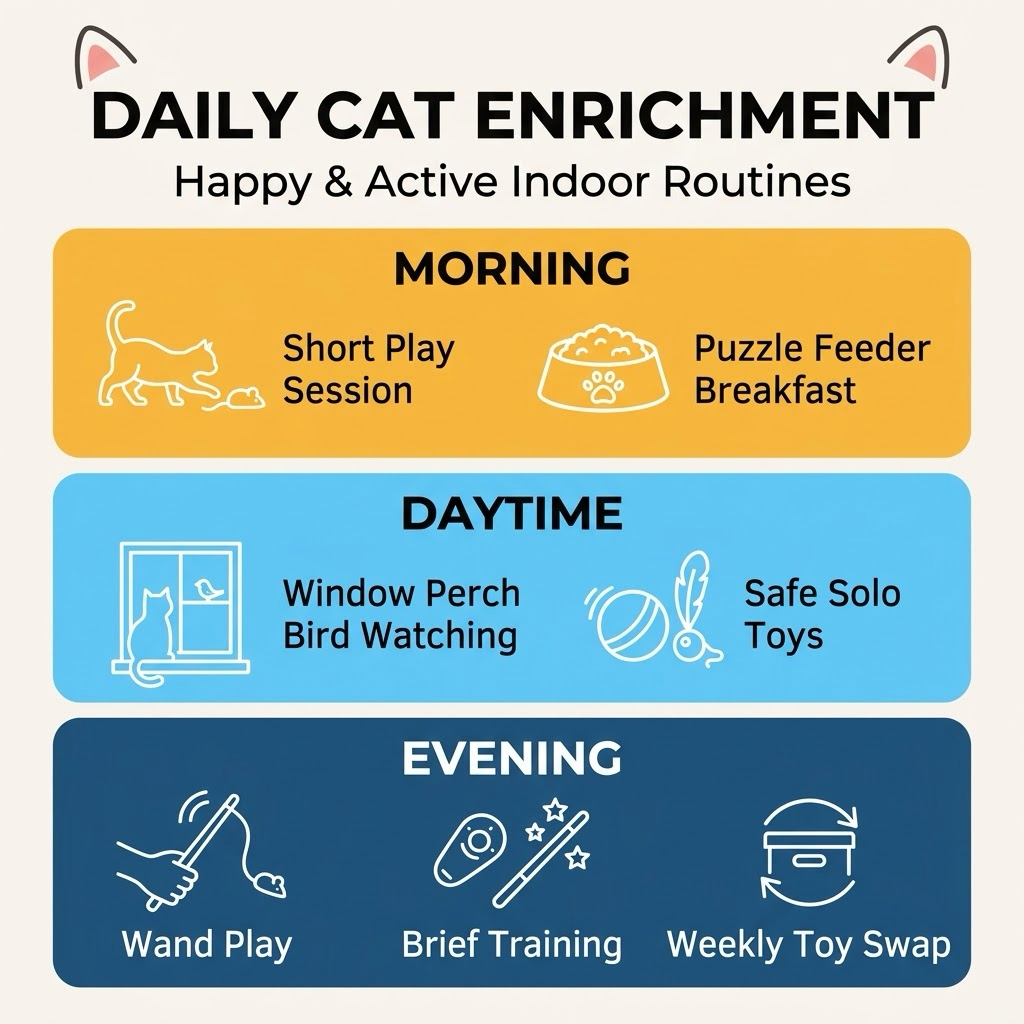
You can fit enrichment into the moments you already spend feeding, caring for, or relaxing with your cat.
In the morning, offer a short play session before breakfast. You can then serve food in a puzzle feeder to encourage your cat to work for part of their meal.
During the day, keep a window perch available for bird watching or place a few toys within your cat’s reach. When you’re away, leave out only toys that are safe to use unsupervised.
In the evening, spend a few minutes playing with a wand toy or practicing simple training. You can also swap toys once a week to bring back some excitement.
These simple habits show you how to keep your cat entertained without adding a complicated schedule. Activities can fit naturally into your existing routine, whether you have five minutes before work or a little more time in the evening.
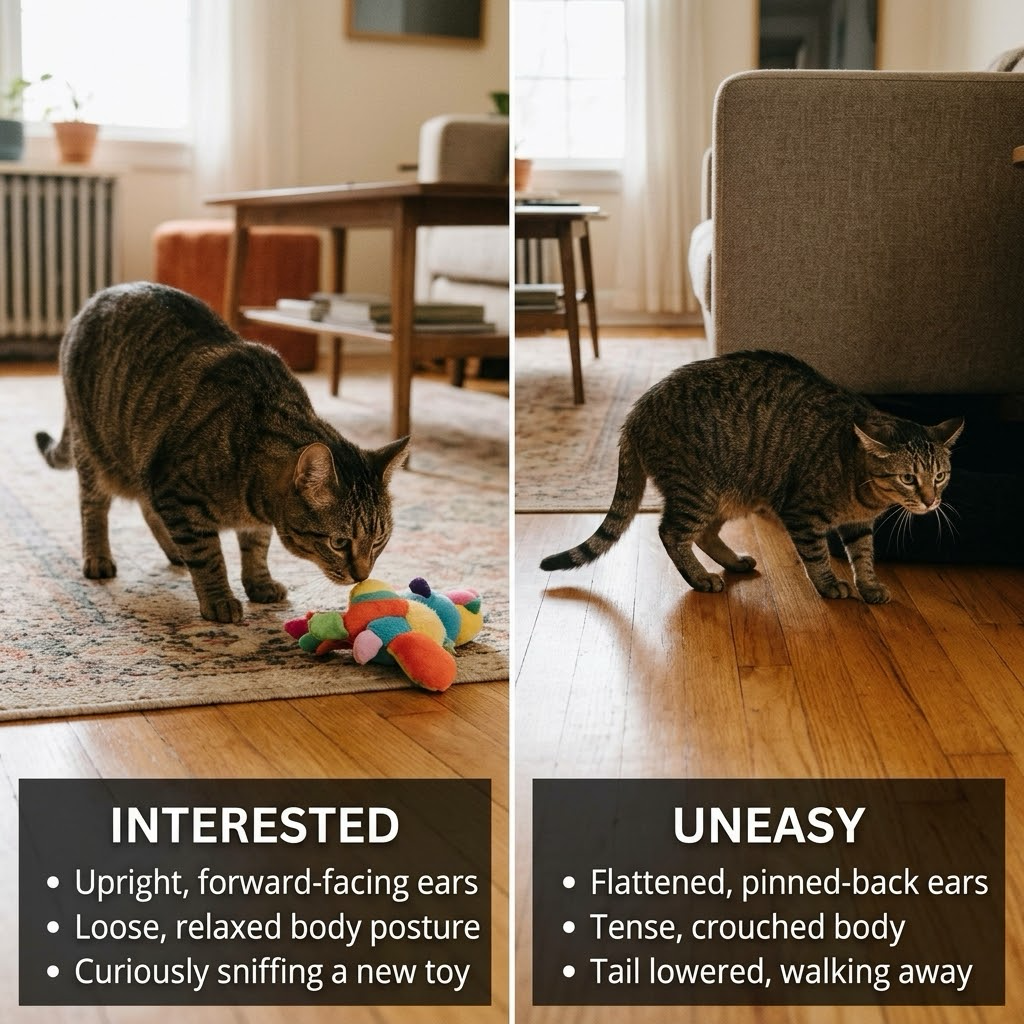
Every cat has different preferences. One may enjoy climbing and chasing, while another prefers sniffing, hiding, and watching the world from a comfortable spot.
Introduce one new activity at a time. Watch how your cat responds. If they walk away, hide, flatten their ears, or seem uneasy, give them space. Enrichment should be something your cat chooses to enjoy, not another activity they have to tolerate.
If you’re unsure whether your cat needs more activity, look for the signs your cat is bored. However, sudden changes in behavior, appetite, or activity may point to a health problem. A vet can help rule out medical causes.
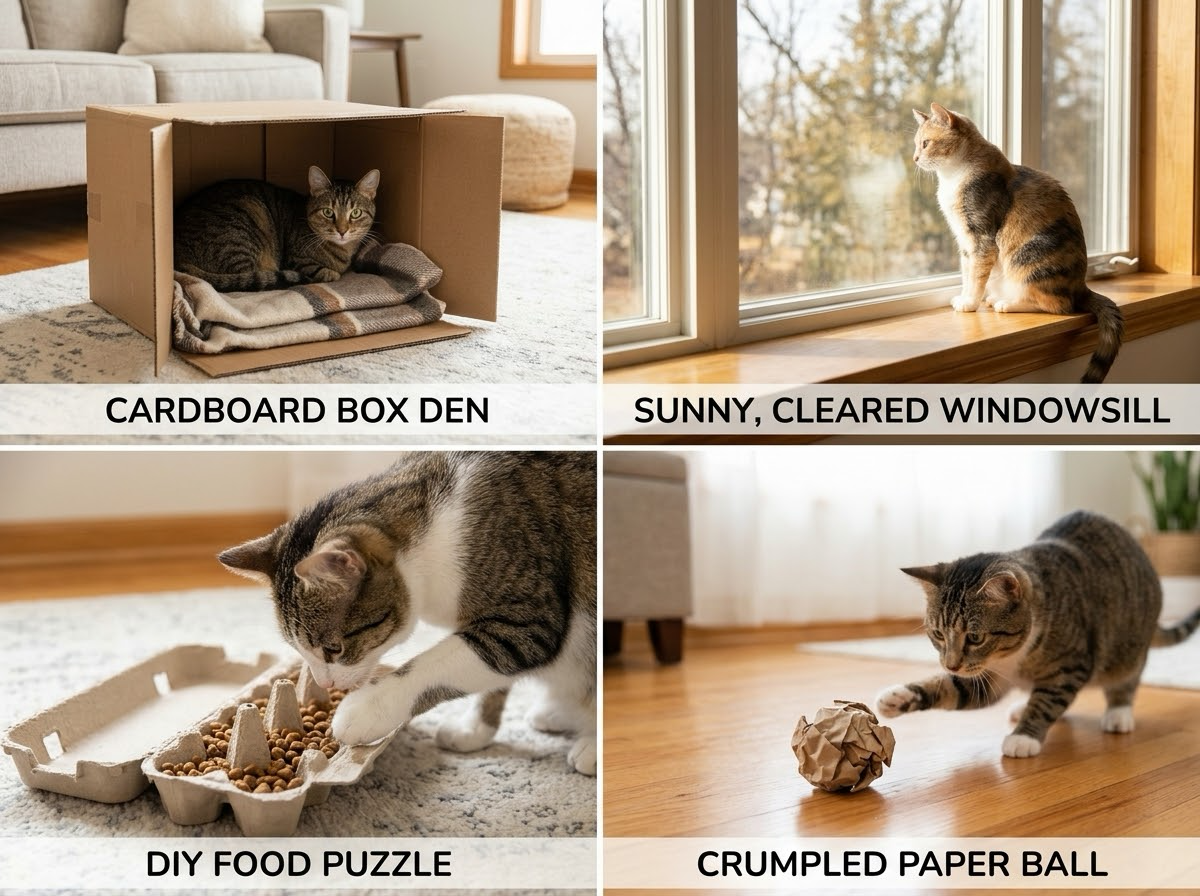
Cat enrichment means adding things to your cat’s home that let them act on instincts. That includes hunting, climbing, sniffing, scratching, and exploring. Think of it as giving your cat opportunities to do things they would naturally enjoy, rather than simply providing food and a bed.
Mix food puzzles, short daily play sessions, and rotating toys. Add a window perch for watching the world. You can also hide treats, introduce new textures, or practice simple training. Your cat doesn’t need a complicated activity every day. Variety and opportunities to explore are more important than spending a lot of money.
Use what you already have. A cardboard box can be a den, a hiding spot, or a puzzle. A clean windowsill becomes Cat TV. Rotate the toys you own instead of buying new ones. Even a crumpled paper ball can start a game, provided your cat doesn’t chew or swallow it.
Yes. Indoor homes offer fewer opportunities for cats to hunt, climb, and explore. Enrichment helps provide outlets for these natural behaviors and may support their physical and emotional well-being. If your cat’s behavior changes suddenly, check with your vet to rule out health issues.
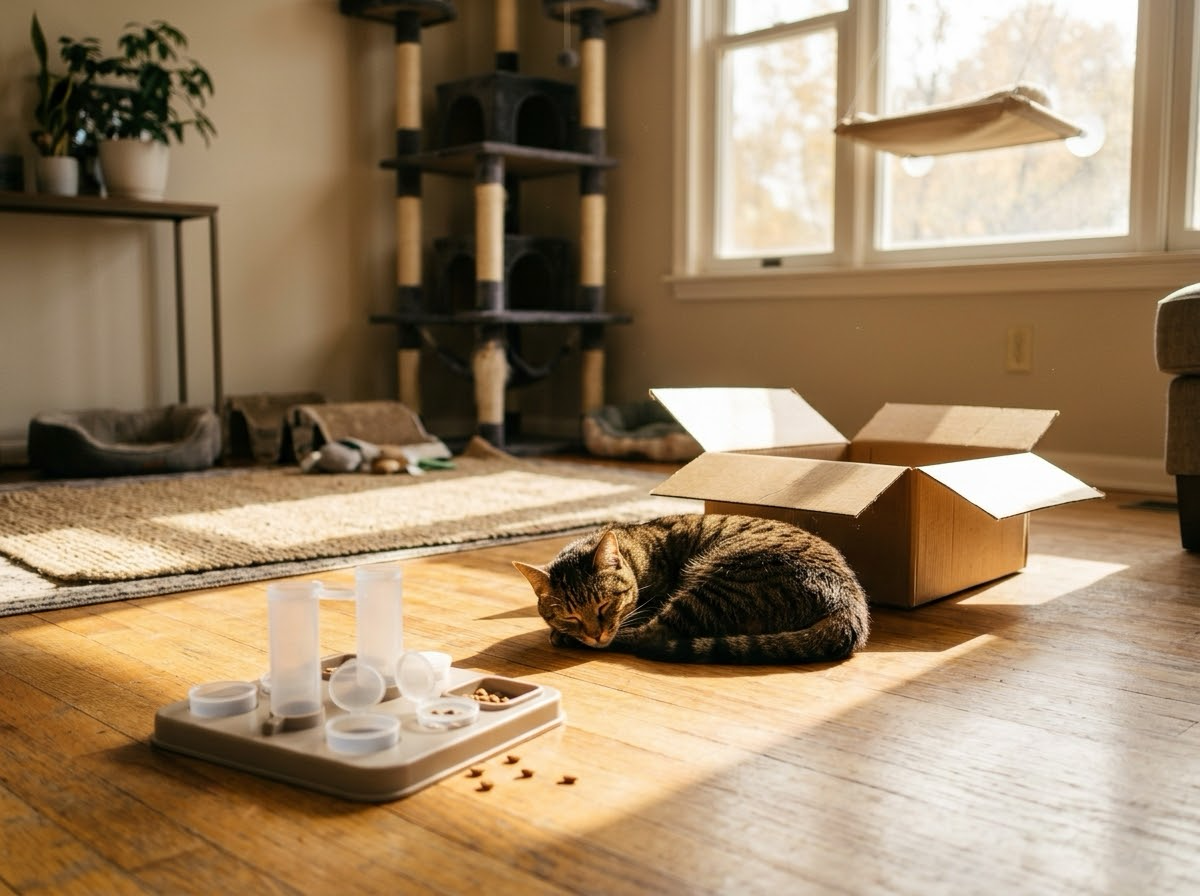
Enrichment is not a checklist you finish once. It is an ongoing conversation between you and your cat. Some days they may want a fast wand-toy chase. Other days, they may prefer a sunny windowsill, a quiet box, or a new smell to investigate.
Try leaving one unfamiliar but safe object out this week: a clean box, a paper bag, or a new textured mat. Do not direct your cat toward it. Just watch what they do. Their choice will tell you more than any list of ideas.
A few weeks from now, that same patch of sunlight may still cross the floor. But beside it, there may be a perch, a puzzle, or a favorite hiding spot waiting. Your cat’s world may be the same size, but it’s become far more engaging.