
You walk into the bathroom and find your furry friend curled up in the granules. Seeing your pet resting in their bathroom area sparks instant worry. Your mind races through worst-case scenarios before you even take a breath.
Healthy felines value cleanliness. They spend hours grooming their fur. So, when they choose the dirtiest spot in the house for a nap, they’re sending a strong message.
If you find yourself asking, “Why does my cat sit in the litter box?” you are not alone. You might feel confused or concerned. Your pet is speaking to you through their actions. We need to decode this behavior right now.
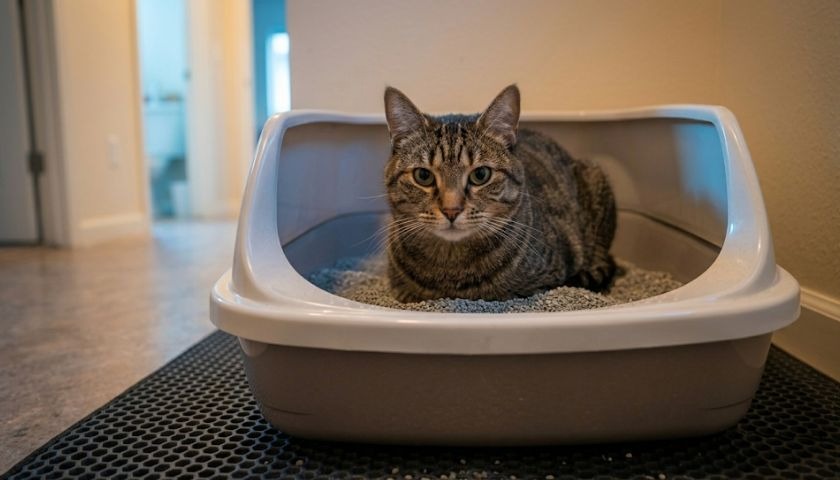
Cats are picky about where they go. They bury their waste and clean themselves afterward. So this new habit feels confusing. It goes against everything you know about their neat, careful nature.
To your cat, the box isn’t just a toilet. It’s a small den with familiar smells. The walls create a shield, so your pet feels less exposed. When life is loud or strange, that quiet corner can seem like the safest place in the house.
That still leaves you wondering, “Why does my cat sit in the litter box if they hate mess?” When fear or discomfort increases, safety prevails over cleanliness. Your cat chooses the one spot that smells like them and feels stable.
Your pet is not misbehaving. They are coping. In nature, small animals look for hidden spots to rest. Tight spaces protect their back and sides from danger. That same instinct still lives in your indoor cat. So if you see your cat sitting in the litter box, it’s a survival habit that appears when something feels wrong.
Your job now is to pay attention, and your cat resting in the litter box is your first clue. The next step is to find out whether your pet is stressed, sick, or both.
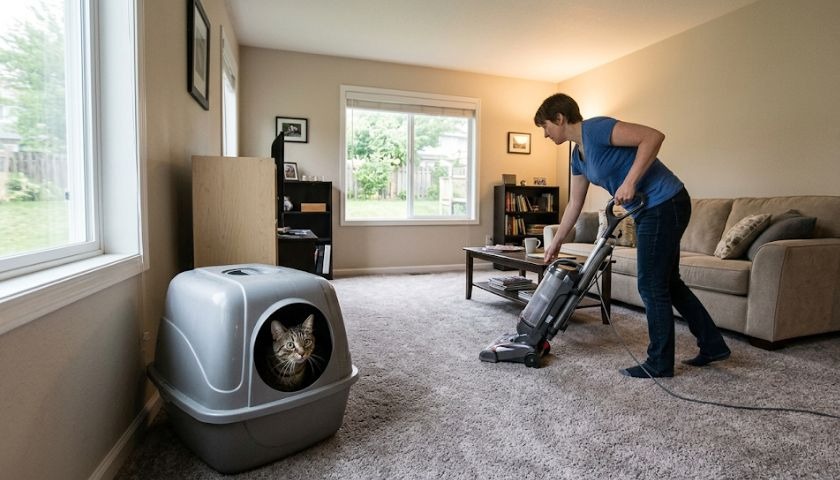
When nothing looks physically wrong, your cat’s mind might be the real issue. Start by looking at what’s happening around them. Their surroundings often explain what their body cannot.
Cats love tight spaces. It’s not strange—it’s a survival instinct. Enclosed areas help them relax because fewer directions feel vulnerable.
If your cat feels scared, they look for places where:
The litter box checks all three. That’s why your cat sitting in the litter box often comes down to fear. The box turns into a quick bunker when they sense tension in the air.
Common triggers include:
If your cat suddenly hides in the box, don’t ignore it. Fear is often the answer.
Cats hate change. You move a chair, and they act like the whole house is different.
So if you’re wondering, “Why does my cat just sit in the litter box?” ask yourself:
Even small changes can stress them out. The litter box smells like them and gives comfort.
That’s why this behavior shows up after changes. Your cat is trying to calm down in the only place that still feels normal.
A new baby, a new pet, or even a visiting friend can trigger insecurity. Your cat might worry that their favorite spots are being taken over.
Cats rely on scent to claim their space. When their territory feels threatened, they double down. Sitting in their own waste area might sound gross to you, but to them, it’s familiar.
So if you keep seeing your cat sitting in the litter box, look at who or what entered their area recently. They could be saying, “This is my space.”
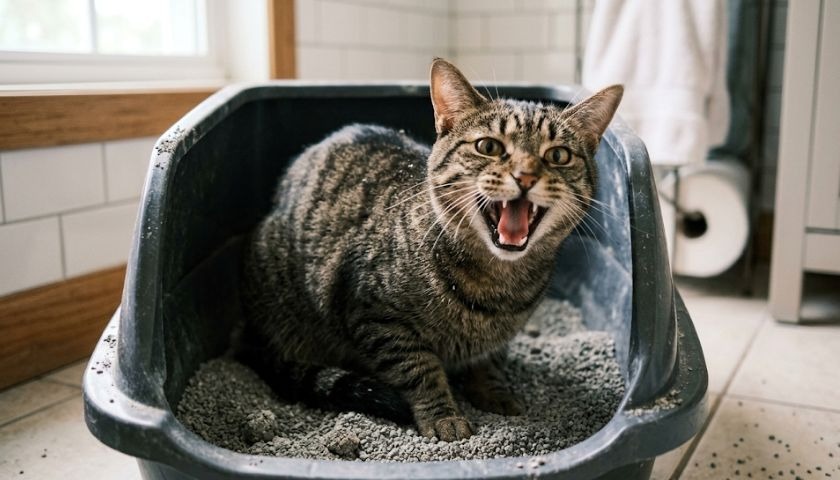
Physical pain quickly changes their normal routines. Sickness alters their behavior before you even notice the symptoms. Your pet hides their pain. By the time you see obvious signs, they may have been uncomfortable for days.
In the wild, showing weakness attracts predators. Your house pet hides their discomfort until it becomes unbearable. You must watch for subtle physical signs.
Health issues often keep them near the litter box. Review these common medical problems carefully to protect your furry friend.
Urinary tract infections cause burning pain. Dangerous crystals form inside the bladder, which block the narrow urethra. A blockage creates a life-threatening emergency instantly.
You see your pet squatting constantly, straining to produce just a drop of urine. If your cat sits in the litter box, always consider urinary health.
They feel a constant, painful urge to empty their bladder. The sensation never goes away, so they hover over the granules, expecting to relieve themselves at any moment.
You might hear them crying out in pain or spot drops of blood mixed in the granules. Male felines face a higher risk of these deadly blockages.
You need to treat this like it’s an emergency. A blocked bladder requires immediate veterinary care. Do not wait until tomorrow morning. Call the vet right now. Delaying treatment can be fatal.
Digestive problems ruin their daily comfort. Constipation creates hard, painful stools, while diarrhea causes sudden, uncontrollable urges. Both extremes keep your pet tied to the bathroom area.
They feel stomach cramps. They fear having an accident on the carpet, so they stay near the pan to avoid a mess.
Constipation makes them strain for several minutes without results. The effort wears them out, so they lie down in the granules.
Diarrhea leaves them feeling weak and dehydrated. You need to keep an eye on their daily bathroom habits so you know what’s normal for them.
Any sudden change in stool consistency warrants a call to the vet. The vet can adjust their diet to fix minor stomach upsets. Sometimes, simply adding more moisture to their food solves the problem.
Time changes their physical body. Senior pets develop painful arthritis. Their joints become stiff. Their protective cartilage wears away over the years.
Jumping causes sharp, sudden pain. Climbing becomes an exhausting chore. Why your cat sits in the litter box often comes down to joint pain. Look closely at the design of your plastic pan.
High plastic sides force your senior pet to lift their aching legs high. Getting inside hurts their hips. Stepping out hurts their shoulders even more.
Once they climb into the pan, they often choose to stay. Leaving hurts, so they avoid the effort. You might notice them limping down the hallway.
You might see them hesitating before jumping onto the couch. Try to adjust their environment to support their aging body. Provide ramps near their favorite resting spots, and consider orthopedic beds to help keep their muscles comfortable.
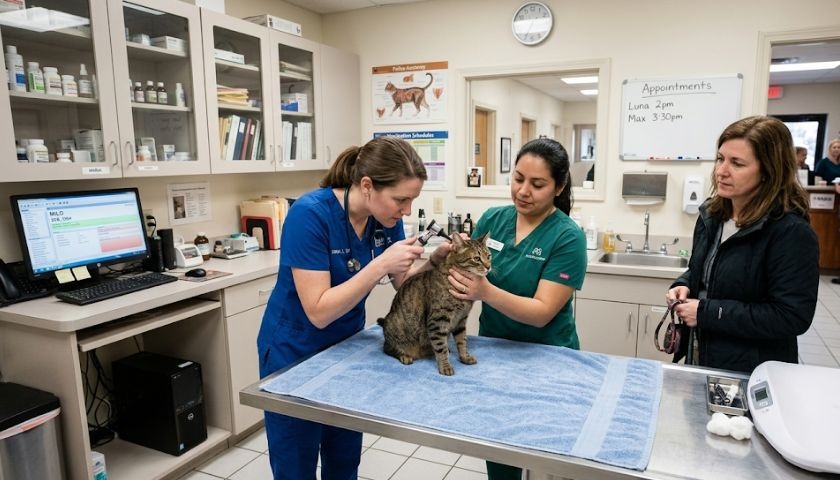
Once you notice this behavior, do not wait and hope it fades. You already asked yourself why your cat sits in the litter box. Now you need answers and a plan.
First, check for medical issues. A quick call or visit lets your vet rule out urinary, stomach, or joint problems. If pain plays any part, you want to catch it early. Health always comes before behavior.
Next, check out how your litter box is set up. If you have more than one pet, make sure you have enough boxes throughout your home. Make sure they are clean and easy to get to. If your cat is old or has trouble moving around, use boxes with low sides. This will make it easier for them to come and go.
Then, think about stress. Ask yourself what changed before you started wondering why your cat sits in the litter box so often. Did you move, add a new animal, or change your routine? To help, offer safe hiding spots that are not bathrooms: covered beds, soft blankets in quiet corners, or a cat tree by a calm window.
Lastly, watch your cat closely for a few days. Keep track of their box usage, behavior, and poop and pee appearance. It keeps you informed of changes and gives your vet useful details.
Your pet talks with their actions. Resting in the waste pan means they’re in pain, scared, or in trouble. Don’t give in to the urge to scream at them. Punishing them just makes them more anxious.
Instead, try to look at this habit with curiosity and understanding. You can help them feel better. Keep an eye on their routines, health, and home to show them they’re safe and loved. When you respond to their silent plea with kindness, you strengthen your bond and give them the home they deserve.