
You’ve just carried your new cat through the door. Across the room, your resident cat stops and stares at the carrier. It’s tempting to let them meet right away, but learning how to introduce a new cat to your home starts with keeping them apart.
Cats use scent to figure out who belongs in their space. When you’re adding a cat, a surprise meeting can leave both pets unsettled. A better approach is to give the newcomer a safe room, let the cats get familiar with each other’s scent, and work toward short meetings. Most introductions take a few weeks. Some move faster; others take months. Watch the cats rather than the calendar, and only move forward when things seem calm.
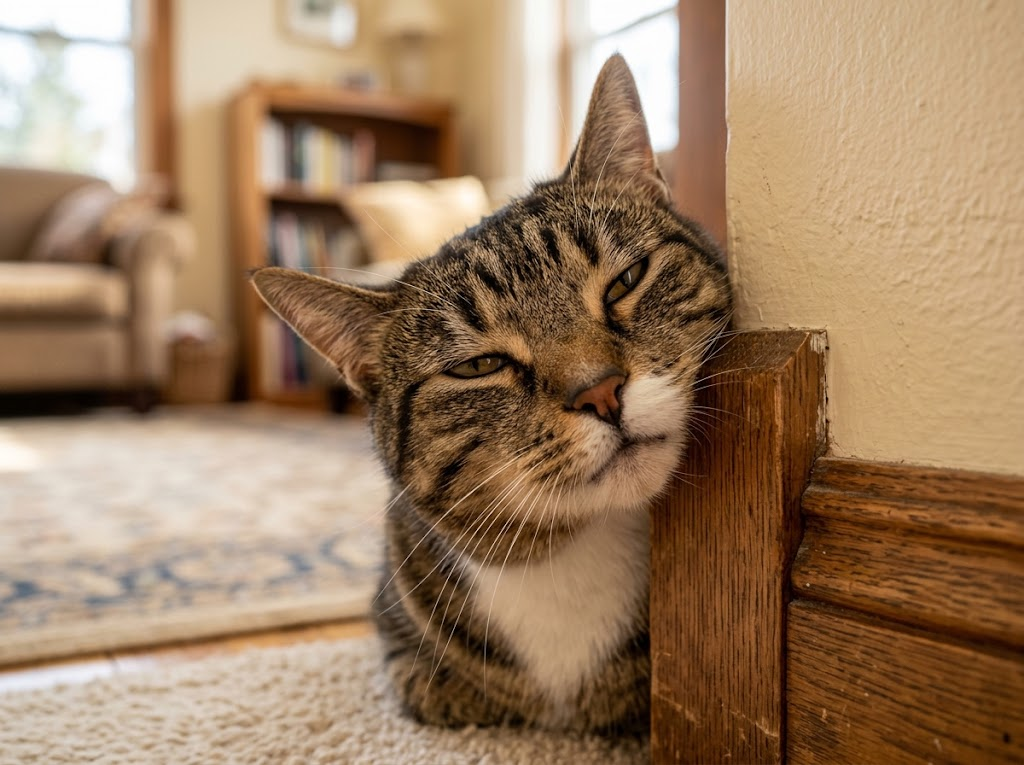
Cats are territorial by nature, and scent is a big part of how they understand their surroundings. They leave their scent by rubbing their faces against objects, scratching surfaces, and engaging in other scent-marking behaviors. So when an unfamiliar feline suddenly appears in the home, the resident cat may see it as a threat to its territory or resources.
Rushing the introduction can lead to fear, hiding, swatting, and lasting tension. Once a cat has had a frightening encounter with another animal, changing that response may take a while. Starting slowly gives the cats a chance to get used to one another without being pushed into close contact.
A patient cat introduction process builds familiarity little by little. You may spend days or weeks managing where each cat goes and when they interact. That might feel slow at first, but it can save you trouble later. A proper introduction gives each cat time to adjust and helps them associate the other cat with positive experiences, like treats, attention, and play.
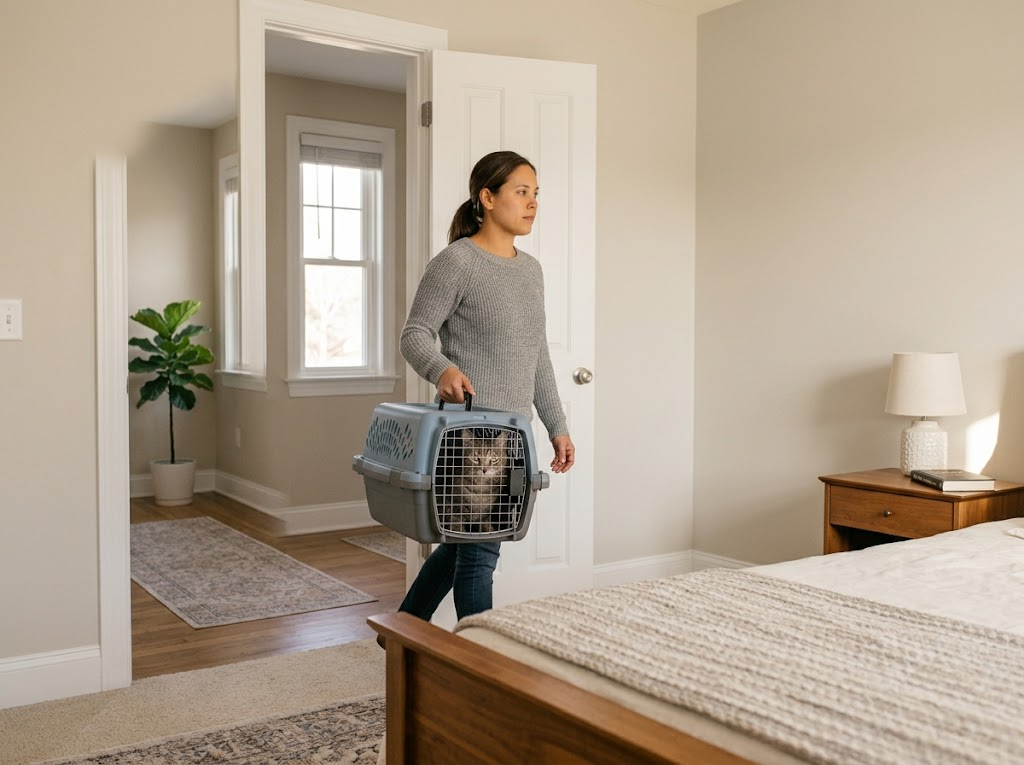
Before you pick up the new cat, set things up at home. Choose a quiet day when you’ll be around, not the morning of a major work deadline or right before houseguests arrive. Once you get home, carry the cat in the carrier straight to the safe room and close the door. No grand tour of the house. The living room can wait.
Try to keep your resident cat’s routine unchanged. Keep meal times, play sessions, and familiar evening routines in place. A new animal is already a big change, so there’s no reason to shake up everything else. Extra attention for your resident cat is fine, too. It may reassure her that a new arrival doesn’t mean she’s losing her place in the household.
There’s one more thing to handle before arrival: a vet check. If you’re adopting or rescuing, ask for the cat’s records and, when possible, have the new cat screened for contagious illnesses like FIV and FeLV before she enters a home with another cat. It’s a simple precaution that can protect both animals. This is how to bring a new cat home the right way—quietly, calmly, and with the basics ready ahead of time.

The safe room will be your new cat’s home base for the first few days. Choose somewhere quiet and away from busy areas, with a door that closes securely. Your resident cat shouldn’t be able to wander in.
Shelters like the San Diego Humane Society recommend setting up a safe space for your new cat before bringing it home. It should contain everything your new cat needs.
Here’s your checklist:
A cat scratcher bed works well here. It gives your new cat somewhere soft to nap and a surface to scratch. Scratching also leaves scent behind, which can make the room feel more familiar.
Add some height, too. Cats often feel safer when they can look down at their surroundings. Cat trees give shy cats a lookout spot and another place to retreat. Some owners also use a calming pheromone diffuser while their new cat settles in. For best results, plug in a feline synthetic pheromone diffuser in the main living area and one in the transition room 24–48 hours before the new cat arrives.
Think of these steps as a guide rather than a timetable. The American Association of Feline Practitioners’ step-by-step introduction guide advises waiting until each cat is comfortable before moving ahead. The whole process may take days, months, or even longer.

Start by giving the newcomer time to settle into the safe room. There should be no face-to-face contact yet. Several days is common, although a nervous cat may need considerably longer.
Spend some quiet time in the room each day. Play if the cat seems interested, but don’t worry about getting a reaction. Let them decide when they’re ready to come closer.
Your resident cat still needs attention as usual. Before moving on, look for basic signs that the newcomer is settling in: eating, using the litter box, and exploring instead of hiding all day. Those small changes matter.

The introduction process can begin well before your new cat and resident cat meet face-to-face. Swap a small piece of bedding or a soft toy and let each cat investigate the unfamiliar scent.
Another option is a clean cloth. Gently rub it over each cat’s cheeks if they enjoy being touched, then place the cloth in the other cat’s area. A treat afterward can make the experience more pleasant. There’s no need to push the cloth toward a cat that isn’t interested.
Repeat this over several days. International Cat Care explains scent swapping in more detail.
Note: Scent swapping is widely recommended by veterinary and shelter professionals, though direct peer-reviewed evidence is limited. Hissing, avoidance, or a change in eating habits are signs to slow things down and return to an earlier step.
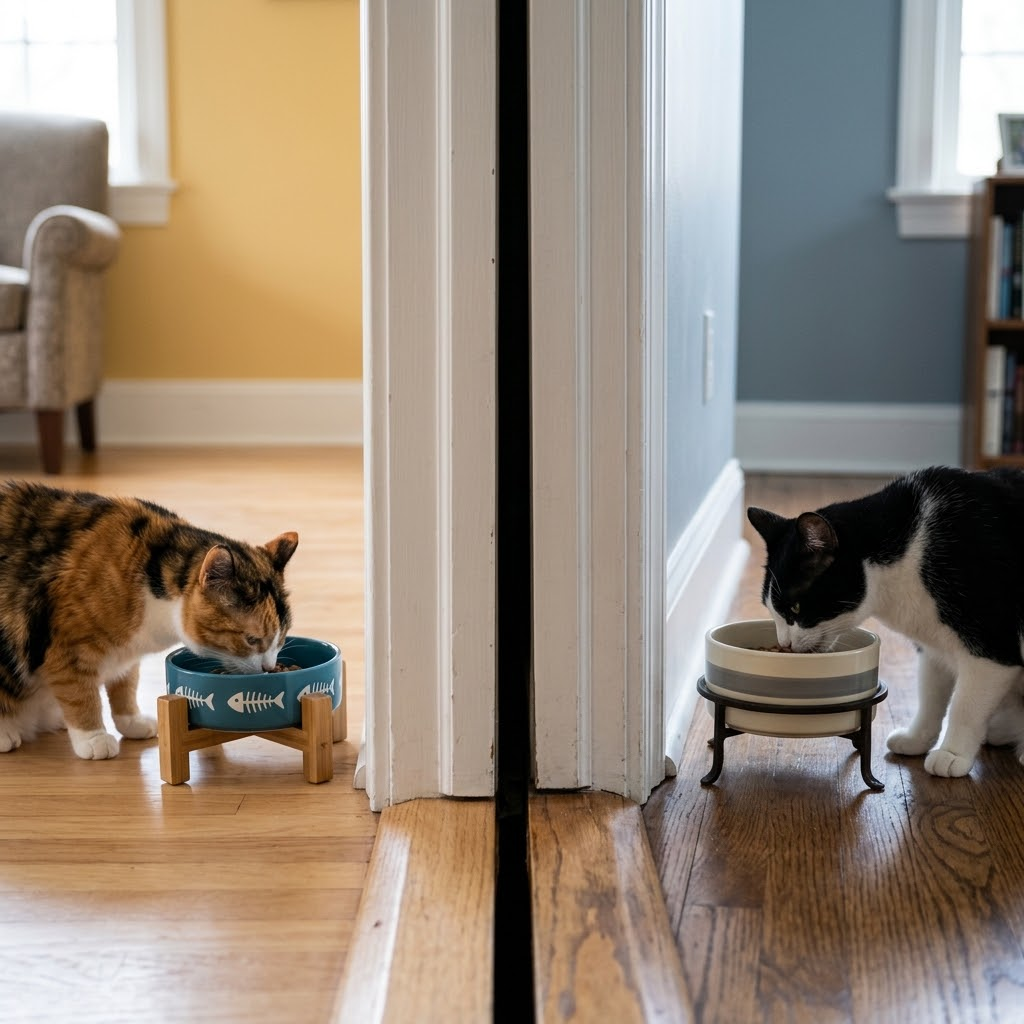
Keep the door closed and place each cat’s food far enough away that they can eat without staring, growling, or backing away. After a few calm meals, move the bowls slightly closer.
Don’t worry about putting the dishes right against the door. That’s not the goal. What matters is that the cats can notice one another while something familiar and pleasant is happening. When one cat refuses food or becomes tense, simply move the bowl farther away.

Once scent swapping and closed-door meals are going smoothly, it’s time to let the newcomer investigate another part of the home. Place the resident cat in a separate room with their usual supplies while the newcomer explores the home.
Keep the first visit short. Afterward, return the newcomer to the safe room.
Later, you can reverse the arrangement and let the resident cat investigate the safe room while the newcomer is elsewhere. Make sure there is no chance of an accidental meeting. A cat that becomes visibly upset during a space swap probably needs shorter visits and more time.
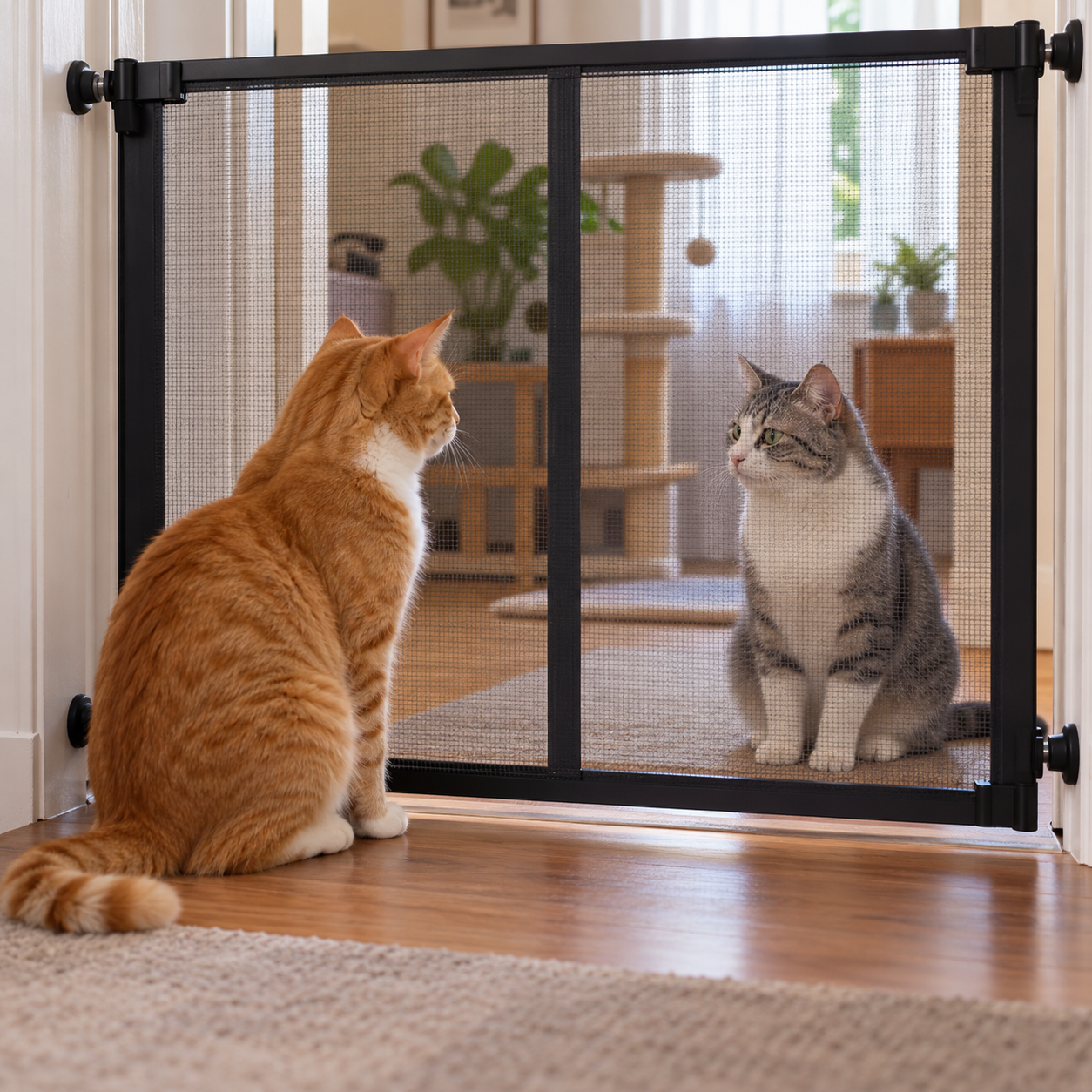
Now comes the first real look. Use a secure screen, a tall gate the cats can’t jump over, or a door opened only enough to prevent physical contact.
Keep the first session brief and make sure there is space to retreat. A relaxed glance is encouraging; a fixed stare is a different story. Hissing, growling, stiff posture, or puffed-up fur means the session has gone far enough for now.
Close the barrier and try another day, preferably from a little more distance. There’s no need to squeeze every possible second out of a calm session.
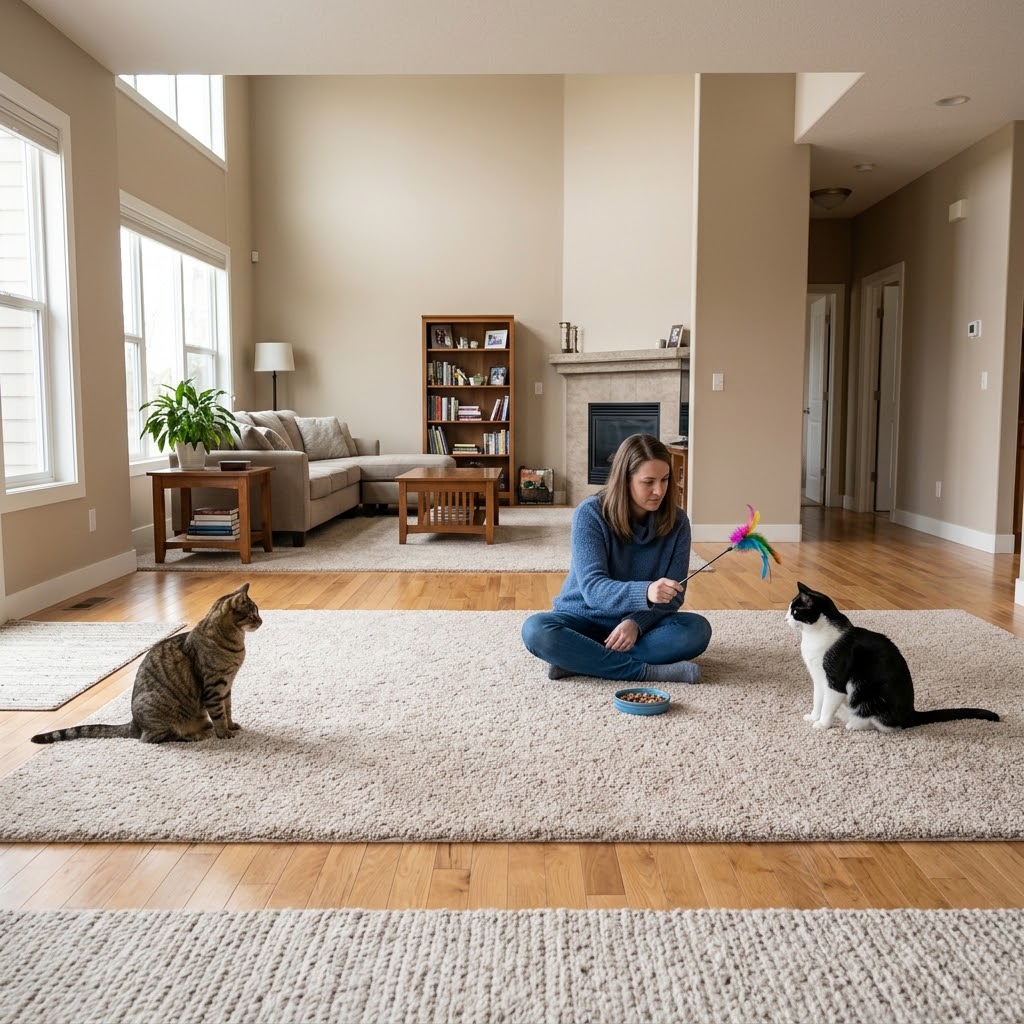
When the cats can look at each other without becoming tense, try a brief meeting in a room with hiding places and clear exits. Don’t carry one cat toward the other, and don’t corner either animal.
Keep treats and toys nearby. They can be useful for rewarding calm behavior, but don’t use them to coax a reluctant cat closer. Some cats will approach right away. Others will sit across the room and watch. Either response is fine.
Hard staring, swatting, or obvious fear means it’s time to separate them. Go back to barrier sessions and give the cats another chance later.
Tip: If tension starts to build, don’t pick up the cats. Put a pillow, cushion, or toy between them to interrupt eye contact. Once their attention shifts, guide them into separate activities or rooms.

Keep the first few shared sessions short. As the cats become more comfortable, add a little more time.
The safe room should remain available as a retreat for the new cat as long as it’s practical. Each animal also needs their own places to eat, rest, scratch, and use the litter box.
One good meeting doesn’t mean they’re ready to live together unsupervised. Look for a pattern of calm sessions instead. If one cat repeatedly avoids the other, take that as useful information and slow down.

Resource guarding can create serious conflict between pets. Provide each cat with their own food bowl, litter box, bed, and scratcher, and ensure these separate resources remain available over the long term. A good rule for litter boxes is one per cat, plus one extra, placed in different locations around the house. Cats shouldn’t have to compete for essentials.
Vertical territory matters, too. Adding a cat to your home may mean rethinking how you use the available space. Tall resting spots allow cats to share a room without sitting directly beside each other. Reading up on what to know before buying a cat tree can help you choose something with enough height and stability. High shelves and sturdy cat trees can also create separate routes around a room.
Play is another useful outlet. A few brief sessions with a wand toy can help cats channel their hunting instincts. Having plenty of cat toys around can also keep boredom from turning into trouble. When the cats interact peacefully, small treats can reinforce that behavior.
Introducing a new cat doesn’t have to turn your home into a feline soap opera. Start with a safe room. Let the cats learn each other’s scent. Take visual contact slowly, then move on to supervised meetings when they’re ready.
And don’t get hung up on the calendar. One pair of cats might be sharing a sofa within a week. Another pair may need months before they’re comfortable in the same room. That’s okay.
When you’re ready to make the home more cat-friendly, browse ZezeLife’s cat furniture and toys. Additional perches, scratching surfaces, and play areas can help cats share their space more comfortably. At the end of the day, how to introduce a new cat to your home comes down to one fairly simple rule: pay attention to the cats, and let their behavior tell you when it’s time for the next step.
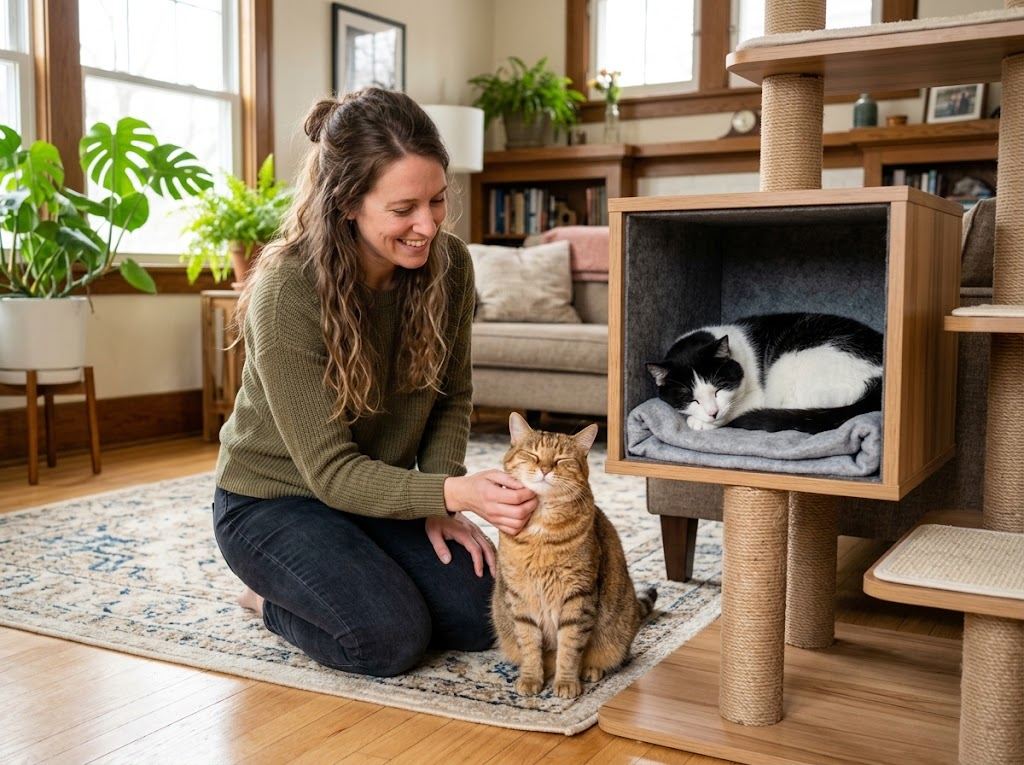
Some cats adjust within a couple of weeks, while others need several months. Personality, age, and past experience can all affect the cat introduction process. Let your cats set the pace. If either cat shows signs of stress, return to the previous step and allow more time before moving forward.
Pick a quiet room with a door that closes. Add food, water, a litter box placed away from the food, a cozy bed, and several scratchers. Include hiding spots and a high perch. A few toys can help, too. Your resident cat shouldn’t be able to enter this room.
Your cats are ready when both can eat calmly on either side of the door and stay relaxed during scent swaps and barrier visits. Look for soft eyes, loose tails, and relaxed body language. A lack of hissing, growling, or puffed fur is another good sign. Start with a short meeting and make sure each cat has room to move away.
Stay calm and never punish either cat. Don’t grab fighting cats with your hands. Use a toy or another safe distraction to break their focus, then separate them and return to an earlier step. Slow things down before trying again. If hissing is constant or appears suddenly, ask your vet to rule out pain. A behaviorist can also help when problems continue.