
No matter how fluffy, cute, and utterly adorable cats may seem, they are natural-born predators. They are wired to hunt, stretch, and sharpen their claws, even when they look half asleep on the couch. One moment, your living room feels calm, and the next you notice pulled threads or scratch marks on your sofa.
It’s frustrating, especially when you end up with what feels like a cat-ruined couch. But you don’t need to replace it right away. You can fix most damage at home with simple tools and a bit of patience. Learning how to fix a couch from cat scratches and hide marks saves money and brings furniture back to life.
This guide walks you through fabric and leather repairs, plus smart prevention so the damage doesn’t come back tomorrow.
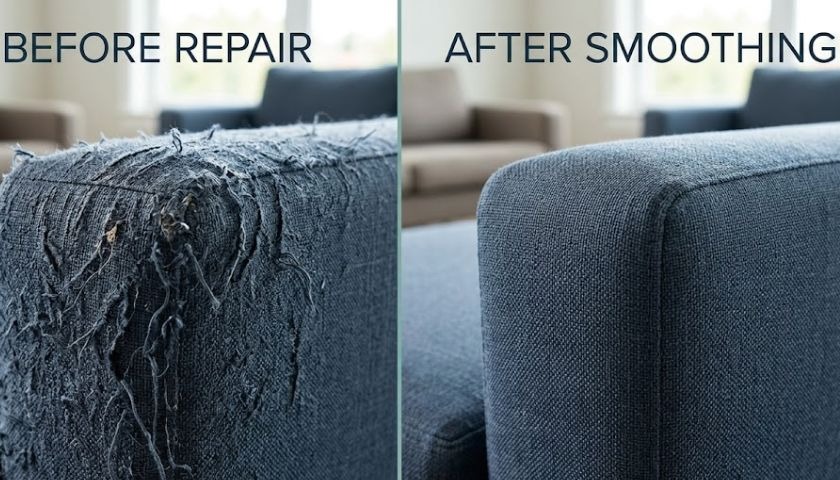
Before you try to hide scratches with covers or throws, it’s important to fix the surface itself. This step restores the material’s texture and helps prevent further damage. It also gives you a cleaner result, so any protective cover or finishing touch sits more smoothly on the couch.
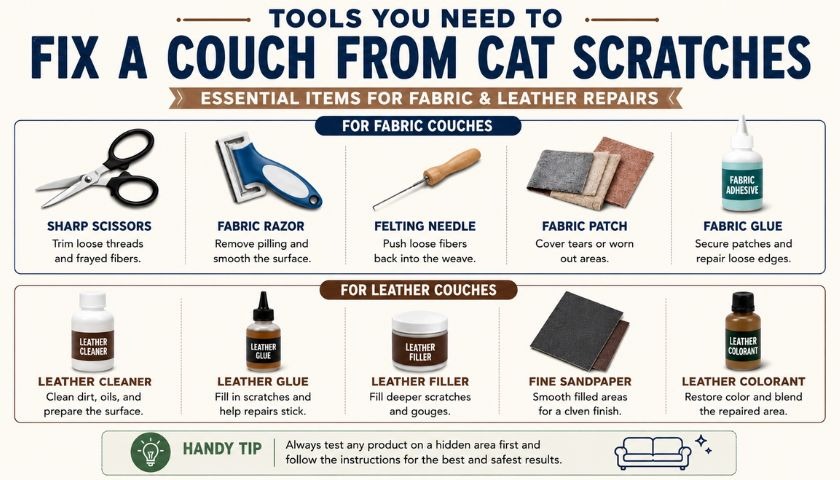
Here’s what you’ll usually do depending on your couch type:
Use the repair method that fits the damage. Minor scratches need simple fixes, while more serious damage takes more careful work. Assessing the damage by depth, size, and location helps you choose the right repair without unnecessary work.
Using the right method saves time and helps the repair hold up better. It also makes the damage less noticeable. If you rush into the wrong fix, you may end up drawing more attention to the area instead of blending it in.
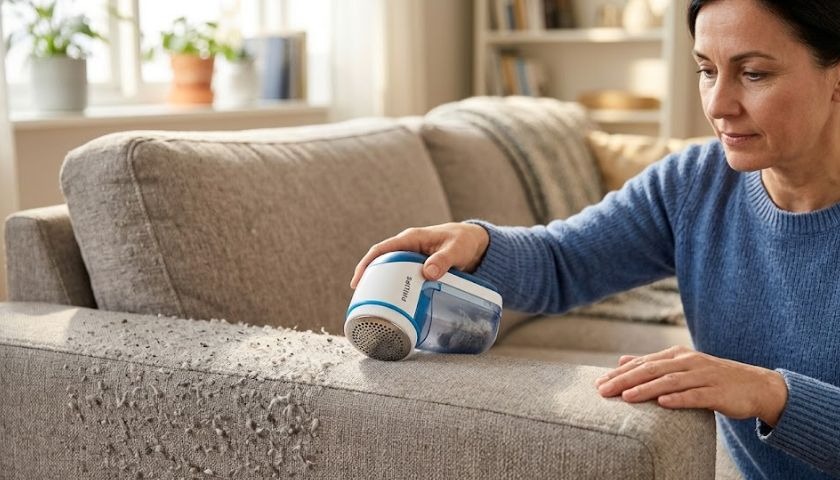
Pilling happens when cat claws catch threads and pull them out of the weave, leaving fuzzy bumps on the fabric. The good news is that it’s one of the easiest types to fix at home. All you need is a steady hand and two basic tools.
Here’s how to fix it:
Work in small sections and check your progress as you go. Rushing this step or cutting too aggressively can pull out intact threads and worsen the pilling. A little goes a long way.
One thing a lot of people overlook is lighting. Doing this repair in a dimly lit room makes it easy to miss threads or accidentally cut too deep. Use a lamp or work near a window so you can clearly see what you’re trimming. Once the surface is smooth, run your hand over it to check for rough spots.
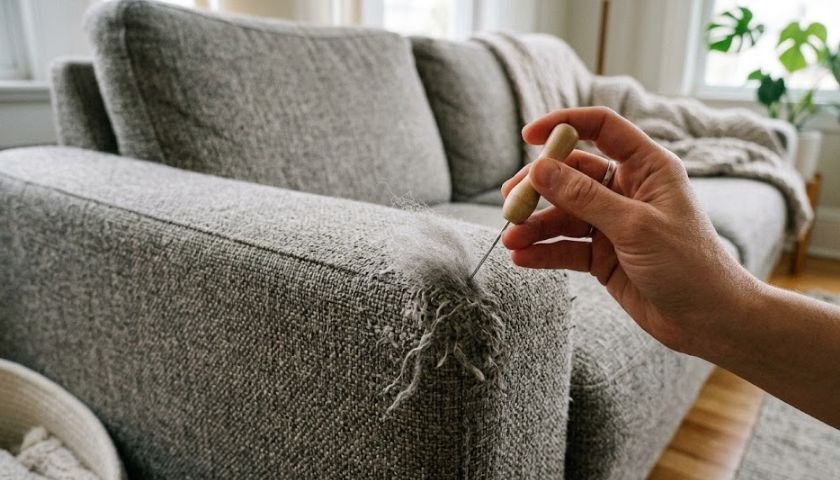
Couch corners always seem to take the absolute most damage in any living room. For badly damaged corners without actual tears, a 38-gauge felting needle is highly effective. It simply pushes the tufts and pills back under the weave of your upholstery.
This is actually a pretty simple process, even if it is a bit time-consuming. However, it ensures your couch strands remain inside, safely tucked under the upholstery. Once the strands are tucked back under the surface, the damaged area will look much better.
Follow these easy steps to get the job done right:
As you work, keep your angle controlled and your pressure light. That helps you guide the fibers back into place without disturbing the surrounding weave more than necessary.
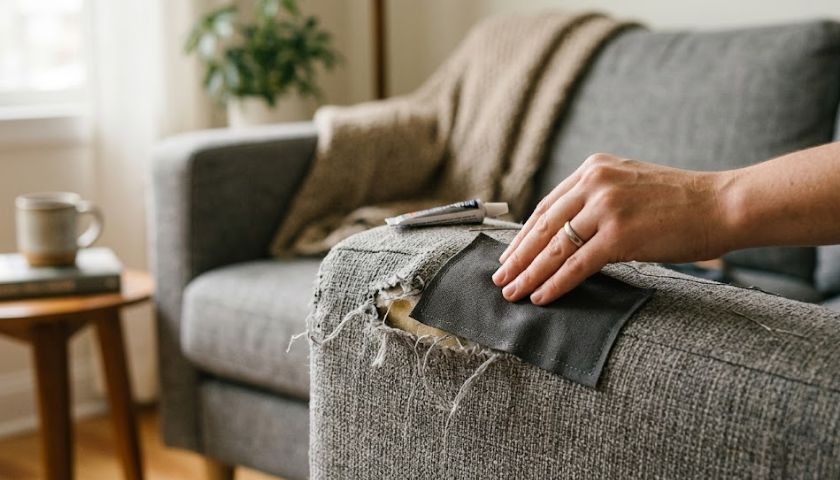
When scratches turn into tears or worn-out patches, surface repair isn’t enough. That’s where patching comes in. It reinforces the damaged area and covers it rather than fully restoring it.
Start by choosing a patch that matches your couch as closely as possible. A similar texture helps it blend in better. Even small differences can stand out in certain lighting.
To patch the damage:
Once the patch is in place, smooth the edges with your fingers so it blends into the couch. If your fabric has texture, the patch will become less noticeable.
This method is especially useful for armrests or seat edges where wear is constant. In high-wear areas, reinforcing the damage early can help keep the tear from getting worse.
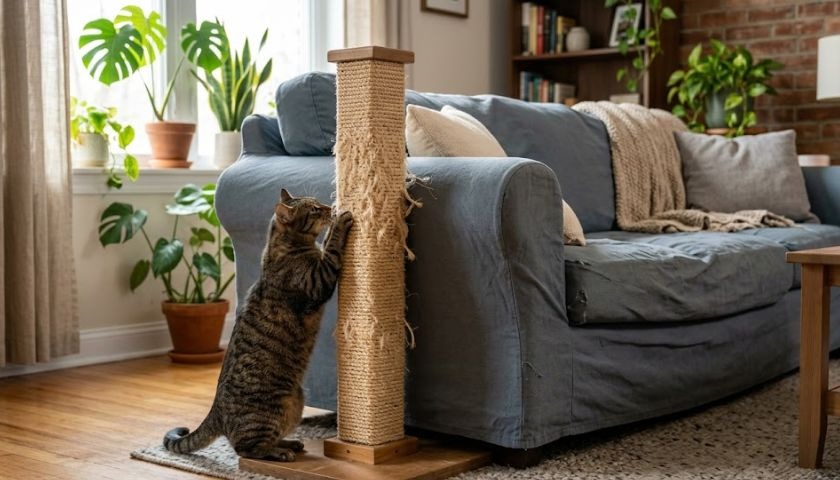
Repairing your couch is only half the solution. Without prevention, your cat may return to the same spot and undo your hard work within days.
Here are a few ways to help protect your couch over time:
If your couch is leather, repair the scratches and take steps to keep your cat from going after it again.
Staying consistent is important. Cats respond well to routine and environment changes, so giving them better options often reduces unwanted behavior naturally.

One of the cheapest and most effective ways to protect your couch after repairs is a homemade deterrent spray. Cats have an incredibly sensitive sense of smell, roughly fourteen times stronger than ours. Scents that seem mild to us can be overwhelming for them. Cats dislike citrus and vinegar, so both can help deter scratching without harsh chemicals.
Citrus Spray Recipe:
Vinegar Spray Recipe:
Before using either spray on your couch, test a small amount on a hidden spot first. Some fabrics and dyes can react to oils or vinegar, especially on lighter-colored upholstery or freshly repaired leather. If the test spot looks fine after a few minutes, you’re good to go.
A quick tip on application: you don’t need to drench the fabric to make it work. A light mist is enough to create a scent barrier that cats dislike. Spraying too much can leave residue or, with vinegar, a faint smell people may notice too. Spray lightly, let it dry, and reapply on a regular schedule for the best results. Over time, most cats learn to avoid the treated area on their own.
Can I use olive oil to fix my leather couch? Home remedies like olive oil won’t remove cat scratches. When you add any liquid to leather, the scratched areas will absorb the liquid. This can leave your leather furniture looking worse than when you started.
Does baking soda help remove cat scratches? No, baking soda doesn’t repair cat scratches either. Instead, it dries out leather furniture.
What is the easiest way to fix minor fabric pilling? Grab your sharpest scissors and a razor. Cut the longest threads off and try to get as close to the surface as you can. Use a razor to trim the upholstery until the surface smooths out.
How do you fix deep gouges in a leather sofa? Apply heavy filler, a sort of leather putty. Use a palette knife to spread the filler in a thin layer over the scratches. Allow the filler to dry for 20 to 25 minutes, inspect your work, and reapply an additional layer if needed.
Should I use a metal spatula to apply leather glue? No, use a plastic or rubber spatula instead.
How can I trim frayed threads on my couch without causing more damage? Trim any loose fibers by clipping with scissors as close to the base of the pilling as possible, being careful not to cut, puncture, or cause further damage.
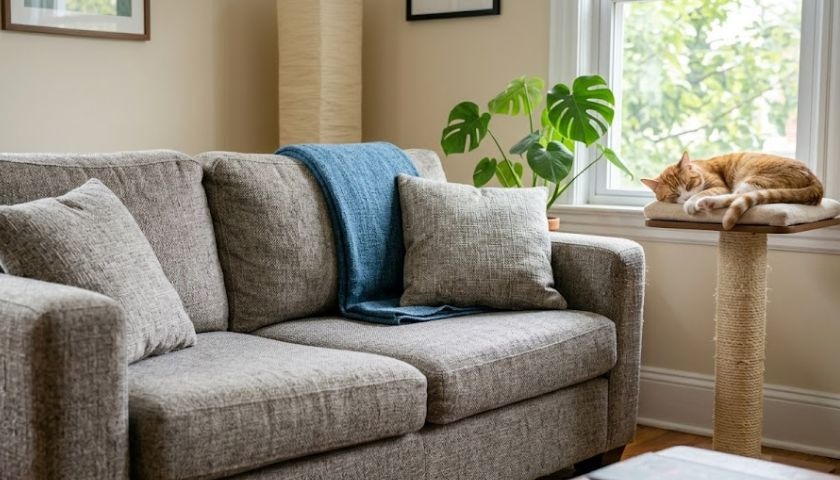
Fixing a scratched couch isn’t just about restoring furniture. It’s about making your home work better for both you and your cat.
Cats don’t understand furniture value. They understand texture, habit, and comfort. Once you see that, everything changes. Repairs become less about frustration and more about managing shared space.
When you combine proper repair methods with better scratching alternatives, your couch stops being a target. It becomes part of a calmer, more comfortable home for both you and your cat.