
The next time your cat yawns, take a good look. Behind that pink tongue is a mouthful of sharp, curved teeth built for one job: meat. Your house cat may nap on the sofa and beg for treats, but its mouth still belongs to a hunter.
Even though cats don’t hunt for food anymore, their teeth still play a big role in their health and comfort. Tooth pain doesn’t just hurt, but it also changes how cats eat, groom, and behave. Dental disease affects over 70% of cats by age three.
Understanding the number of cat teeth is the first step. Once you know what “normal” looks like, it’s easier to spot problems early and protect your cat from pain.
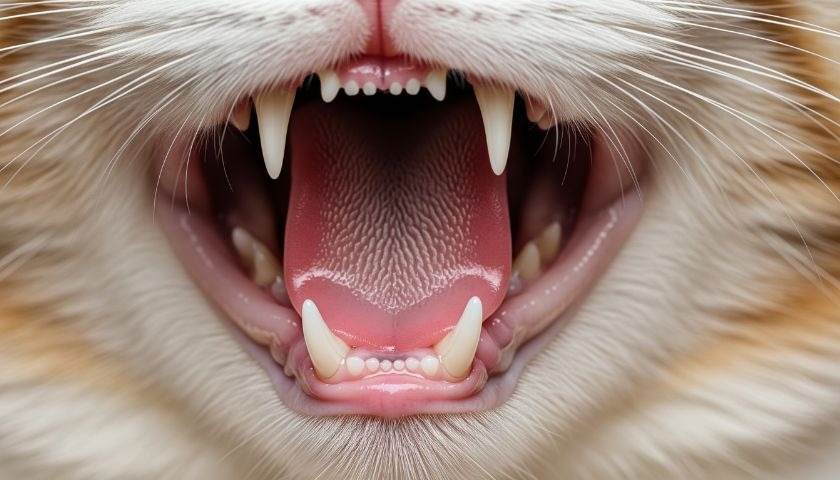
So, what is the magic number?
Adult cats have 30 teeth that stay in place. Each tooth is made to cut, hold, or tear. They don’t have flat grinding molars as people do. A cat’s teeth are serrated and pointed. They are tools for precise biting, not chewing.
Evolution shaped your cat’s mouth for efficiency. Unlike omnivorous humans with 32 teeth or dogs with 42, cats evolved as obligate carnivores. They don’t need flat molars for chewing grains or vegetables. Every tooth is built to support their meat-focused diet.
Kittens go through a teething journey like human babies, only faster. They start life toothless, then grow and later replace their first set of sharp teeth with permanent ones.
The Kitten Phase:
Kitten Teething Timeline:
By about 6 to 7 months, those milk teeth fall out, replaced by the permanent set of 30 adult teeth. Kittens often chew on everything, even your fingers, during this period. Give them soft chew toys to calm their gums and keep your hands and furniture safe.
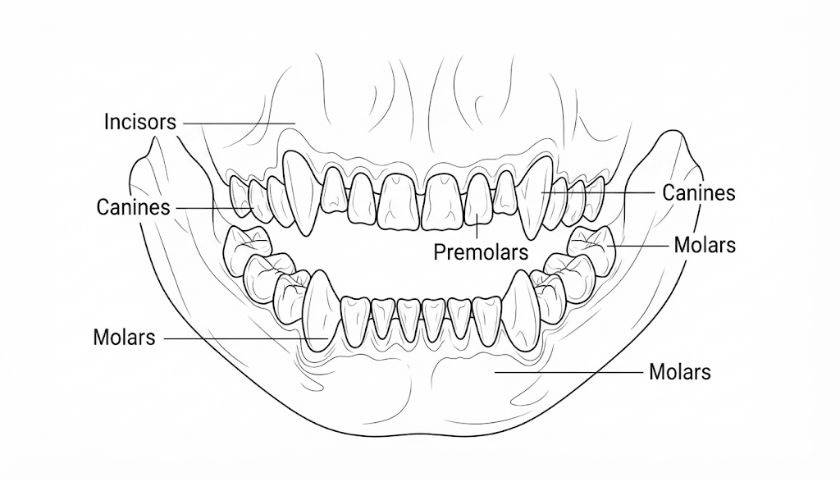
If you’ve ever wondered how many teeth a cat has, here’s a list of the 30 adult teeth and what each group does:
These are the little teeth in your cat’s mouth that are in front. There are six on the top and six on the bottom. Even though they look small, they do important work.
Cats use their incisors for delicate jobs like grooming their fur, nibbling out knots, and tugging at bits of food. You might notice your cat gently “picking” at something with these front teeth. Incisors also help with gripping prey or toys, but they are not strong enough for heavy chewing.
Your cat’s most noticeable teeth are the long, sharp fangs on the top and bottom. They are designed for puncturing and holding.
In the wild, these teeth pierce prey, but at home, they mostly bite toys or kibble. Canines also help cats defend themselves if needed. Because these teeth stand out, damage to a canine is so painful and often obvious when your cat eats or grooms.
Located just behind the canines, premolars line the sides of the mouth. Cats have three teeth on each side of their upper jaw and two on each side of their lower jaw. These teeth are specialized for shearing meat rather than grinding.
When your cat chews kibble, you’ll notice they tilt their head slightly. This helps them position food against the premolars so they can slice it into smaller, easy-to-swallow pieces. Premolars are also prone to tartar buildup because of their position, making them a common site for dental disease.
Your cat’s molars sit at the back of the mouth, with two on the top and two on the bottom. Unlike human molars, which are broad and flat for grinding, cat molars are sharp and narrow. They work like scissors, cutting food into smaller pieces.
Cats don’t chew the way humans do. They slice food with their molars and then swallow it. These teeth are small but important, and because they sit so far back, molar problems often go unnoticed at first.
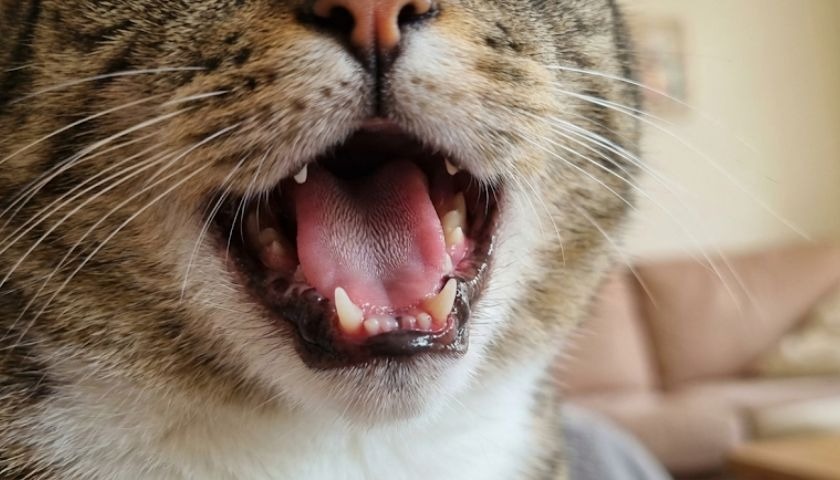
You might say, “Who cares if they lose a tooth? They have plenty left.” But that kind of thinking can be risky. The number of teeth a cat has is tied to their overall health. When a cat loses a tooth, it’s rarely just because they’re getting older. It usually means there’s a serious dental problem that’s been bothering them for a while.
Cats are masters at hiding pain. They continue to eat despite their sore mouth.
Here are the most common conditions that reduce the tooth count:
Since you can’t ask your cat if their tooth hurts, you have to play detective. If you notice fewer teeth than before, or you find a tooth on the floor, the problem is already advanced.
Watch out for these subtle red flags:
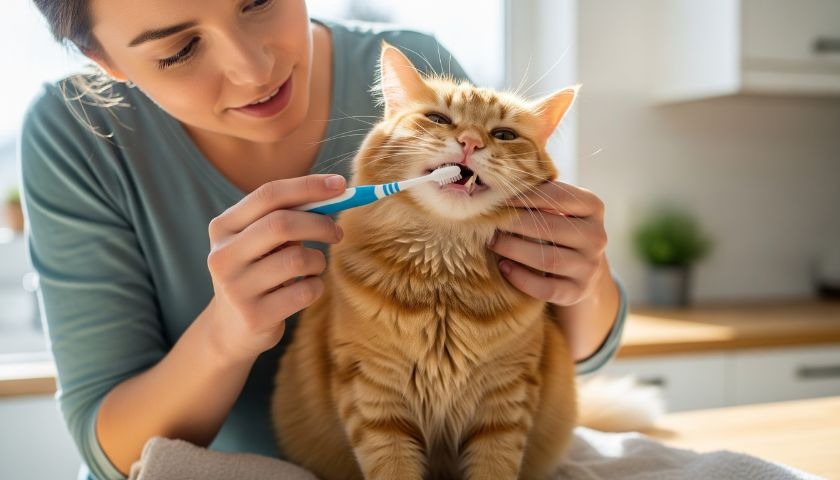
You don’t have to do everything at once to protect your cat’s teeth. Dental care works best when you build it slowly, especially with cats who hate change. Even small steps, like letting your cat lick toothpaste or brushing a few teeth, can help over time. What matters most isn’t perfection but consistency. A simple routine you can stick to will always help more than an ideal plan you never follow.
Yes, brushing a cat’s teeth sounds impossible. But it’s the most effective tool you have.
Start slow. First, let your cat taste the toothpaste. Then use a finger brush and gently work up to brushing. Aim for the outer surfaces of the teeth; you don’t need to force the mouth open.
Use an enzymatic toothpaste made for cats only. Human toothpaste is toxic to them.
These tools support brushing, not replace it.
Some toys use mesh textures to gently clean between your cat’s teeth while they chew, adding dental care to playtime.
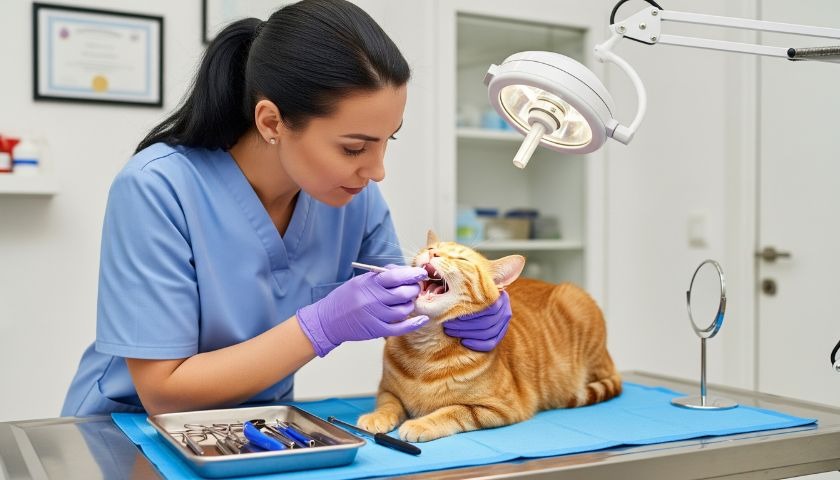
For your cat’s dental health, home care helps slow plaque and tartar, but can’t replace vet visits. The two work together, and skipping either one makes dental problems much more likely.
Veterinary cleanings are done under anesthesia. This allows full scaling below the gum line and dental X-rays.
No home routine can replace this.
Start yearly dental checkups when your cat turns one. Some cats, especially breeds prone to dental problems, may need professional cleanings more often.
A cleaning may feel expensive, but extractions, infections, and long-term medication cost much more in both money and stress.
Prevention is always cheaper than repair.

Now you know your feline friend has 30 remarkable teeth, each built for a purpose. Your job is to help keep them all healthy.
So here’s your quick homework for tonight: gently lift your cat’s lip and look inside. Are the gums a healthy pink or an angry red? Does the breath seem normal or surprisingly strong and fishy? Catching these small changes early can spare your cat a lot of pain and keep their smile healthy for years.