
Winter can come on quickly. One week, the air is cool and fresh; the next, a strong wind blows through the area. Most people go inside and turn on the heat, but community cats stay outside and deal with the cold. They can’t count on blankets, closed doors, or a thermostat. Every day is a fight to stay warm and safe when the temperature drops.
You know why it’s important to keep stray cats warm if you’ve seen one shivering outside on a cold night. A single person who cares can make a big difference. A simple shelter, dry straw, and regular food can make winter safer and more comfortable for outdoor cats.
You don’t need special tools or equipment to help. Simple actions in your yard or neighborhood can protect outdoor cats when winter hits. Once you learn how to keep a feral cat warm in winter, you’ll see it’s easier than most people think.

Cats hide discomfort well, but cold affects them quickly. Outside in winter, their bodies work constantly to stay warm. Their ears, paws, and tail lose heat first. To keep a cat warm in winter, give them a dry, sheltered spot and enough food for energy.
Outdoor survival is different from indoor life. An indoor cat can stretch out in a warm room, but a feral cat curls into a tight ball to hold in heat. That’s why a small, snug shelter works better than a large, open space. The warm air a feral cat creates needs to stay close to their body. Once you understand this, every decision about how to keep a feral cat warm in winter becomes simpler.
When you plan to keep cats warm in your yard or neighborhood during the winter, location is everything. Place shelters and feeding spots:
If you want to know how to keep a stray cat warm in winter in a busy area, think like a cat. Look for quiet, sheltered spots like covered porches, tucked-away decks, gaps beside garages, or space under stairs. When you’re learning how to keep a feral cat warm in winter, always aim for dry, draft-free, and calm.
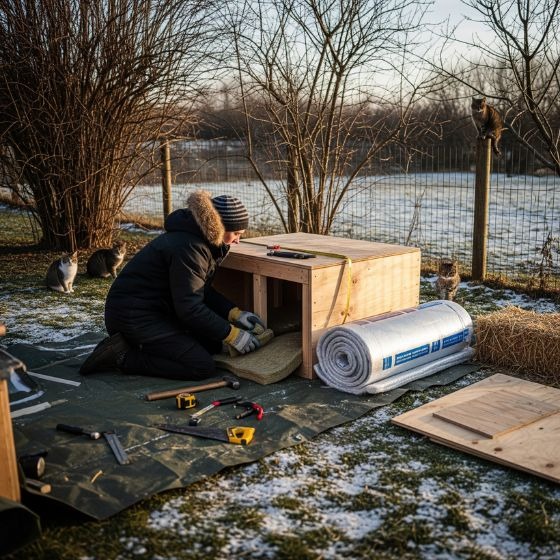
If you want to master how to keep a feral cat warm in winter, a good shelter is your priority. A simple, sturdy shelter keeps wind, snow, and rain off the feral cat and holds in their body heat. You can build one from basic materials or buy a ready‑made outdoor cat shelter.
Here’s a simple way to build a winter-proof shelter that helps keep an outdoor cat warm in the winter:
As you repeat these steps, your shelters will keep feral cats tight, dry, and protected in winter. Even one well-placed shelter can warm a small colony, and a few more give cats extra safe places.
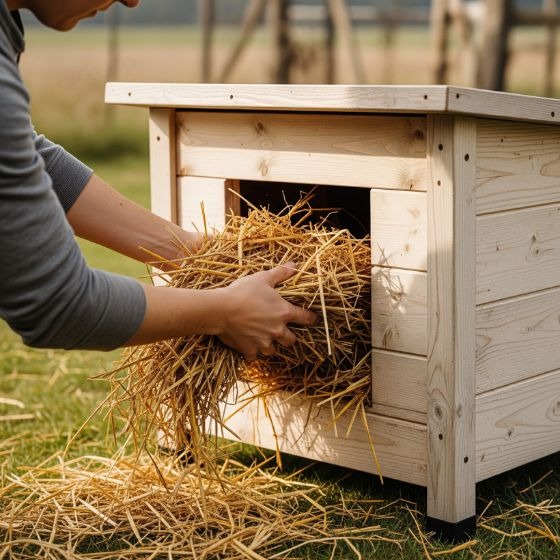
Once the shelter is up, what you put inside matters as much as the walls. Good bedding keeps the cat off the cold floor and gives them something to burrow into. If you care about keeping a stray cat warm in winter, choose their bedding carefully.
Not all materials are safe in cold, wet weather. Avoid:
These materials soak up moisture. When a wet cat comes in, these materials stay damp and can freeze, making the shelter even colder. If you want to keep a stray cat warm in winter safely, leave soft, cozy items indoors, not in shelters.
Instead, choose straw, not hay. Straw is hollow and insulates by trapping your feral cat’s body heat in small air pockets. It also sheds moisture better than fabric, so it dries faster and stays usable longer. To support how to keep a feral cat warm in the winter with straw:
You can add a reflective emergency blanket under the straw if you have one. This bounces body heat back toward the cat. Straw should be the main bedding if you want to keep outdoor cats warm in winter safely and easily.
When you look inside a well‑set shelter, you should see dry straw, no pooled water, and no heavy blankets. That simple picture sums up one of the most effective ways to keep a feral cat warm in winter.
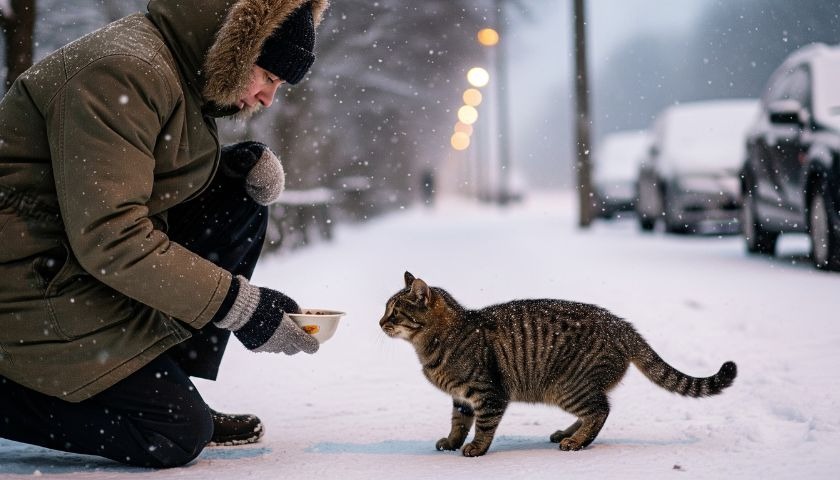
Freezing weather forces a cat’s metabolism into overdrive. Their bodies burn extra calories just to maintain a normal core temperature.
A hungry animal freezes faster than a well-fed one, so winter feeding routines need extra care. To keep cats warm in winter, adjust their food and feeding stations:
Dry kibble works well because it doesn’t freeze, allowing you to leave bowls out all day. Wet food adds moisture and fat but quickly turns to ice.
Try warming the wet food slightly in the microwave before taking it outside. The warmth offers quick comfort and slows freezing. Look for high‑quality kitten food or other high‑calorie diets.
These options add extra fat and protein. This nutrition gives community cats the fuel they need to handle the cold. Always clean up spilled food, so you don’t attract wildlife to the feeding area. Good nutrition is a key part of keeping a feral cat warm in the winter. When you get feeding schedules right, you solve a big part of that challenge.

Providing liquid water becomes quite difficult when temperatures plunge below freezing. Felines eating dry kibble need plenty of fresh water to stay hydrated.
Snow is not a safe substitute for water. Eating it lowers body temperature and can lead to dangerous chills. Find ways to keep liquid water available as often as possible. Knowing how to keep a feral cat warm in the winter also means managing their water well.
Consider investing in solar-heated water bowls. These clever devices use the sun’s rays to keep the water just above freezing.
If you lack direct sunlight, use microwavable warming discs. Heat these round discs in your kitchen and place them under a thick bowl outside. They radiate heat for hours, stopping ice from forming.
Try a simple DIY setup to keep water from freezing too quickly. Nest a smaller plastic bowl inside a larger one, then pour warm water into the space between them. The warm outer layer acts like a buffer, helping the drinking water inside stay liquid for a few extra hours.
You can toss a few ping-pong balls into the water bowl. The wind blows the balls around, keeping the surface moving and delaying freezing. Unfrozen water remains a key trick for keeping a feral cat warm in winter.
The type of bowl you use matters immensely. Never use metal bowls, as a wet tongue sticks instantly to freezing metal, causing severe injuries.
Choose thick plastic or heavy ceramic bowls. Thick materials insulate the water much better than thin plastic.
Place water stations where they work hardest for the cats. Set bowls in sunny, wind‑sheltered spots, where the sun helps slow freezing. Check the water twice a day, break out any ice, and refill with fresh, lukewarm water. Regularly checking on a feral cat is a simple but important way to help keep them warm in winter.
Helping outdoor cats stay warm also means watching for hidden dangers. When people search for “how to keep a stray cat warm in the winter,” they often overlook safety risks.
Cold weather makes cats search for any warm, sheltered space they can find.
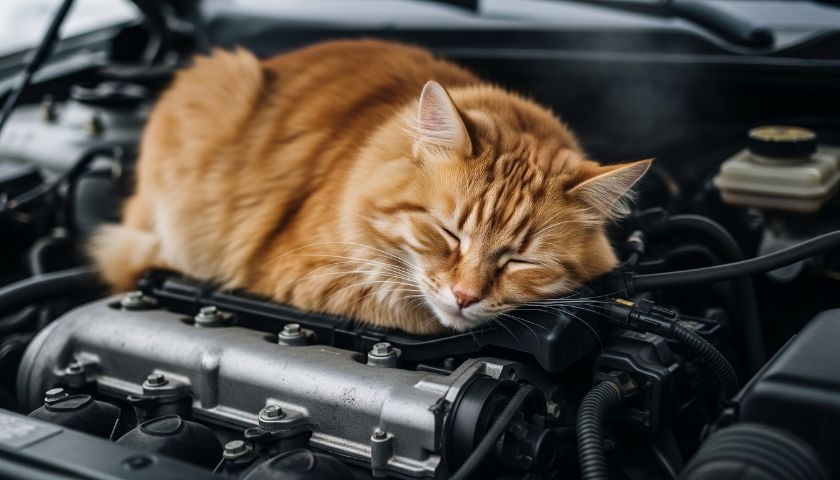
One of the most common cold‑weather dangers involves parked cars. On frigid days, cats may crawl under the hood to sleep near a warm engine. If the car starts while they’re hiding there, they can be seriously hurt.
Before you start your car on cold mornings, tap or knock on the hood. That quick habit gives hidden cats a chance to escape.
Antifreeze is another thing that can be dangerous. The slightly sweet taste attracts curious animals, but even a small amount is poisonous and can kill them. Stray cats need to be protected from these hidden poisons just as they need winter warmth.
Check driveways and garages often for spills, and clean them up right away. Choosing pet‑safe antifreeze adds protection and lowers the risk for curious outdoor cats.
Ice melt products can also be a threat. Some formulas contain chemicals that irritate paws or make cats sick if they lick them off their fur. Choosing pet‑safe ice melt helps protect both feral and family pets as they move through your yard.
Safety awareness makes every effort to keep a feral cat warm in winter works better. Warm shelters, good food, and safer surroundings all work together to protect outdoor cats.
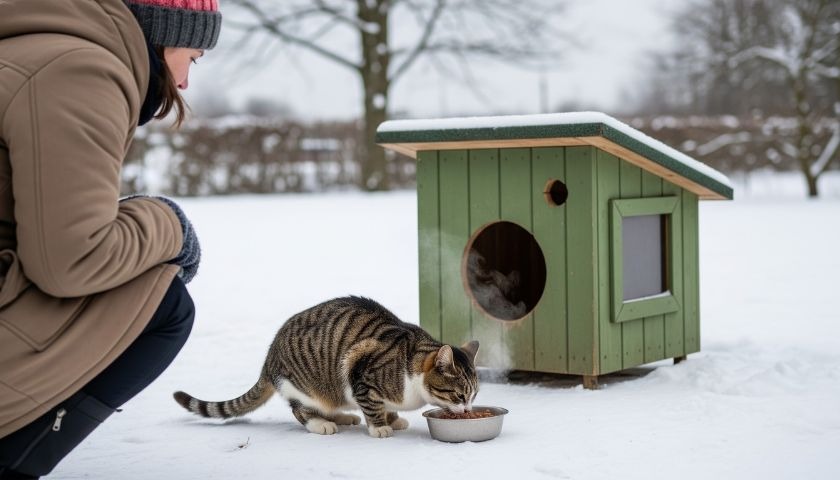
Every time you step outside into the cold now, you may see your street a little differently. You’ll think about the shy eyes under the porch or the quick shadow along the fence line. After learning how to keep a feral cat warm in winter, you can’t ignore the quiet lives on your block.
You can use what you know about keeping an outdoor cat warm in the winter for more than one shelter. Talk with your neighbors, share ideas, and encourage them to help watch, feed, and protect the community cats nearby. You may eventually teach someone how to warm a stray cat in winter.
You may not change the world, but for a single feral cat huddled against the wind, you are the world. When you act, speak up, and care, you show that one person, one yard, and one shelter can save a life.