
Lift your cat’s lip for a moment. You’ll see tiny front teeth lined up like grains of rice. Behind them are sharp fangs made for serious work. Many people never stop to wonder, “How many teeth do cats have?” But that number can tell you a lot about your cat’s health.
Cats use their teeth for eating, grooming, and even acting out their natural hunting instincts. They also hide mouth pain well. By the time a cat eats less, their mouth may have been bothering them for weeks. That’s why knowing how many teeth cats have—and how they’re supposed to look—is an important part of caring for your pet.
Let’s look at what’s normal for cat teeth. We’ll also check how they change with age and go over the warning signs to watch for.
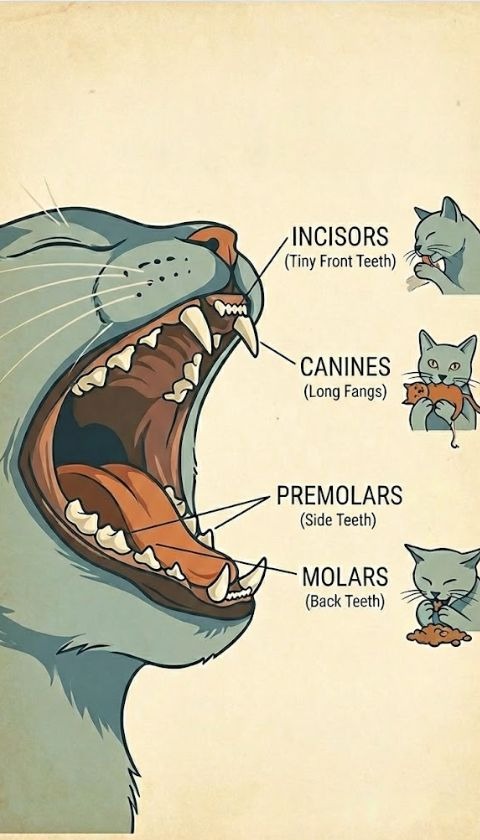
Check out the main types of teeth in a cat’s mouth:
In the wild, cats use their teeth to catch and eat prey. At home, your cat uses its teeth to crunch kibble, chew treats, and groom their coat. They may also use their teeth gently while playing or exploring new objects, which is why every tooth must stay healthy and strong.
Each tooth has a job:
A cat’s jaw only moves up and down, not side to side like ours. That means their teeth act more like scissors than grinders, making them perfect for slicing. This design explains why cats tend to gulp food rather than chew it into a paste as humans do.
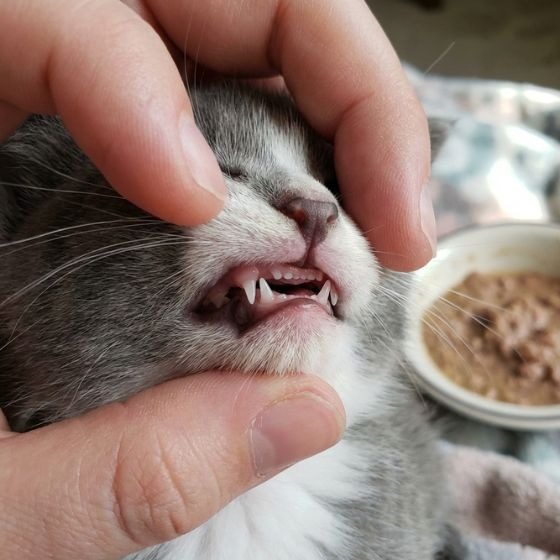
Kittens are born with bare gums. Newborns rely entirely on their mother’s milk and don’t eat solid food. Toothless gums make nursing safer and more comfortable for the mother, and they prevent tiny teeth from scratching sensitive skin.
Around weeks two to four, tiny baby teeth (deciduous teeth) start to push through the gums. The incisors appear first, followed by the small canines, then the baby premolars. By about week six, this process is usually complete. At that point, the kitten can eat soft, wet food, and you can start offering specialized kitten meals.
Most kittens develop 26 baby teeth before their adult teeth start to come in. These teeth are temporary, yet they play an important role in helping kittens learn to eat, play, and groom. If any baby teeth look broken, crooked, or unusually discolored, it’s worth mentioning to your vet during a routine visit.
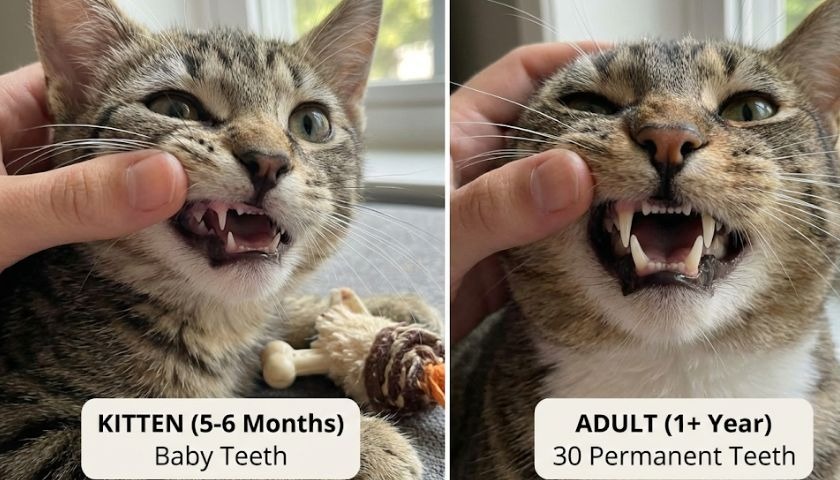
So, how many teeth does a cat have after it grows up? Between five and six months old, kittens start swapping their baby teeth for permanent ones. By their first birthday, that full set of 30 adult teeth should be settled in.
Once the adult teeth come in, that’s it. Cats get one set for life, so keeping them clean matters more than most pet owners realize.
During this transition from baby teeth to adult teeth, some cats experience mild discomfort. They may chew more on toys, drool a bit, or seem mouth-sensitive for a short time. Offering safe chew toys and scheduling regular checkups helps make this stage smoother and keeps those 30 teeth on track.
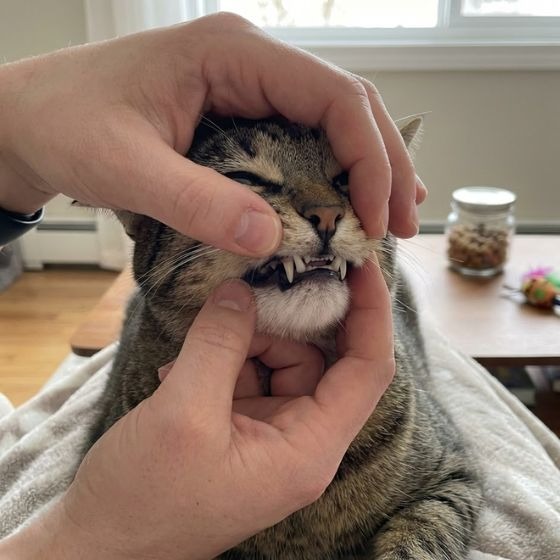
Curious how many teeth your cat has right now? You can take a quick peek safely at home. A calm, quiet environment helps, and it’s easier if you turn this into a short, positive routine.
If your cat squirms or refuses, don’t push it. Painful teeth or sore gums can make them defensive. Try again later, or let your vet take a look. You can also slowly train your cat to accept mouth handling by pairing gentle lip lifts with treats and praise.
If you ever notice a gap where a tooth used to be, a tooth that looks broken, or gums that appear very red or swollen, it’s time to book a dental check. Knowing the number of cats’ teeth makes it easier to spot when something is missing or out of place.
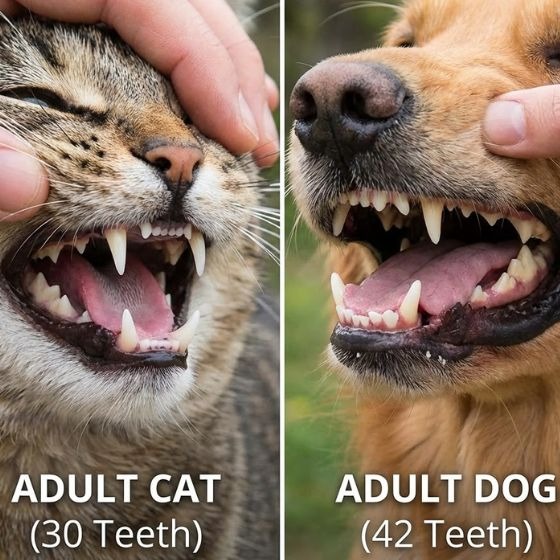
A quick comparison: how many teeth does an adult cat have versus a dog? Cats have 30, while dogs have 42.
Dogs need more teeth to chew lots of food. Cats are built for meat. They don’t grind or munch the way dogs do. Their smaller set of teeth suits a narrow, powerful jaw designed for slicing prey, not slowly chewing kibble. This is why most cats prefer small, bite-sized pieces of food and often swallow after just a few crunches.
Because dogs have more teeth, they also have more surfaces where tartar can build up. Cats, with fewer teeth, still face serious dental issues, but those problems often show up differently. Understanding these species differences helps explain why cat dental care can’t just copy what works for dogs.
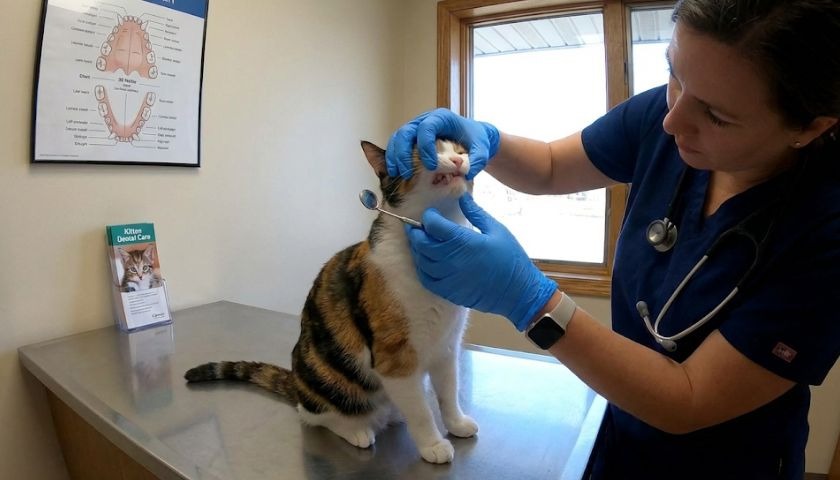
Thirty adult teeth should be fully in place. If your young cat has fewer than 30, ask your vet to take a look. Some teeth may stay trapped under the gums. Others may grow in the wrong direction.
The first year is important for dental health. As soon as adult teeth appear, plaque begins to form. If it’s not removed, it hardens into tartar that sticks to the teeth, presses against the gums, and can lead to infection. Early cleanings and at-home brushing can help keep those 30 teeth in good shape.
Routine exams during kittenhood give your vet a chance to catch crowded teeth or bite problems before they cause long-term damage. Knowing how many teeth your cat should have by age one makes it easier to spot when something isn’t right.

Protect your pet’s smile with these easy habits:
You play a key role in keeping all 30 of your cat’s teeth healthy. Plaque starts to build up after every meal and quickly hardens into tartar, which can cause gum disease and eventually tooth loss.
Bacteria attack the gum line, and the gums become red and inflamed. The bone holding the tooth weakens, and the tooth may fall out. Infections in the mouth can even affect the rest of the body, including the heart, kidneys, and liver.
In a perfectly healthy mouth, cats keep all 30 teeth, but many lose some due to poor dental care. Regular brushing helps break this cycle and protects your cat’s smile.
Older pets face different dental challenges. A painful condition called tooth resorption breaks down the tooth from the inside out, which causes severe pain. Many owners of senior cats wonder how many teeth their pet has left after dealing with this disease. The answer is often fewer than 30, and some cats lose all of their teeth.
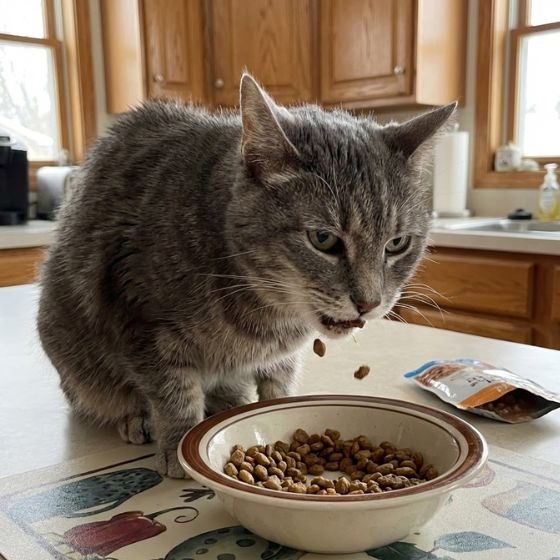
Missing teeth can change how your cat eats, especially dry kibble. You may notice them dropping food, chewing on one side, or walking away from the bowl. Bad breath is another warning sign and often points to infection or gum disease. Some older cats may also groom less because their mouths hurt, leading to a dull or matted coat.
If you spot any of these signs, schedule a vet visit as soon as you can. Your vet can find the cause, treat any pain or infection, and help you plan the best diet.
The good news is that even with missing teeth, most cats can still live happy, comfortable lives. Many learn to swallow small pieces of kibble whole and usually do very well on wet or soft food. With the right care, a cat with fewer teeth can eat, play, and enjoy life just as much as one with a full set of 30. What matters most is not how many teeth are left, but how healthy and pain-free your cat feels.

Cats rarely show pain. By the time they skip a meal, the problem’s usually serious. Now that you know how many teeth cats have, you’re one step closer to catching little issues before they turn big.
Tonight, peek at your cat’s gums. A simple one-minute check—or better yet, a quick brush—can save those teeth for years to come. Small steps can make a big difference in your cat’s comfort and overall health. When you remember that adult cats should have 30 teeth, you’ll be better prepared to protect every single one.