
Have you ever woken up at three in the morning to the sound of your cat making extremely loud noises? Or maybe your usually calm pet suddenly paces around the living room and ignores his favorite toys?
When this happens, it’s normal to wonder about his behavior. You might ask yourself, “How long are male cats in heat?” Many people ask this when their cat drives them crazy.
The answer depends on a few surprising factors. We’ll explain his body’s changes, debunk feline mating myths, and show what’s normal and when to call a vet. Our goal is to give you the facts you need to help calm your cat and your home.
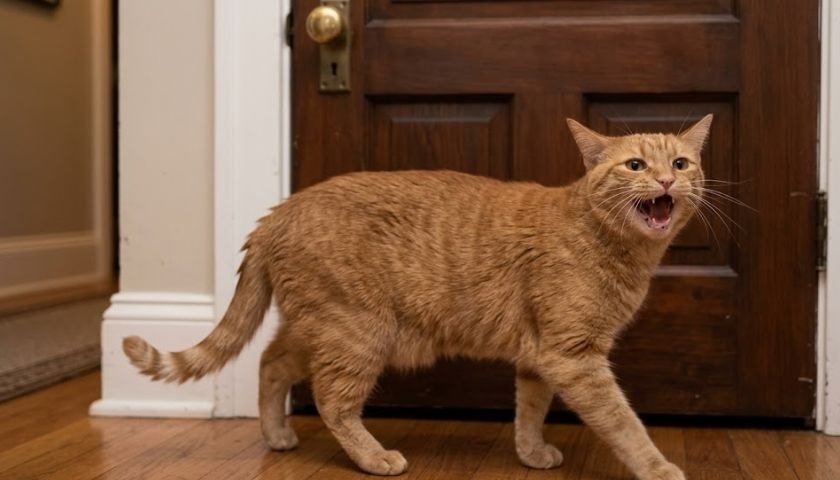
When your male cat becomes loud, restless, and obsessed with going outside, you may think he’s “in heat”. The behavior can look so extreme that it seems like part of a repeating cycle.
But male cats don’t go into heat. That’s something only female cats experience—a heat cycle, or estrus, when their bodies get ready to mate.
Male cats are different. Once they reach sexual maturity—usually around five to six months old—they don’t cycle in and out of readiness. Instead:
This can be surprising if you expected your male cat to have an on-and-off schedule like a female. Instead, his body works more like a switch that flips whenever the right signals appear.
What you’re seeing isn’t a timed phase but a reaction. Your cat is responding to signals in his environment, especially scent. That’s why the behavior feels so sudden and intense.
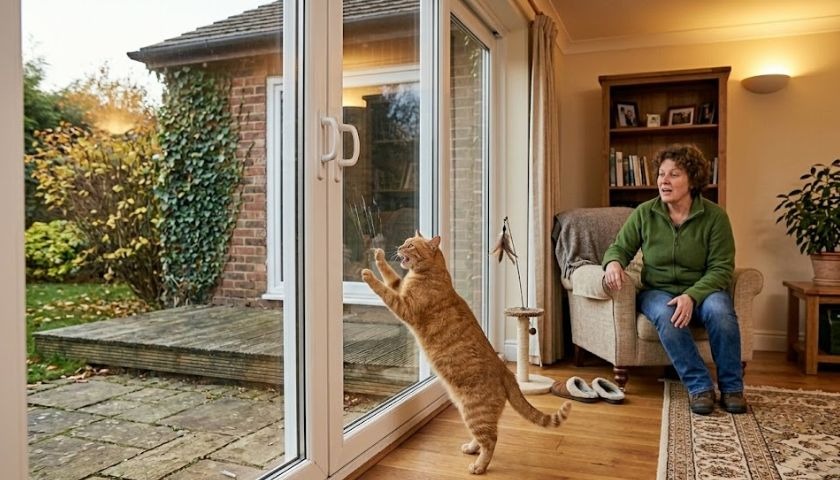
Because male cats don’t have a heat cycle, their behavior doesn’t follow a set timeline. Instead, it depends on outside triggers:
This means your cat’s loud cries and restless pacing can last for days or even weeks if there’s a female in heat nearby. In some neighborhoods with many unneutered cats, this can feel almost nonstop.
You may notice things are worse in spring and early summer, when more females go into heat. This seasonal pattern can make your cat seem like he’s always in “mating mode,” even though he’s not.
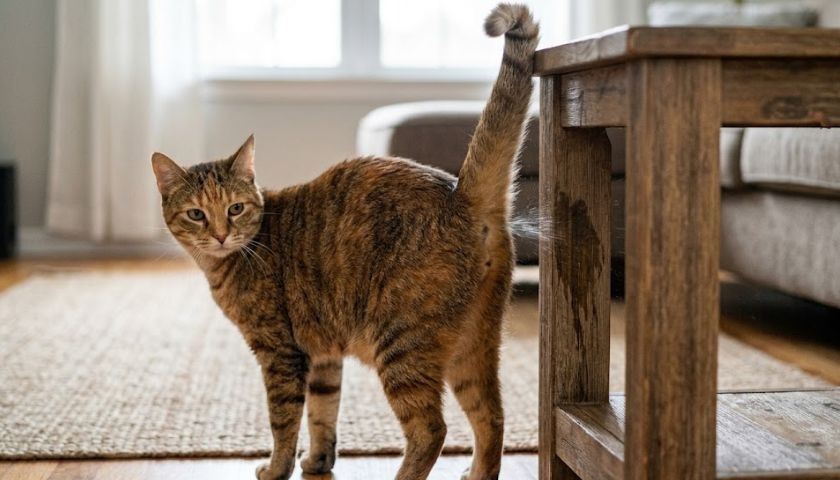
You may wonder how long male cats are in heat when your cat suddenly changes because a female is nearby. Instead of his usual calm self, he becomes completely focused on mating and even ignores his favorite treats.
You’ll notice a few clear behaviors during this stressful time:
He sprays urine to warn other males to stay away and to let females know he’s nearby. You’ll spend a lot of time cleaning these spots because the smell is very strong and can linger for days. Regular soap doesn’t remove the odor, so you’ll need enzyme cleaners to break it down. Over time, he may return to the same spots again and again, turning them into scent “hotspots.”
His aggression makes the whole house feel tense. He may swipe at your dog or hiss when you try to pet him. He doesn’t hate you; he’s overwhelmed by his own instincts. Even small changes—like walking past his favorite window—can set him off when he’s already keyed up.
Knowing how long male cats are in heat can make this period easier to handle. You can give him space and protect your other pets from sudden mood swings. His body is on high alert, so he may bite if you try to pick him up quickly. Read his body language—a stiff tail, wide eyes, and flattened ears—to know when to back off and let him calm down.
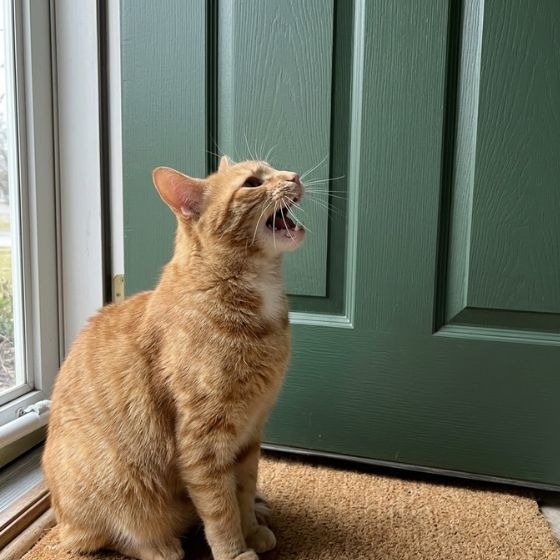
When he smells a female, his voice changes a lot, which may make you wonder what a male cat in heat sounds like. You’ll hear deep, harsh cries and nonstop yowling meant to attract a mate from far away. These sounds can carry across the neighborhood because he wants every nearby female to hear him and know he’s strong.
The cries can sound painful, so many owners check for injuries but find no physical harm, just frustration. His calls get even louder when he spots another male outside, screaming to show dominance and defend his territory.
Punishing him won’t stop this hormone-driven noise; it only adds stress. These intense vocalizations can happen every day, disrupting calls and startling guests. The constant crying quickly wears down your patience. Try closing the blinds to block his view or playing music to drown out outside sounds.
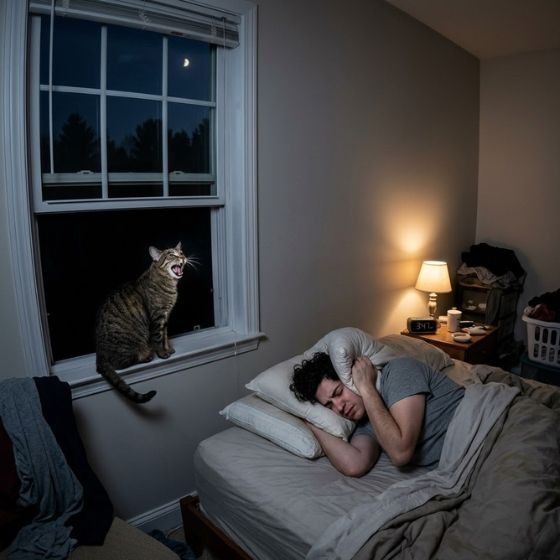
Cats are naturally more active at night, so you’ll hear the most noise after dark. Instinct drives this behavior, so the noise usually peaks when you’re trying to sleep.
At night, traffic stops and people go inside, so the quiet air lets sounds travel much farther. He uses the quiet night to call loudly, letting females hear him better without daytime noise.
You wake up several times, try to cover your ears or put him in another room, but the yowling continues. He naps all afternoon, saving his energy for nighttime yowling at the glass door into the dark.
Severe lack of sleep leaves you exhausted at work the next morning. His loud calls carry over fences, waking your neighbors and adding stress when they complain.
Since you can’t get quiet, you look up how long male cats are in heat, hoping for a solution. The dark hours bring out his strongest instincts.

You see your cat pacing back and forth, meowing all evening loudly. He moves between the window and the back door, unable to settle on the couch from pent‑up energy and frustration.
He senses a nearby female he can’t reach and scratches the door frame and blinds, desperate to get outside. He seems obsessed, pacing around the living room, burning calories, and even losing weight because he forgets to eat.
When you offer his favorite toys or try to pet him, your cat ignores you and goes back to pacing. You keep asking how long male cats are in heat because you miss your relaxed boy and hate seeing him exhausted. You wish you could simply turn off his instincts.
You must watch the doors because he waits by the entryway, ready to bolt outside when you open it. If he escapes, he could cross busy roads chasing a scent or suffer serious injuries fighting other males.
Keeping him safe inside becomes a daily chore, proving that knowing male cat heat cycles isn’t enough. His constant pacing reveals how trapped he feels indoors.
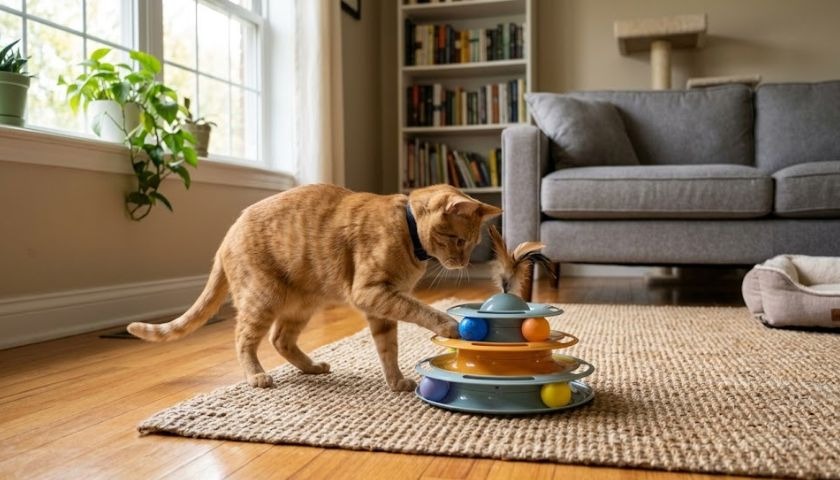
You can make things a bit easier, but you can’t completely stop this behavior without fixing the root cause. In the short term, these steps can help:
These steps can make your home more manageable, but they won’t fully stop the behavior. In the end, the question isn’t really how long male cats are in heat. The real issue is that your cat is ready to mate 24/7.
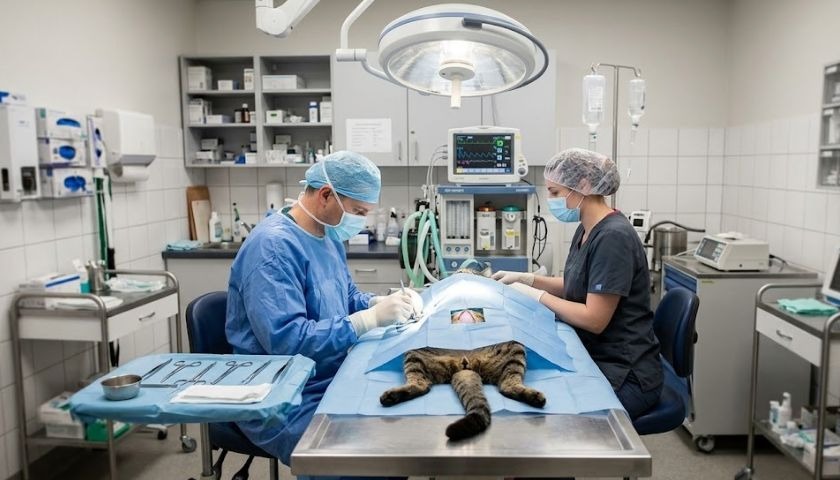
If you’re dealing with this situation constantly, there’s one solution that consistently helps: neutering. It reduces the hormones that drive this behavior. After your cat recovers, most males show the following:
Neutering also helps protect your cat’s health and safety. It lowers the risk of some diseases and reduces injuries from roaming and fighting. Many owners notice their cats become calmer overall, not just better behaved.
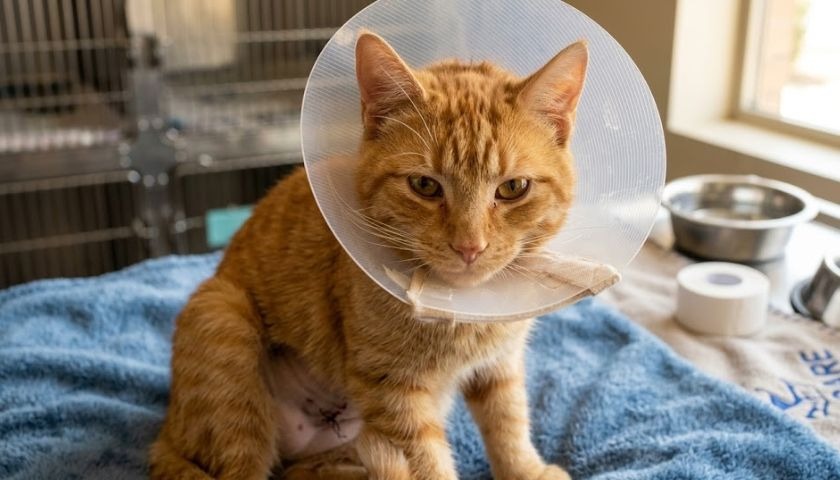
Living with a male cat during mating season can test your patience. The constant yowling, spraying, and escape attempts are stressful for both of you.
The most effective solution is neutering. It reduces these urges, giving your cat a calmer, healthier life and restoring peace to your home.
You have the power to stop the endless cycle of frustration. Consider booking an appointment with your vet today to give your companion the comfort and calm he deserves.