
It’s enough to drive you crazy: you’re ready for bed, then you hear your cat whining at night again. You’re exhausted, frustrated, maybe even a little desperate for rest, but know that you’re not the only one.
Plenty of pet owners end up losing sleep because their cats decide to get vocal in the middle of the night. You just want your cat to settle down so you can rest, but at the same time, you genuinely want to help.
If you keep hearing your cat whining at night, chances are they’re trying to tell you something. Most cats vocalize because they have a need, whether it’s hunger, discomfort, or a call for attention. So, pay attention to what your cat is doing; you’ll start to understand what they need and how to help.
Figuring out the root of their whining is the first step to peaceful nights for both of you.
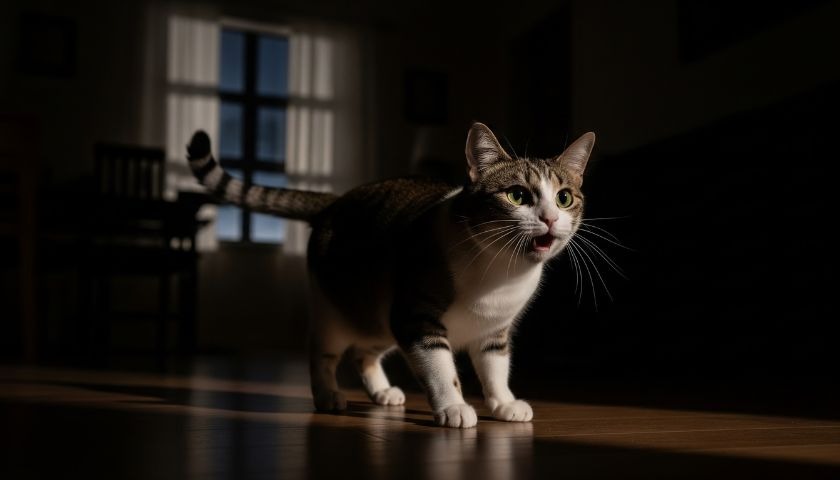
Cats are most active at dawn and dusk. Their natural schedule doesn’t match ours. When it’s dark, their instincts kick in.
They might be in the mood to hunt, play, or watch their surroundings. If they don’t have a way to burn off that energy, they might end up whining instead.
Sometimes, your cat just wants your attention. If you respond every time they cry, they learn that making noise gets your attention, so they’ll keep doing it.
Try waiting a moment before reacting, or gently redirect their focus with a favorite toy. It can take patience, but changing your reaction helps break this habit over time.
If you suddenly hear your cat whining at night, call the vet and book an appointment right away. Cats are experts at hiding pain or illness, and increased vocalization can be the only sign something’s wrong. Before assuming your cat is just acting up, rule out health problems so you both get a good night’s sleep.
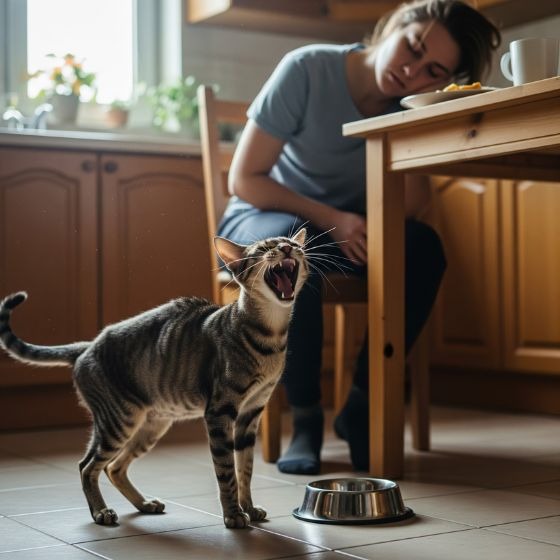
Hyperthyroidism is a common condition in older cats that can cause them to meow much more at night. With this condition, their thyroid gland is overactive, which causes their whole body to speed up. This makes them always hungry, thirsty, and jumpy.
They might seem confused or irritated and cry out for no clear reason. If your cat is eating more than usual but still losing weight, hyperthyroidism could be the cause. The good news is that medicine can help.
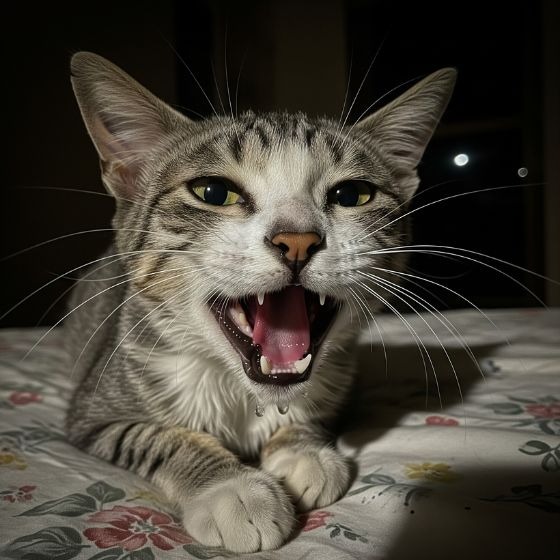
Kidney disease is also common in older cats. It can raise their blood pressure, which affects how they feel and act. This can make them restless at night and keep them from sleeping, so they start yowling instead.
They might even feel sick or just not themselves. The right food and medicine can help your cat, and you can get a more peaceful night. The sooner you catch kidney problems, the easier it is to help your cat feel better.
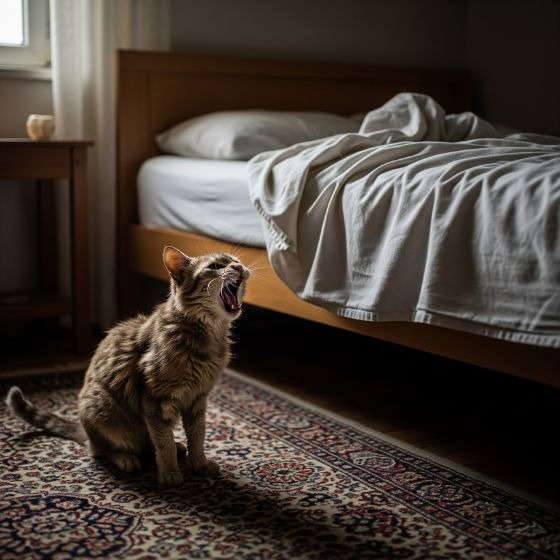
As cats get older, their joints can become stiff and sore. Moving around or jumping onto the bed gets harder. They might whine because they’re uncomfortable or can’t reach their favorite spot to sleep.
Joint pain can worsen at night, especially when the temperature drops. You might not notice your cat limping, but their crying is a sign that they’re uncomfortable. Pain management can make a huge difference in their quality of life.
If your kitty is healthy, a cat whining at night is usually a behavior issue. When cats are missing something in their routine or environment, they let you know, often by being loud at night. They have strong feelings and needs, and if something’s off, you’ll hear about it.
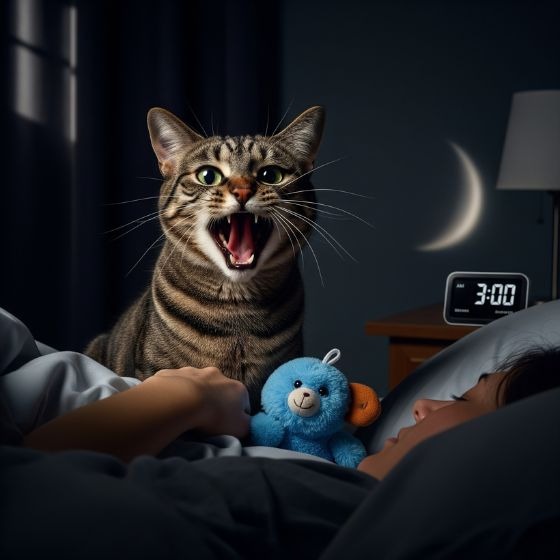
Indoor cats spend a lot of the day napping while we’re out. By the time we get home, we’re tired, but they’re full of energy and ready to play. If they don’t get a chance to use up that energy, they’ll let you know. Usually, this means being noisy at night.
Cats need things to do, both for their bodies and their minds. If they get bored, they’ll wander around making noise to get your attention or hoping you’ll play with them. Their cries are really just a way of saying, “Hey, I need some attention!”
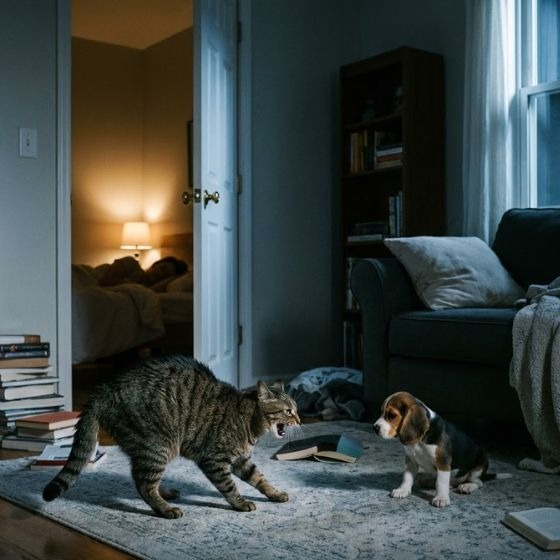
Big changes at home, such as a new pet or moving furniture, can make your cat feel nervous. They might start meowing more when it’s quiet at night because they’re stressed. Creating a steady routine and a calm space can help your cat feel more secure.
Sometimes, when your cat feels anxious, they might pee outside the litter box. They do this because they feel uneasy in their home. Give your cat a quiet place to relax and stick to their routine.
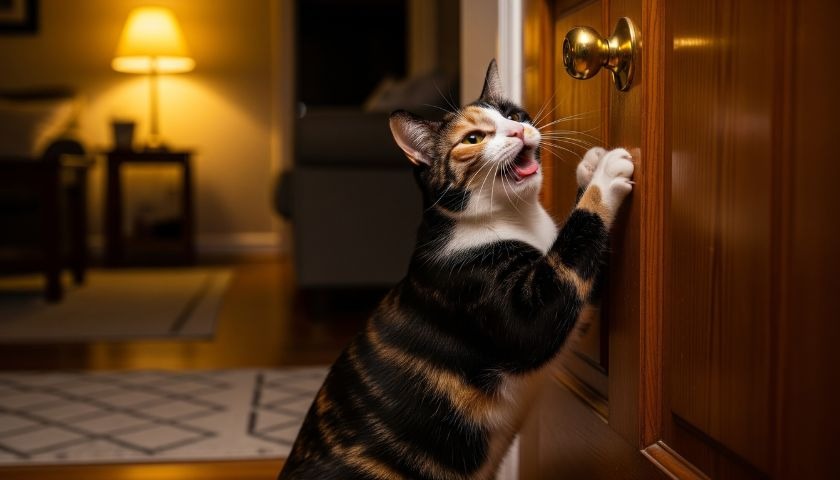
If your cat isn’t spayed or neutered, the reason for their nighttime whining is probably hormones. The urge to mate is intense, and it can make them cry out, especially at night. They’re just following their instincts to find a mate nearby.
Unspayed females will yowl to announce they are ready to mate. This sound is distinctively loud, persistent, and can sound like they are in pain.
Male cats will also whine and pace if they sense a female nearby. They get restless and try to go outside. This behavior will keep happening as long as they have the urge to mate.
This behavior happens every time a female cat goes into heat and will recur until she is spayed. The only way to stop this for good is to have your cat spayed or neutered. Call your vet to schedule a spay or neuter appointment for your cat. This will reduce nighttime whining and help you and your cat enjoy better sleep.
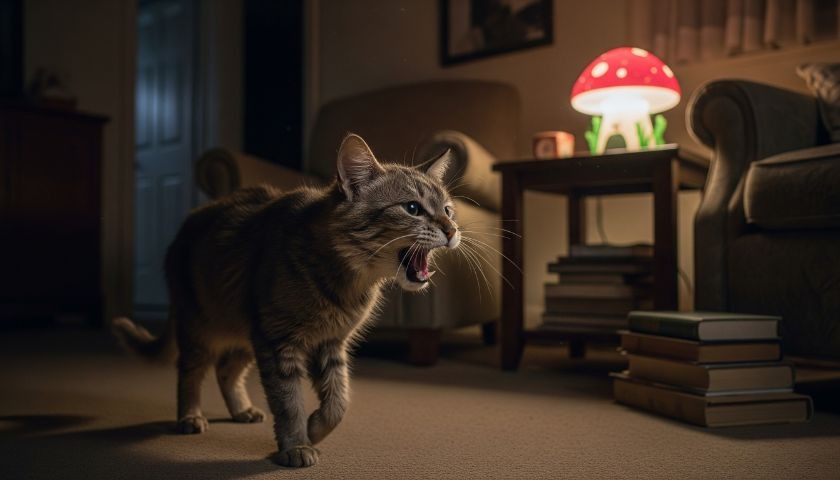
Just like humans, older cats can get dementia, called Feline Cognitive Dysfunction (FCD). This affects their memory and routine, and can cause them to become confused or restless at night.
If your senior cat cries or seems lost in the dark, they could be feeling scared or confused due to this condition. Ask your vet about ways you can help, such as using nightlights or making a steady daily routine for your cat. With your love and support, and your vet’s help, you can make your cat’s life easier.
It takes time and a consistent plan to fix this problem. You can’t just hope the noise will stop or yell for quiet. Instead, focus on changing your cat’s routine and what they expect at night.
If you want to stop your cat from whining at night, you’ll need patience and a clear plan. Here are some strategies you can try that really work:
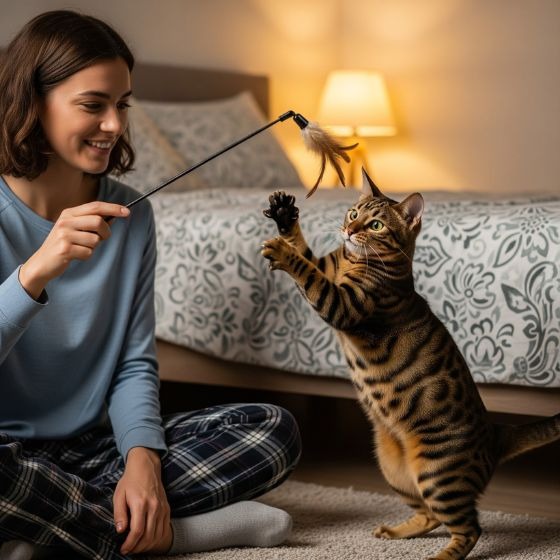
Spend 15 to 20 minutes playing with your cat before you go to bed. Use a wand toy to help your cat run and jump during playtime. This will help them burn energy and be ready to sleep when the lights go out.

Feed your cat their main meal right after playtime. A full belly will help them feel sleepy and ready for bed.
Don’t feed your cat as soon as you get up. If you do, they’ll start waking you up earlier to get food. Instead, wait until you’ve had your coffee or taken a shower before feeding them.
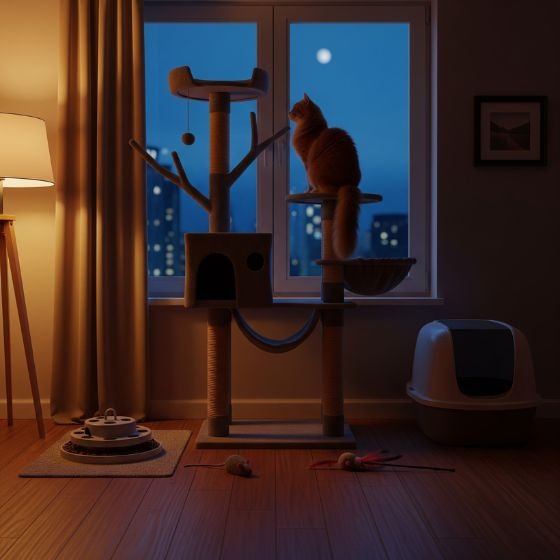
Give your cat something to do at night that doesn’t need your involvement. Set out puzzle feeders or treat-dispensing toys before bed to keep them busy and reward them while you sleep.
Set up a soft perch near a window so your cat can watch outside at night. This keeps them entertained and less likely to wake you.
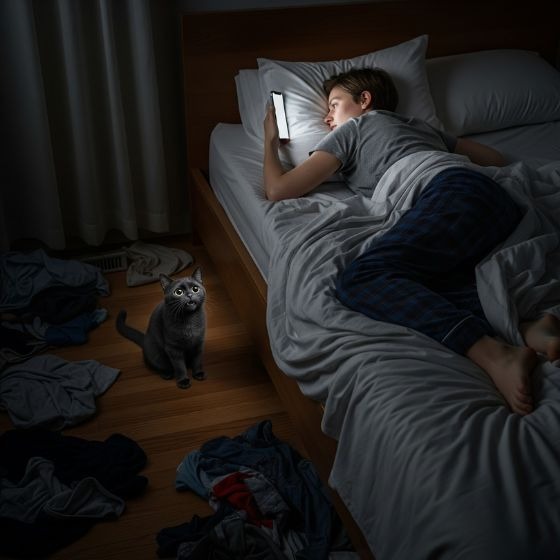
This part is tough, but it’s important: when your cat whines at night, do not react at all. Don’t yell, don’t get up, and don’t feed them.
Stay consistent. Even giving your cat negative attention, such as scolding or getting up, can worsen the whining. Stick with it, and your cat will learn that whining doesn’t work.
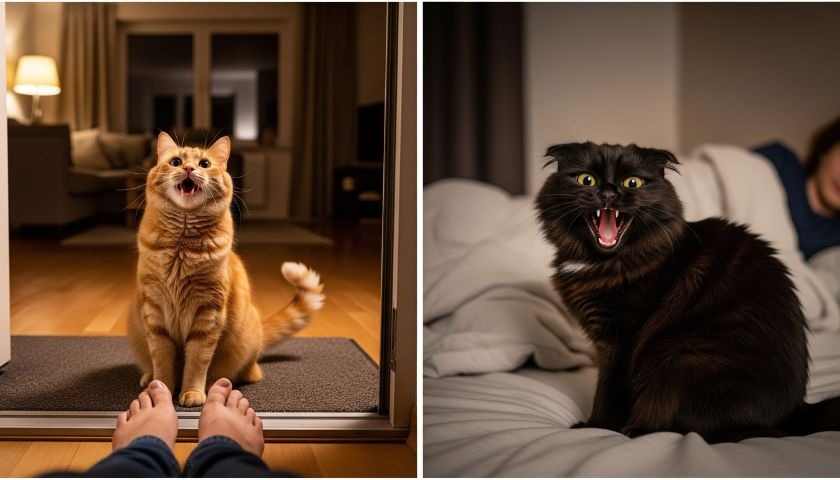
It’s useful to know the difference between your cat’s sounds. A meow is a friendly greeting or quick request. Meanwhile, a whine is longer and indicates your cat is upset or frustrated. Paying attention to the sound your cat makes can help you better understand what they need, especially at night.
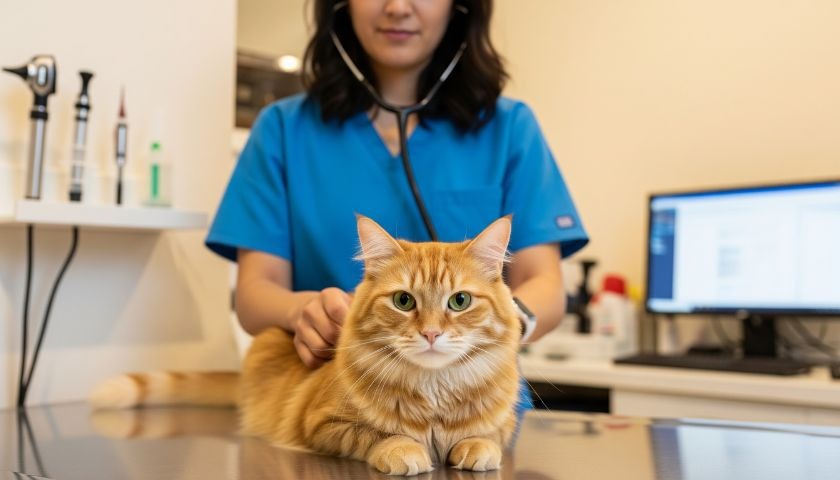
Don’t ignore it if your cat suddenly starts whining at night. If your usually quiet cat suddenly won’t stop making noise, something might be wrong. Trust your instincts. If you are worried, reach out to your vet.
Watch for other signs, like vomiting, diarrhea, or changes in appetite. If your cat is hiding more than usual, they may be in pain. Sudden aggression can also mean your cat isn’t feeling well. If you notice any of these changes, contact your vet right away.
Your veterinarian will examine your cat and run blood tests to check for concerns, such as thyroid or kidney disease. This check-up can give you peace of mind, even if the problem turns out to be just a behavioral change.
Don’t wait until you’re completely exhausted before asking for help. The sooner you consult your vet, the better for both you and your cat. Early checkups can save you money and worry, and your vet will help you identify the cause.
You’re not alone in feeling frustrated or helpless when you hear your cat whining at night. But this doesn’t have to last forever. By finding the cause behind the noise, you can help your cat and yourself sleep better. With patience and consistency, you’ll both enjoy peaceful nights again.