
You have a bag of treats or your cat’s favorite toy in your bedroom. You get on your knees and look down into the dark area under the bed. Two eyes stare back and blink, but don’t move. If your cat is hiding under the bed, it’s easy to feel worried, rejected, or helpless. Is something wrong? Are they mad at you? Are they sick?
The truth is, hiding is normal cat behavior, but where, when, and how long your cat hides matter. Sometimes it’s just a cozy retreat. Other times, your cat is just telling you, “I don’t feel safe.”
This guide breaks down the answer to your question, “Why does my cat hide under the bed?” It tells you what’s normal and what’s not, and how to make your cat feel safe enough to go outside.
Cats are naturally mysterious, but their behavior usually has a clear cause. Let’s talk about why your cat keeps going to the dark, quiet place under the bed.
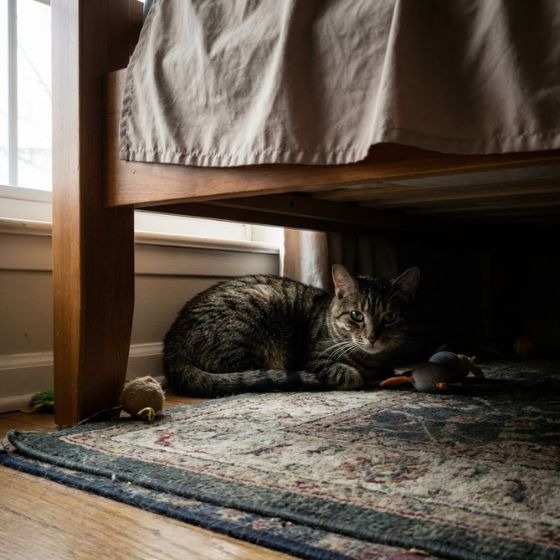
Cats are both predators and hunters, so they look for places where they can watch without being seen or heard. The bed is like a small cave with walls and only one exit. It’s the perfect place for your cat to relax and feel secure because it’s quiet, controlled, and private.
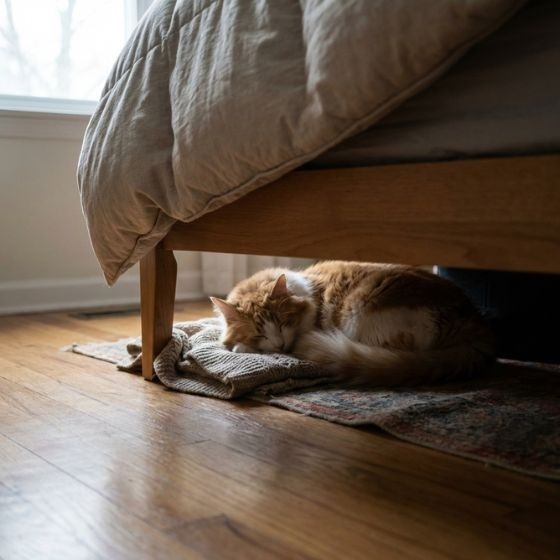
Ever notice your cat slipping under the bed on a cold morning or a hot summer day? That’s no coincidence. When it’s hot, the area under the bed is usually cooler, and when it’s cold, it’s quite warmer. This is because it is protected from drafts. Cats naturally pick places that help them stay warm and comfortable.
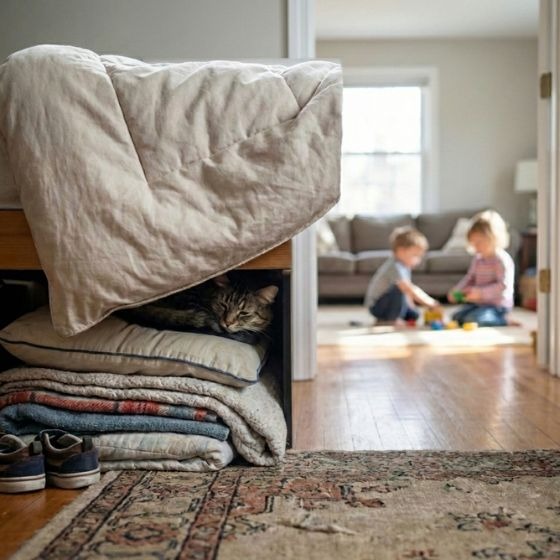
Cats have very sensitive hearing. The bed’s frame, mattress, and blankets act as a sound buffer, softening thunder, vacuums, children playing, and barking dogs. To a cat, that spot feels calm, almost like a built-in noise-canceling zone.
Stress often causes behavior changes. If your house is messy, your cat may go to your bedroom, which smells the safest. This room usually carries your strongest scent, which can comfort an anxious cat.
When you find yourself asking, “Why is my cat hiding under the bed?” look at recent changes in your household. Cats are creatures of habit, so even small disruptions can send them running for cover.
You might not notice a change, but your cat does. Did you move the furniture? Bring home a new rug with a strong smell? Switch their litter? Even small changes can make shared spaces feel strange and unsafe. Under the bed stays the same and feels familiar.
In a busy home, shared spaces belong to everyone: kids, guests, and even the dog stay in the living room. The bedroom, however, is usually quieter and off-limits to most activity. Your cat notices this and hides there because they’re less likely to be stepped on, disturbed, or grabbed.
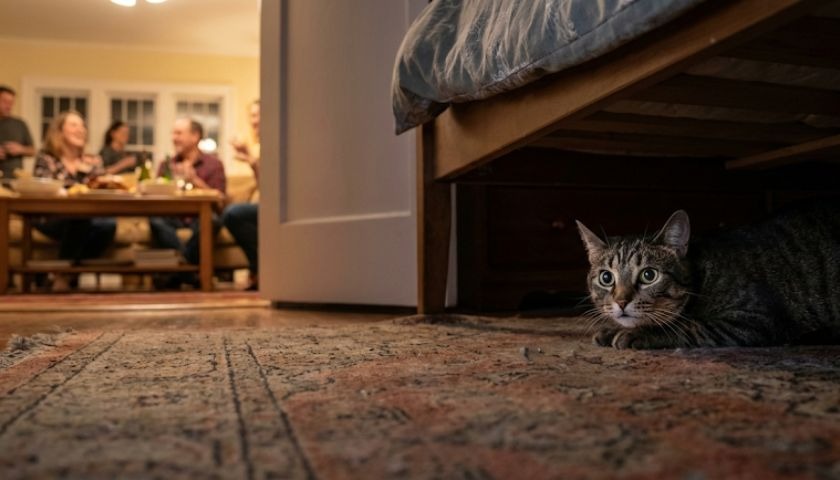
Strangers can be frightening for cats. Loud voices, heavy footsteps, and unfamiliar smells can trigger a quick escape. If you host a dinner party and your cat disappears, they’re probably pressed flat under the bed. They’ll stay there until the visitors leave and the house smells like you again.
When owners ask, “Why is my cat suddenly hiding under the bed?” the word suddenly is the key. There is always a reason why cats act the way they do. A sudden shift usually points to a physical problem or something very upsetting.
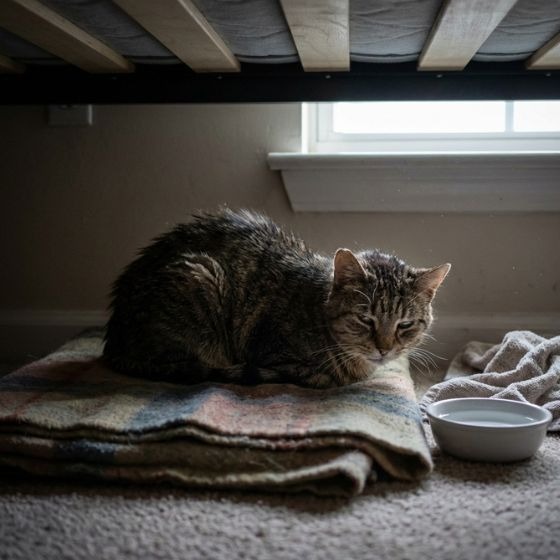
Illness is a common cause. Cats instinctively hide pain; in the wild, weakness makes them a target, and that instinct remains. Urinary tract infections, dental pain, arthritis, stomach issues, and other internal problems can all make a cat withdraw and hide.
If your hiding cat eats less, uses the litter box differently, or seems aggressive or unkempt, call your vet. Don’t wait and see.
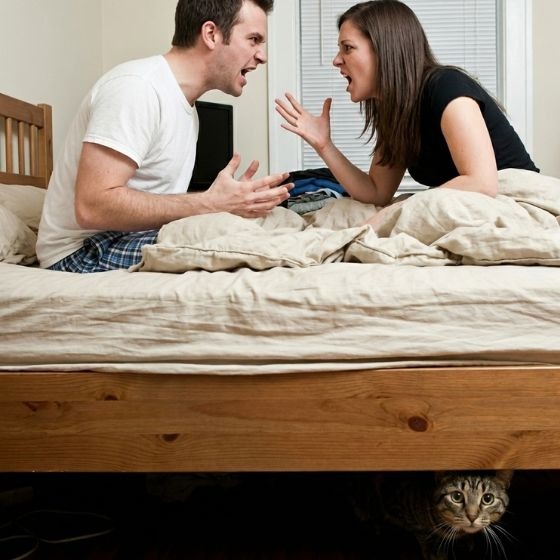
Fear can also cause sudden hiding. Cats remember scary events. A loud noise, something dropped, an argument, or a fall can all feel dangerous. If something frightening happens near the bed, your cat may later see that spot as the safest place to hide.
So, if you see your cat hiding under the bed and staying there more than usual, take it seriously. You don’t need to panic, but you should notice the change and act quickly if other worrying signs show up.
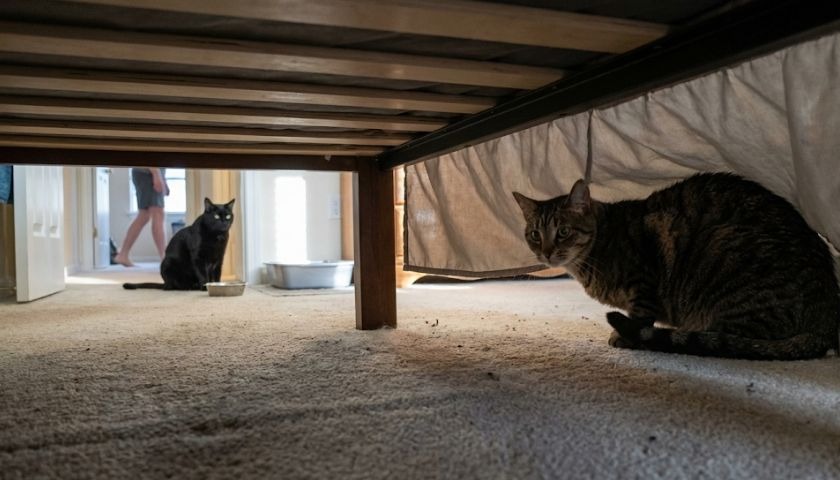
If your cat hides all the time rather than just for a short time, there may be bigger problems happening. It could mean your cat feels stressed or uncomfortable at home. You have to play detective to find the root cause.
Long-term stress from too many pets, constant noise, or boredom can make a cat hide most of the time. These cats are always ready to fight or run away. To help your cat, figure out what’s stressing them and gently rebuild their sense of safety and trust.
Try to set aside some quiet time to bond. To make positive connections outside of the hiding place, offer gentle play sessions, slow blinks, or treats by hand.
Older cats with feline cognitive dysfunction may hide more when they are confused or disoriented. For them, the darkness under the bed feels steady and comforting. Keep their surroundings predictable by leaving their bed, litter box, and food bowls in the same spots every day.
If you have multiple cats, one may block another’s access to food or the litter box. The bullied cat may stay under the bed to avoid another fight. Give each cat its own litter box, feeding area, and safe spot to reduce tension and prevent bullying.
You want your friend back, and it’s heartbreaking to see a cat hiding under the bed day after day. But dragging them out is the worst thing you can do. It confirms their fear that the outside world is dangerous and that you don’t respect their need to feel safe.
To get them out, you must make the rest of the room more appealing than the dust bunnies.
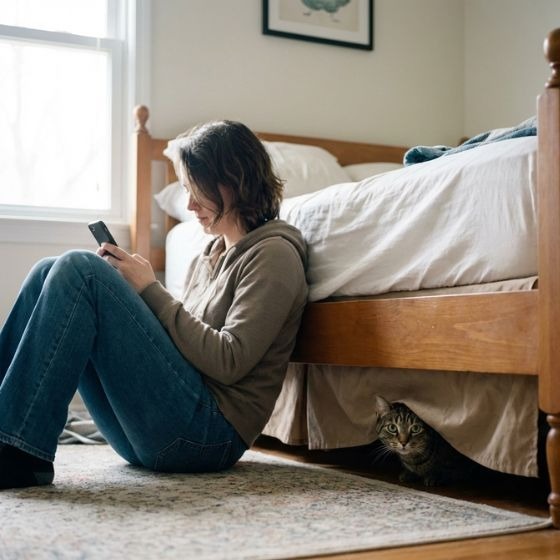
This might seem strange, but it works. Stop trying to lure them out. Stop looking under the bed every hour. When you stare at them, you behave like a predator watching prey. The best thing you can do is…

Why do cats go under beds? The answer is simple: because it smells safe! Help the rest of the room feel just as safe for your cat.

Sometimes cats hide on the floor because they do not have a high place to go. Behaviorists often talk about two general types of cats: bush dwellers and tree dwellers.
Bush dwellers feel safest in low, covered spots, so they frequently choose places like under the bed or behind furniture. Tree dwellers feel safest when they can watch from above, so they love high shelves, perches, and cat trees.
If you have a tree-dwelling cat, do the following:
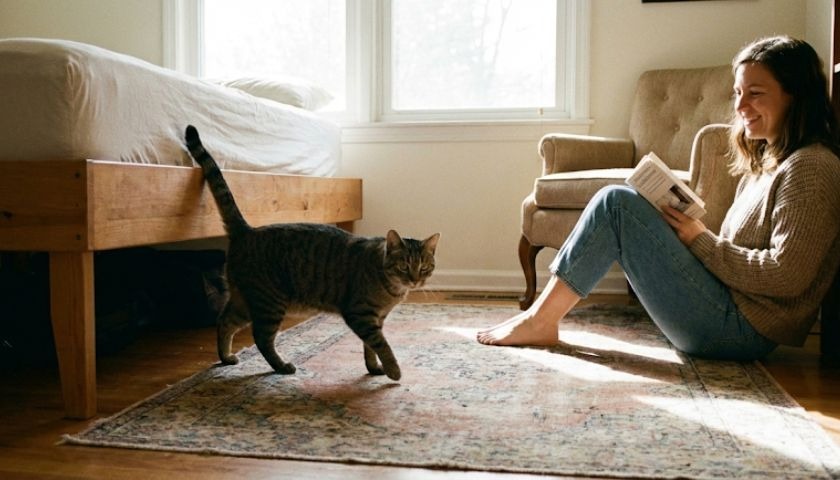
If your cat is hiding under the bed, they are not being difficult or ungrateful. They’re just responding in the only way they know how to what’s going on around them.
The goal is not just to get the cat out. The goal is to make the world outside the bed feel safe enough that your cat chooses to come out.
That space under the bed is a sanctuary, not a problem. When you respect that space, notice patterns, and address the real cause, your cat feels in control again. And when cats are in control, they are much more likely to come out and be with you.
Look around your home the way your cat might see it. Ease up on the pressure. Add comfort. Build their confidence.
That is how those glowing eyes in the dark turn back into a cat curled up beside you.